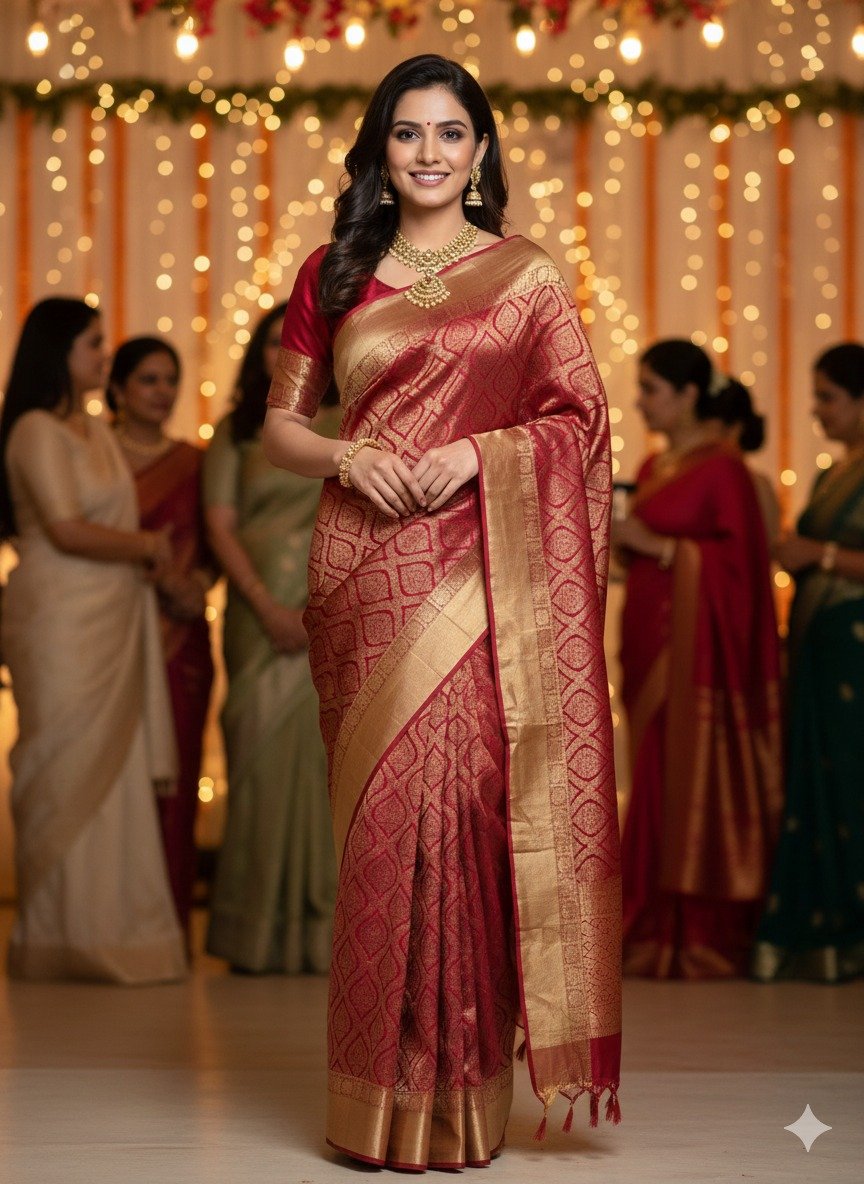
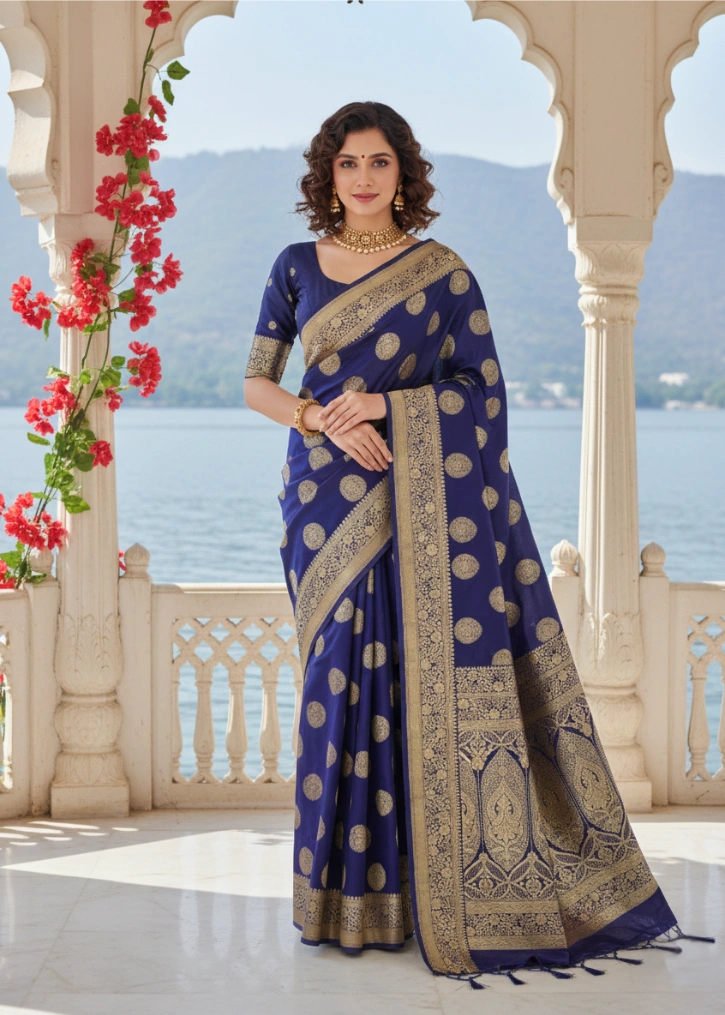
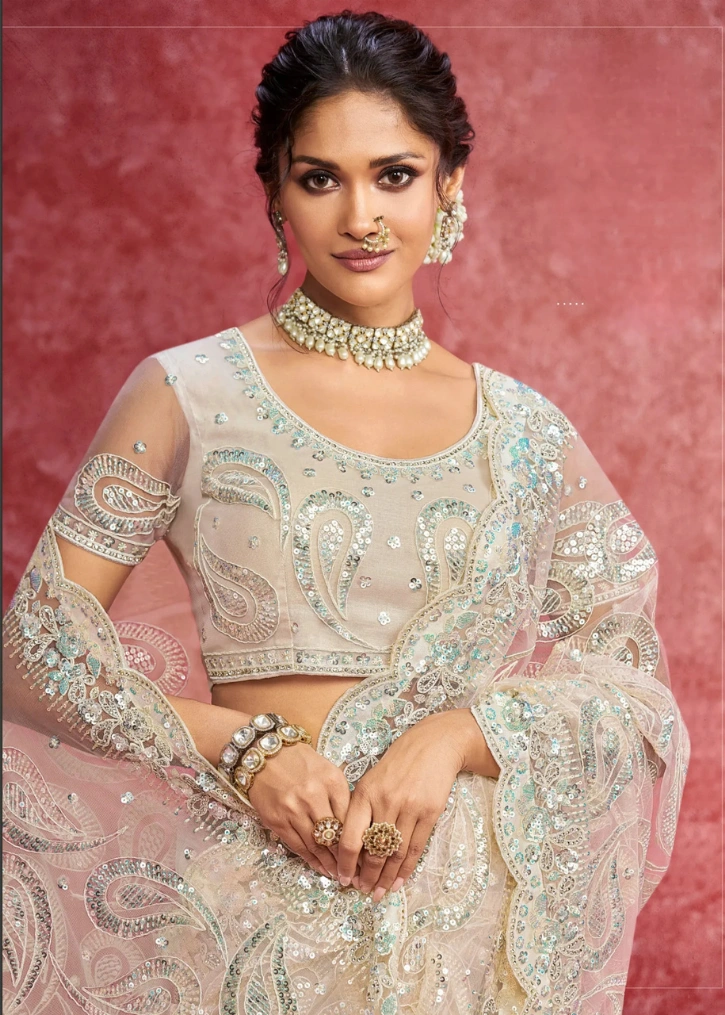
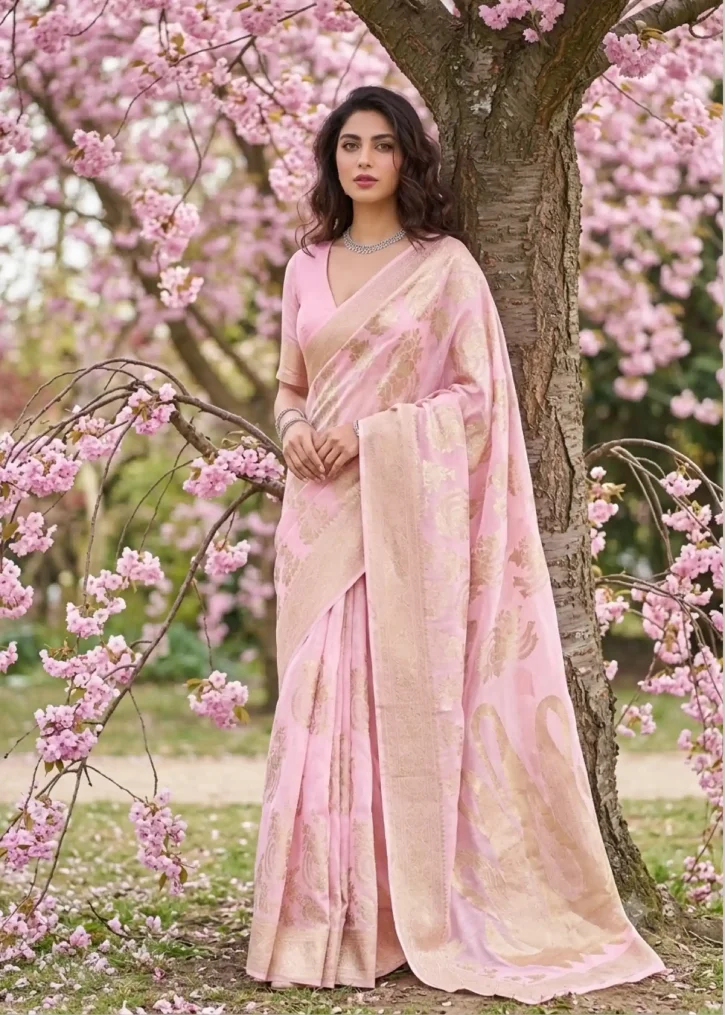
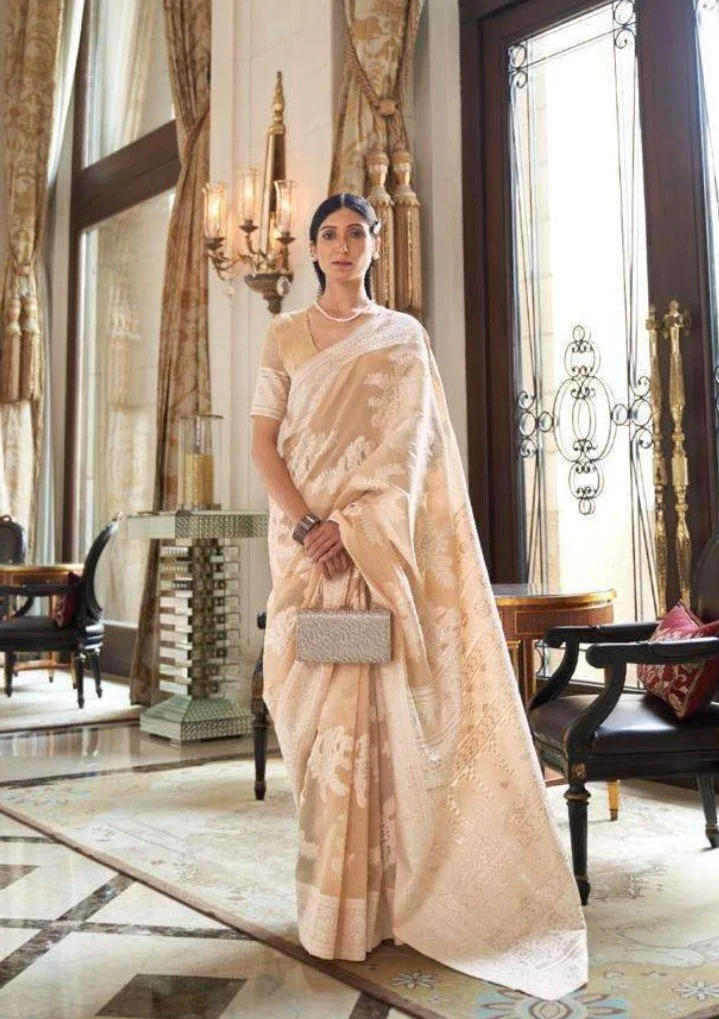
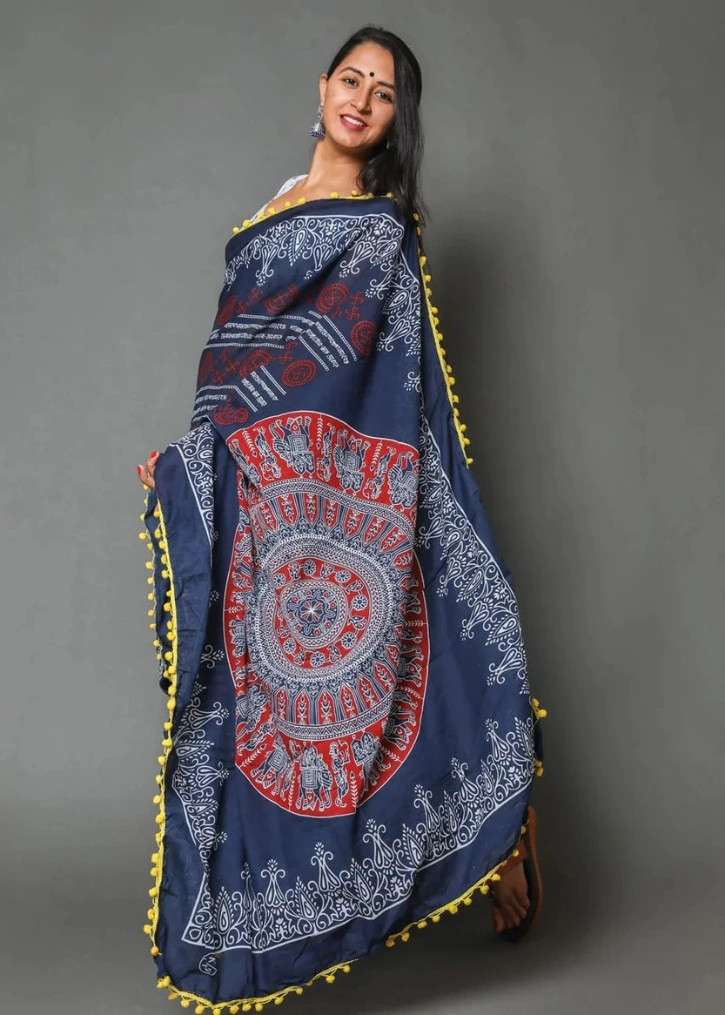
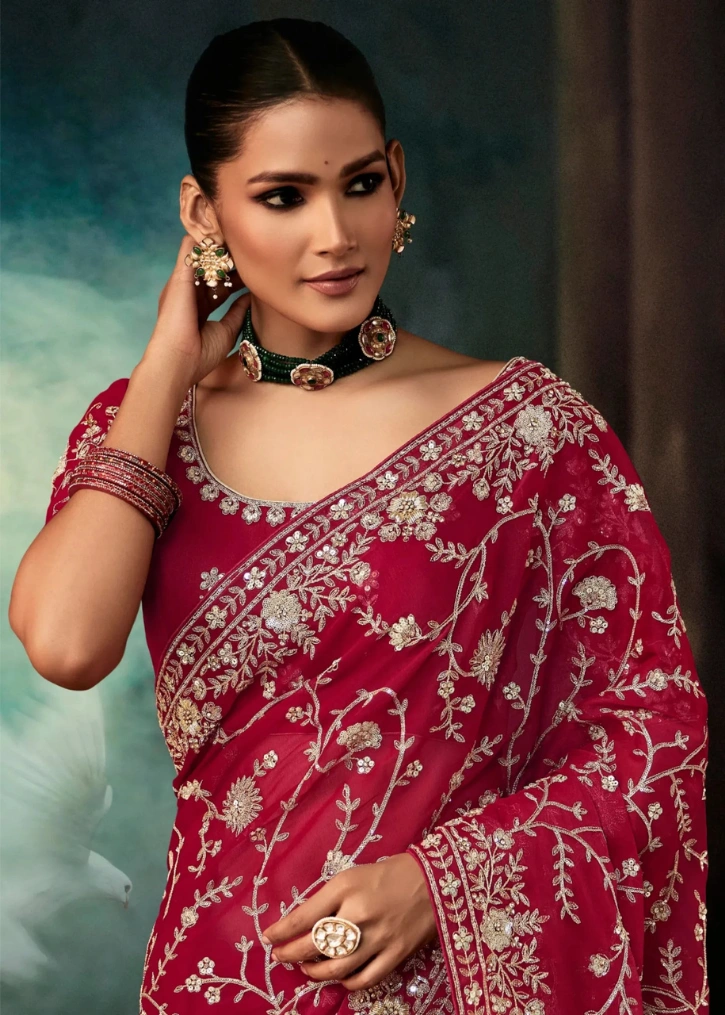
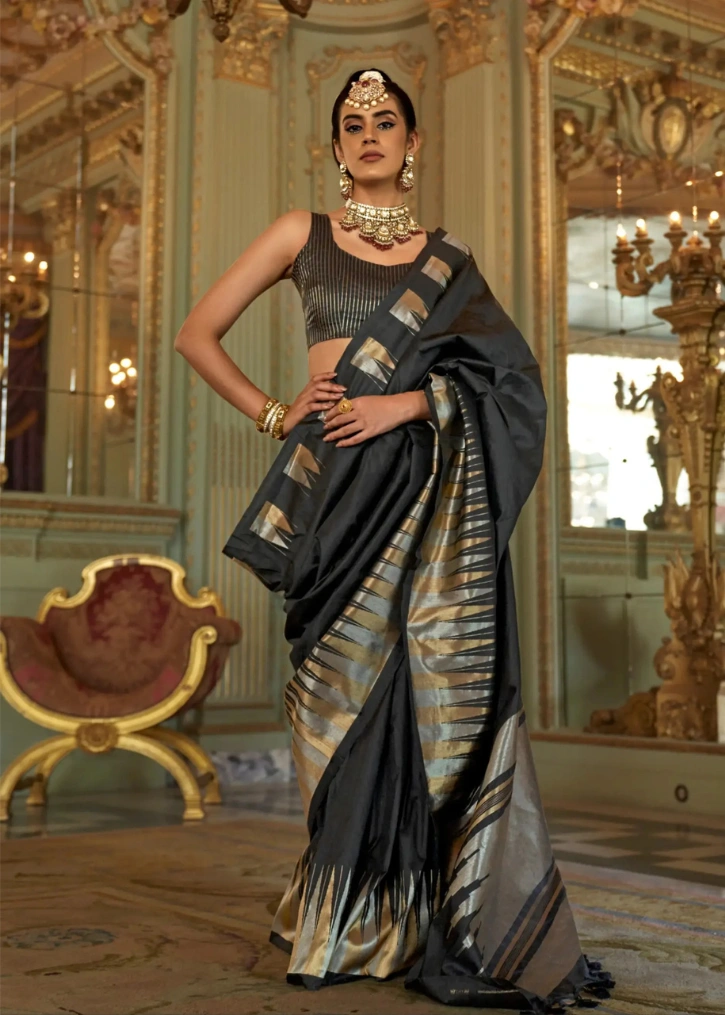
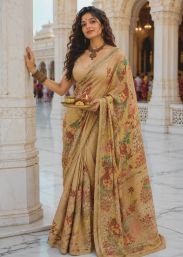
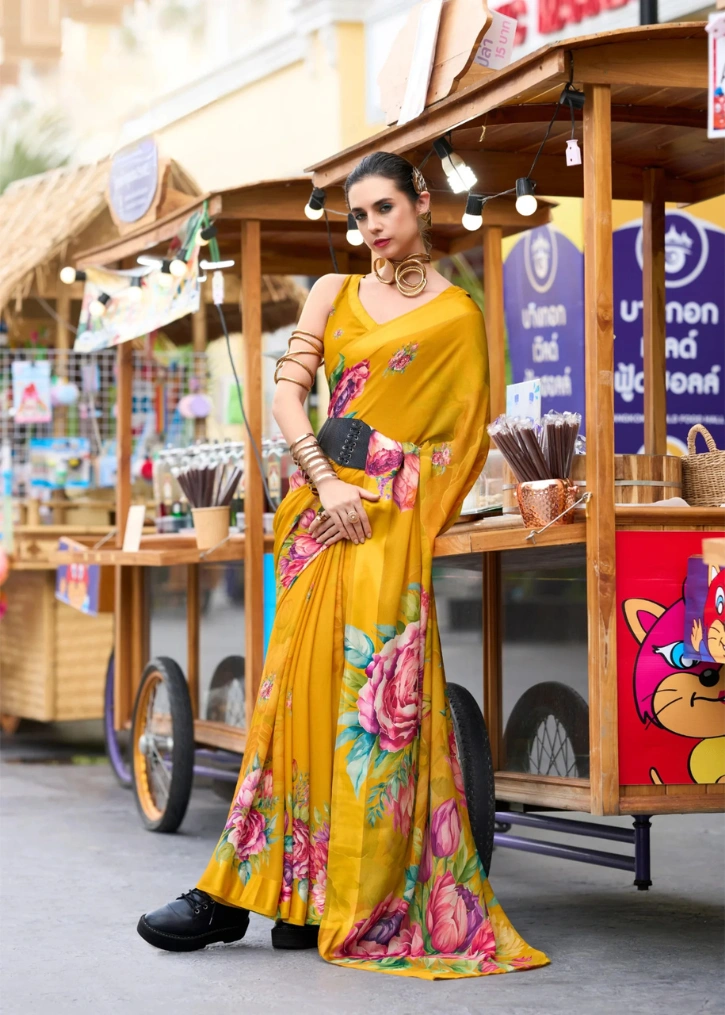
Showing all 5 results
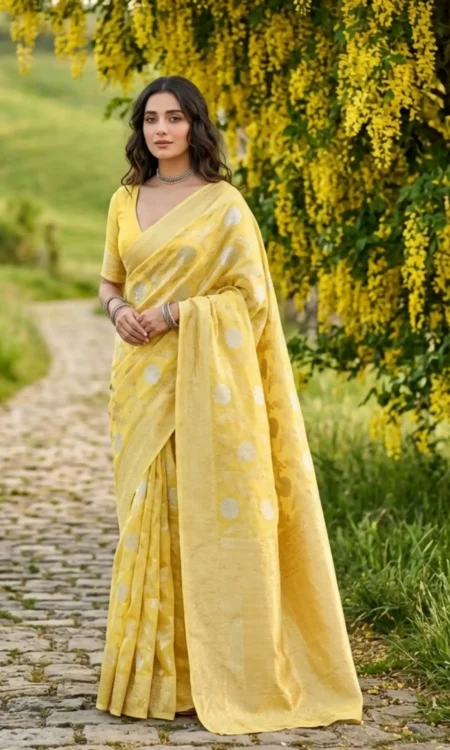
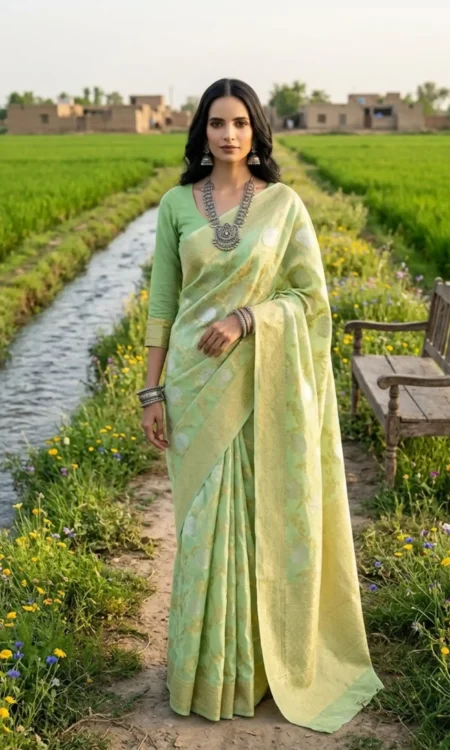
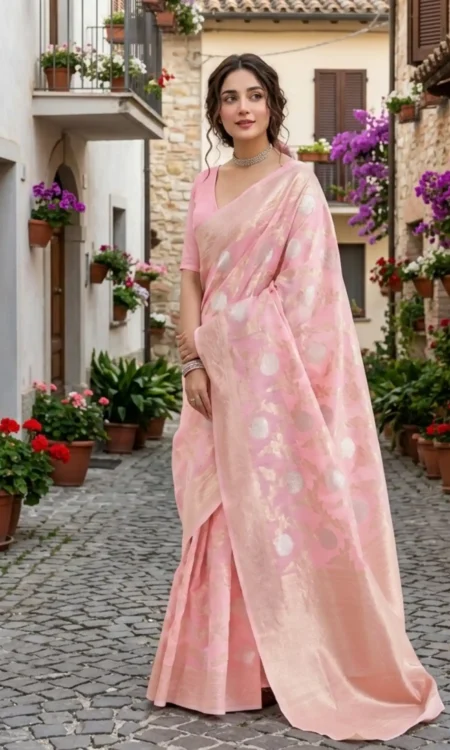
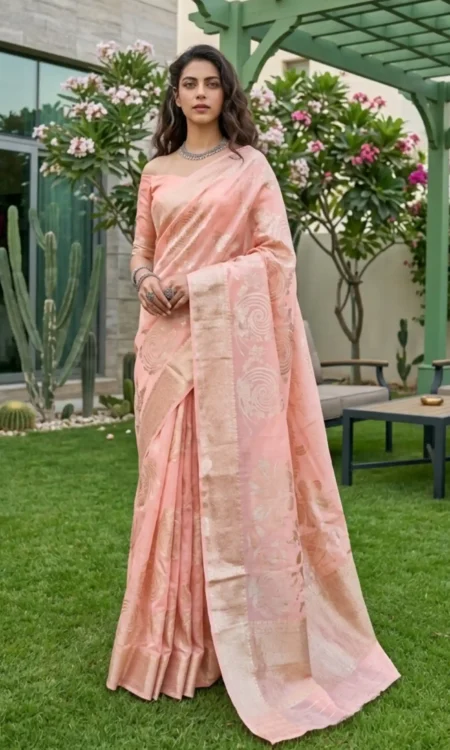
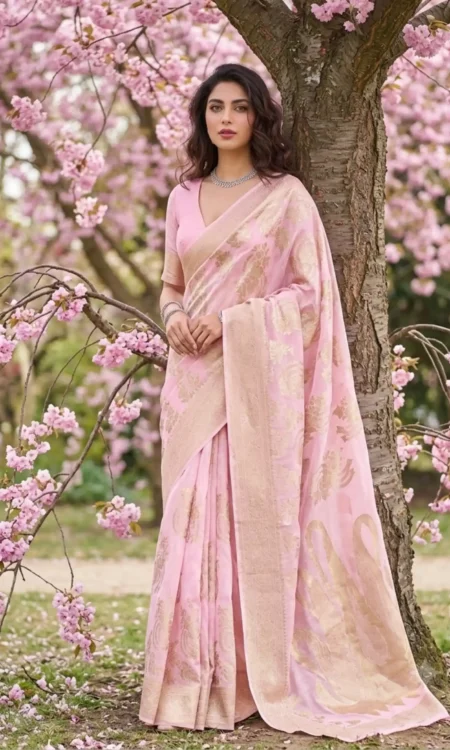
What Are Chanderi Sarees?
Chanderi sarees are sarees associated with the Chanderi textile and weaving tradition of Madhya Pradesh. The textile is recognised for its fine construction, lightness, subtle sheen and, in many examples, a translucent or airy appearance.
Chanderi is best understood as a textile and weaving tradition rather than simply another name for a silk saree. Different Chanderi sarees can vary in fibre composition, weave, motifs, embellishment and overall appearance.
This distinction is important when choosing a saree. A Chanderi saree may be made with silk, cotton or a silk-cotton construction, depending on the particular textile.
Where Are Chanderi Sarees Made?
Chanderi is a historic town in Madhya Pradesh, India, now located in Ashoknagar district. The town has a long-established association with fine textile production and a living weaving tradition.
The geographical connection is an important part of Chanderi’s identity. The name therefore refers not only to a visual style but to a textile tradition rooted in a specific place and its weaving community.
Chanderi’s textile heritage developed over centuries and continued to evolve as weavers introduced different yarns, designs and production methods while retaining characteristics associated with the fabric’s fine and lightweight appearance.
What Makes Chanderi Sarees Distinctive?
Several characteristics contribute to the recognisable character of Chanderi textiles:
- Fine yarns and a delicate construction
- Lightweight feel in many varieties
- A translucent or airy appearance in many constructions
- Subtle sheen
- Woven buti and buta motifs
- Floral, geometric and nature-inspired designs
- Decorative borders and pallus
- Zari detailing in selected sarees
These characteristics are not identical across every Chanderi saree. Fibre composition, yarn fineness, weave structure, motif density and embellishment can all affect the final appearance and feel.
Chanderi Silk, Cotton & Silk-Cotton Sarees
One of the most important things to understand when shopping for Chanderi is that Chanderi does not mean one fixed fibre composition.
Chanderi Silk
Chanderi silk refers to silk-based Chanderi textiles, but the term should not automatically be interpreted as meaning that every saree described as Chanderi silk is 100% silk.
If a saree is made entirely from silk, its product specifications should identify the relevant composition. If silk and cotton are combined, the product should be described according to that construction.
Silk-Cotton Chanderi
Silk-cotton is an important traditional Chanderi construction. Government handloom documentation describes Chanderi silk-cotton sarees using silk in the warp and fine cotton in the weft.
This combination contributes to the fine, lightweight character for which Chanderi is known.
Cotton Chanderi
Cotton Chanderi sarees are also part of the Chanderi textile tradition. Government and Madhya Pradesh tourism sources identify cotton, silk and silk-cotton varieties.
For this reason, always check the fibre composition of the individual saree rather than assuming that every Chanderi saree is a silk saree.
Understanding Chanderi Weaving
Traditional Chanderi production involves skilled weaving and fine yarn preparation. Government handloom documentation describes the use of pit and frame looms and techniques including jala and extra-weft figuring for decorative work. Dobby mechanisms can also be used for border designs.
The warp runs lengthwise through the saree, while the weft passes across it. The interaction of these yarns, their fineness and the structure of the weave contributes to Chanderi’s characteristic visual delicacy.
Modern Chanderi products can vary in construction and production method, so the word Chanderi by itself should not be treated as proof that an individual saree is handwoven.
If handloom status is important to you, look for explicit handloom information, appropriate certification or clear product documentation rather than relying on the textile name alone.
Chanderi Butis, Butas & Ashrafi Motifs
Chanderi designs often use small woven motifs known as butis. Larger versions are commonly referred to as butas.
The difference is primarily one of scale and visual impact. Small butis can create a delicate pattern across the saree body, while larger butas give the design greater visual emphasis.
Ashrafi Buti
The Ashrafi buti is a distinctive coin-shaped motif associated with Chanderi textiles. Historical Chanderi documentation records Ashrafi butti among the traditional motifs used in the textile.
Its rounded, coin-like form can create a repeated pattern across the saree body and works particularly well with the fine scale of Chanderi weaving.
Other Chanderi designs include floral, geometric and nature-inspired motifs, with documented examples including peacock and lotus forms as well as traditional patterns such as Dandidar, Chatai and Jangla.
Zari, Borders & Pallus
Zari can add a subtle metallic dimension to Chanderi sarees. Depending on the particular saree, it may appear in the body, woven motifs, border or pallu.
Historical Chanderi documentation records the use of metallic threads including gold- and silver-coated varieties, as well as tested zari.
Not every Chanderi saree contains zari, and the presence of zari does not by itself establish that it is made from real gold or silver. The material and finish should therefore be checked in the individual product specifications.
The body, border and pallu also play different roles in the overall design. A restrained border can keep a saree understated, while a more detailed pallu or zari border can give it a more ceremonial appearance.
What Is Tissue Chanderi?
Tissue Chanderi is a product term used for Chanderi textiles with a more pronounced luminous or metallic-looking effect. The exact appearance and composition can vary according to the yarns, weave and embellishment used.
Tissue should not automatically be interpreted as:
- Pure silk
- Gold
- Real metallic thread
For a particular tissue Chanderi saree, the product’s fibre and embellishment specifications provide the most reliable information.
Are Chanderi Sarees Handwoven?
Chanderi has a strong handloom heritage, and traditional Chanderi weaving is documented as a handloom craft. Government handloom sources identify Chanderi among India’s major handloom products.
However, the word Chanderi alone does not prove that an individual saree is handwoven.
When handloom production matters to your purchase, check whether the specific saree carries:
- Explicit handloom information
- Handloom Mark information where applicable
- India Handloom Brand information where applicable
- Clear production or seller documentation
This distinction helps separate the geographical/textile identity of Chanderi from the production method of an individual product.
Chanderi Sarees and GI Recognition
Chanderi Sarees is a registered Geographical Indication associated with Madhya Pradesh. The official GI record identifies Chanderi Sarees under Class 24 and records the application as filed in 2004 and registered in 2005.
A Geographical Indication protects the connection between a product and its geographical origin. It should not be interpreted as meaning that every saree sold online using the word “Chanderi” is automatically GI-certified.
When a seller makes a specific GI-related claim about an individual product, the supporting documentation and authorised-user context should be considered.
How to Choose a Chanderi Saree
Choosing a Chanderi saree becomes easier when you look beyond the name and consider the actual product specifications.
1. Check the Fibre Composition
Start with the material.
Look for the stated composition of the individual saree rather than assuming that Chanderi means pure silk.
2. Consider the Weaving Information
If handloom or handwoven production is important to you, look for explicit evidence rather than relying on the word Chanderi alone.
3. Consider Sheerness and Weight
Chanderi is known for its fine, lightweight character, but the degree of translucency and weight can vary according to fibre, yarn and construction.
4. Look at the Motifs
Small butis create a subtle patterned effect, while larger butas can create a stronger visual statement. Ashrafi motifs add a distinctive coin-shaped detail.
5. Examine the Border and Pallu
A narrow or understated border can give a saree a refined appearance, while a more elaborate border or pallu can make it more suitable for formal or festive dressing.
6. Decide Whether You Want Zari
Zari can add metallic detail to selected Chanderi sarees. Check the individual product description for the type of embellishment rather than assuming that every saree contains zari.
7. Match the Saree to the Occasion
The right Chanderi saree depends on its colour, motif density, border, pallu, fibre and embellishment—not simply on the fact that it is Chanderi.
Chanderi Sarees for Weddings, Festivals & Formal Wear
Chanderi can work across several occasions, but different styles create different levels of formality.
Weddings
For wedding celebrations, look for Chanderi sarees with richer motifs, more pronounced borders, detailed pallus or zari where appropriate.
Receptions & Formal Events
A silk-based or more elaborately detailed Chanderi saree can create a refined formal look, depending on its construction and embellishment.
Festivals
Traditional motifs, zari details and contrasting borders can give Chanderi a more festive character.
Day Events
Lighter colours, restrained motifs and delicate borders can work well for daytime occasions.
Office Wear
For professional settings, simpler designs with controlled embellishment and understated borders can provide an elegant appearance without looking overly ceremonial.
Summer & Warm-Weather Occasions
The fine and lightweight character associated with many Chanderi textiles can make them appealing for warm-weather dressing. However, comfort depends on the individual fibre composition and construction, so product specifications remain important.
How to Style a Chanderi Saree
Chanderi’s delicate texture and fine detailing can work with both traditional and contemporary styling.
Blouse
For a traditional look, consider a classic blouse that complements the saree’s border or motifs. For contemporary styling, a structured blouse in a complementary or carefully contrasted shade can create a cleaner silhouette.
Jewellery
Gold-toned jewellery can complement zari and traditional motifs. For simpler Chanderi sarees, statement earrings can provide enough detail without competing with the fabric.
Hair
A classic bun works naturally with traditional jewellery and formal occasions, while a simpler open or softly styled look can suit daytime dressing.
Footwear
Choose footwear according to the occasion. Traditional embellished footwear can complement festive styling, while understated heels or flats can work well for daytime and formal settings.
Bag
A compact clutch or structured handbag can complement an occasion-ready Chanderi look without distracting from the saree.
Draping
Keep the drape neat enough for the border, motifs and pallu to remain visible. For detailed pallus, arranging the pallu so its woven work is clearly displayed can make a significant difference to the overall appearance.
How to Care for a Chanderi Saree
Care should be based on the individual saree’s fibre composition, zari and embellishment.
A silk Chanderi saree may require different handling from a cotton Chanderi saree, while zari-containing or embellished pieces may require additional care.
General precautions
- Follow the care instructions supplied with the individual saree.
- Avoid harsh washing methods.
- Do not twist or wring delicate fabrics.
- Avoid excessive heat.
- Protect zari and delicate embellishments from unnecessary friction.
- Store the saree clean and completely dry.
- Avoid prolonged direct sunlight.
- Refold stored sarees periodically rather than leaving the same folds in place for extended periods.
Product-specific care instructions always take priority.
Frequently Asked Questions
What is a Chanderi saree?
A Chanderi saree is a saree associated with the Chanderi textile and weaving tradition of Madhya Pradesh. Chanderi is known for fine yarns, a lightweight character, delicate translucency, subtle sheen and woven motifs.
Where are Chanderi sarees made?
Chanderi sarees are associated with Chanderi in Madhya Pradesh, India. Chanderi is currently located in Ashoknagar district and has a long-standing weaving tradition.
Is Chanderi silk or cotton?
Chanderi can be made using silk, cotton and silk-cotton constructions. The exact fibre composition depends on the individual saree.
What is Chanderi silk?
Chanderi silk refers to a silk-based Chanderi textile. The term should not automatically be treated as proof that a saree is 100% silk. Always check the product’s stated fibre composition.
What is silk-cotton Chanderi?
Silk-cotton Chanderi combines silk and cotton in the textile. Government handloom documentation describes a traditional construction using silk in the warp and fine cotton in the weft.
Are Chanderi sarees handwoven?
Chanderi has a strong handloom tradition and traditional Chanderi weaving is documented as handloom production. However, “Chanderi” alone does not establish that an individual saree is handwoven. Check the product’s specific handloom information or certification where applicable.
Why are Chanderi sarees lightweight?
Chanderi is known for fine yarns and a delicate textile construction, characteristics that contribute to its lightweight and often translucent appearance. The exact feel varies with fibre, yarn and construction.
Why are some Chanderi sarees sheer?
The translucency associated with Chanderi is related to fine yarns and the textile’s construction. The degree of sheerness varies between sarees according to fibre, yarn and weave.
What are Chanderi butis and butas?
A buti is a small decorative motif, while a buta is generally a larger motif. Both can be used to create patterned designs across Chanderi sarees.
What is an Ashrafi motif?
An Ashrafi buti is a coin-shaped motif associated with Chanderi textile design. It is used as a decorative woven motif and can appear repeatedly across the saree body.
Does every Chanderi saree have zari?
No. Zari is used in selected Chanderi sarees and may appear in the body, motifs, border or pallu. The individual product description should be checked for details about embellishment.
What is tissue Chanderi?
Tissue Chanderi is a product term generally associated with a more luminous or metallic-looking Chanderi effect. Its exact fibre and embellishment composition can vary, so product specifications should be checked.
How do I choose a Chanderi saree?
Consider fibre composition, handloom information, weight, sheerness, motifs, border, pallu, zari, colour and intended occasion. The individual product specifications should guide the final choice.
How should I care for a Chanderi saree?
Follow the product-specific care instructions. Care requirements can differ between silk, cotton, silk-cotton, zari-containing and embellished sarees. Avoid harsh handling, twisting and excessive heat unless the product’s care instructions specifically allow them.
Explore Related Saree Collections
Explore our Cotton Sarees collection if you are comparing cotton-based sarees and their characteristics.
For broader saree inspiration and educational guides, visit the Sarees By Muhurat blog.
You can also explore our existing Chanderi saree guide for additional background on the textile tradition.