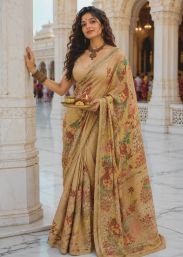
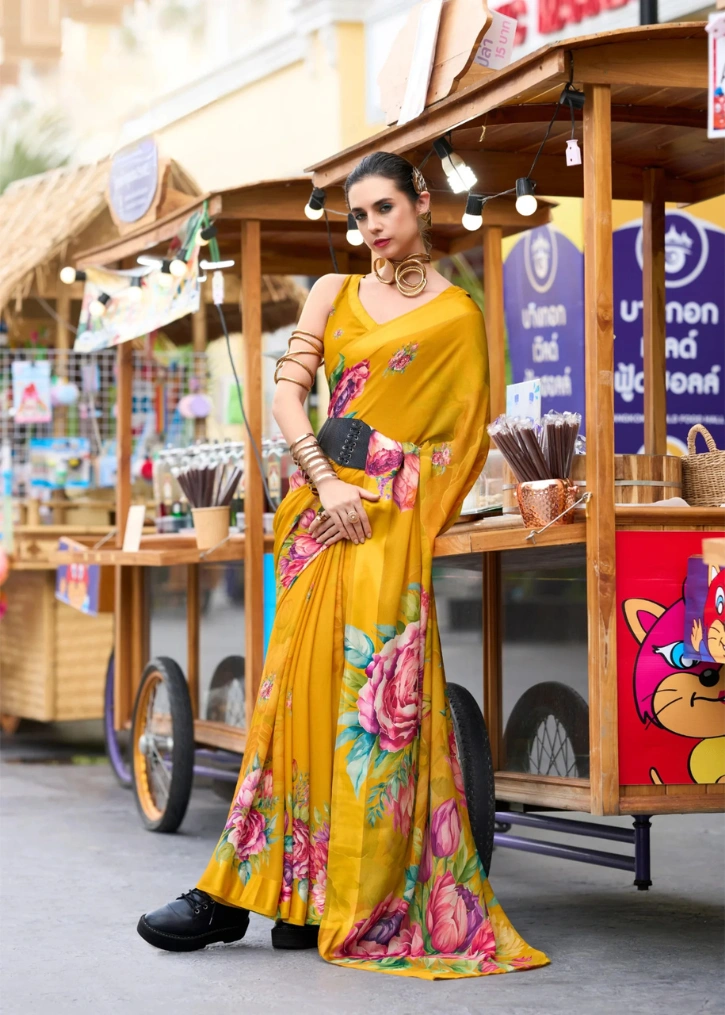
Showing all 6 results
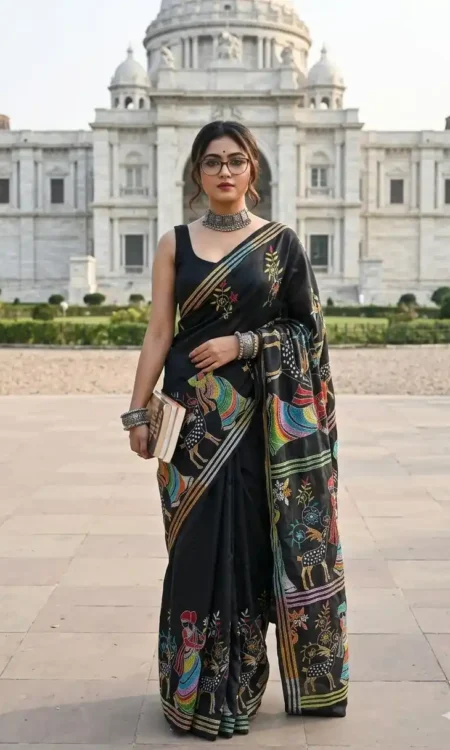
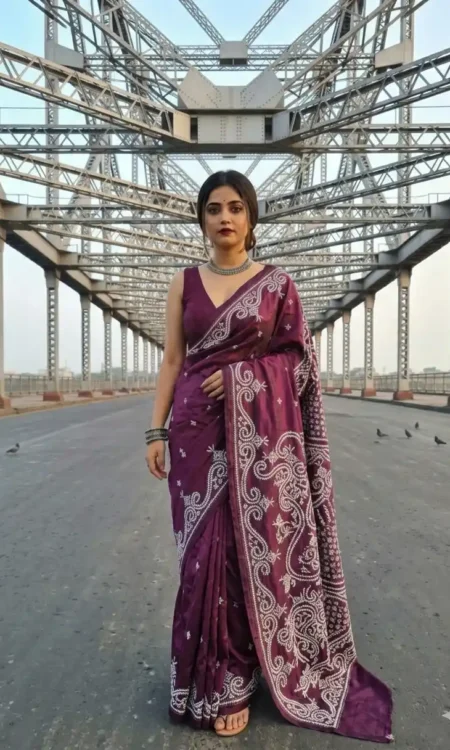
What Are Kantha Sarees?
A Kantha saree is a saree featuring Kantha embroidery or Kantha stitch work, a textile tradition strongly associated with Bengal and particularly known for running-stitch embroidery.
Kantha is not a fabric or weave. Instead, it refers to a broader textile craft tradition that includes embroidery and quilting. The base fabric of a contemporary Kantha saree can vary depending on the product.
For the current Sarees By Muhurat collection, the clearly identified Kantha sarees are presented in Bangalore silk. Individual designs differ in colour, motif and embroidery arrangement, allowing you to choose according to your preferred look and occasion.
What Is Kantha Embroidery?
Kantha embroidery is associated with repeated running stitches worked across textile surfaces to create outlines, motifs, textures and decorative patterns.
Historically, Kantha encompassed both embroidery and quilting. Traditional Kantha textiles were often created by layering and stitching together worn fabrics, including old sarees and dhotis. Contemporary Kantha work can instead be applied to newly produced fabrics and garments, including sarees.
This distinction is important when shopping for a Kantha saree: Kantha describes the craft or embroidery tradition, while the saree’s base fabric is a separate product characteristic.
What Makes Kantha Sarees Distinctive?
Kantha sarees can be recognized through the character of their stitch work, expressive motifs and detailed embroidery arrangements.
Common characteristics associated with Kantha include:
- Running-stitch work: Repeated stitches create lines, outlines, textures and patterns.
- Nature-inspired imagery: Flowers, foliage, birds, animals and other natural forms are recurring motif families.
- Narrative designs: Historical Kantha textiles can depict people, everyday activities, folklore, mythology and scenes from life.
- Individual design character: The arrangement, density and combination of motifs can vary considerably between pieces.
- Tactile detail: Repeated stitching can give Kantha textiles a distinctive textured quality, although the exact surface character depends on the construction of the contemporary saree.
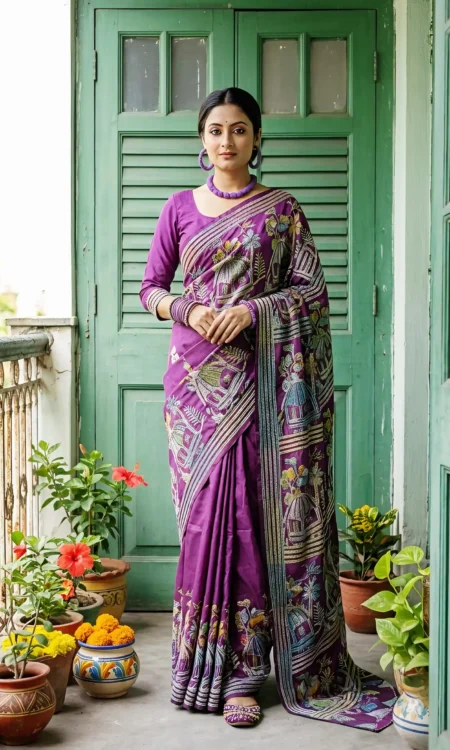
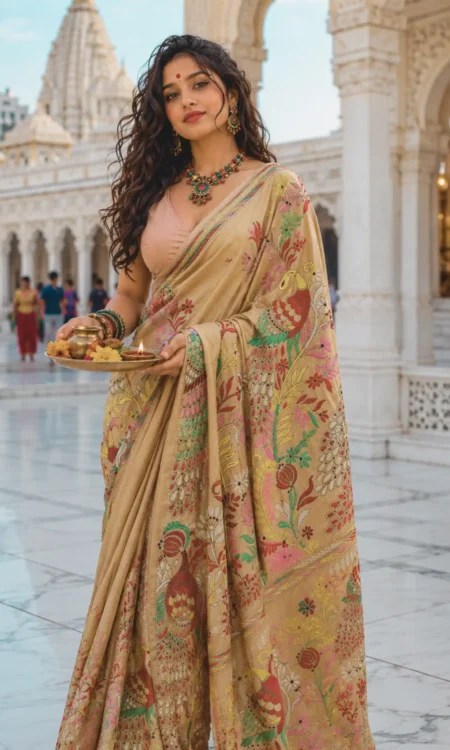
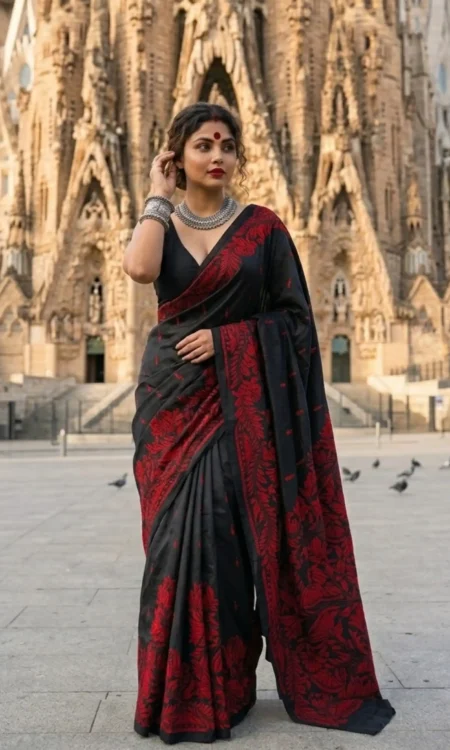
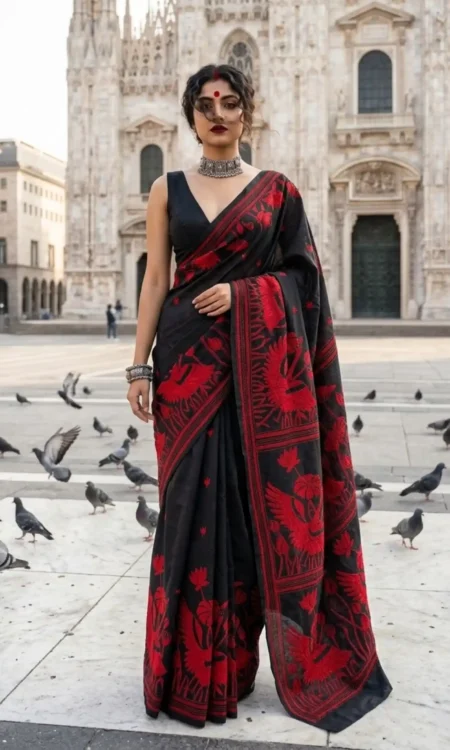
The current collection brings this visual language into saree designs through motifs such as peacocks, swans, flowers and leaves, village or hut imagery, and Shakuntala.
Fabrics Used for Kantha Sarees
Kantha should not be treated as the name of a fabric. It is more accurate to think of a Kantha saree as:
Base fabric + Kantha embroidery or stitch work
Traditional Kantha textiles often involved layers of reused fabrics, including old sarees and dhotis. Contemporary Kantha work may be created on new fabrics, with cotton, silk, tussar and other textile bases appearing in the wider market.
The current Sarees By Muhurat Kantha collection is more specific: the clearly identified Kantha sarees currently available are presented in Bangalore silk.
Always check the individual product description for the exact fabric rather than assuming that every Kantha saree uses the same material.
Kantha Motifs and Design Details
One of the appealing aspects of Kantha is the range of imagery that can be expressed through stitching. Historical and contemporary Kantha work can include nature, animals, birds, plants, everyday life, folklore, mythology and narrative scenes.
Examples associated with the wider Kantha tradition include:
- Lotus and floral forms
- Birds and fish
- Animals
- Plants and foliage
- Paisley or boteh forms
- Human figures
- Village and everyday-life scenes
- Folklore and mythological imagery
- Narrative compositions
- Geometric forms
The exact motifs depend on the individual textile or saree. The current Sarees By Muhurat collection includes several more specific design directions:
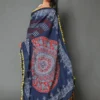
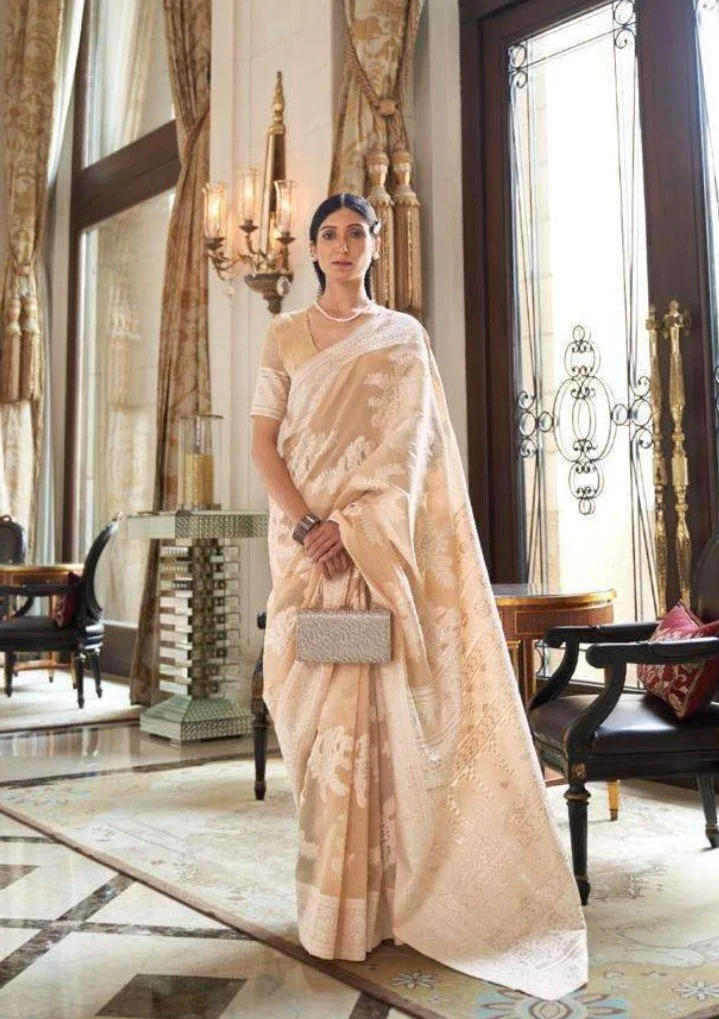
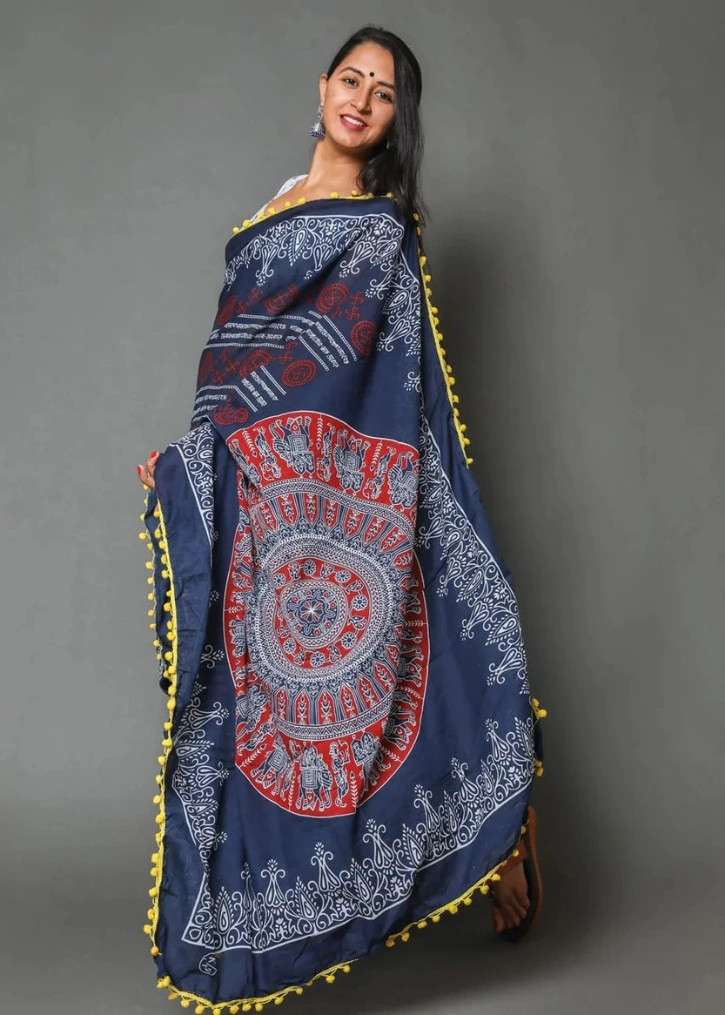
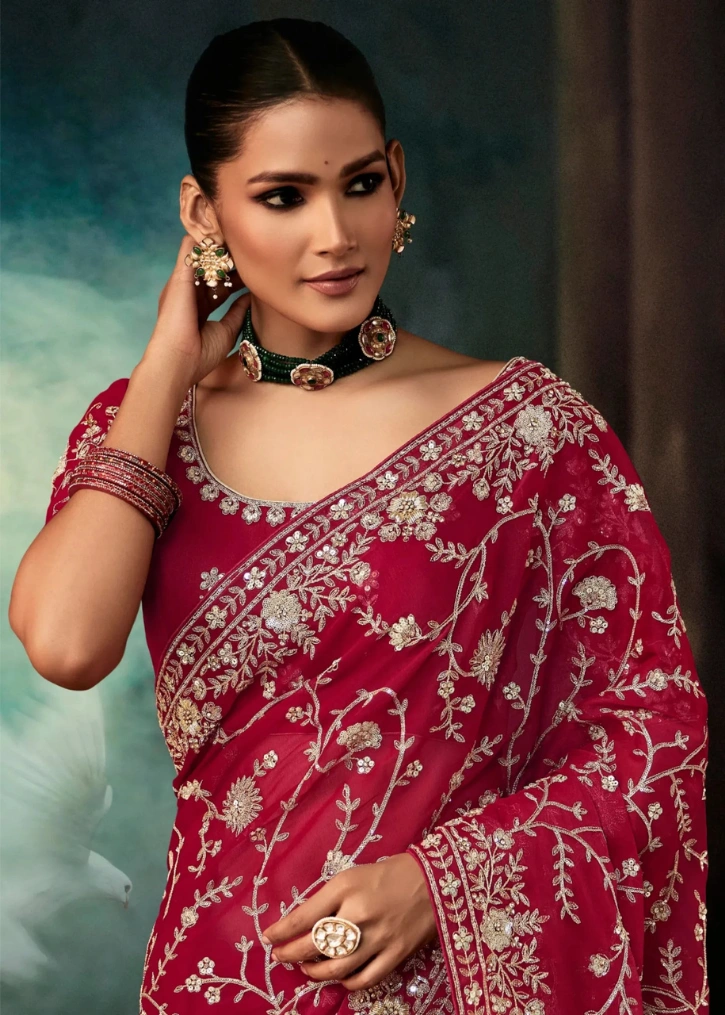
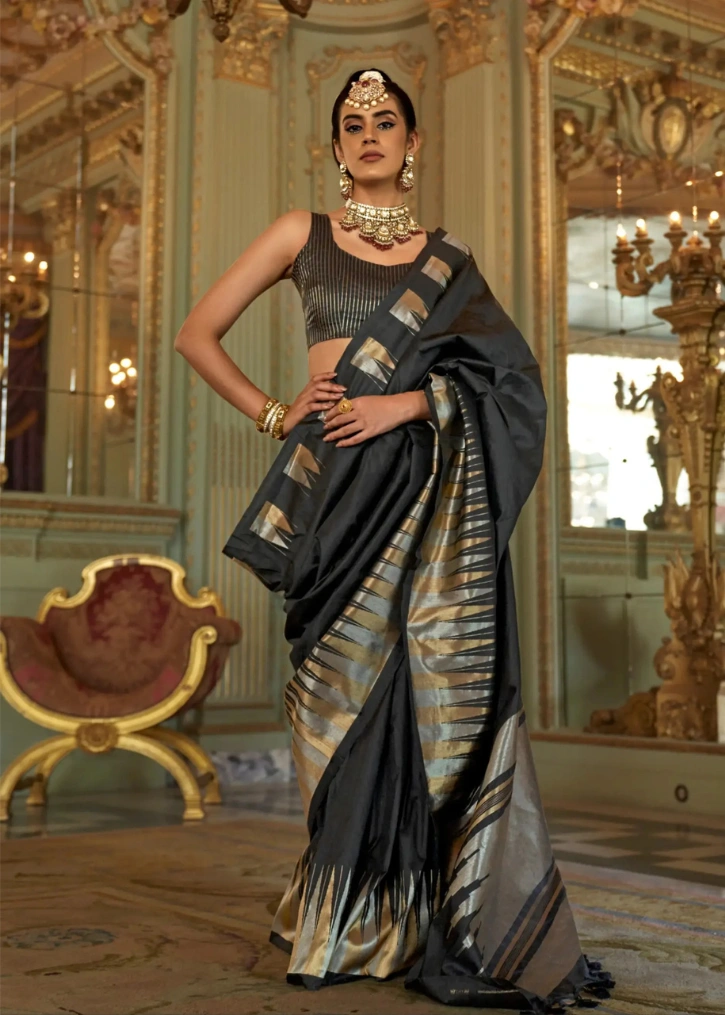
- Deep Plum: hut or village-inspired imagery
- Sand Beige: peacock motif
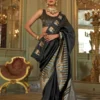
- Pitch Black: flowers and leaves
- Jet Black: swan motif
- Raven Black: Shakuntala motif
These designs show how Kantha embroidery can move between nature-inspired, figurative and narrative imagery rather than being limited to one motif family.
Traditional Kantha and Contemporary Kantha Sarees
Traditional Kantha and contemporary Kantha sarees should not be treated as identical forms.
Traditional Kantha textiles were often made by layering and reusing worn fabrics. Multiple layers could be stitched together using running stitches and other embroidery techniques, creating quilts, wraps, covers and other textile pieces.
Contemporary Kantha has expanded into fashion and can be applied to newly produced fabrics and garments. A modern saree may therefore carry Kantha embroidery without being made from layers of old sarees.
This means that not every contemporary Kantha saree is made from recycled textiles. Historical textile reuse is an important part of Kantha’s story, but it should not automatically be treated as a sustainability claim about every modern product.
Understanding Bengal, Birbhum and Santiniketan
Kantha has a strong cultural and textile connection with Bengal, encompassing traditions associated with areas that are now part of West Bengal in India and Bangladesh.
Within West Bengal, Birbhum has a particularly relevant association with Nakshi Kantha. Santiniketan and the surrounding area are also connected with Kantha-related craft activity.
However, these geographic terms should not be treated as interchangeable. Not every Kantha saree is a Santiniketan saree, and a Kantha saree should not be assigned to a specific locality unless its provenance supports that description.
What Is Nakshi Kantha?
Nakshi Kantha refers to ornamented Kantha textiles, particularly those featuring detailed decorative and narrative embroidery.
The term is useful when discussing particular forms or traditions of Kantha, but it should not automatically be used as another name for every Kantha saree.
For contemporary products, the safest approach is to describe the actual embroidery and provenance of the individual saree rather than making a broad regional claim.
How to Choose a Kantha Saree
Choosing a Kantha saree is easier when you consider the embroidery and the saree itself as separate elements.
1. Check the base fabric
Start with the fabric stated in the product description. The current collection features Bangalore silk, but fabric should always be verified at product level.
2. Look at the embroidery density
Some designs can have more concentrated decorative work, while others may use motifs more selectively. Consider whether you prefer a more detailed or more understated appearance.
3. Choose your motif
The current collection includes floral, foliage, bird, village-inspired and figurative designs. Choose a motif that suits your personal style and the way you intend to wear the saree.
4. Consider the colour
Colour can significantly change the character of an embroidered saree. The current collection includes shades such as deep plum, sand beige and black-based designs.
5. Think about the occasion
A more restrained design can work well for daytime or formal settings, while a more elaborate motif arrangement can suit festive, cultural or social occasions.
6. Check the blouse piece and dimensions
Review the individual product information for blouse-piece details, saree length, width and other measurements before choosing.
7. Read the care instructions
Embroidery and fabric construction can affect maintenance requirements. Check the product-specific instructions before purchase.
8. Check the handwork description
If hand embroidery is important to you, look for an explicit product description stating the technique rather than assuming that every Kantha saree is handmade.
Are Kantha Sarees Hand Embroidered?
It depends on the individual product.
Kantha is a textile and embroidery tradition strongly associated with hand stitching, but the contemporary market includes different interpretations and production methods. A collection should therefore not be described as universally hand embroidered unless every product has been verified on that basis.
When evaluating a saree, check whether the product description explicitly identifies hand embroidery or hand stitching. Product photographs, visible stitch details, technique descriptions and maker information can provide additional context.
No single visual feature should be treated as definitive proof of authenticity.
How Can You Assess Kantha Work When Shopping?
When comparing Kantha sarees, consider several pieces of information together:
- Is the embroidery technique clearly described?
- Does the seller identify the work as Kantha or running-stitch embroidery?
- Is the base fabric clearly stated?
- Are close-up photographs available?
- Can you see the relationship between the front embroidery and the reverse side?
- Does the stitching show natural variation?
- Is maker or artisan information provided where relevant?
- Are the product’s dimensions and care requirements clearly explained?
These details can help you understand the product without relying on one supposed visual test for authenticity.
When Can You Wear a Kantha Saree?
Kantha sarees can work across a range of occasions depending on the colour, embroidery density, motif and overall design.
Consider them for:
- Cultural events
- Festive occasions
- Family gatherings
- Daytime celebrations
- Social and artistic occasions
- Work or formal settings where the particular design is appropriate
- Small celebrations and daytime functions
For weddings, consider the individual saree rather than treating Kantha as inherently bridal. A richly worked design may suit a festive celebration, while a more restrained piece can be appropriate for daytime or semi-formal wear.
How to Style a Kantha Saree
Let the embroidery remain the visual focus and build the rest of the outfit around the particular saree.
Blouse
A blouse in a complementary or coordinating colour can create a balanced look. For a more understated outfit, choose a simpler blouse so the Kantha work remains prominent.
Jewellery
For daytime styling, consider lighter jewellery that complements the motifs. For festive occasions, traditional earrings, bangles or a statement necklace can add more visual weight.
Footwear and Bag
Choose footwear and a bag according to the occasion. Neutral accessories can work well when the saree already has detailed embroidery, while coordinated colours can create a more deliberate festive look.
Hair and Draping
A neat, simple hairstyle can keep attention on the saree. The drape can also be adapted to the setting—more relaxed for daytime occasions and more structured for formal events.
Daytime vs Evening
For daytime wear, lighter accessories and simpler styling can complement detailed Kantha work. For an evening event, you can introduce richer jewellery and accessories while keeping the overall look balanced.
How to Care for a Kantha Saree
Care requirements depend on the saree’s base fabric, embroidery and construction, so the individual product’s care instructions should always take priority.
For the current Sarees By Muhurat Kantha pieces reviewed, product instructions recommend careful handling and professional dry cleaning rather than hand or machine washing.
Current product guidance includes avoiding:
- Hand washing
- Machine washing
- Brushing
- Twisting or squeezing
- Harsh chemical cleaners
Additional care guidance includes careful pressing, protecting the saree from moisture, folding the embroidery inward and storing the saree carefully.
Because individual products can differ, check the care instructions supplied with the specific saree before cleaning or storing it.
Frequently Asked Questions
What is a Kantha saree?
A Kantha saree is a saree featuring Kantha embroidery or stitch work. Kantha is a textile craft tradition associated with Bengal and particularly known for running-stitch work. The saree’s base fabric is a separate characteristic; the current Sarees By Muhurat Kantha collection features clearly identified styles in Bangalore silk.
What is Kantha embroidery?
Kantha embroidery is decorative needlework associated with the broader Kantha textile tradition. Running stitch is one of its most recognizable characteristics, although historical Kantha textiles could incorporate other stitch types as well.
Is Kantha a fabric or an embroidery technique?
Kantha is not a fabric or weave. It refers to a broader textile craft tradition encompassing embroidery and quilting. In contemporary fashion, Kantha can describe the embroidery or stitching style applied to a saree or another fabric.
Where is Kantha traditionally associated?
Kantha is strongly associated with Bengal, including traditions connected with present-day West Bengal in India and Bangladesh. Birbhum in West Bengal has a particularly relevant association with Nakshi Kantha.
What stitch is used in Kantha embroidery?
Running stitch is strongly associated with Kantha and is one of its most recognizable techniques. It can be repeated across textile surfaces to create outlines, patterns, textures and motifs. Historical Kantha could also incorporate other stitch types.
Are Kantha sarees made from old sarees?
Not necessarily. Traditional Kantha textiles were often created by layering and reusing worn fabrics, including old sarees and dhotis. Contemporary Kantha sarees may instead use newly produced fabrics with Kantha embroidery or stitch work.
Are Kantha sarees hand embroidered?
It depends on the individual product. Kantha has strong associations with hand stitching, but contemporary products can differ in production method. Check the individual product description for an explicit statement about hand embroidery or hand stitching.
What fabrics are used for Kantha sarees?
The base fabric can vary because Kantha describes the craft or embroidery tradition rather than a particular fabric. Contemporary Kantha work can be found on different textile bases. The current Sarees By Muhurat Kantha collection features clearly identified Bangalore silk sarees.
What motifs are commonly found in Kantha embroidery?
Kantha motifs can include flowers, lotus forms, birds, fish, animals, plants, foliage, human figures, village scenes, everyday life, folklore, mythology and narrative imagery. The exact motifs vary between individual textiles and sarees.
How do I care for a Kantha saree?
Follow the care instructions for the individual saree because requirements depend on the fabric and embroidery. Current Sarees By Muhurat Kantha product instructions reviewed for this collection recommend professional dry cleaning and careful handling, including avoiding washing, brushing, twisting and harsh chemical cleaners.
Explore Related Saree Collections
Continue exploring related collections based on the fabric, embroidery and style you prefer:
- Silk Sarees — explore other sarees based around silk fabrics.
- Embroidered Sarees — discover sarees where embroidery is a central design element.
- Kanjivaram Sarees — explore another distinctive Indian saree tradition.
- Kantha – The Art in Everyday Life — learn more about the art and heritage of Kantha.
For shoppers comparing saree traditions, the most useful approach is to look at the individual product specification: consider the base fabric, embroidery, motifs, construction, dimensions and care requirements rather than assuming that every Kantha saree has identical characteristics.