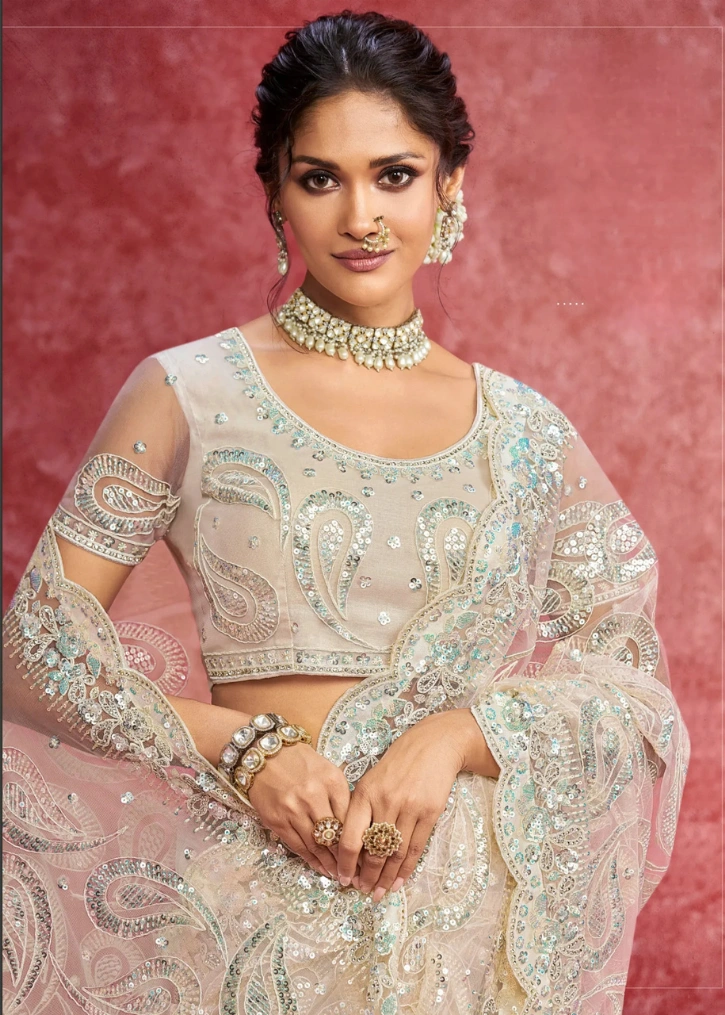
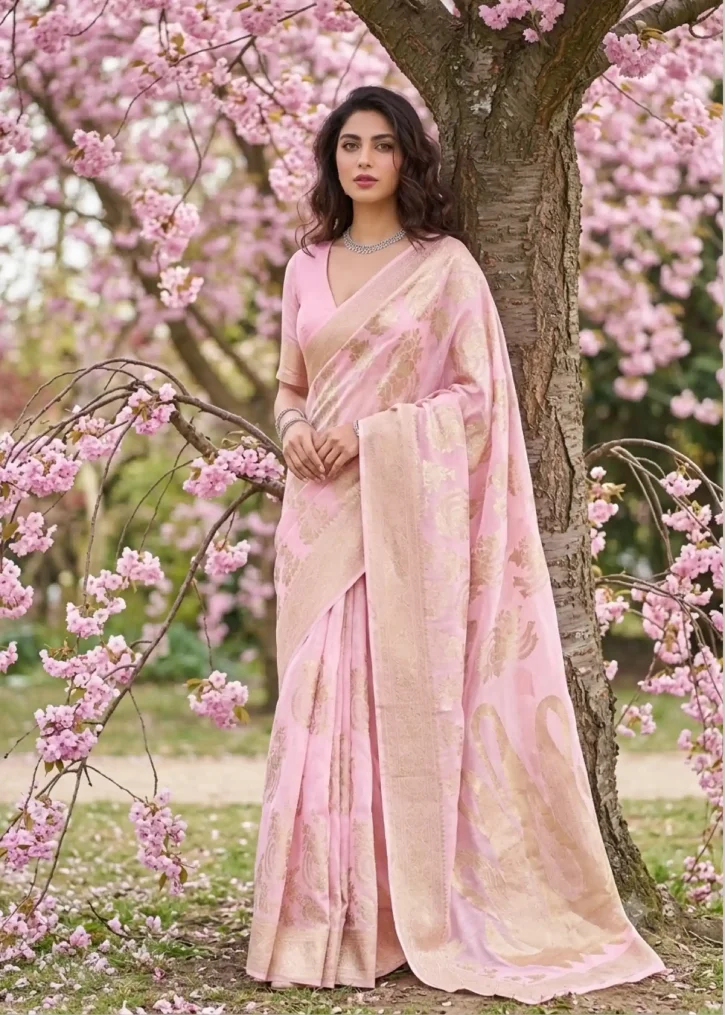
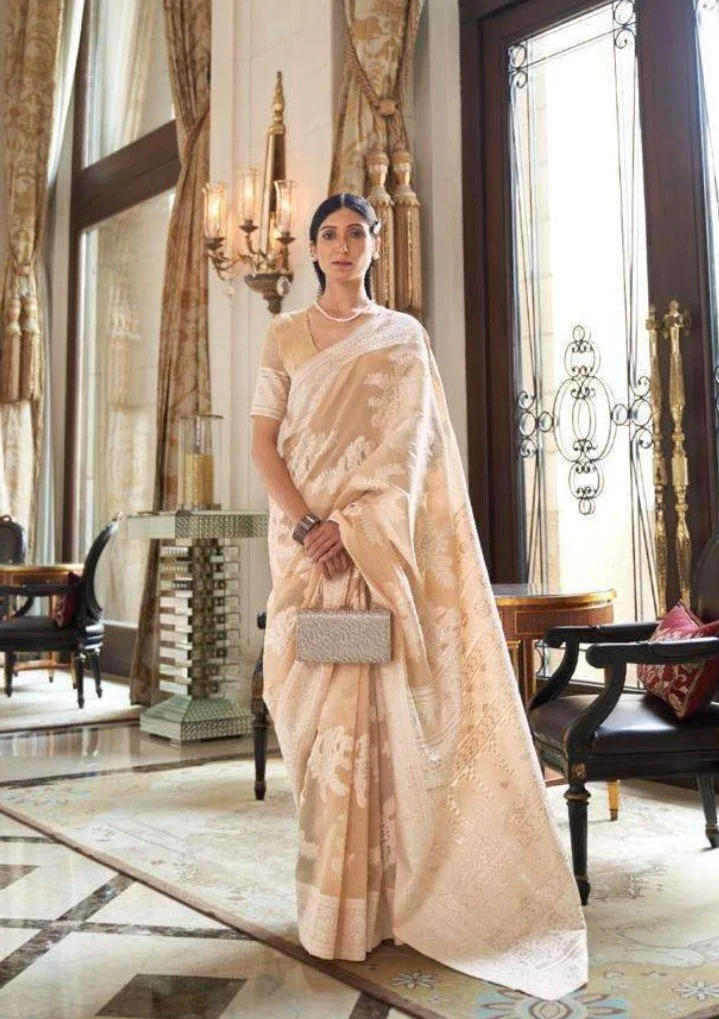
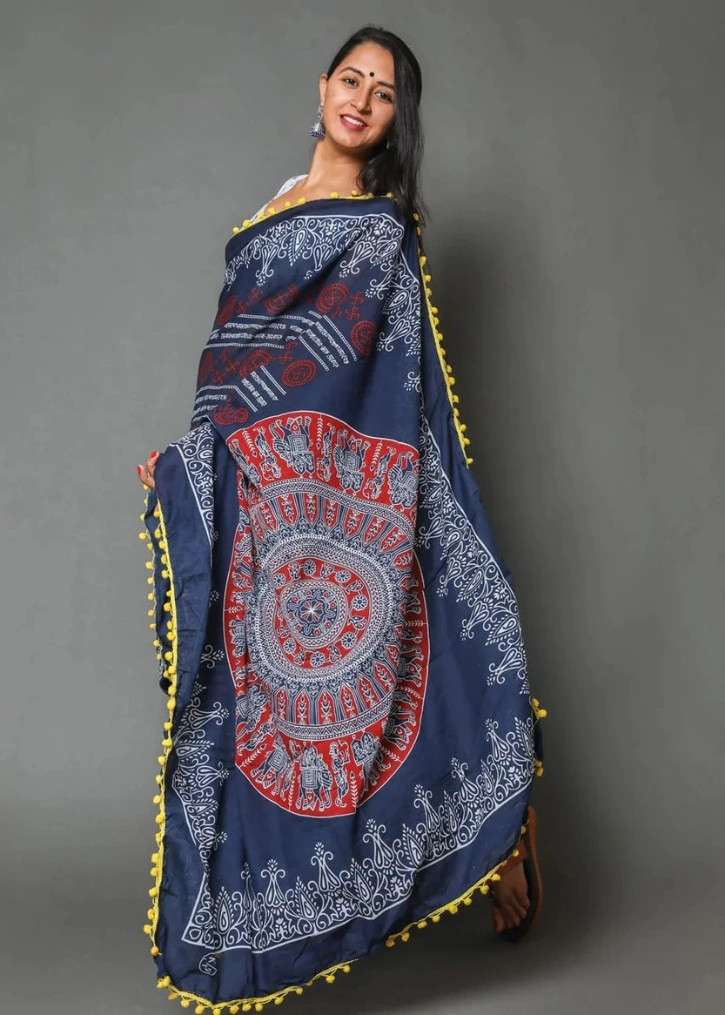
Showing all 11 results
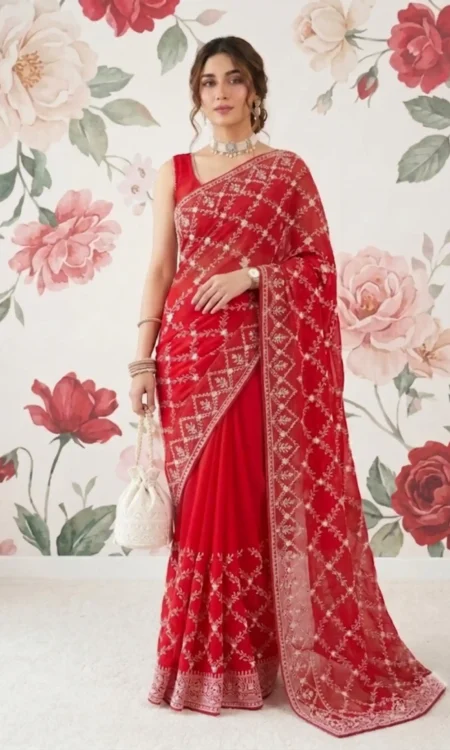
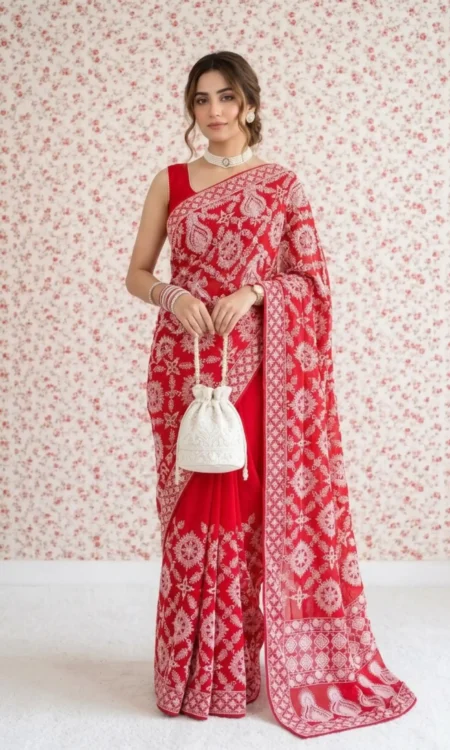
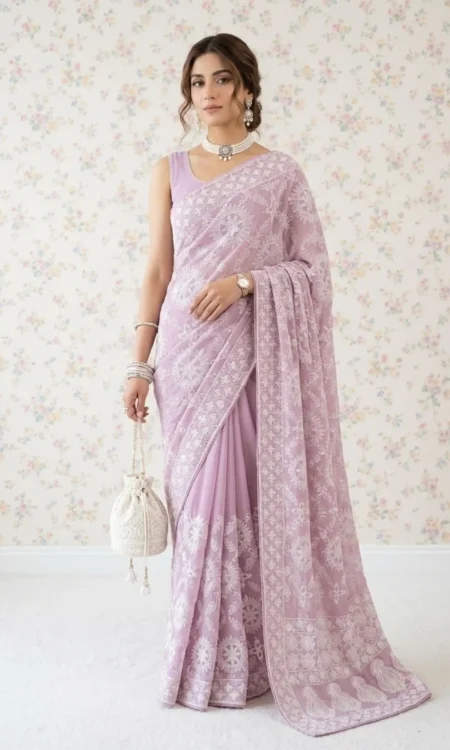
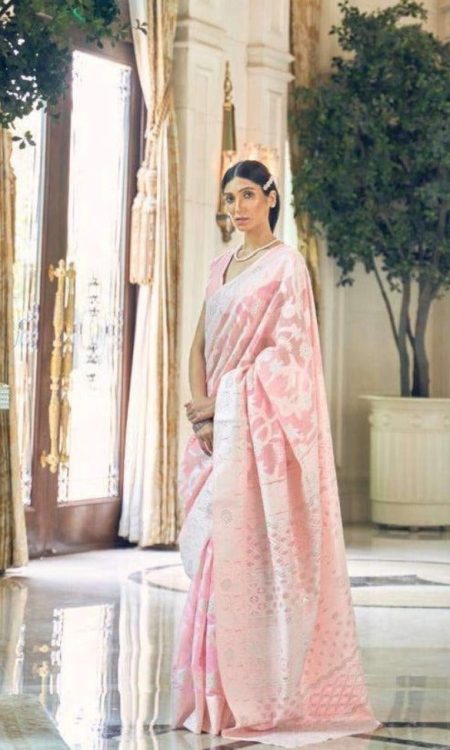
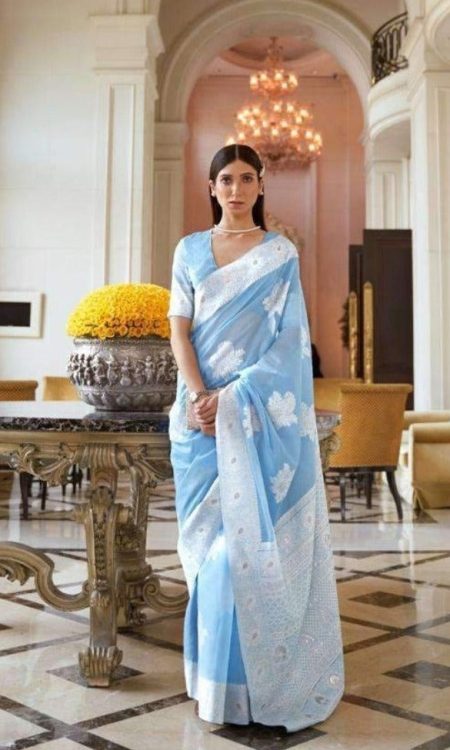
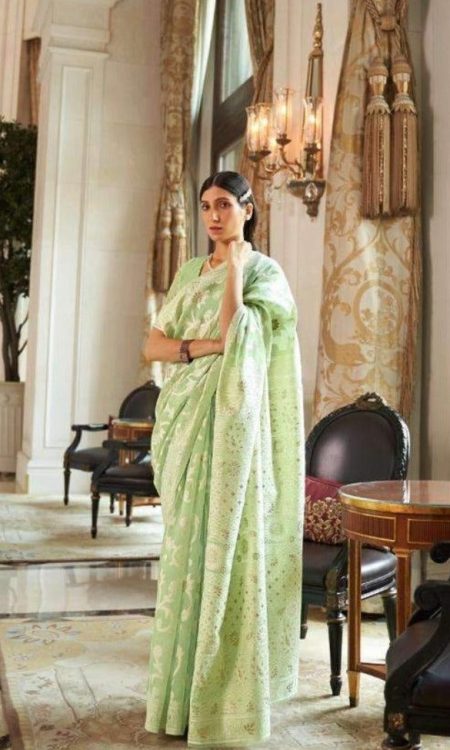
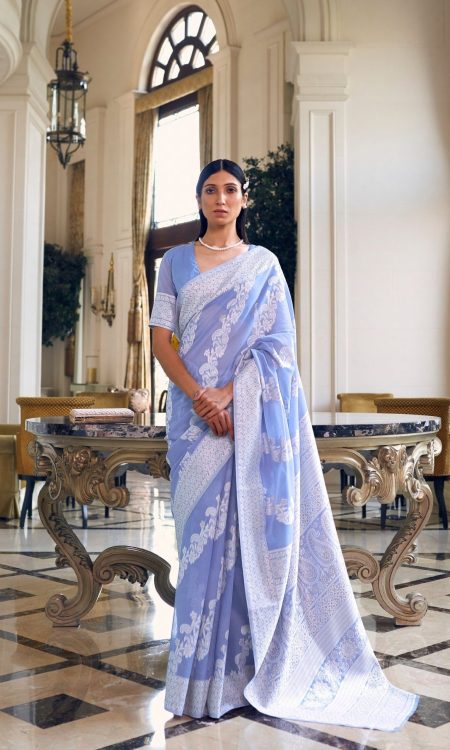
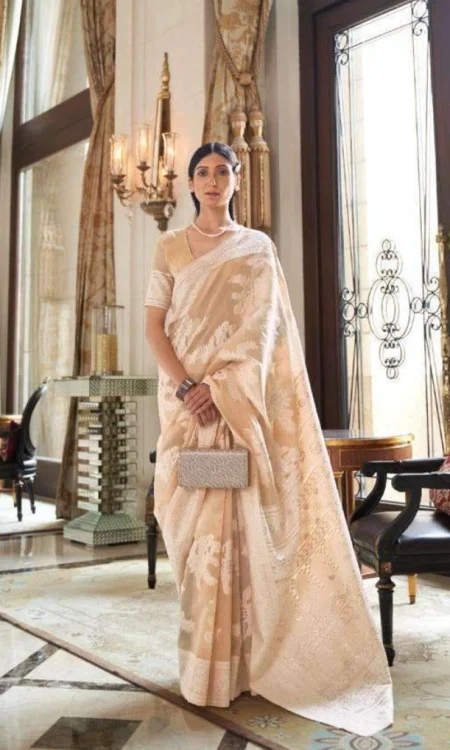
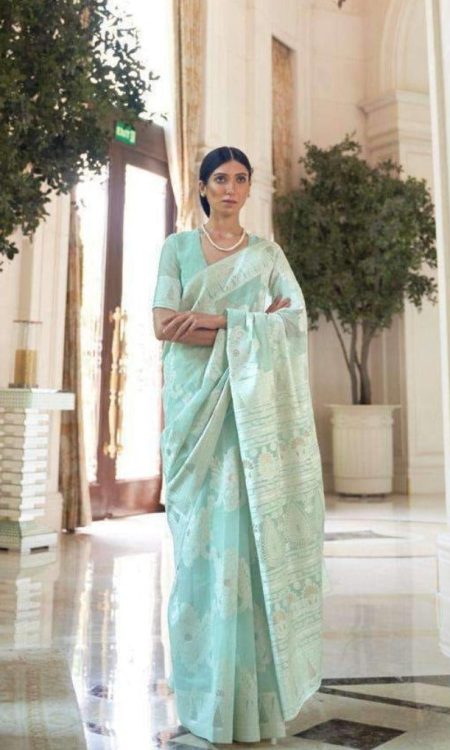
What Are Chikankari Sarees?
A Chikankari saree is a saree featuring Chikankari embroidery, a traditional Indian needlework craft associated particularly with Lucknow in Uttar Pradesh.
An important distinction is that Chikankari is the embroidery, not the fabric. A Chikankari saree may therefore be made using different base textiles. In the current collection, cotton and georgette are represented.
The appearance of a Chikankari saree can vary considerably depending on its fabric, embroidery coverage, motifs, colour and construction. This makes it useful to look beyond the word “Chikankari” and consider the individual product details when choosing a saree.
What Makes Chikankari Distinctive?
Chikankari is recognised for its delicate threadwork, intricate motifs and varied stitch vocabulary. Traditional examples are closely associated with fine white-on-white embroidery, while contemporary Chikankari can also appear in coloured fabrics and with coloured threads.
Floral and botanical forms are especially characteristic of the craft. Leaves, vines, creepers and paisley-inspired forms can create anything from subtle scattered details to more elaborate patterns.
The final appearance depends on how the embroidery interacts with the base fabric. A lightweight fabric can give the work a soft, flowing appearance, while a more structured textile can create a different visual effect.
Understanding Chikankari Embroidery
Chikankari embroidery involves a range of stitches and techniques rather than one single stitch.
Some commonly discussed Chikankari stitches include:
- Bakhiya – associated with shadow-work effects, where embroidery can create a subtle pattern through the fabric.
- Jali or Jaali – open, net-like work that creates a delicate patterned effect.
- Tepchi – a running-style stitch used in Chikankari work.
- Hool – an eyelet-style stitch that can create small open details.
- Murri – a small raised or knotted detail.
- Phanda – a knotted stitch used to create small raised elements.
Sources documenting Chikankari do not always use the same classification or number of stitches, so it is more accurate to discuss its varied stitch vocabulary than to assign one definitive stitch count.
For shoppers, the more useful consideration is how the embroidery appears on the particular saree: its density, motif placement, border, pallu and overall finish.
Fabrics Used for Chikankari Sarees
Because Chikankari refers to embroidery rather than a textile, the base fabric is an important part of choosing a saree.
Cotton Chikankari Sarees
Cotton offers a lighter, breathable character and can work particularly well for daytime dressing, everyday wear and warm-weather occasions. The current collection includes several cotton Chikankari sarees in soft and colourful shades.
Choose cotton when comfort and an easy daytime drape are priorities.
Georgette Chikankari Sarees
Georgette has a fluid drape and creates a different look from cotton. In the current collection, georgette Chikankari sarees are available in several richer colours, making them suitable for shoppers looking for a more flowing and occasion-oriented appearance.
Choose georgette when you prefer movement and a softer, more fluid fall.
Other Fabrics
Chikankari can also be found on textiles such as muslin, Chanderi, chiffon, organza, silk and tussar in traditional and contemporary applications. However, fabric availability varies by collection and product.
Always check the individual saree’s product specifications rather than assuming that every Chikankari saree is available in every fabric.
White-on-White and Contemporary Chikankari
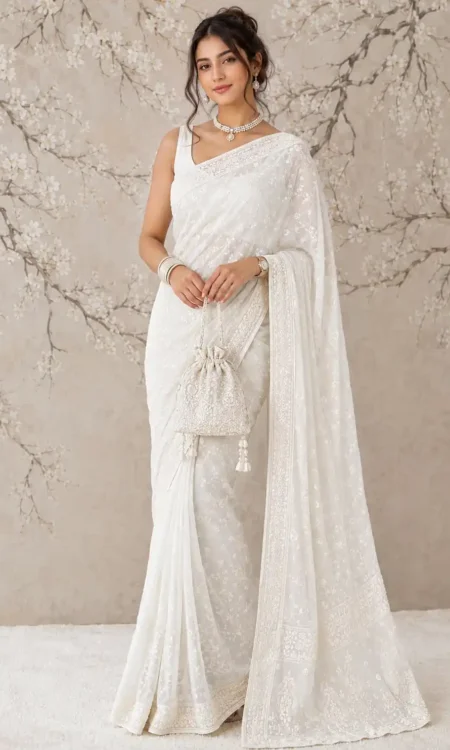
White-on-white embroidery is one of the best-known traditional expressions of Chikankari. White thread worked on a white or similarly light base can create a subtle, textured appearance where the embroidery is appreciated through stitch, shadow and surface detail.
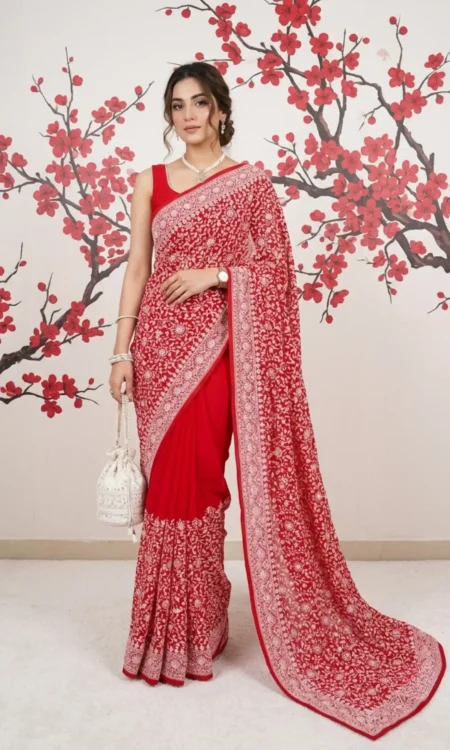
Contemporary Chikankari is broader than this classic expression. Coloured fabrics and coloured threads are also used, allowing the craft to appear in pastel, bright and deeper colour palettes.
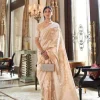
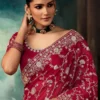
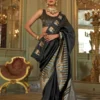
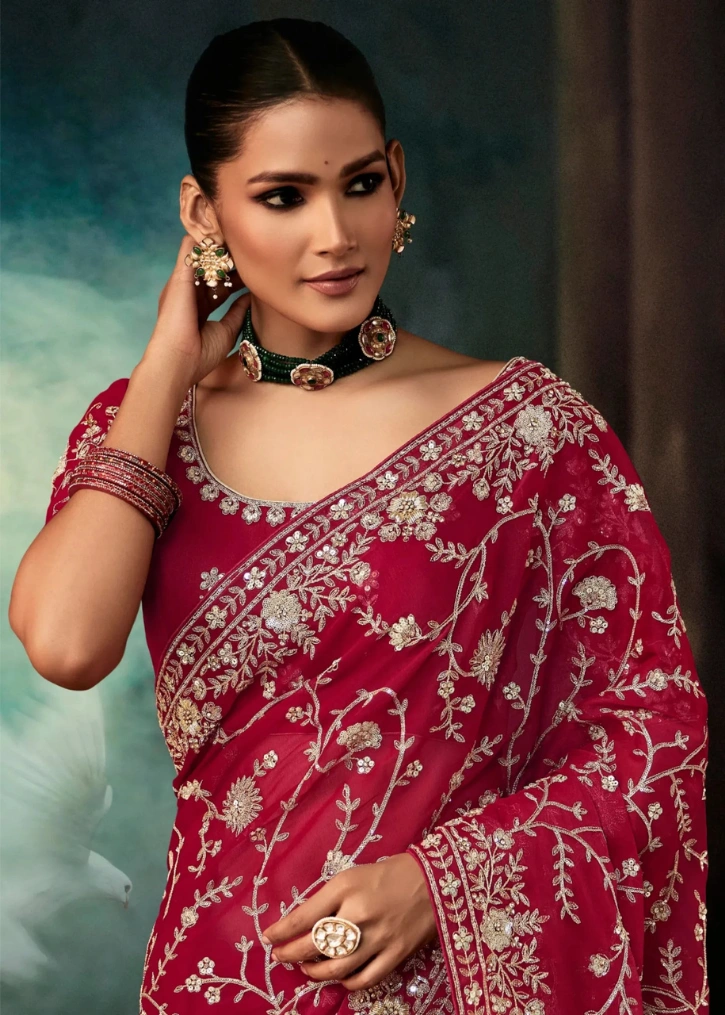
The current collection reflects this contemporary range, including white, red, lavender, pink, blue and green-toned sarees.
Chikankari Stitches and Motifs
The beauty of Chikankari often comes from the relationship between its stitches and motifs.
Floral and botanical designs are commonly associated with the craft. Leaves, vines, creepers and paisley-like forms can be arranged as small scattered motifs, borders or more continuous patterns.
Stitching can also change the character of the design. Shadow work can create depth without heavy surface decoration, while open Jali work introduces a lighter, net-like effect.
Because embroidery placement is product-specific, compare the actual images and descriptions of each saree rather than assuming that every Chikankari design contains the same motifs or stitch techniques.
Hand-Embroidered vs Machine Chikankari
The term Chikankari identifies an embroidery tradition, but it should not automatically be interpreted as a guarantee that every product marketed with the term is hand embroidered.
Products can differ in how their embroidery or decorative work is produced. Hand embroidery, machine embroidery, printed designs and Chikankari-inspired patterns should therefore not be treated as identical.
When handwork is important to your purchase decision, look for product-specific information about the embroidery method. Product descriptions, close-up images, construction details and any available documentation can all help you make a more informed comparison.
A single visual characteristic should not be treated as conclusive proof of authenticity or hand embroidery.
For this collection, rely on the individual product description and specifications for any product-specific handwork claim.
Why Is Chikankari Associated With Lucknow?
Chikankari has a strong cultural and historical association with Lucknow, the capital of Uttar Pradesh. Lucknow became an important centre for the development and continuation of Chikan embroidery, and the craft remains closely connected with the city’s textile and cultural identity.
The deeper origins of Chikankari are less straightforward. Historical accounts include different narratives concerning Persian influence, Mughal-era culture and the development of the craft in the Lucknow region. These accounts should be understood as historical narratives rather than presented as one undisputed origin story.
The terminology Lucknowi Chikankari is commonly used in commerce to describe Chikankari associated with Lucknow. It should not, however, be treated as automatically equivalent to GI authorization.
A Note on Lucknow Chikan Craft
Lucknow Chikan Craft is the official name of a registered Geographical Indication associated with the handicraft tradition in Uttar Pradesh.
The existence of this GI does not mean that every product sold using the general term “Chikankari” is automatically GI-certified or produced by an authorized GI user. For that reason, GI status should only be claimed for a particular product or seller when supporting evidence exists.
How to Choose a Chikankari Saree
Choosing a Chikankari saree becomes easier when you compare the product beyond its colour or overall appearance.
1. Start With the Fabric
Consider how you want the saree to feel and drape.
- Choose cotton for a lighter, comfortable daytime option.
- Choose georgette when you prefer a fluid drape and more movement.
For other fabrics, check the individual product composition and care instructions.
2. Look at the Embroidery
Consider whether you prefer:
- Lightly scattered motifs
- Border-focused embroidery
- More extensive surface work
- Floral patterns
- Open Jali-style details
- Subtle tonal embroidery
3. Consider Colour
The collection includes both light and stronger colour options. A white or pastel saree can create a softer daytime appearance, while deeper colours can give the embroidery a stronger visual presence.
4. Check the Product Details
Before purchasing, review:
- Fabric
- Saree length
- Blouse piece information
- Embroidery description
- Colour
- Border
- Pallu
- Weight
- Care instructions
These details can differ from one saree to another.
5. Consider the Occasion
Think about where you are most likely to wear the saree. A lightweight cotton style may suit daytime or work settings, while a flowing georgette style may work better when you want a more dressed-up appearance.
When to Wear a Chikankari Saree
Chikankari sarees can work across different occasions depending on their fabric, colour and embroidery density.
Everyday and Daytime Wear
Cotton Chikankari sarees with lighter embroidery can be practical for relaxed daytime dressing, particularly when comfort is a priority.
Office Wear
For a professional setting, consider softer colours, balanced embroidery and understated accessories. A clean blouse and simple jewellery can keep the overall look polished without overwhelming the embroidery.
Family Gatherings and Day Events
Pastel, white and lightly coloured Chikankari sarees can work well for daytime family occasions and informal celebrations.
Festive Occasions
Choose based on the individual design rather than the Chikankari label alone. Deeper colours, more visible embroidery or a dressier fabric can create a more festive appearance.
Wedding Guest Dressing
Chikankari can be appropriate for wedding guest dressing when the individual saree has the right colour, embroidery coverage and overall formality. Not every Chikankari saree is intended as bridal or wedding wear, so choose according to the occasion and product design.
How to Style a Chikankari Saree
Let the embroidery determine how much additional detail you introduce.
Blouse
A matching blouse creates a coordinated look, while a contrasting solid blouse can make the embroidery more noticeable. Keep the blouse relatively simple when the saree already has substantial surface work.
Jewellery
Pearls, delicate gold jewellery or understated traditional pieces can complement lighter Chikankari designs. For a stronger evening look, consider statement jewellery if it does not compete with the embroidery.
Footwear
Classic sandals, understated ethnic footwear or simple heels can work depending on the occasion.
Bag
A structured clutch or compact traditional bag can suit a more formal look, while a simpler handbag may work better for daytime dressing.
Draping
A clean, well-defined drape allows the embroidery on the body, border and pallu to remain visible. Avoid excessive layering if it hides important design details.
Hair
A low bun or simple traditional hairstyle works well for an understated occasion look, while soft waves can give the saree a more contemporary feel.
How to Care for a Chikankari Saree
Care should be determined by the base fabric, embroidery, thread, embellishment and product construction.
There is no single washing method that should automatically be applied to every Chikankari saree.
For each saree:
- Check the product-specific care instructions first.
- Avoid rough handling of embroidered areas.
- Do not brush, twist or squeeze delicate embroidered fabric unnecessarily.
- Avoid harsh cleaning products unless specifically recommended for the fabric.
- Protect the embroidery when storing the saree.
- Follow professional-care recommendations when specified for the product.
For example, care requirements for a georgette Chikankari saree may differ from those of a cotton saree. Always prioritize the instructions supplied with the individual product.
Frequently Asked Questions
What is a Chikankari saree?
A Chikankari saree is a saree featuring Chikankari embroidery, a traditional Indian embroidery craft strongly associated with Lucknow. Chikankari describes the embroidery rather than the base fabric.
Is Chikankari a fabric?
No. Chikankari is an embroidery and craft tradition. The saree itself can use different fabrics, depending on the product.
Where is Chikankari associated with?
Chikankari is particularly associated with Lucknow in Uttar Pradesh, which has become an important centre of the craft and its cultural identity.
What is Lucknow Chikan Craft?
Lucknow Chikan Craft is the official name of a registered Geographical Indication associated with the Chikan handicraft tradition in Uttar Pradesh.
Is every Chikankari saree GI certified?
No. The existence of the Lucknow Chikan Craft GI does not automatically mean that every saree marketed as Chikankari is GI-certified or produced by an authorized GI user.
Is Chikankari always hand embroidered?
Not necessarily. The term Chikankari identifies the embroidery tradition and should not by itself be treated as proof that a particular product is hand embroidered. Check the product-specific description and documentation for handwork claims.
What fabrics are used for Chikankari sarees?
Chikankari can be found on cotton, muslin, Chanderi, georgette, chiffon, organza, silk, tussar and other textiles. The available fabric depends on the individual collection and product.
Is Chikankari always white?
No. White-on-white is a well-known traditional expression of Chikankari, but contemporary Chikankari is also produced on coloured fabrics and with coloured threads.
What stitches are used in Chikankari?
Commonly discussed stitches include Bakhiya, Jali or Jaali, Tepchi, Hool, Murri and Phanda. Different sources classify the wider Chikankari stitch vocabulary differently.
What motifs are common in Chikankari?
Floral and botanical motifs are strongly associated with Chikankari. Leaves, vines, creepers and paisley-inspired forms are also commonly seen, although motifs vary between products.
How do I choose a Chikankari saree?
Compare the base fabric, embroidery coverage, stitch and motif details, colour, border, pallu, blouse information, occasion and care requirements. Product-specific specifications are more useful than relying on the Chikankari label alone.
How should I care for a Chikankari saree?
Follow the individual product’s care instructions because requirements vary according to fabric, embroidery and construction. Avoid rough handling and protect the embroidered areas during cleaning and storage.
Explore Related Saree Collections
If you are comparing Chikankari with other saree styles, explore related collections based on the characteristic that matters most to you.
- Cotton Sarees — for more cotton-based saree options.
- Embroidered Sarees — for a broader selection of embroidery-focused sarees.
- Saree Fabric Guide — for help comparing the characteristics of different saree fabrics.
- Saree Draping Guide — for practical ideas on styling and draping sarees.
Explore the Chikankari collection to compare individual designs, fabrics, colours and embroidery details and select the saree that best fits your wardrobe and occasion.