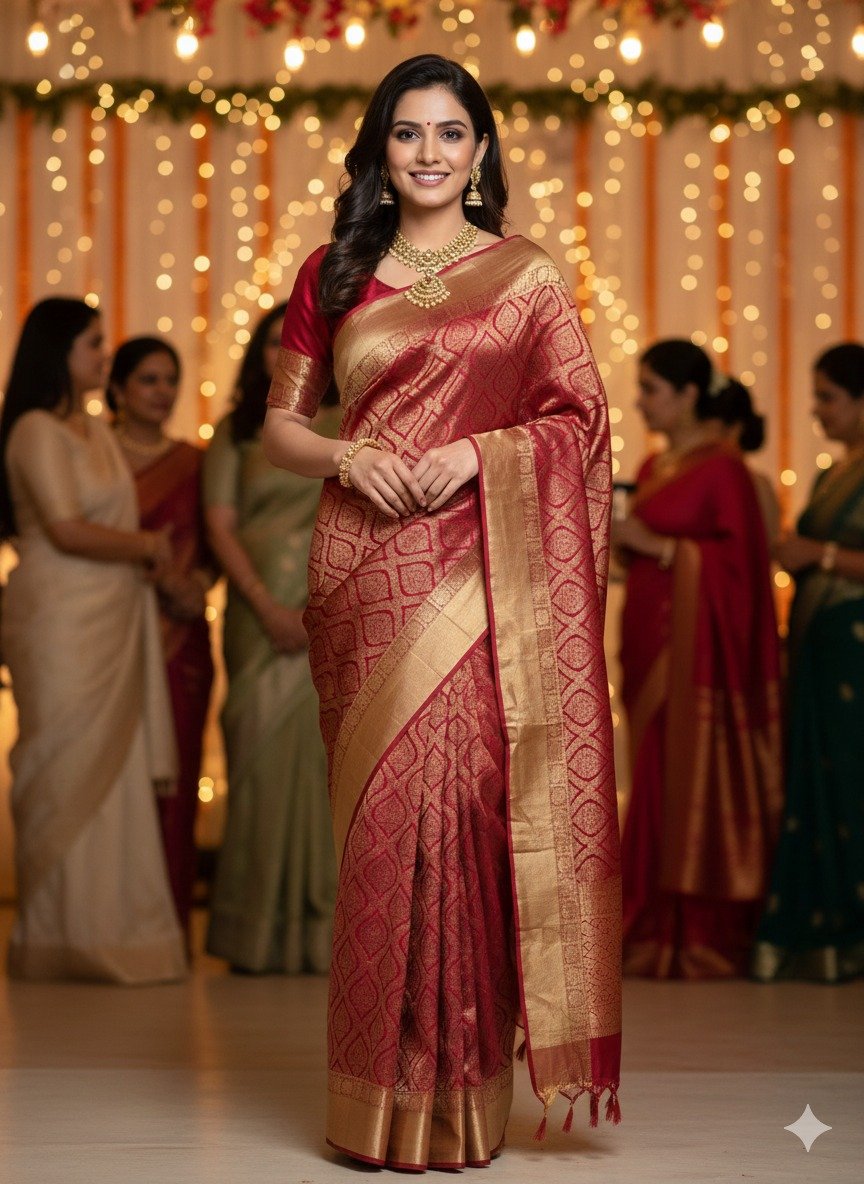
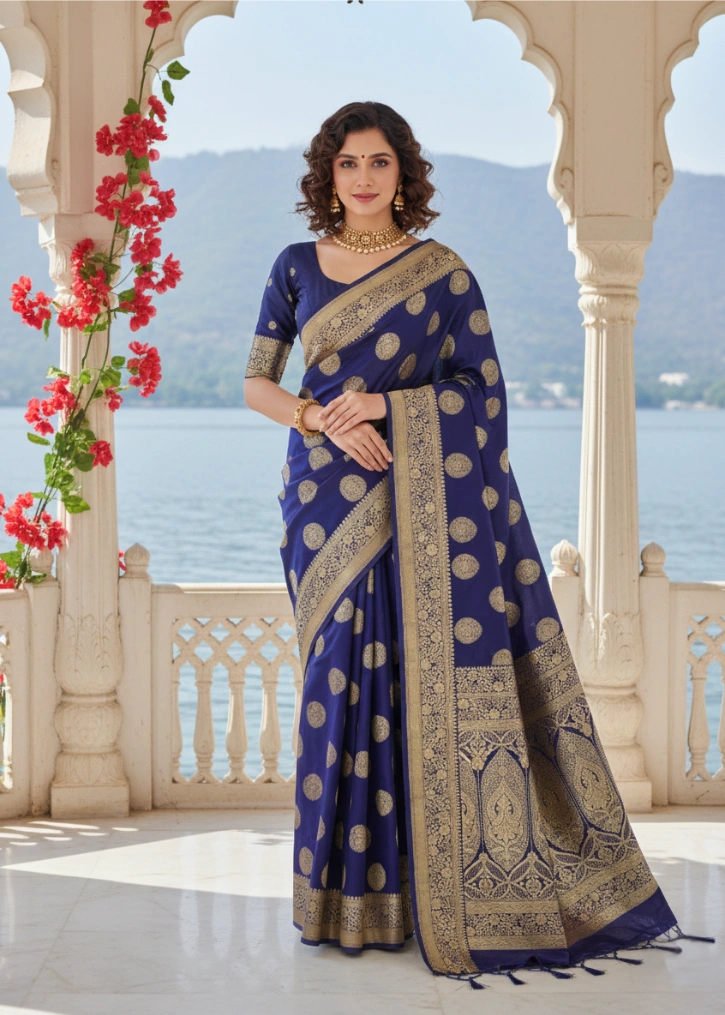
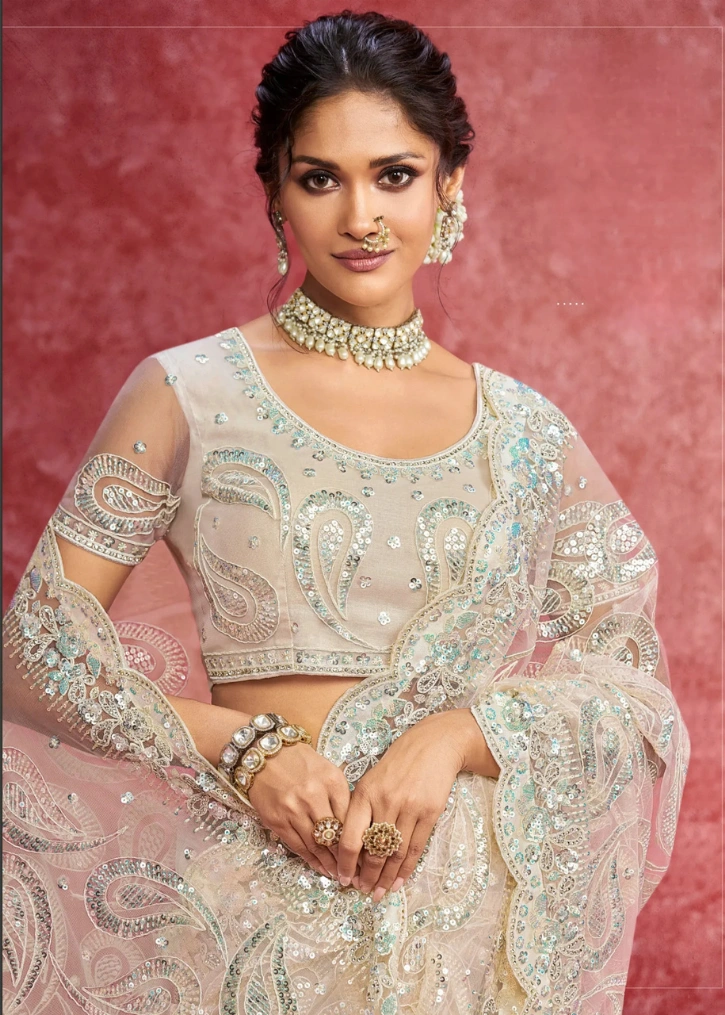
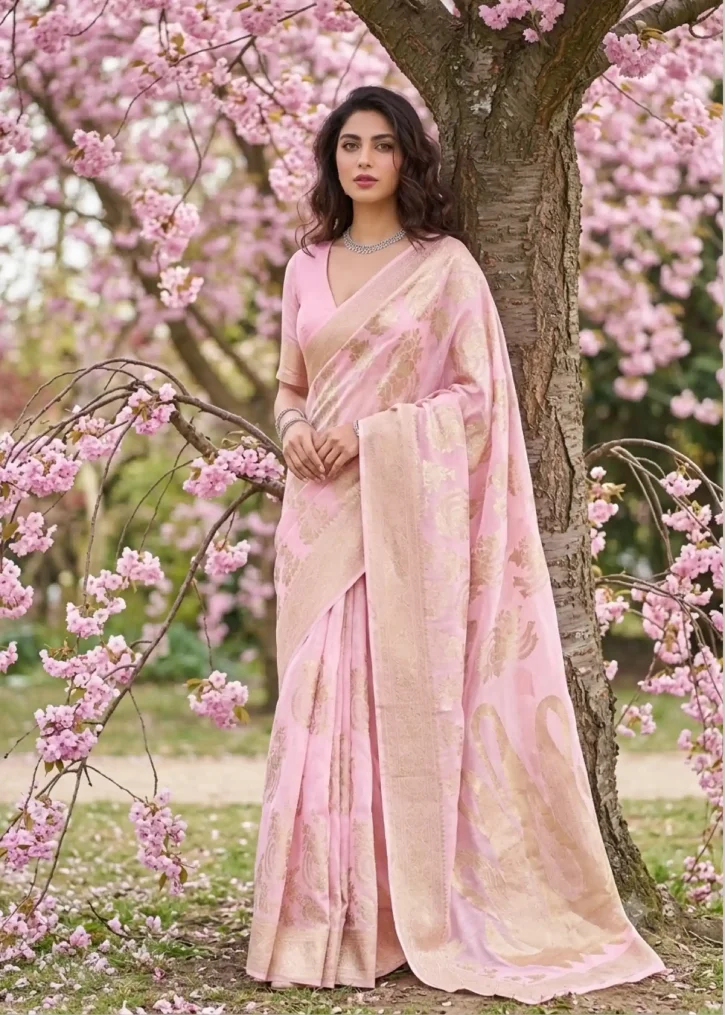
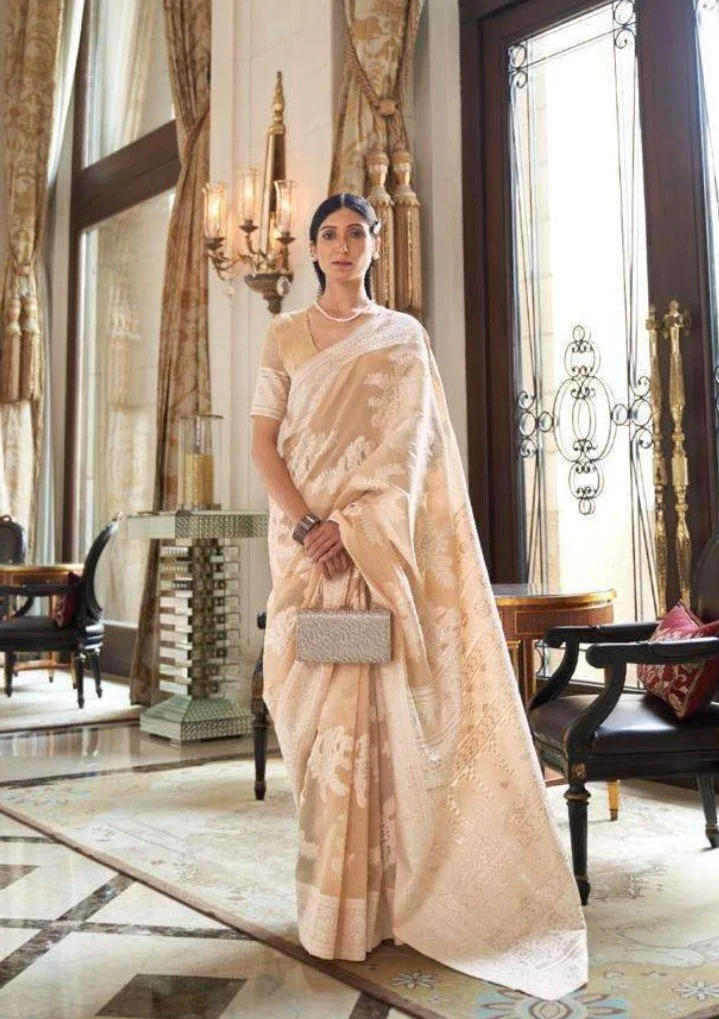
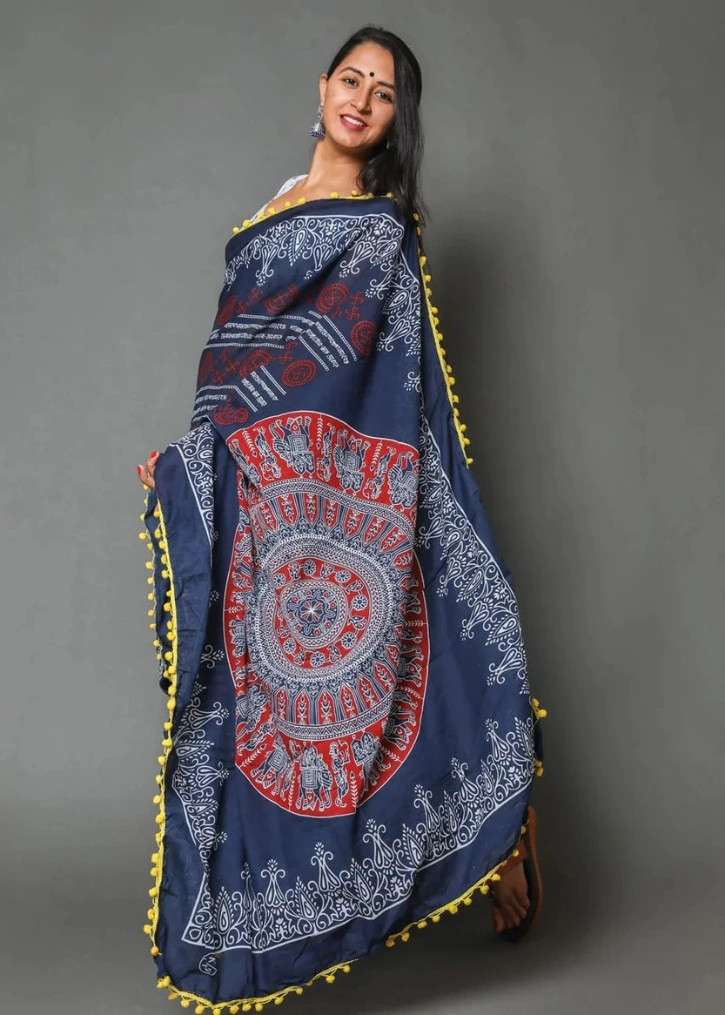
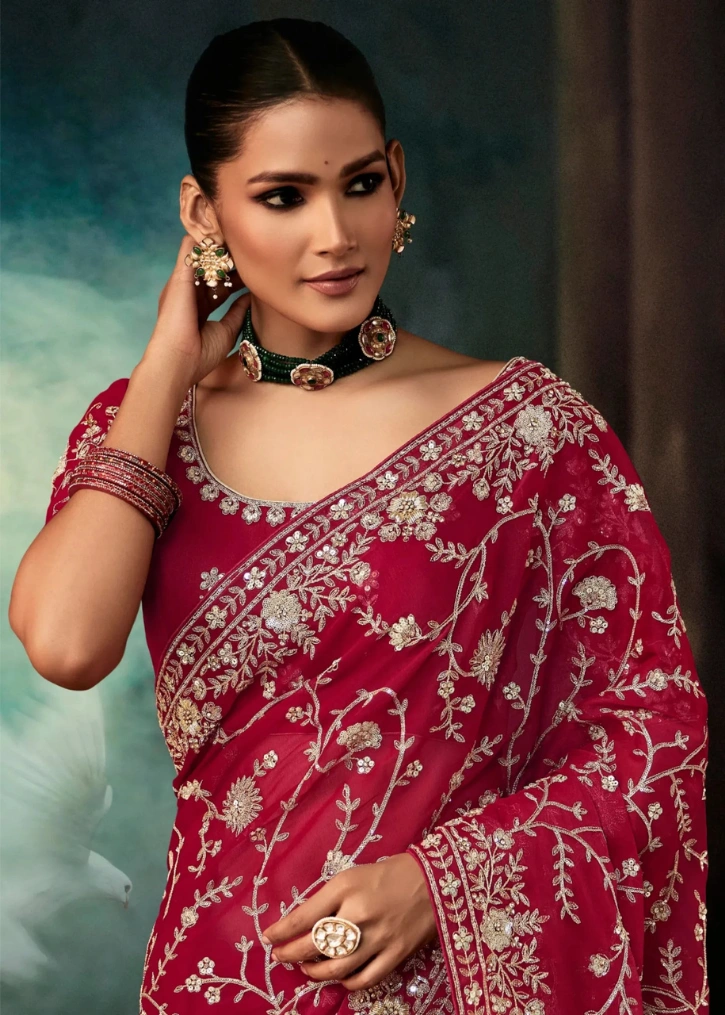
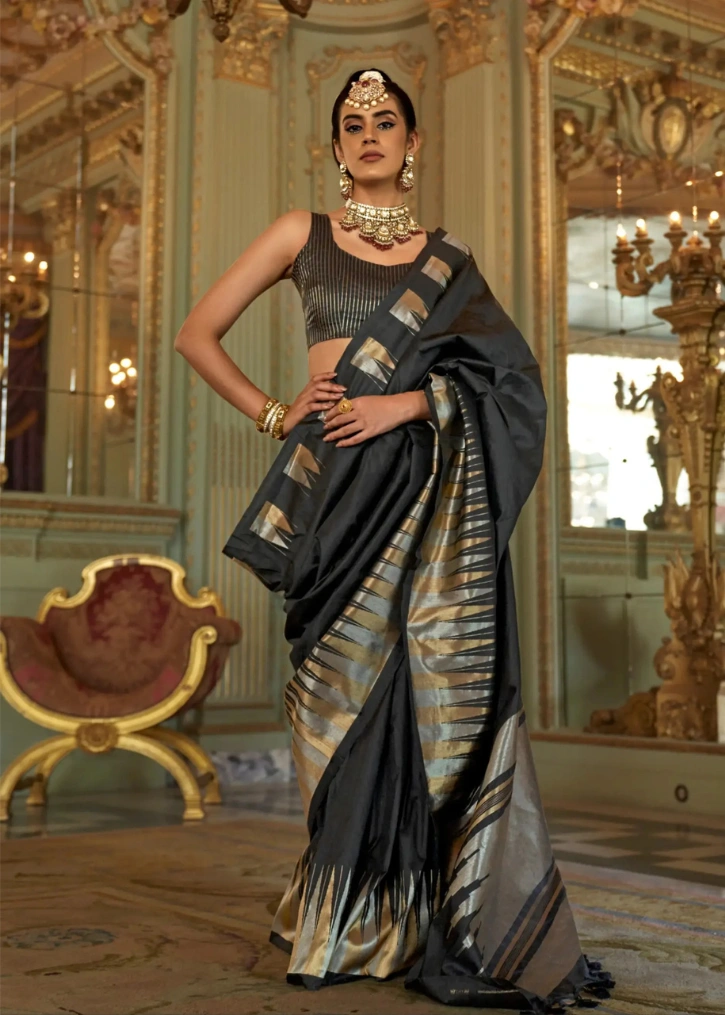
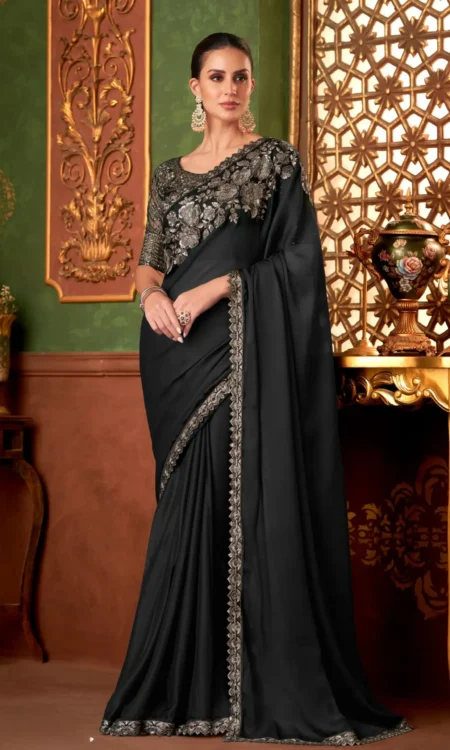
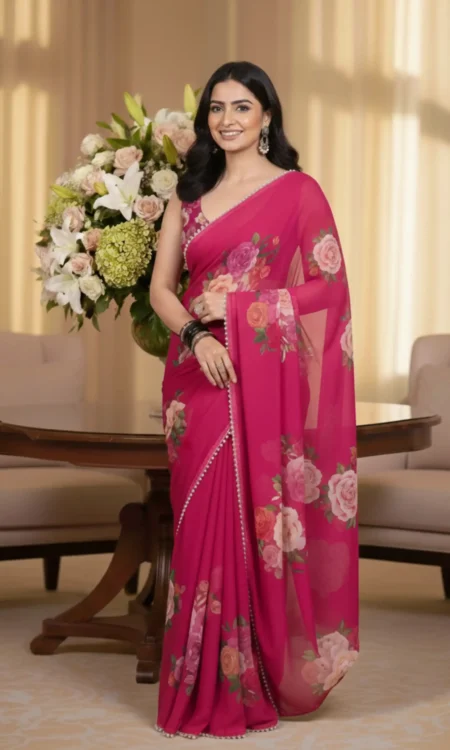
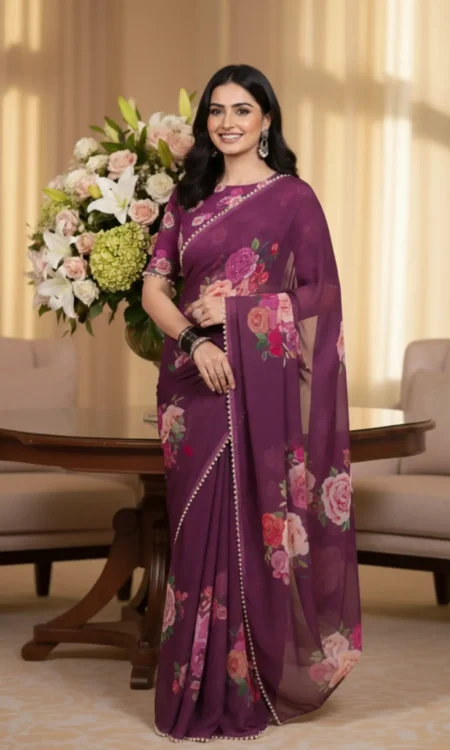
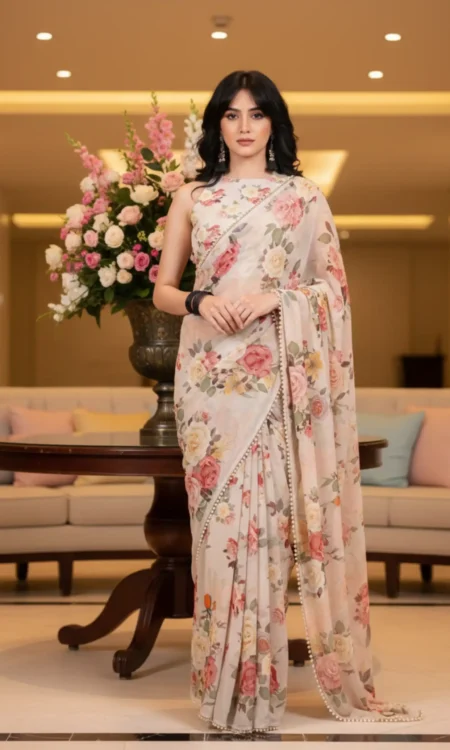
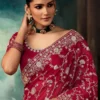
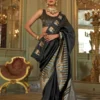
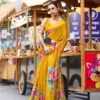
What Are Chiffon Sarees?
A
chiffon saree is a saree made using chiffon fabric. Chiffon is generally known for its fine, lightweight character, fluid drape and sheer or translucent appearance.
Importantly,
chiffon is not a fiber. It describes a fabric category associated with a fine plain-weave construction and highly twisted yarns. Different fibers can be used to produce chiffon, including silk and manufactured fibers such as polyester or nylon.
For a shopper, this means that two sarees both described as chiffon can still differ in feel, appearance, transparency, weight and care requirements depending on their fiber composition, construction, finishing and embellishment.
What Is Chiffon Fabric?
Chiffon is generally a fine, sheer fabric made using a plain weave and highly twisted yarns. The yarn characteristics and fabric construction contribute to the delicate surface, lightness and fluid movement commonly associated with chiffon.
Chiffon's construction should not be confused with its fiber content:
Fiber → yarn → fabric construction → finished saree
For example, silk can be used to make chiffon, producing silk chiffon. Manufactured fibers can also be used to make chiffon.
This is why the word
"chiffon" alone does not tell you whether a saree is silk, polyester, nylon, viscose or another composition. For an individual saree, the stated material and fiber information should take priority.
What Makes Chiffon Different?
The characteristics most relevant when shopping for a chiffon saree are:
- Lightness: Chiffon is generally associated with a lightweight fabric character.
- Fluidity: It tends to fall softly rather than holding a rigid silhouette.
- Drape: Pleats and the pallu can have a flowing appearance.
- Sheerness: Chiffon is generally sheer or translucent, although the actual degree of transparency varies.
- Texture: The surface can have a fine, delicate and subtly crepe-like character.
- Movement: Its fluid construction can create visible movement in the pallu and pleats.
- Structure: Compared with a crisp fabric such as organza, chiffon generally provides a softer and less structured drape.
The exact behaviour of an individual saree can vary with fiber, yarn, density, finishing, colour and embellishment.
Chiffon Drape
If your priority is a saree with
soft, flowing movement, chiffon is a useful fabric to consider.
Its fluid character can work particularly well with:
- Neat Nivi-style pleats
- A softly falling pallu
- Controlled pallu pinning
- Simple, movement-friendly styling
- Layered blouse and petticoat combinations suited to the saree's transparency
Chiffon does not automatically make draping effortless. The fabric's sheerness, delicacy and fluidity can make careful pleating and secure pinning useful, particularly when wearing jewelry that could catch the fabric.
Chiffon Weight
Chiffon is generally regarded as a lightweight fabric, but
fabric weight should not be confused with the total weight of a finished saree.
The current Sarees By Muhurat chiffon products inspected during research are listed at around
600 grams per saree, with saree lengths of approximately
5.4–5.5 metres. This is a product-level specification and should not be interpreted as a chiffon fabric GSM measurement.
Individual sarees can feel different depending on their composition, construction, border, blouse piece and any additional detailing.
Is Chiffon Sheer?
Generally, yes. Chiffon is typically sheer or translucent, but the degree of transparency varies between fabrics and products.
Transparency can be influenced by:
- Fiber composition
- Yarn characteristics
- Fabric density
- Construction
- Colour
- Finishing
- Layering
When choosing a chiffon saree, consider how much coverage you want from the overall outfit. The blouse, petticoat and other layers can affect the finished appearance.
Do not assume that every chiffon saree has exactly the same level of transparency.
What Does Chiffon Feel Like?
Chiffon generally has a
fine, delicate and lightweight fabric character, with a fluid surface rather than a crisp, structured hand.
It should not automatically be described as silky or satin-like. Those terms can imply particular fibers or fabric constructions that are not established simply because a saree is chiffon.
The feel of an individual chiffon saree depends on its fiber, yarn, construction and finishing.
Silk Chiffon vs Synthetic Chiffon
Chiffon can be produced using different fibers.
| Feature |
Silk Chiffon |
Synthetic Chiffon |
| Fiber |
Silk |
Manufactured fiber such as polyester or nylon |
| Drape |
Fluid |
Can also be fluid |
| Feel |
Influenced by natural silk characteristics |
Influenced by the specific synthetic fiber and finish |
| Sheerness |
Can be very sheer |
Varies by construction |
| Sheen |
Depends on silk and finishing |
Depends on fiber and finishing |
| Care |
May require more careful handling |
Depends on the specific product |
| Price |
Genuine silk can increase cost |
Wide range depending on material and manufacture |
Neither should automatically be treated as universally better.
If a product is described as silk chiffon, check the stated material information rather than relying only on appearance or touch. The same principle applies to synthetic or blended composition claims.
Chiffon vs Georgette
Chiffon and georgette can both create flowing sarees, but they have different fabric characteristics.
| Characteristic |
Chiffon |
Georgette |
| Construction |
Fine plain weave with highly twisted yarns |
Crepe fabric using highly twisted yarns |
| Surface |
Fine and delicate |
More pronounced crepe or pebbled character |
| Drape |
Very fluid |
Fluid with somewhat more body |
| Weight |
Generally lighter |
Generally more substantial |
| Sheerness |
Usually more sheer |
Often less transparent |
| Styling effect |
Soft and floating |
Textured and flowing |
A simple shopping distinction is:
Choose chiffon when you want a lighter, softer and more fluid-looking drape. Consider georgette when you want more surface texture and body while retaining flowing movement.
The exact result still depends on the individual fabric.
Chiffon vs Crepe
"Crepe" is a broader fabric category rather than one single standardized fabric.
Chiffon is generally associated with a very fine, sheer plain-weave construction using highly twisted yarns. Crepe can be produced through different constructions, yarn characteristics and finishing techniques that create a crêped or pebbled surface.
For shoppers, the useful distinction is:
- Chiffon: generally emphasizes lightness, sheerness and fluid movement.
- Crepe: can provide a broader range of surface texture, opacity, weight and body depending on the specific fabric.
Avoid choosing solely from the word "crepe" without checking the actual product description.
Chiffon vs Organza
The clearest difference between chiffon and organza is
structure.
| Characteristic |
Chiffon |
Organza |
| Drape |
Fluid |
More structured |
| Hand |
Soft/delicate |
Crisp |
| Sheerness |
High |
High |
| Shape retention |
Lower |
Higher |
| Volume |
Generally softer and flatter |
Can create more volume |
| Visual effect |
Flowing |
Crisp and architectural |
In simple terms:
Chiffon flows; organza holds more shape.
If you prefer soft pleats and a fluid pallu, chiffon may be the more appropriate starting point. If you want crisp structure and defined volume, organza offers a different fabric behaviour.
Chiffon Sarees by Design
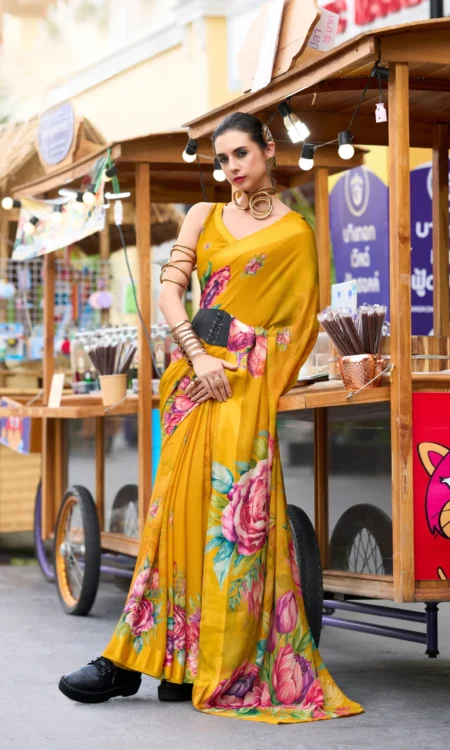
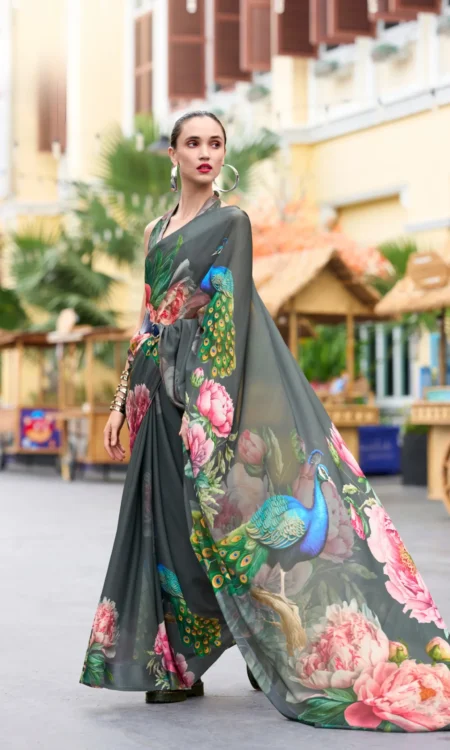
The current Sarees By Muhurat chiffon assortment has a distinctly
printed and floral-led identity.
Floral Printed Chiffon Sarees
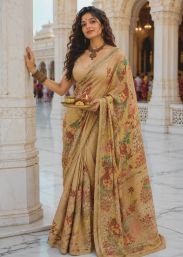
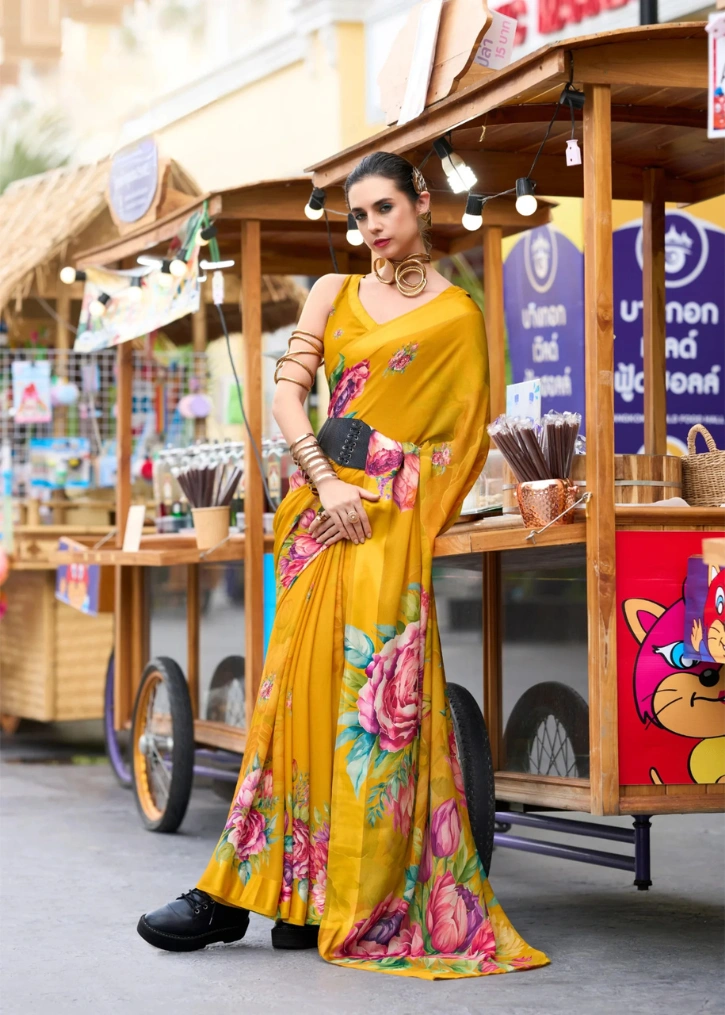
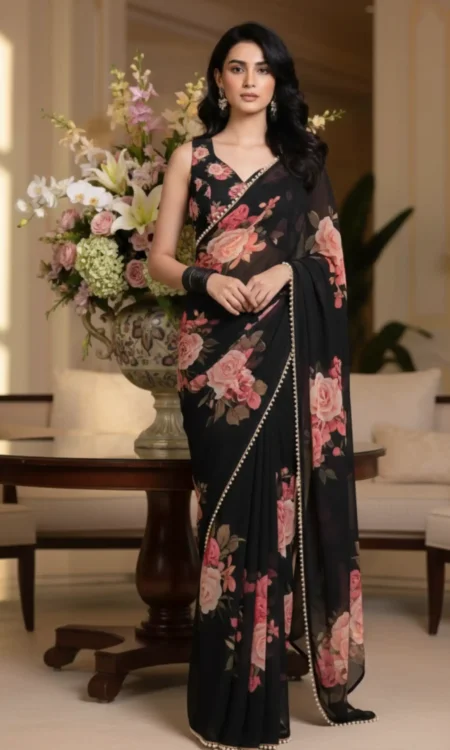
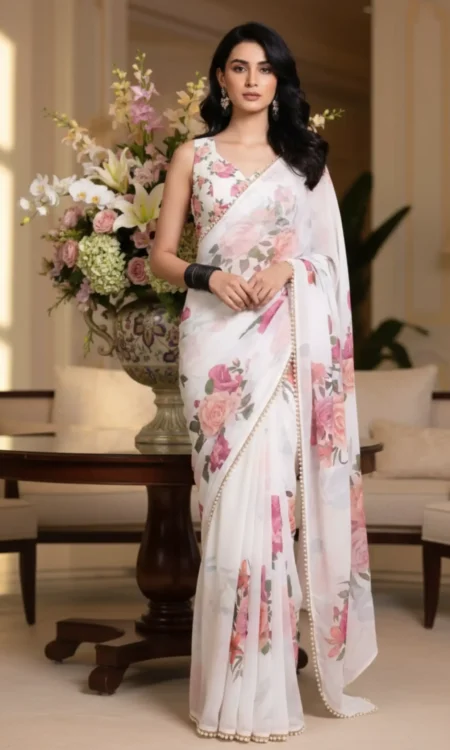
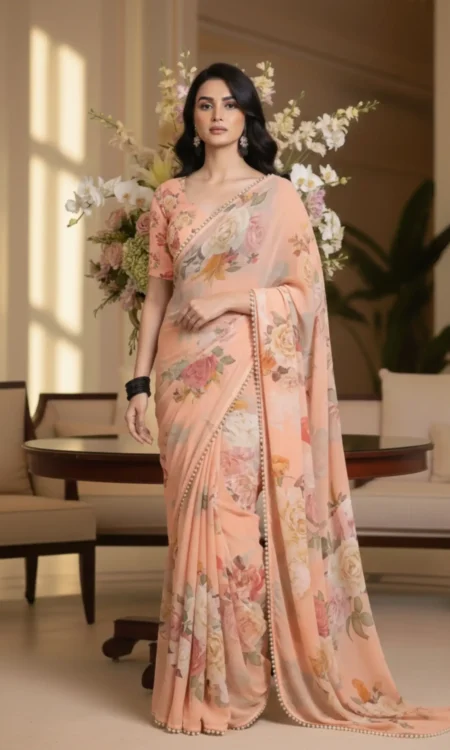
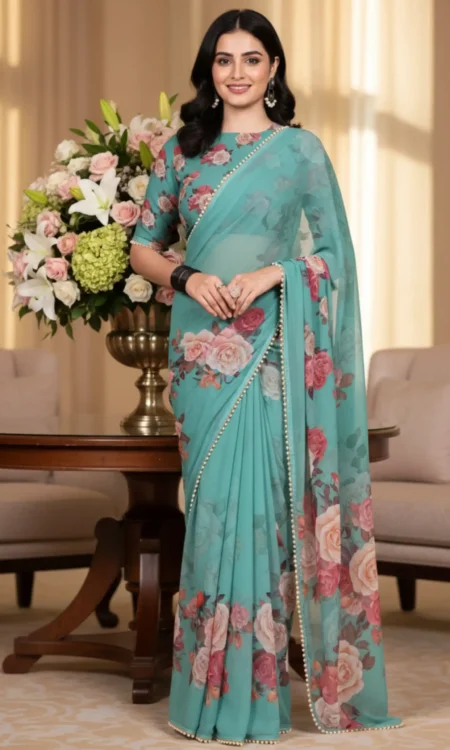
Floral designs form the main visual direction of the current collection. These range across different colour combinations, from softer shades to stronger and darker colourways.
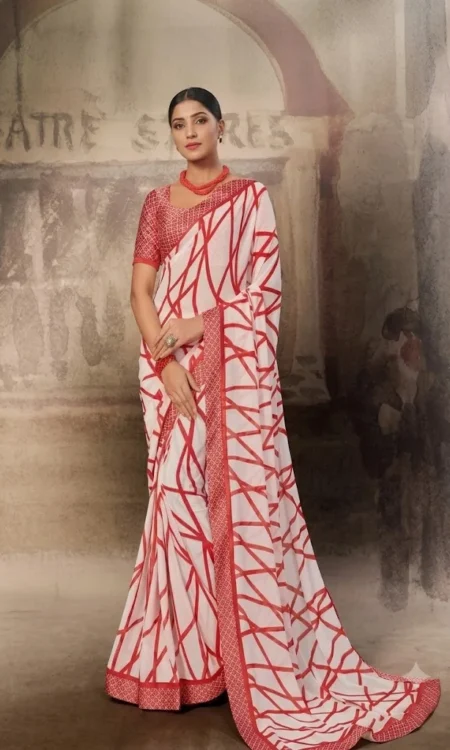
Contemporary Printed Chiffon
The assortment also includes a red-and-white crisscross/stripe design, giving the collection a geometric direction alongside the predominantly floral selection.
Pearl Borders
Several current floral chiffon sarees feature pearl-style borders. A border can visually frame the saree and create more definition around the edge.
Borderless Chiffon Sarees
Some current designs are borderless, allowing the printed body to remain the main visual focus.
Pallu
Most of the current floral chiffon products use a pallu that follows the body design rather than introducing a dramatically contrasting pallu.
Blouse Pieces
Most inspected floral products include an
unstitched floral blouse piece of approximately 90 cm. The red-and-white crisscross design has a printed blouse piece listed at approximately 75–85 cm.
Always check the individual product listing for the exact blouse specification.
Chiffon Sarees for Different Occasions
Chiffon itself does not determine the occasion. The
print, colour, border, blouse, embellishment and styling all influence where a particular saree works best.
Casual Chiffon Sarees
The current floral printed assortment is particularly suitable for casual styling when paired with a simple blouse and understated accessories.
A floral chiffon saree can work well for everyday social occasions, brunches and relaxed gatherings when the overall styling remains uncomplicated.
Office Wear Chiffon Sarees
Chiffon can be considered for office wear when the individual saree provides an appropriate level of coverage and the print, colour and embellishment fit the workplace.
For a professional setting, consider:
- Transparency
- Print scale
- Colour combination
- Blouse design
- Amount of embellishment
- Workplace dress expectations
Do not assume every chiffon saree is office appropriate.
Festive Chiffon Sarees
A chiffon saree can become more festive through its specific colour, print, border, blouse and accessories.
Zari, metallic details or richer embellishment can create a dressier effect, but
chiffon itself does not automatically make a saree festive.
Party Wear Chiffon Sarees
For an evening or party look, a chiffon saree can be styled with:
- A more decorative blouse
- Statement earrings
- A clutch
- Metallic accessories
- Dressier footwear
The current collection is more strongly aligned with printed styles than with heavily embellished chiffon, so the styling should reflect the actual product.
Wedding Guest Chiffon Sarees
A chiffon saree can work for a wedding guest outfit when its colour, print, blouse and accessories suit the event.
It should not automatically be described as a bridal saree. Wedding suitability depends on the specific design and dress code.
Chiffon Saree Colors
The current collection includes a broad selection of colour directions, including:
- Pink
- Violet
- Cream and off-white
- Black
- White
- Peach
- Blue
- Mustard and yellow
- Grey
- Red and white combinations
Floral prints are particularly prominent, so the colour of the ground fabric and the colours used within the print can both influence the final appearance.
Rather than choosing a colour because it is supposedly "best for chiffon," consider the occasion, blouse, accessories and your preferred level of contrast.
Chiffon Saree Motifs
The strongest motif category currently represented is
floral.
The collection also includes a
crisscross/stripe geometric direction.
These motifs should be evaluated visually rather than assigned fixed cultural or symbolic meanings. The scale and placement of a print can affect the overall appearance of the saree and how prominently the border and pallu are perceived.
Borders & Pallus
The border and pallu can significantly change the visual balance of a chiffon saree.
Border
A pearl border can provide definition around a soft, flowing saree, while a borderless design keeps attention more strongly on the printed body.
Contrast Border
A contrasting border can introduce a clearer edge and create more visual separation between the body and the border.
Pallu
When the pallu follows the body print, the saree maintains a continuous visual design. A contrasting or heavily detailed pallu would create a different focal point.
For the current collection, matching-body pallus are more representative than highly contrasting or heavily embroidered pallus.
How to Style a Chiffon Saree
The best styling approach depends on the saree rather than following one universal rule.
Everyday Styling
Pair a floral chiffon saree with:
- A simple matching or coordinated blouse
- Small earrings
- Simple bangles or a bracelet
- Comfortable footwear
- A practical handbag
Office Styling
For a more professional combination, consider:
- A solid or restrained blouse
- Controlled pallu styling
- Moderate accessories
- Closed or refined footwear
- A structured handbag
Pay particular attention to transparency and workplace expectations.
Party Styling
For a party, the same chiffon base can be made dressier through:
- A statement blouse
- Larger earrings
- Metallic accents
- A clutch
- Dressier footwear
Festive Styling
A richer blouse, coordinated jewellery and stronger colour contrast can shift a printed chiffon saree towards a festive look.
Wedding-Guest Styling
For a wedding guest appearance, coordinate the blouse, jewellery and accessories with the formality and dress code of the event. The saree does not need to be heavily embellished simply because it is being worn to a wedding.
What Blouse Goes With a Chiffon Saree?
Several blouse directions can work depending on the saree:
- Matching blouse: Creates a coordinated look.
- Solid blouse: Allows a floral or patterned saree to remain the main focus.
- Contrast blouse: Adds stronger visual separation.
- Printed blouse: Works when the print relationship is intentional.
- Embellished blouse: Can make a relatively simple chiffon saree more formal.
- Traditional blouse: Useful when the styling calls for a more classic appearance.
- Contemporary blouse: Can create a more modern fashion direction.
The current collection mostly includes unstitched blouse pieces, so check the individual product before planning the final blouse.
Jewelry & Accessories for Chiffon Sarees
Casual
Consider smaller earrings, delicate bracelets, simple bangles and a practical handbag.
Office
Choose accessories according to your workplace and the print and transparency of the saree. A refined earring and structured handbag can keep the outfit polished without competing with the saree.
Party
Statement earrings, a clutch and metallic accents can increase the formality of a printed chiffon saree.
Festive or Wedding Guest
Coordinated earrings, bangles and a more decorative blouse can create a dressier combination.
There is no requirement to keep jewelry minimal. The appropriate level depends on the saree, occasion and overall styling.
How to Choose a Chiffon Saree
Use this checklist before buying:
- Check the stated composition. Chiffon identifies a fabric category, not a single fiber.
- Consider the desired drape. Look for a soft, flowing effect if that is your priority.
- Consider sheerness. Think about blouse, petticoat and overall coverage.
- Check the individual product specifications. Do not assume every chiffon saree has identical weight or dimensions.
- Look at the texture. Consider whether you prefer a fine, delicate surface.
- Choose the occasion. Casual, office, festive, party and wedding-guest styling may require different levels of formality.
- Choose the print. Floral designs dominate the current collection, with geometric print represented as well.
- Consider the border. Decide whether you prefer pearl, contrast or borderless styling.
- Check the pallu. See whether it matches the body or creates contrast.
- Review the blouse piece. Check colour, print and stated length.
- Consider accessories. Plan jewellery, footwear and handbag around the saree.
- Check care requirements. Delicate fabric and embellishment may require more careful handling.
- Check the product description. Composition and product-specific information should take priority over general assumptions about chiffon.
- Consider your budget. Price can reflect fiber, construction, design, finishing and embellishment, not simply fabric name.
Chiffon Quality Guide
There is no single visual characteristic that proves a chiffon saree is high quality.
Instead, evaluate several factors together.
Composition
Look for clearly stated material and fiber information where available.
Construction
Consider whether the fabric appears consistent and appropriately finished.
Density and Sheerness
Check whether the transparency matches your intended styling.
Surface
Look for an even, consistent surface without obvious defects.
Drape
Consider how naturally the fabric falls and moves.
Print
For printed chiffon, inspect print clarity, alignment and consistency.
Colour
Look for consistent colour across the visible saree.
Border
Check the border finish, attachment and consistency.
Pallu
Inspect how the pallu transitions from the body and whether the finishing is clean.
Blouse
Check the blouse material, colour, print and stated length.
Stitching and Finishing
Where fall, pico or other finishing is provided, inspect the quality of the work and the product description.
Embellishment
For products with pearls, metallic details or other embellishment, check how securely the detailing is attached.
Do not use price alone as a proxy for quality.
Chiffon Fiber Composition & Authenticity
One of the most important things to understand when buying chiffon is:
Chiffon is not synonymous with silk or synthetic fiber.
A saree labelled chiffon may be produced using different fibers, so the individual product's material information matters.
Similarly, avoid assuming that a saree described as silk chiffon is genuine silk solely because it looks or feels like silk. Fiber identification should rely on reliable product information and, where relevant, appropriate certification.
Avoid treating words such as:
- Pure chiffon
- Pure silk chiffon
- Genuine chiffon
- Premium chiffon
as technical guarantees unless the specific product information supports them.
Chiffon Saree Price & Value
The price of a chiffon saree can be influenced by several factors, including:
- Fiber composition
- Fabric construction
- Manufacturing
- Print technique
- Border
- Blouse piece
- Embroidery
- Embellishment
- Craftsmanship
- Finishing
- Brand positioning
A higher price does not automatically mean better chiffon, just as a lower price does not automatically indicate poor quality.
The current collection should be evaluated product by product because the available catalog does not establish a single composition or price range for every chiffon saree.
Chiffon Saree Care Guide
Always follow the care instructions supplied with the individual saree where they differ from general fabric guidance.
For the current Sarees By Muhurat sarees, the stated care guidance includes:
- Do not handwash or machine wash.
- Do not brush, beat, twist or squeeze the saree.
- Do not use harsh chemical cleaners.
- Use professional dry cleaning.
- Avoid frequent washing or dry cleaning where possible.
- Professional roll pressing is advised rather than frequent pressing.
- Avoid direct extreme heat.
- Do not iron directly over sharp folds.
- Store sarees in a dry, airy place.
- Change the fold periodically to reduce wear at permanent creases.
- Keep zari or embroidery protected on the inside when applicable.
For delicate chiffon, take particular care around jewelry, sharp accessories and rough surfaces that could catch the fabric.
Frequently Asked Questions
What is a chiffon saree?
A chiffon saree is a saree made using chiffon fabric. Chiffon is generally a fine, lightweight and sheer or translucent fabric with a fluid drape.
What is chiffon fabric?
Chiffon is generally a fine plain-weave fabric associated with highly twisted yarns. Its construction contributes to its light, delicate and fluid character.
What is chiffon made from?
Chiffon is a fabric category rather than one fiber. Depending on manufacture, chiffon can be produced using fibers such as silk, polyester, nylon or viscose, among others.
Is chiffon always synthetic?
No. Chiffon is not inherently synthetic. Silk chiffon exists alongside chiffon made from manufactured fibers.
Can chiffon be made from silk?
Yes. Silk can be used to produce chiffon, commonly referred to as silk chiffon.
What is silk chiffon?
Silk chiffon is chiffon made using silk fiber. Its characteristics still depend on the specific yarn, construction and finishing.
Is chiffon lightweight?
Chiffon is generally associated with a lightweight fabric character. However, the total weight of a finished saree can vary according to its construction, border, blouse and detailing.
Is chiffon sheer?
Chiffon is generally sheer or translucent, but transparency varies according to fiber, density, construction, colour and finishing.
How does chiffon drape?
Chiffon generally has a fluid drape, allowing pleats and the pallu to fall softly and move with the wearer.
What does chiffon feel like?
Chiffon generally has a fine, delicate and lightweight character with a subtle crepe-like surface. Its exact feel depends on fiber and finishing.
How is chiffon different from georgette?
Chiffon is generally lighter and more sheer with a highly fluid drape, while georgette generally has a more pronounced crepe texture and somewhat more body.
How is chiffon different from crepe?
Chiffon is generally a fine, sheer plain-weave fabric. Crepe is a broader category covering fabrics with crêped or pebbled surfaces produced through different constructions and techniques.
How is chiffon different from organza?
Chiffon generally has a softer, more fluid drape, while organza is crisper and more structured and can hold more shape.
Are chiffon sarees suitable for parties?
They can be, depending on the saree's print, colour, blouse, border and embellishment. A more decorative blouse and accessories can make a printed chiffon saree more formal.
Are chiffon sarees suitable for weddings?
A chiffon saree can work as wedding-guest attire when its design and styling suit the event. Chiffon itself does not make a saree bridal or wedding-specific.
Can chiffon sarees be worn to office?
Some can. Consider transparency, print, colour, embellishment, blouse and workplace expectations before choosing one for professional wear.
How do I style a chiffon saree?
Start with the saree's print and level of formality, then coordinate the blouse, pallu styling, jewellery, footwear and handbag. Neat pleats and controlled pallu styling are useful starting points.
What blouse goes with a chiffon saree?
Matching, solid, contrast and printed blouses can all work. An embellished blouse can create a dressier look, while a simpler blouse can keep a floral chiffon saree understated.
How do I choose a chiffon saree?
Check composition, drape, sheerness, texture, print, border, pallu, blouse, occasion, accessories and care requirements before buying.
How do I evaluate chiffon quality?
Assess composition, construction, surface consistency, density, drape, sheerness, print clarity, colour, border, pallu, blouse and finishing together. Price alone is not a reliable quality measure.
How do I check chiffon fiber composition?
Read the individual product's stated material and fiber information. Do not infer fiber content from the word "chiffon," photographs or touch alone.
How should a chiffon saree be cleaned?
Follow the individual product's care instructions. The current Sarees By Muhurat care guidance specifies professional dry cleaning and advises against handwashing or machine washing.
How should a chiffon saree be stored?
Store it in a dry, airy place and avoid unnecessary pressure or sharp permanent folds. Protect embroidery or zari on the inside where applicable and follow the individual product's care instructions.
Explore Related Saree Collections
If you are comparing chiffon with other design or occasion categories, explore:
- Printed Sarees for print-led saree shopping
- Embroidered Sarees for embroidery-led designs
- Silk Sarees when fiber and silk construction are the priority
- Party Wear Sarees for occasion-led evening styling
- Wedding Sarees for wedding-focused shopping
- Reception Sarees for reception dressing
- Engagement Sarees for engagement and pre-wedding occasions
- Festive Sarees for festival-focused styles
- Office Wear Sarees for professional dressing
- Casual Sarees for relaxed everyday styling