What Are Japan Satin Sarees?
Japan Satin is a commercial fabric name used in the saree and apparel market. The term commonly refers to satin-type fabrics with a smooth, lustrous appearance, but “Japan Satin” does not by itself identify a specific fiber or composition.
That distinction matters when shopping. A fabric name, fiber and construction are not the same thing. Depending on the supplier or product, terms such as polyester, silk, satin silk or blends may be used differently, so composition should always be confirmed from the individual product information rather than inferred from the name.
The word “Japan” should also not be taken as proof that a saree was made in Japan or imported from Japan. Country of manufacture or origin should be verified separately when that information is important to your purchase.
Japan Satin Fabric: Look, Sheen and Drape
Satin construction is associated with a smooth surface and noticeable light reflection. This gives satin fabrics their characteristic polished appearance. The exact level of sheen, hand feel and drape can vary according to fiber, construction, finishing and the individual product.
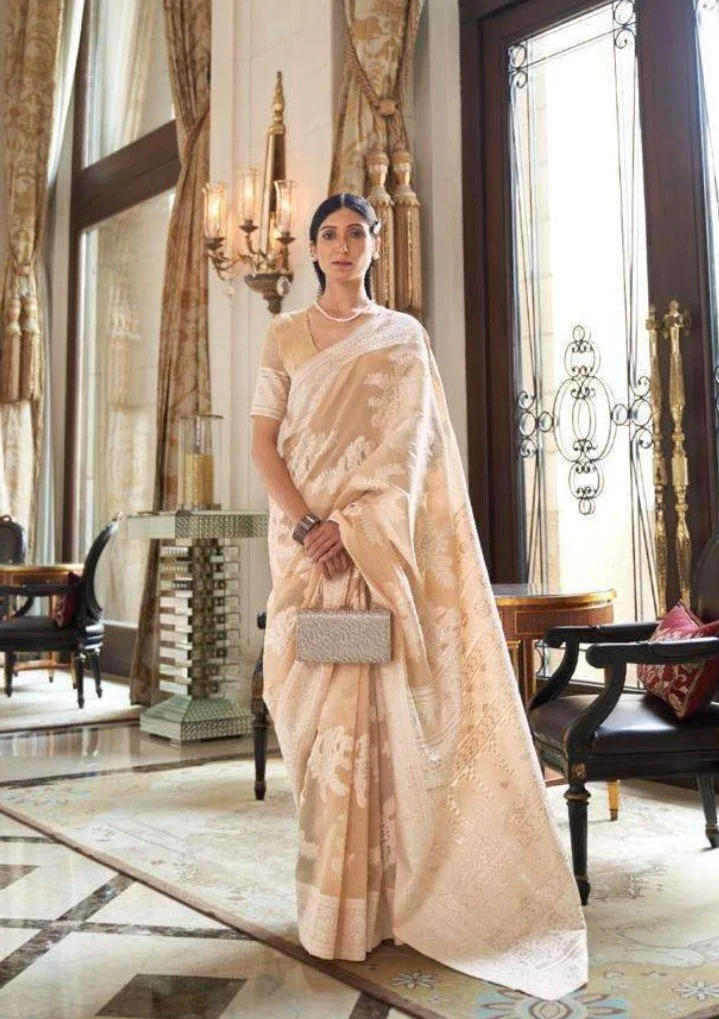
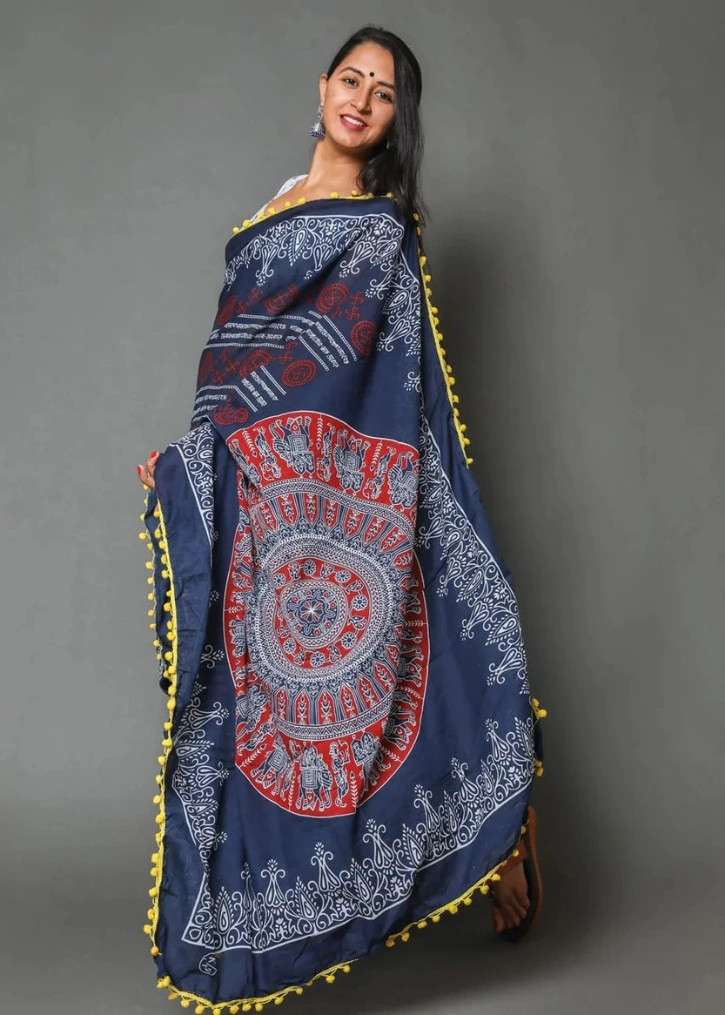
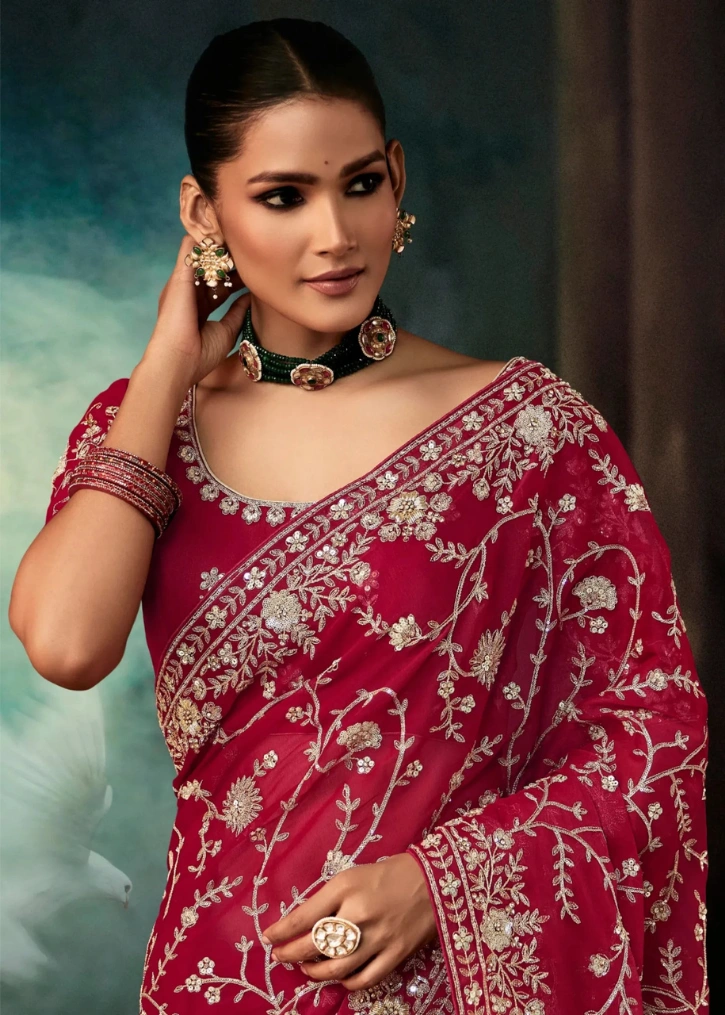
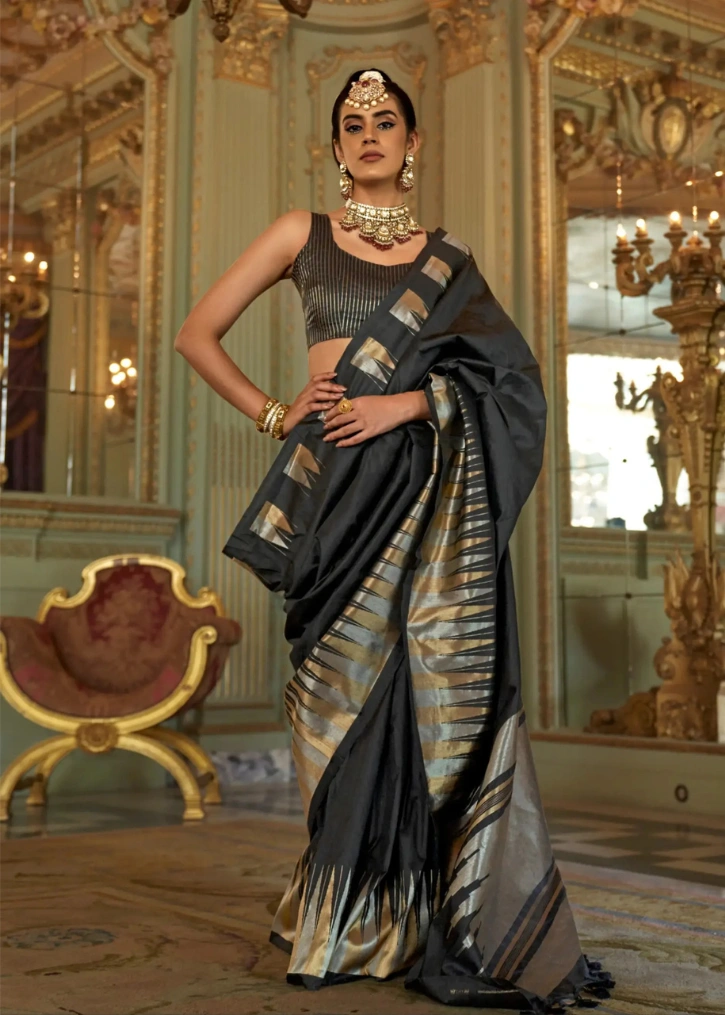
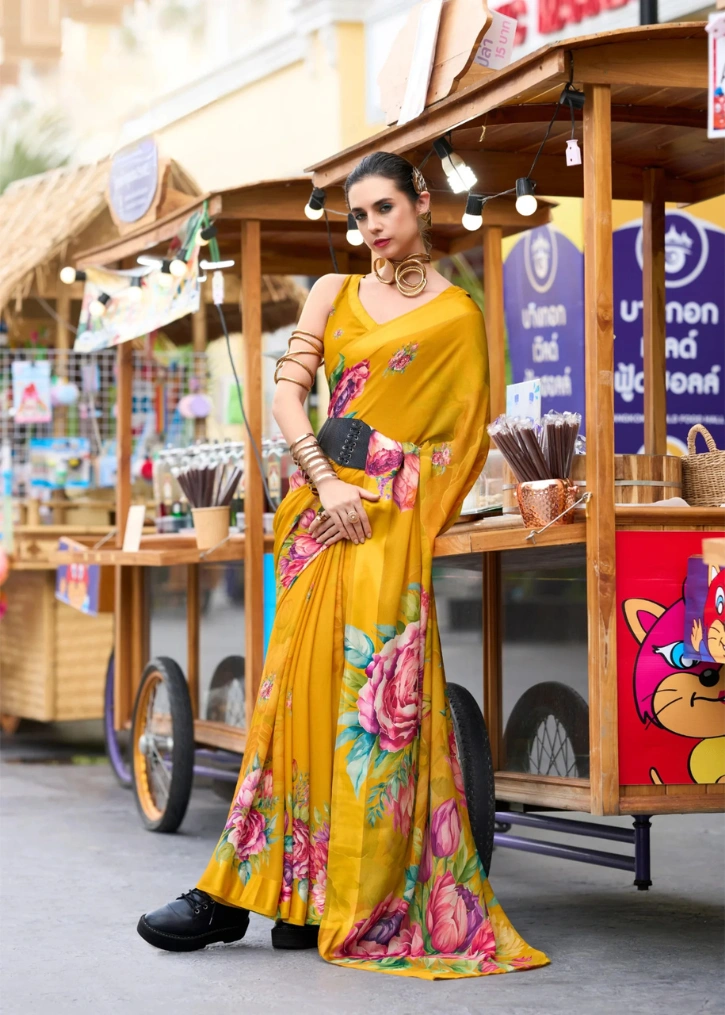
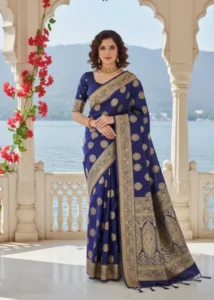
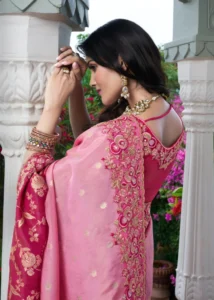
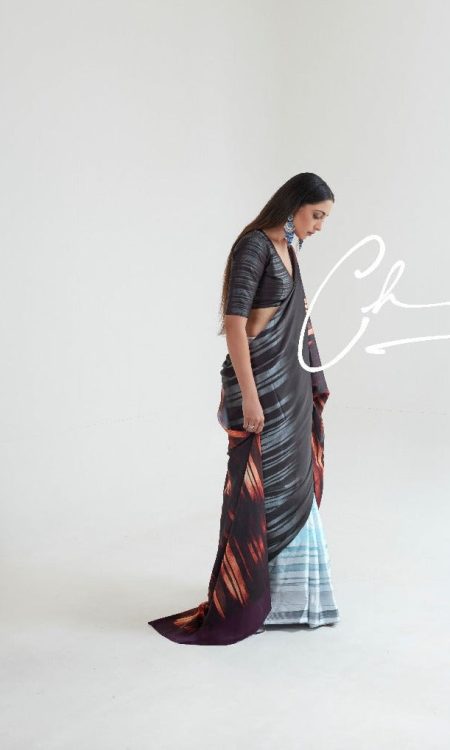
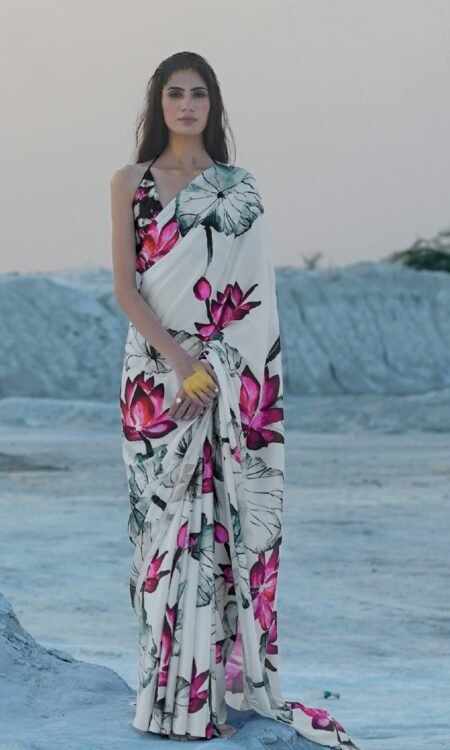
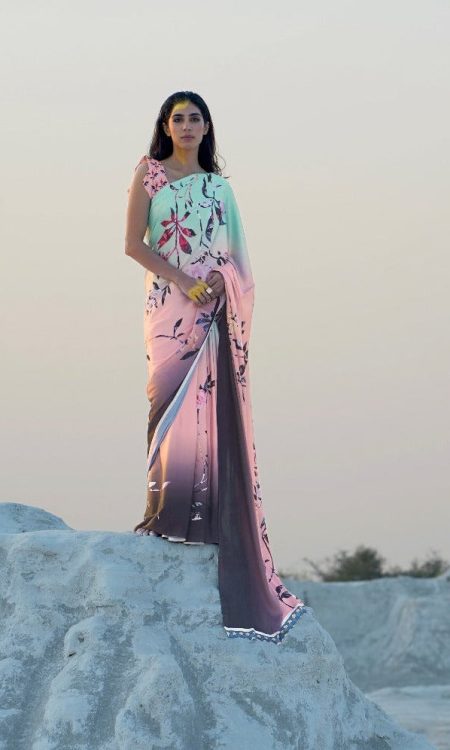
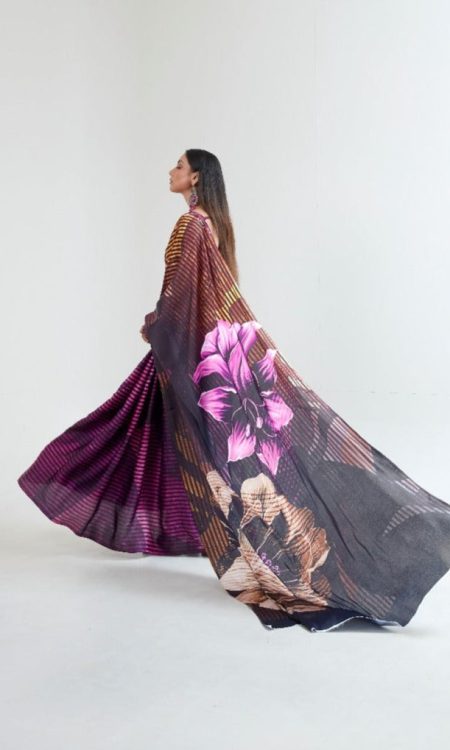
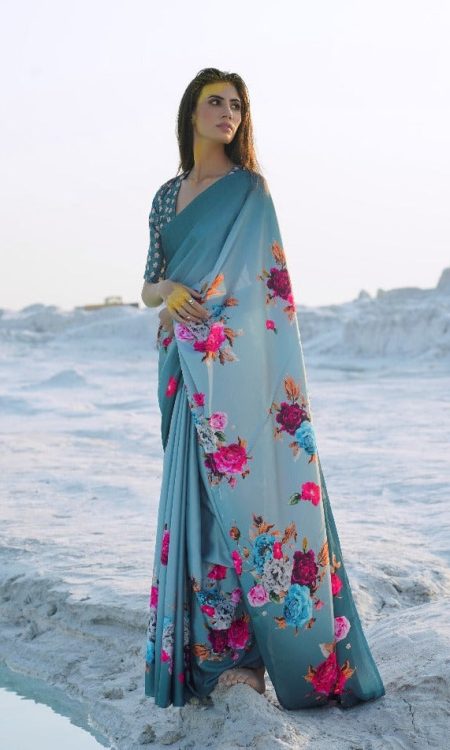
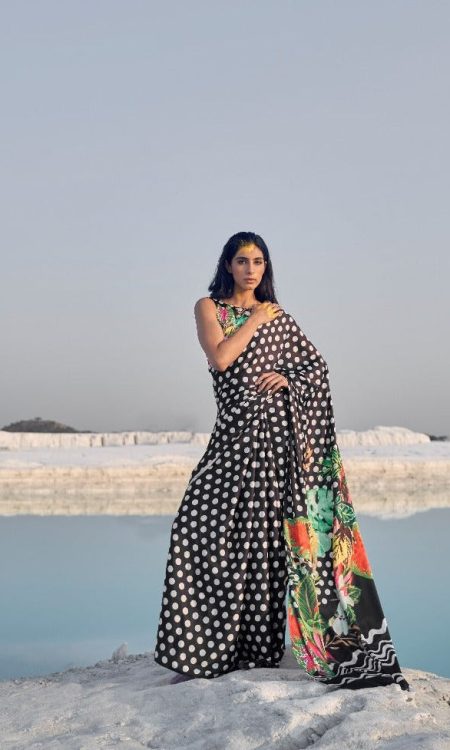
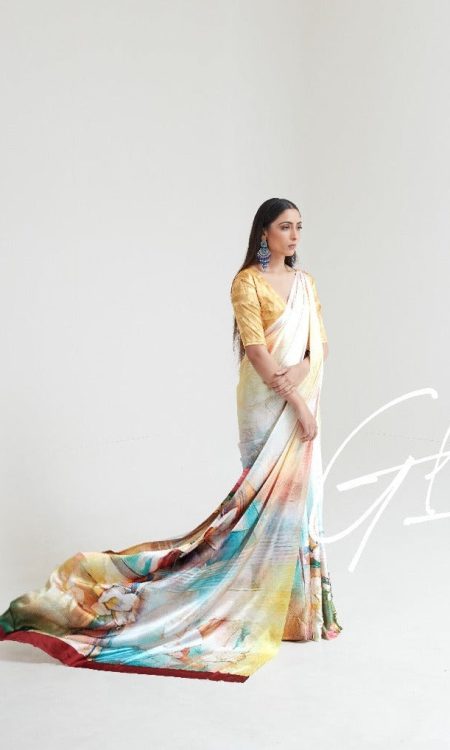
For the current collection, the visual identity is especially driven by printed designs. Floral patterns, multicolour combinations, abstract elements and contrasting pallu or border details give the sarees different levels of visual impact.
When choosing between styles, consider:
- Sheen: Choose according to how reflective or understated you want the saree to appear.
- Print: Floral, abstract, polka-dot and other contemporary patterns create different levels of visual detail.
- Drape: Satin-type fabrics can have a fluid fall, but the exact way a saree pleats and moves depends on the specific fabric and construction.
- Pallu and border: These can significantly change the overall appearance of a printed saree.
- Surface feel: A smooth satin surface can also be more prone to slipping or snagging than fabrics with a more textured construction, so handling and styling matter.
Japan Satin Sarees for Office and Casual Party Wear
The current collection is positioned primarily around office wear and casual party wear. Product descriptions repeatedly identify these styles for workwear, casual dressing and relaxed party occasions.
For Office Wear
Choose prints and color combinations that feel balanced for your workplace. A floral or abstract print can provide visual interest without requiring heavy accessories. Pairing the saree with a coordinated solid blouse is another option when you want a quieter overall look.
For Casual Parties and Evening Gatherings
The smooth satin appearance can be styled with stronger accessories when the setting calls for it. Look for prints, contrasting pallus or more noticeable color combinations if you want the saree itself to make more of a statement.
For Weddings, Receptions and Engagements
Not every saree in this collection is intended as a bridal or formal wedding saree. For a wedding-related event, assess the individual print, border, pallu, embellishment and overall formality before choosing a style.
The collection should therefore be viewed primarily as a printed, contemporary option for office and casual-party dressing, rather than as a dedicated bridal or wedding category.
How to Style a Japan Satin Saree
Because the current collection is print-led, styling can be kept coordinated rather than overly elaborate.
Blouse
The current products include unstitched printed blouse pieces. You can use the matching printed piece for a coordinated look, or consider a solid blouse that picks up one of the saree's visible colors when a simpler finish is preferred.
Jewellery
Let the print determine how much jewellery is needed. A simpler printed saree can accommodate more noticeable earrings, while a busy multicolour print may work well with fewer accessories.
Footwear and Bag
For office styling, practical flats, sandals or low heels can keep the outfit understated. For a casual evening occasion, a compact clutch or structured bag can add definition without competing with the print.
Draping
Keep the pleats neat and consider how the pallu displays the print. A clearly arranged pallu can be especially useful when the saree has a contrasting floral, abstract or patterned section.
Japan Satin vs Satin vs Silk Satin
The names can sound interchangeable, but they describe different things.
| Type |
What the Term Tells You |
What to Check |
| Japan Satin |
A commercial/market fabric label |
Product-specific composition and specifications |
| Satin |
A broad fabric/construction category associated with a smooth, lustrous surface |
Fiber, construction and finishing |
| Silk |
A fiber/material category |
Whether the product actually states silk composition |
| Silk Satin |
Silk used in a satin construction |
Confirm the stated silk composition |
| Georgette / Chiffon / Organza |
Distinct fabric categories with their own construction and characteristics |
Fiber, weight, transparency and product specifications |
The key point: Japan Satin should not automatically be treated as silk, polyester or “silk satin.” If composition is important to your decision, use the material information for the individual saree.
Japan Satin vs Georgette, Chiffon and Organza
These fabrics can create very different saree experiences, so the right choice depends on the look and handling characteristics you prefer.
| Fabric Category |
Typical Visual Direction |
Shopper Consideration |
| Japan Satin |
Smooth, polished and light-reflective appearance |
Check the individual product's composition, drape and care requirements |
| Georgette |
Often associated with a softer, flowing appearance |
Consider drape, texture and opacity for the specific product |
| Chiffon |
Fine, fluid and often more sheer-looking |
Check transparency and the specific fiber composition |
| Organza |
More structured and crisp-looking |
Consider the level of structure and transparency |
| Silk Satin |
Satin appearance combined with silk composition |
Confirm that silk is actually stated in the product specifications |
These are broad fabric-level distinctions rather than guarantees for every saree. Fiber, finishing and construction can change how a particular product looks and behaves.
How to Choose a Japan Satin Saree
Start with the way you intend to wear it rather than choosing only by the word “satin.”
1. Check the Material Information
Do not infer fiber composition from the name Japan Satin. If silk, polyester, rayon, nylon or a blend matters to you, look for explicit product-level information.
2. Decide How Much Visual Shine You Want
Satin construction is associated with light reflection, but the appearance can differ between products. Product photographs are useful for comparing the visible surface.
3. Choose the Print and Color
The current selection includes floral, abstract and other contemporary printed designs. Consider whether you want a dominant floral pattern, a more graphic print, polka dots or a multicolour combination.
4. Match the Design to the Occasion
For office wear, consider balanced prints and styling. For a casual party, you may prefer a stronger print or more noticeable color combination.
5. Check the Blouse Piece
The current collection consistently includes unstitched printed blouse pieces. Check the individual product page for the stated blouse measurements and design.
6. Review the Border and Pallu
The border and pallu can change the appearance of a printed saree significantly. Check the product photographs and description rather than assuming every design has the same finish.
7. Check Measurements
Current products in the collection are listed with a saree length of 5.4 m and an unstitched blouse measurement of approximately 75–85 cm. Always verify the individual product listing before purchasing, particularly if specifications are updated.
8. Check Care Instructions
Care requirements should be considered before purchase. Current product listings advise professional dry cleaning and avoiding direct extreme heat; always follow the care information attached to the specific saree.
9. Compare the Complete Product Specification
Before ordering, review the photographs, material description, measurements, blouse information, care instructions and applicable return/exchange terms together.
Japan Satin Saree Quality Checklist
There is no single visual test that can establish the fiber or authenticity of a saree. For a more informed purchase, check:
- Stated fabric or material information
- Product measurements
- Saree length
- Blouse-piece details
- Print clarity and placement
- Border and pallu photographs
- Overall finishing
- Color representation in product images
- Care instructions
- Seller and product information
- Return or exchange policy
- Any composition or origin information supplied by the seller
If a listing uses terms such as “pure,” “silk,” “premium,” “imported” or “Japanese,” look for product-level evidence supporting that particular claim.
Japan Satin Saree Care
Care should always follow the instructions supplied with the individual product because fabric composition and finishing can differ.
For the current Japan satin products, the product listings advise professional dry cleaning and recommend avoiding direct extreme heat and harsh chemical cleaners. Avoid treating all satin fabrics as though they have identical washing requirements.
For storage, keep the saree dry and appropriately protected from unnecessary friction. When folding, periodically changing the fold can help avoid leaving the same crease in place for extended periods.
If you are unsure about a stain, cleaning method or heat setting, use the product's stated care instructions or consult a professional cleaner rather than testing an unfamiliar treatment on the saree.
Frequently Asked Questions
What are Japan Satin Sarees?
Japan Satin Sarees are sarees sold under the commercial “Japan Satin” fabric label. The term is commonly associated with satin-type fabrics and a smooth, lustrous appearance, but it does not by itself establish a particular fiber composition.
Is Japan Satin the same as silk?
No. Japan Satin is a commercial fabric label, while silk identifies a fiber/material. A Japan satin saree should not be assumed to be silk unless the individual product information confirms silk composition.
Is Japan Satin polyester?
Not necessarily from the name alone. Polyester is commonly associated with some Japan satin products in the market, but supplier and retailer descriptions are not consistent enough to treat polyester as a universal definition. Check the composition of the individual saree.
Is Japan Satin actually made in Japan?
The name alone does not establish country of manufacture. “Japan Satin” should be treated as a commercial naming term rather than proof that a saree was manufactured in Japan or imported from Japan. Check the product's origin information if this matters to your purchase.
How is Japan Satin different from regular satin?
“Satin” is a broader fabric/construction category, while “Japan Satin” is a commercial market label used for particular satin fabrics. There is no sufficiently consistent universal distinction that allows the name Japan Satin to determine fiber composition or exact construction on its own.
Are Japan Satin Sarees suitable for parties?
Yes, selected styles can work well for casual parties and evening social occasions. The current collection is specifically positioned around office wear and casual party wear. For more formal events, assess the individual saree's print, border, pallu and overall styling.
Can I wear a Japan Satin Saree to the office?
The current collection includes styles whose product descriptions specifically position them for office wear. For a workplace setting, choose a print and styling level appropriate to your environment.
Do these sarees come with blouse pieces?
The current Japan satin products include unstitched printed blouse pieces. Check the individual product page for the exact blouse measurement and design.
How should a Japan Satin Saree be washed?
Do not assume one washing method applies to every Japan satin product. Current product listings advise professional dry cleaning and avoiding direct extreme heat. Follow the care instructions for the individual saree.
What should I check before buying a Japan Satin Saree?
Check the material description, measurements, print and color photographs, border and pallu, blouse-piece details, care instructions, seller information and return policy. If composition or country of origin matters, look for explicit product-level information rather than relying on the term “Japan Satin.”
Explore Related Saree Collections
If you are comparing fabrics or occasions, explore the Printed Sarees, Office Wear Sarees, Casual Sarees and Party Wear Sarees collections. For a different fabric direction, compare the options available in Georgette, Chiffon and Organza.
If your priority is specifically silk composition, browse the relevant Silk Sarees collection and compare the stated material information at product level.
Shop the Collection
Browse the available styles above and compare each saree by print, color, blouse details, measurements and intended occasion. Choose the product specification that best matches how you plan to wear and care for the saree.