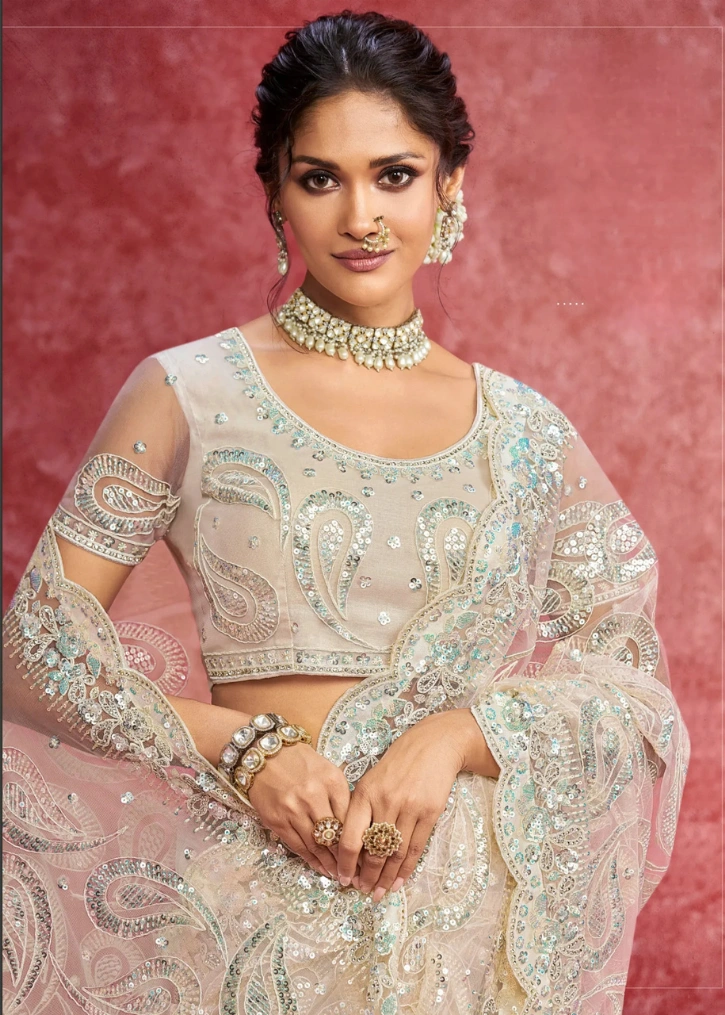
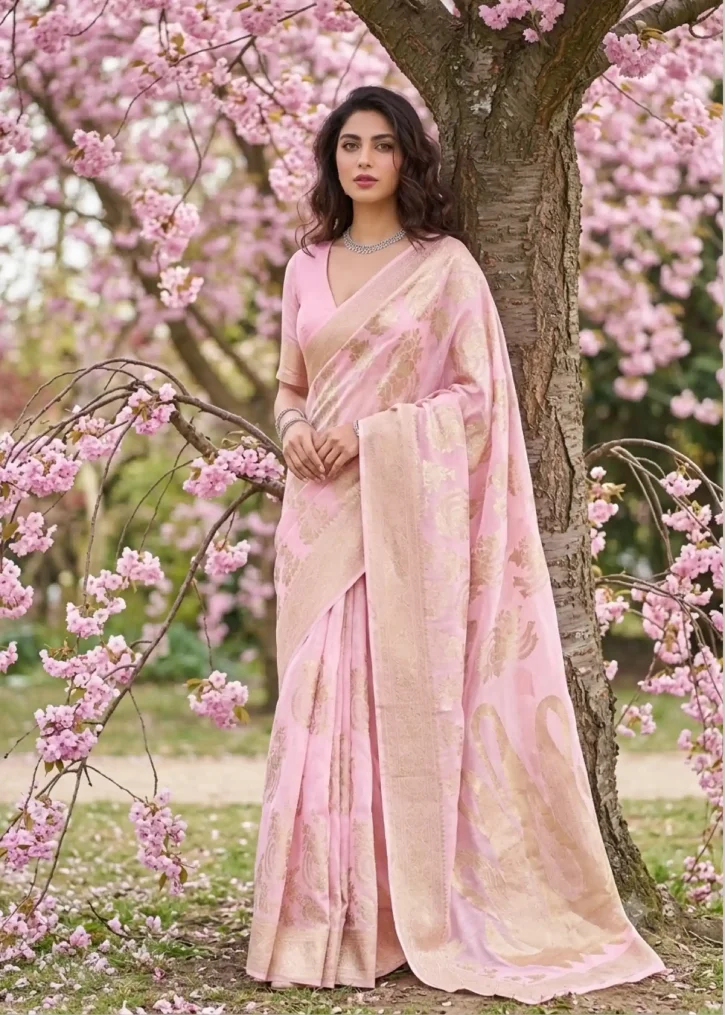
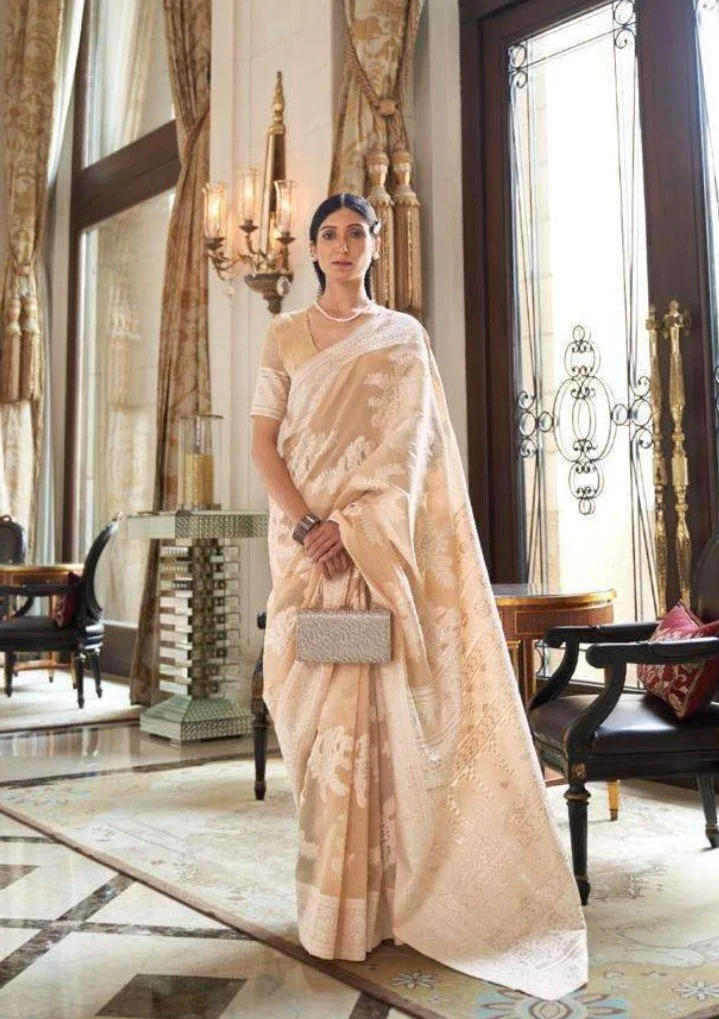
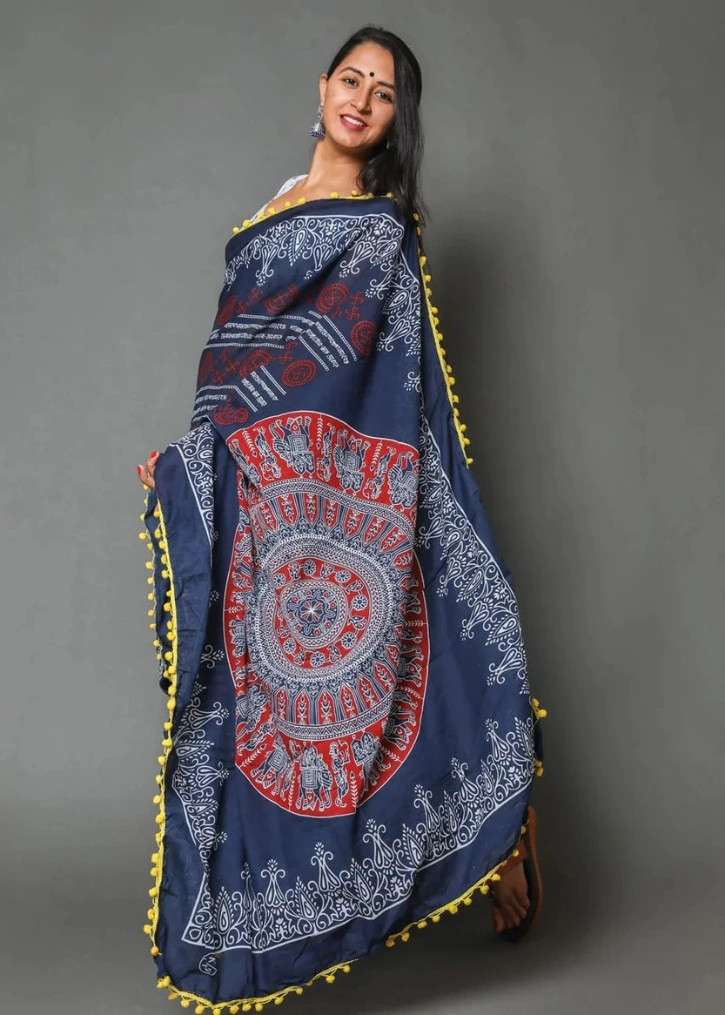
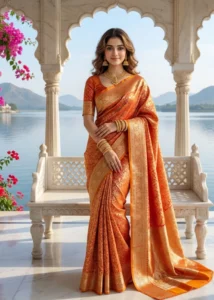
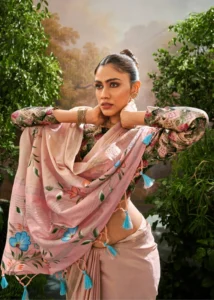
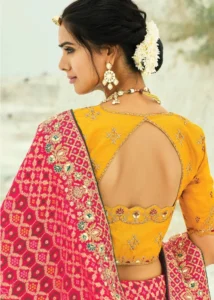
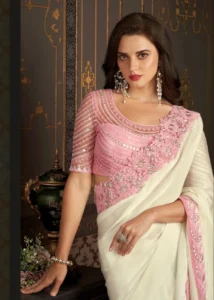
Showing 1–20 of 48 results
SOLD OUT!
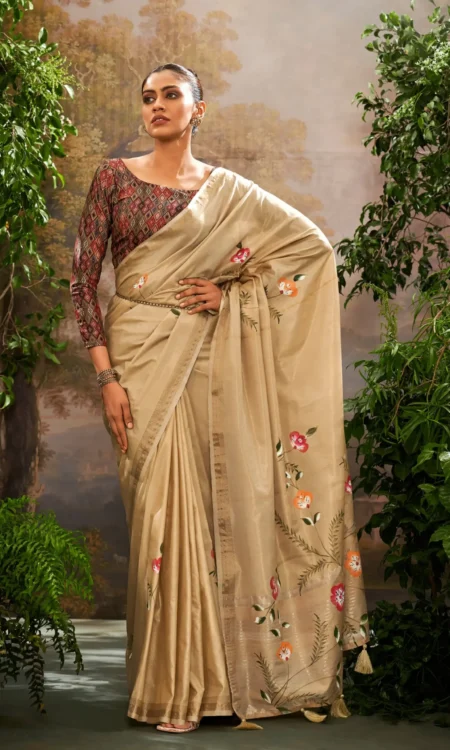
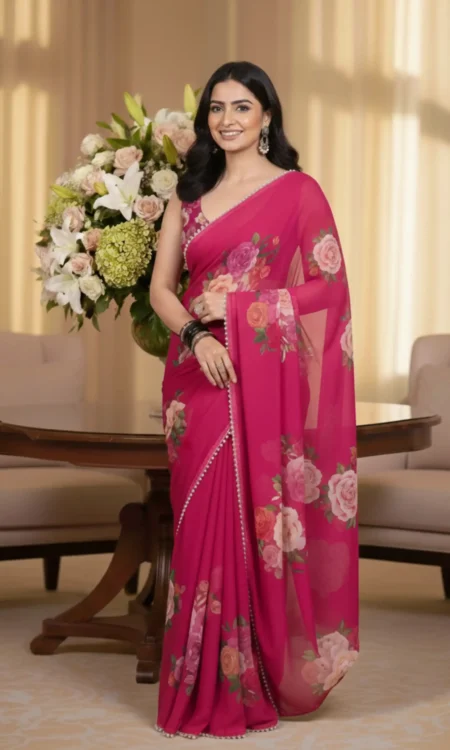
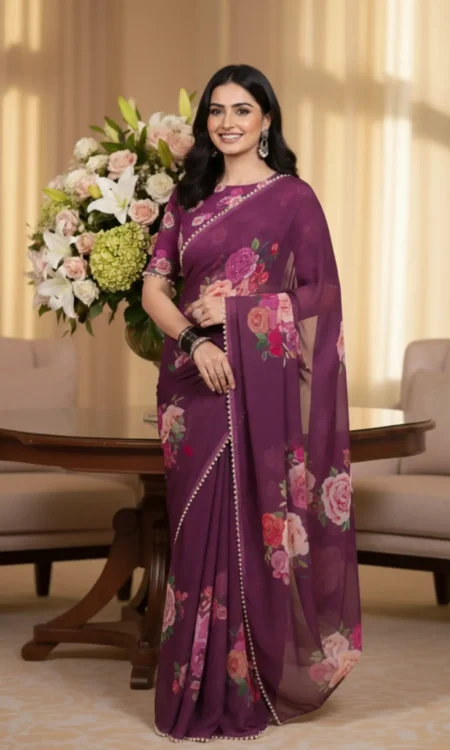
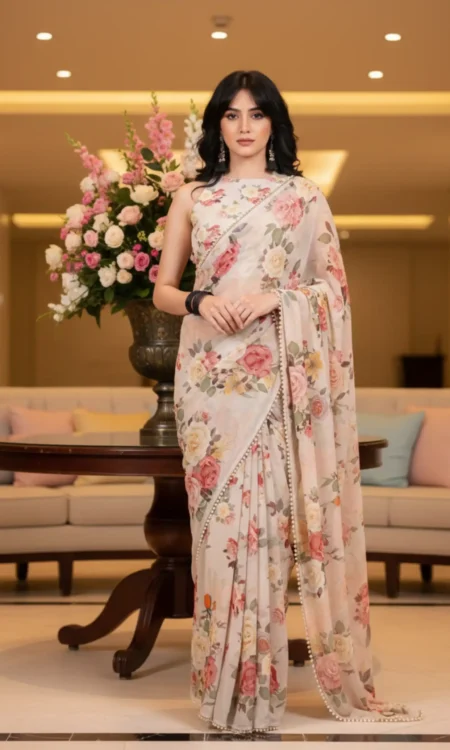
SOLD OUT!
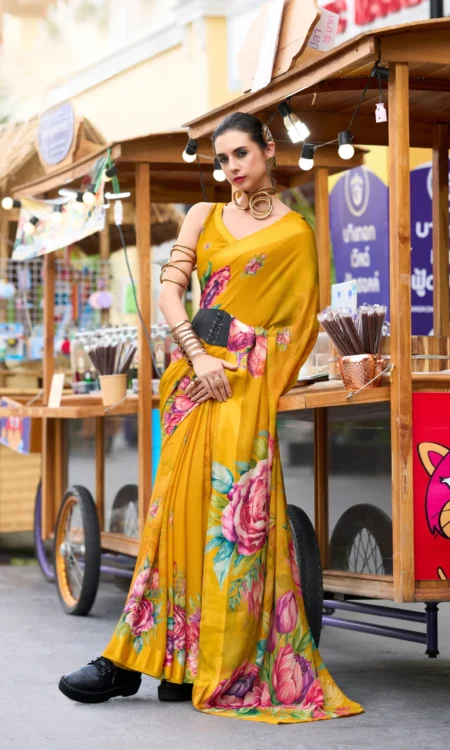
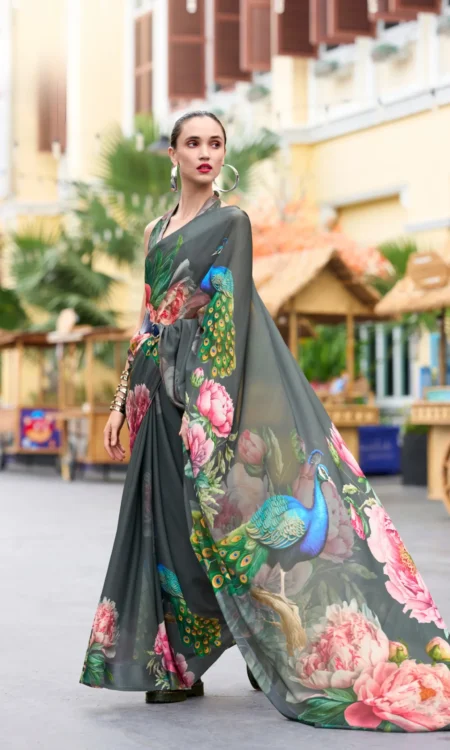
SOLD OUT!
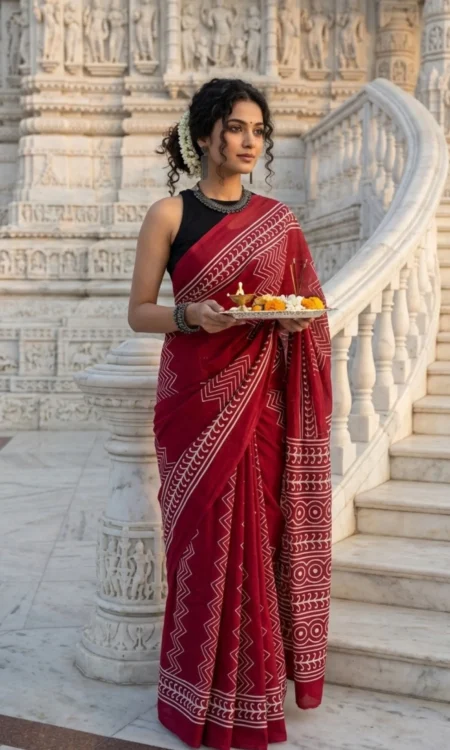
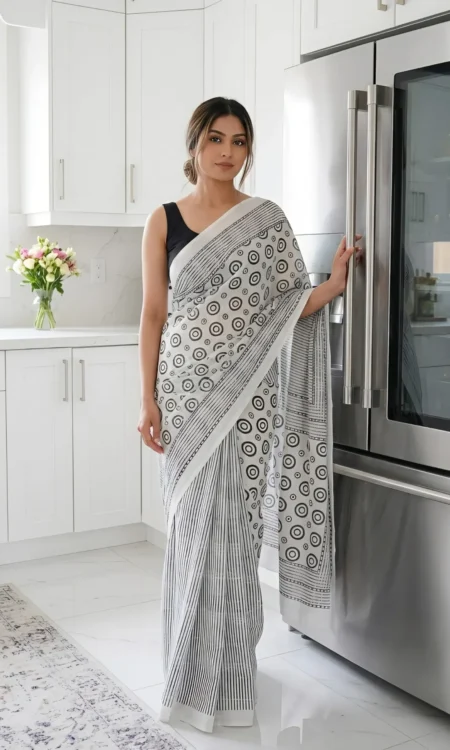
SOLD OUT!
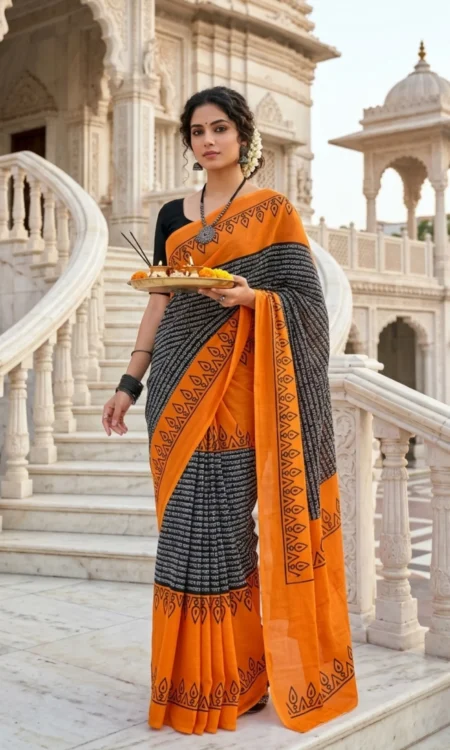
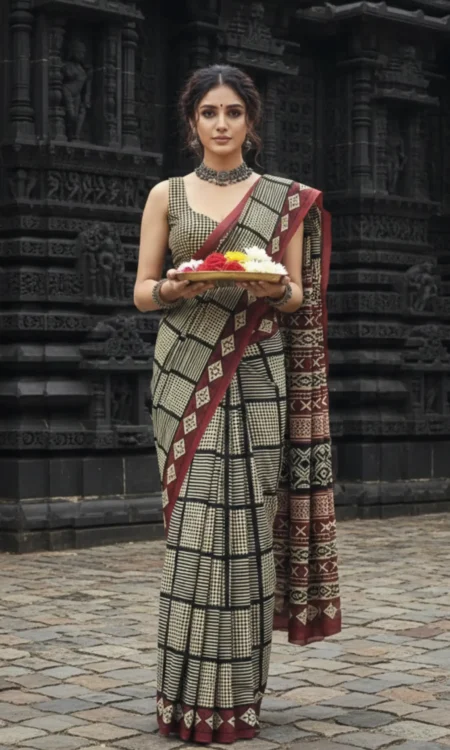
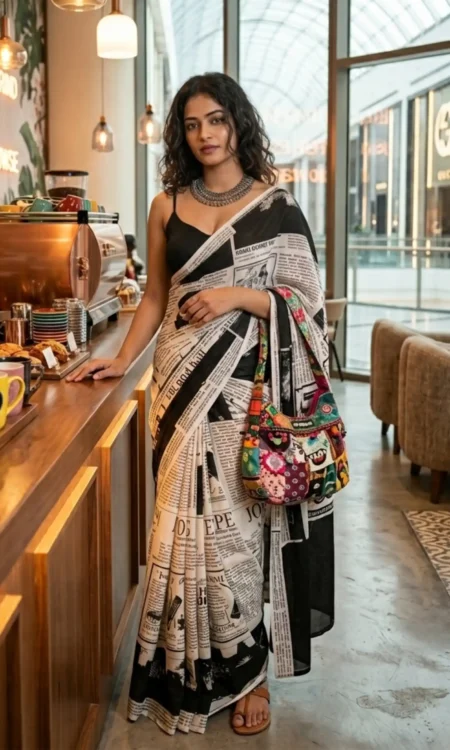
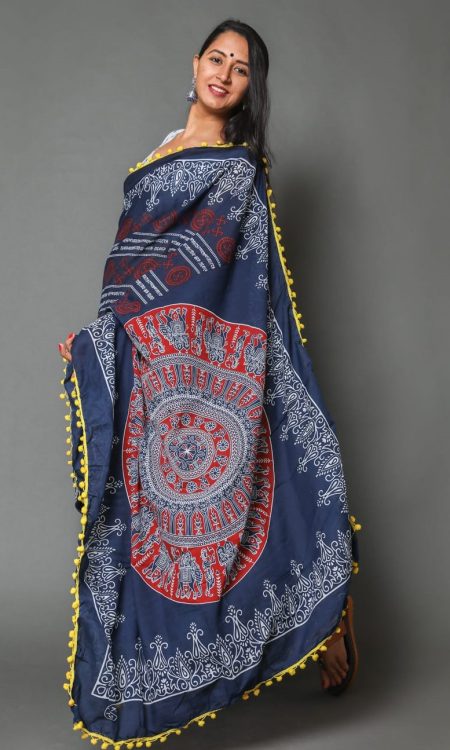
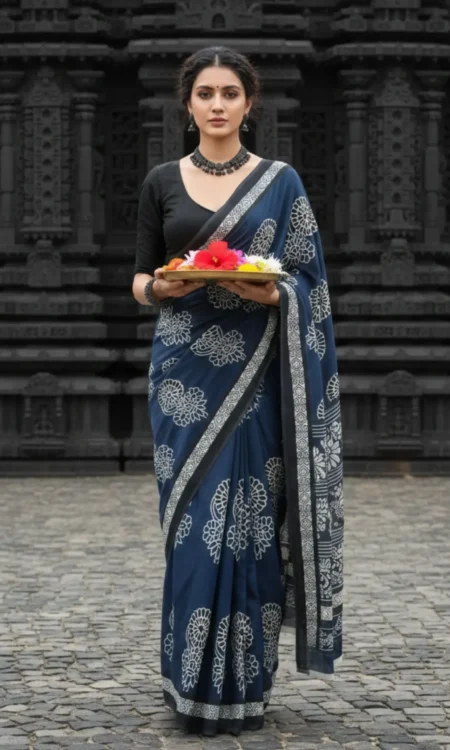
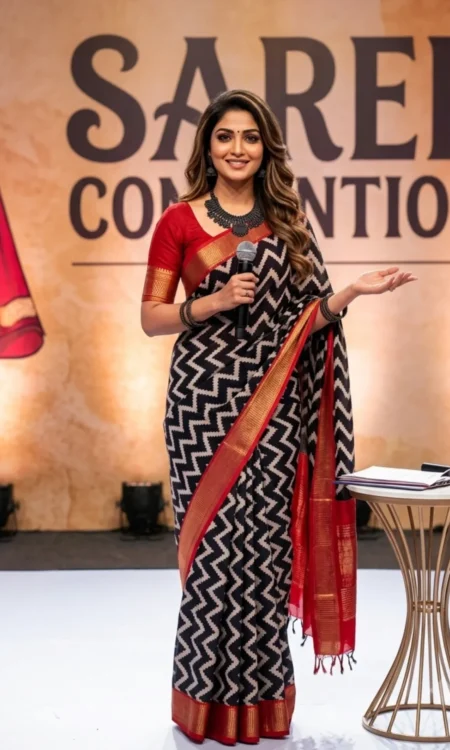
What Are Printed Sarees?
A printed saree is a saree in which the visible design or pattern is applied to the textile surface through a printing process.
Printing is different from weaving or embroidery. In a printed saree, colour or design is applied to the fabric surface. In a woven saree, the pattern is created through the interlacement of yarns during fabric construction. Embroidery adds decorative threadwork to the fabric, while embellishment adds elements such as sequins, beads or other decorative components.
The term printed saree describes a broad category rather than one specific production method. A printed design may be created using processes such as block printing, screen printing, digital printing or other textile-printing techniques, depending on the individual product.
This means a printed saree should not automatically be described as hand printed, hand block printed, naturally dyed, handmade or artisan-made unless those characteristics are specifically established for that product.
How Are Sarees Printed?
Textile printing involves applying a design or colour to a textile surface through a defined printing process. Different methods provide different ways of creating motifs, repeating patterns, detailed artwork and colour combinations.
Block Printing
Block printing uses a prepared block to transfer a design onto fabric. Traditional block printing can involve repeated impressions to create motifs and patterns.
When multiple colours are used, separate blocks or printing stages may be required. Manual printing can also result in small differences in registration or placement.
However, block printed does not automatically mean hand block printed. The more specific term should only be used when the production method is verified.
Screen Printing
Screen printing transfers printing paste through selected areas of a prepared screen. It can be used to reproduce repeated patterns and multiple colours and is suitable for production at different scales.
Screen printing should not be treated as inherently better or worse than hand printing. The result depends on the fabric, materials, execution and finishing.
Digital Printing
Digital textile printing uses computer-controlled design data and printing equipment to apply designs directly to textiles.
It can accommodate detailed imagery, complex patterns, multiple colours and gradual colour effects. It also allows designs to be changed or reproduced with a high degree of control.
Digital printing is simply a different production technology. It should not automatically be considered inferior to hand printing.
Resist Printing
Resist printing uses a resist process to protect selected areas of the textile from subsequent colour or dye application.
Resist techniques appear in several Indian textile traditions, but a resist-printed design should not automatically be assigned a particular regional craft name.
Types of Printed Sarees
The print itself can change the overall character of a saree. The current collection includes several visual directions, allowing shoppers to compare quieter patterns with more prominent designs.
Floral Printed Sarees
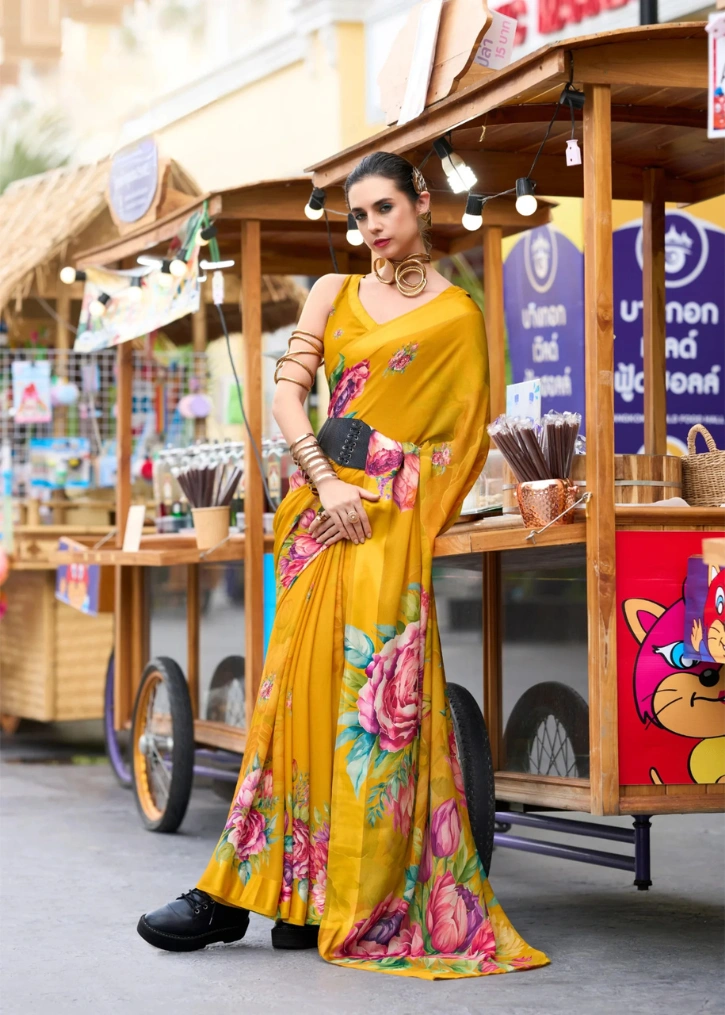
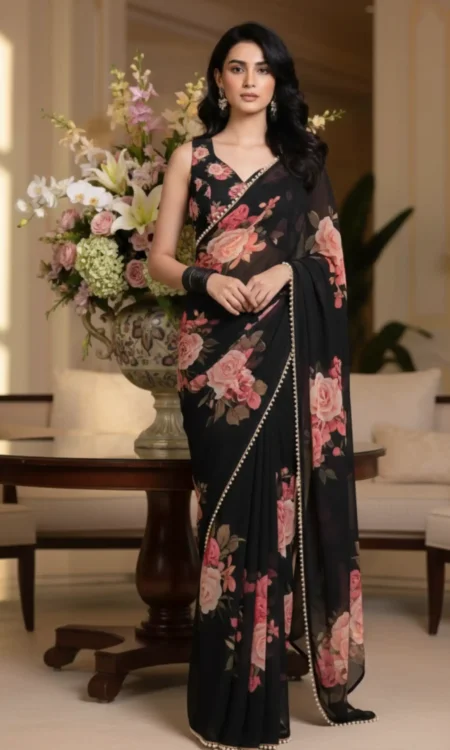
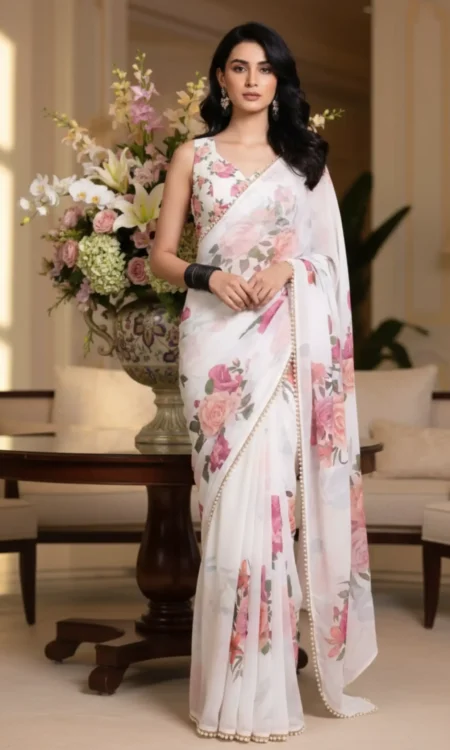
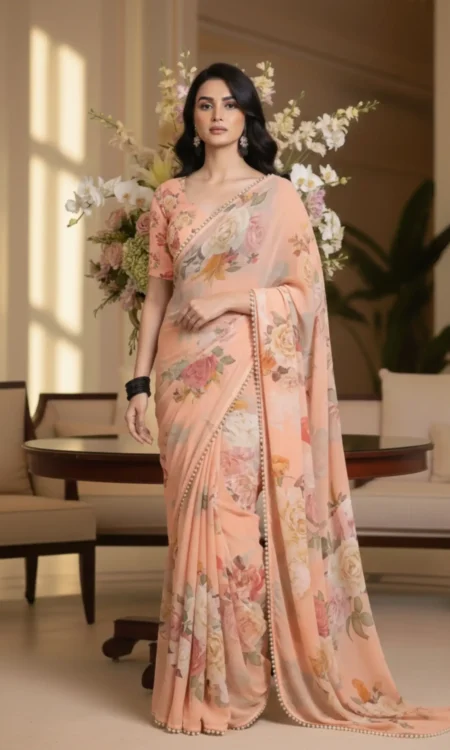
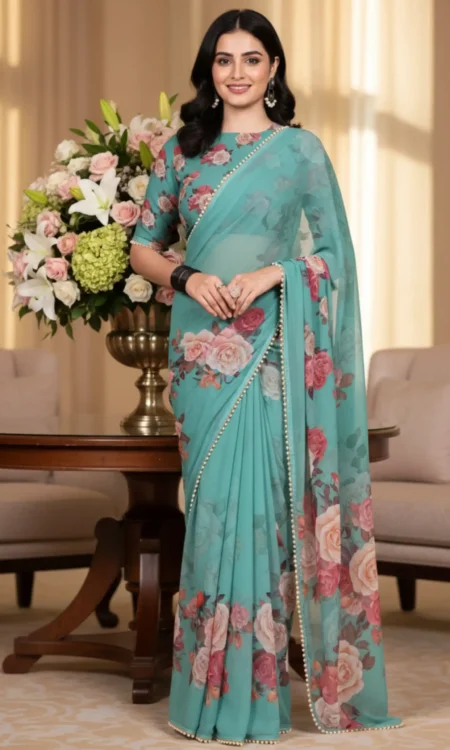
Floral prints feature flowers and related botanical forms and are represented across parts of the current collection, including chiffon and cotton-silk styles.
For a softer daytime look, consider the relationship between floral scale, colour contrast and fabric. A denser or more prominent floral pattern can create a stronger visual presence.
Geometric Printed Sarees
Geometric prints use structured shapes and repeated forms such as zigzags, squares, diamonds and other graphic arrangements.
They can provide a cleaner visual character and are particularly useful when you want the print itself to be the main design feature.
Abstract Printed Sarees
Abstract prints use less literal shapes, compositions or visual forms. Current collection evidence includes abstract printed styles in blended silk and Japan satin.
These designs can be useful when you want a contemporary look without relying on conventional floral motifs.
Contemporary Graphic Prints
The collection also includes distinctive graphic concepts such as script, newspaper-inspired, mathematical-symbol and mantra-inspired designs.
These styles demonstrate that printed sarees are not limited to conventional floral or traditional-looking motifs.
Printed Sarees by Fabric
Fabric is an important part of choosing a printed saree because it affects how the saree feels, drapes and presents the print.
Cotton Printed Sarees
Cotton is strongly represented in the current collection and includes geometric, floral, graphic and contemporary motifs.
For regular dressing, consider the fabric weight, construction, print density and ease of styling rather than choosing only by motif.
Cotton-Silk Printed Sarees
Cotton-silk combines characteristics of both fibres and can offer a different balance of texture, appearance and drape from a straightforward cotton saree.
The exact feel and care requirements depend on the individual fabric construction.
Chiffon Printed Sarees
Printed chiffon styles are represented in the collection, including several floral designs.
Chiffon has a fluid appearance and should be assessed alongside the individual product’s construction and care instructions.
Blended-Silk Printed Sarees
Blended-silk printed sarees in the collection include abstract designs and decorative borders.
They can be considered when you want a more polished appearance for evening, festive or social dressing.
Japan Satin Printed Sarees
Japan satin styles in the collection include floral, abstract and polka-dot designs.
The smooth appearance of satin can give printed motifs a distinctly contemporary character, making fabric finish an important part of the overall design.
Semi-Tussar and Other Printed Fabrics
The collection also contains semi-tussar printed and appliqué-associated styles, while linen is represented in print-associated product evidence.
Because fabric composition and finishing can differ between products, always check the individual product description before making assumptions about weight, texture or care.
Hand Block Printed vs Other Printed Sarees
Hand block printing is a specific manual printing process in which carved blocks are repeatedly impressed onto fabric.
Screen and digital printing use different production technologies.
| Printing approach | General characteristic |
| Hand block printing | Manual block impressions; small registration variations may occur |
| Block printing | Design transferred using prepared blocks; production method should be verified |
| Screen printing | Colour transferred through selected areas of a prepared screen |
| Digital printing | Computer-controlled printing with strong design flexibility |
There is no universal quality ranking between these methods. The appropriate choice depends on the design, fabric, production process, finishing and the characteristics you value in a saree.
Traditional Indian Printing Traditions
India has many regional textile-printing traditions, but a traditional craft name should only be used when the saree genuinely corresponds to that tradition.
Ajrakh
Ajrakh is a traditional resist- and block-printing textile tradition associated with Kachchh, Gujarat. It is known for structured designs and historically significant dyeing and printing processes.
The GI record identifies Kutch Ajrakh Print of Gujarat as a registered geographical indication. This does not mean that every geometric or indigo printed saree is Ajrakh.
Bagru
Bagru is a regional hand-block-printing tradition associated with Rajasthan. Traditional production can involve direct and resist-printing processes.
Bagru Hand Block Print is recorded as a GI-associated craft from Rajasthan. A saree should not be labelled Bagru simply because it uses blocks or resembles Bagru motifs.
Sanganeri
Sanganeri Hand Block Printing is associated with Sanganer near Jaipur, Rajasthan. Government handicraft documentation describes the use of wooden blocks, including floral, natural and buti/buta motifs.
The GI record identifies Sanganeri Hand Block Printing for Rajasthan.
Kalamkari
Kalamkari encompasses different regional traditions and production methods. Srikalahasti Kalamkari is strongly associated with drawing and painting using a kalam, while Machilipatnam Kalamkari is associated with block-printing traditions.
Therefore, Kalamkari should not automatically be described as hand-painted without identifying the specific tradition and process.
Dabu and Bagh
Dabu refers to a resist-printing technique associated with regional textile traditions, while Bagh Prints are associated with Madhya Pradesh.
These terms describe specific craft contexts rather than generic alternatives for any printed saree.
How to Choose a Printed Saree
When comparing printed sarees, consider the following in order:
- Fabric — Think about the drape, texture, weight and occasion.
- Print technique — Look for the printing method when it is provided.
- Print scale — Choose between smaller, medium or larger visual motifs according to your preferred appearance.
- Print density — Light, medium and dense patterns create different levels of visual presence.
- Motif — Floral, geometric, botanical, abstract or graphic designs create different styling directions.
- Colour — Consider the dominant colour and contrast between the print and base fabric.
- Border — A contrast or patterned border can change the overall visual balance.
- Pallu — Check whether the print continues across the pallu or uses a distinct composition.
- Occasion — Match the fabric, print and formality to where you plan to wear the saree.
- Care — Always check the individual product’s care instructions before purchase.
Printed Sarees for Different Occasions
Daily Wear
For regular use, consider comfortable fabrics, manageable weight, practical drape and a print density that suits your personal preference.
Cotton printed sarees are particularly relevant to the current collection.
Office Wear
For professional dressing, you may prefer controlled print density, moderate contrast, clean borders and fabrics such as cotton, cotton-silk or selected contemporary styles.
The aim is not to follow a fixed “office print” rule, but to choose a combination that fits your workplace and personal style.
Brunch and Day Events
Floral prints, lighter colours, cotton and selected chiffon styles can work well for daytime social occasions. Print scale and fabric finish can help determine whether the overall look feels understated or more prominent.
Festive Wear
For festive dressing, consider richer colours, more elaborate motifs, decorative borders or fabrics with a more polished appearance.
Blended silk and selected satin styles can offer a more pronounced evening or festive direction.
Party Wear
A contemporary abstract print, floral composition, satin finish or decorative border can provide a stronger party-oriented look.
Consider the print together with the blouse, jewellery and footwear rather than selecting the saree by print alone.
Wedding Guest Wear
Printed sarees can work for selected daytime wedding functions, festive gatherings, mehendi, haldi and wedding-guest dressing.
The appropriate choice depends on the formality of the event, fabric, colour, print richness, border, pallu and overall styling.
A generic printed saree should not automatically be described as bridal.
How to Style a Printed Saree
Let the print scale, colour, fabric and occasion guide the rest of the outfit.
Blouse
For a busy print, a blouse picked from one of the saree’s dominant colours can create a more controlled look. With a simpler print, you can consider stronger blouse detailing or contrast.
Jewellery
Use the visual intensity of the print as a guide. A detailed print may work well with more restrained jewellery, while a simpler print can accommodate a more noticeable jewellery choice.
Earrings and Bangles
Coordinate metals and colours with the saree rather than trying to match every printed motif individually.
Footwear
For daytime or office styling, choose footwear that complements the overall colour palette. For festive or evening occasions, the footwear can echo the saree’s border, blouse or jewellery.
Bag
A structured or understated bag can balance a highly graphic print, while a simpler saree can accommodate more visual interest in accessories.
Hair and Draping
Keep the drape appropriate to the occasion and fabric. A clean drape can allow a strong print to remain the main visual feature.
How to Care for a Printed Saree
There is no single washing method that applies to every printed saree.
Care requirements can vary according to:
- Fabric
- Printing method
- Colourants
- Finishing
- Surface details
- Individual construction
Some current product instructions specify professional dry cleaning and advise against handwashing, machine washing, brushing, beating, twisting or harsh chemical treatment.
Always follow the care instructions provided for the individual saree.
Avoid assuming that a printed saree should automatically be hand washed. When pressing or storing the saree, also follow the product-specific guidance, particularly for delicate fabrics and surfaces.
Do Printed Sarees Fade?
They can, depending on the fabric, colourant or printing system, exposure and care.
Colourfastness is a measurable textile property, including resistance to factors such as washing, rubbing and light exposure. The presence of a print alone does not determine how long its colours will remain unchanged.
To help preserve the saree, follow its specific washing, pressing and storage instructions and avoid unnecessary harsh treatment.
Frequently Asked Questions
What is a printed saree?
A printed saree is a saree in which the visible design or pattern is applied to the textile surface through a printing process.
Are all printed sarees hand printed?
No. Printed sarees can be produced using different processes, including hand block, screen and digital printing.
What is the difference between block printed and hand block printed sarees?
Block printing describes the use of blocks to transfer a design. Hand block printed specifically indicates that the blocks are applied manually, so the latter term requires evidence of manual production.
What is digital printing on sarees?
Digital textile printing uses computer-controlled printing equipment to apply designs directly to textile surfaces and can support detailed, complex and multi-colour designs.
What is screen printing?
Screen printing transfers printing paste through selected areas of a prepared screen to create a design on the textile.
What fabrics are used for printed sarees?
The current collection includes printed styles in cotton, cotton-silk, chiffon, blended silk, Japan satin and semi-tussar, with linen represented in print-associated product evidence. Always check the individual product specification for exact composition.
Are printed sarees suitable for daily wear?
Yes. Selected printed sarees can be suitable for daily wear, particularly when the fabric, weight, construction and design suit regular use.
Can I wear a printed saree to the office?
Yes. Consider the print density, colour contrast, fabric, border and overall formality when selecting a saree for professional dressing.
Can printed sarees be worn to weddings?
Yes. Printed sarees can work for selected daytime wedding functions and wedding-guest occasions, depending on the event and the saree’s fabric, print and styling.
How do I choose the right printed saree?
Compare fabric, print technique, print scale, density, motif, colour, border, pallu, occasion and care requirements.
Do printed sarees fade?
They can. Colour retention depends on the fabric, colourants, printing process, exposure and care.
How should I care for a printed saree?
Follow the care instructions for the individual product. Do not assume that all printed sarees have the same washing or cleaning requirements.
Explore Related Saree Collections
If you are comparing printed designs with other saree styles, explore the relevant collections:
Cotton Sarees — for cotton-focused saree options.
Floral Sarees — for a broader floral-design comparison.
Banarasi Sarees — for woven Banarasi styles.
Kanjivaram Sarees — for Kanjivaram saree designs.
Chanderi Sarees — for Chanderi-focused options.
Embroidered Sarees — for sarees featuring embroidery rather than printed surface design.
The appropriate comparison depends on whether your priority is the
print, fabric, weave, embroidery, occasion or overall styling direction.