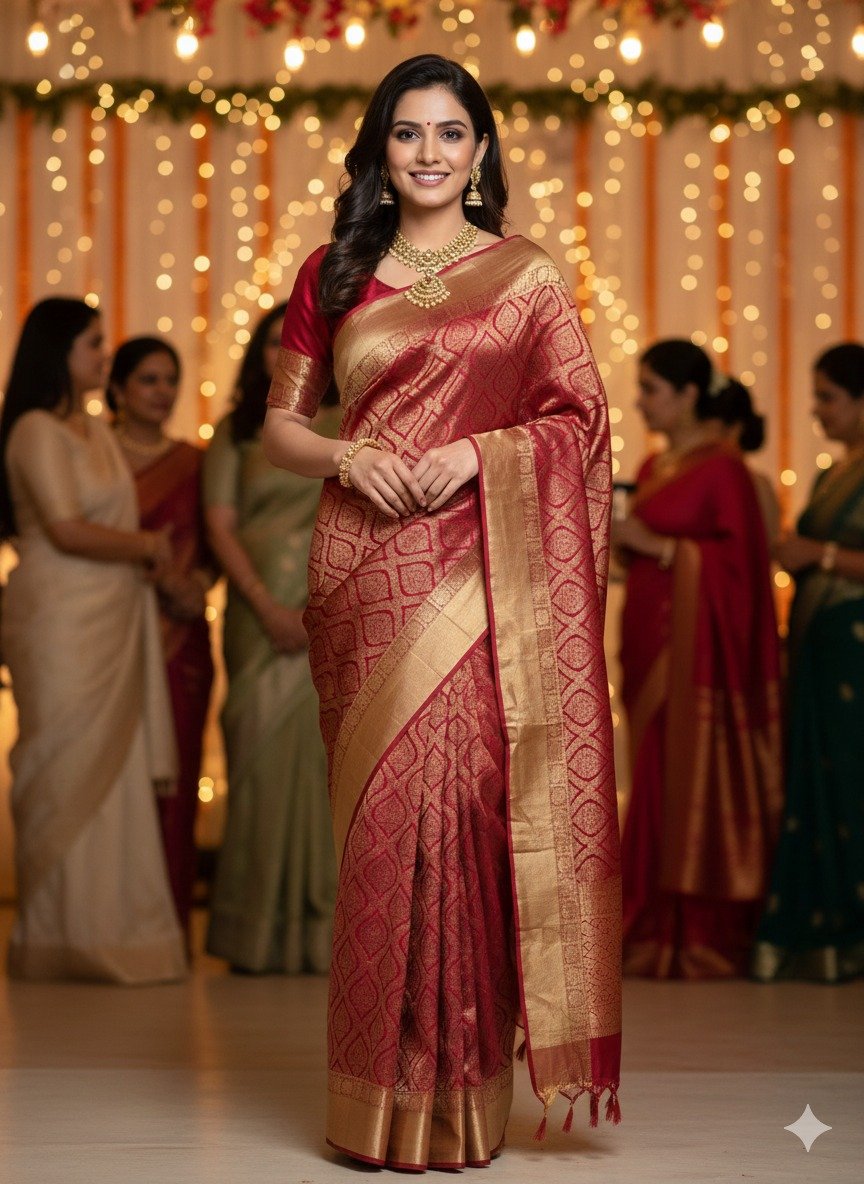
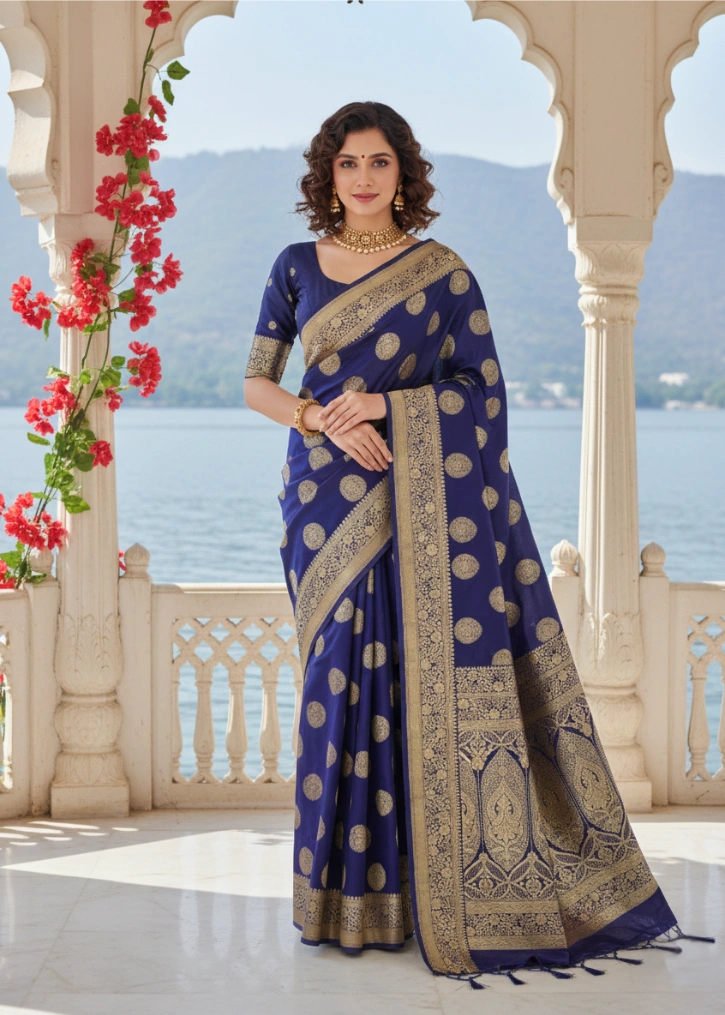
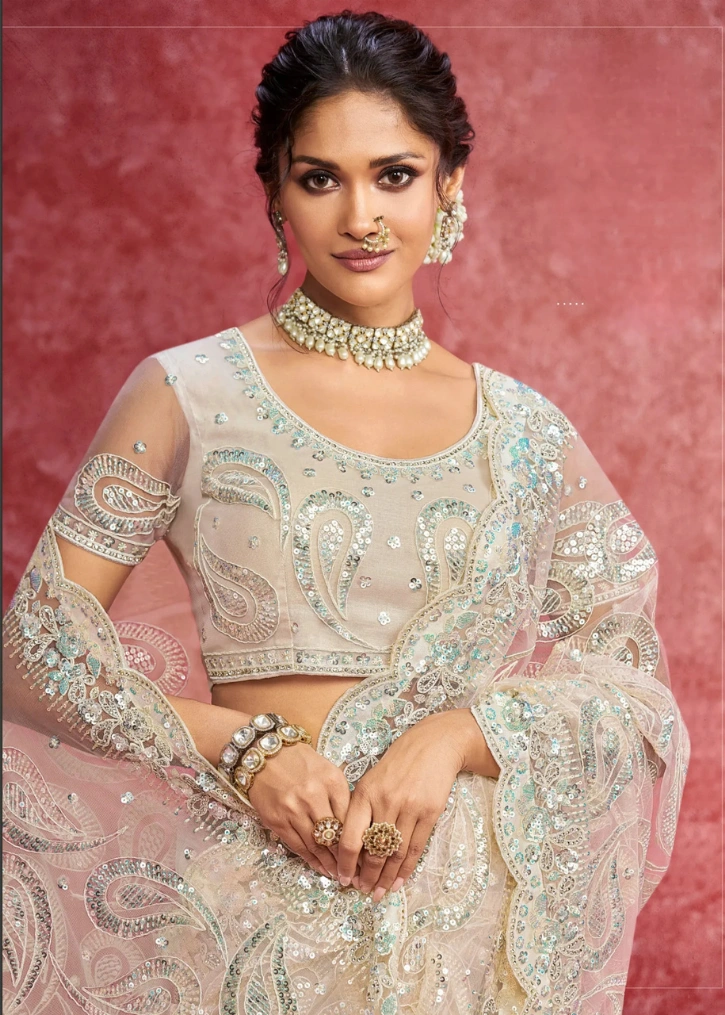
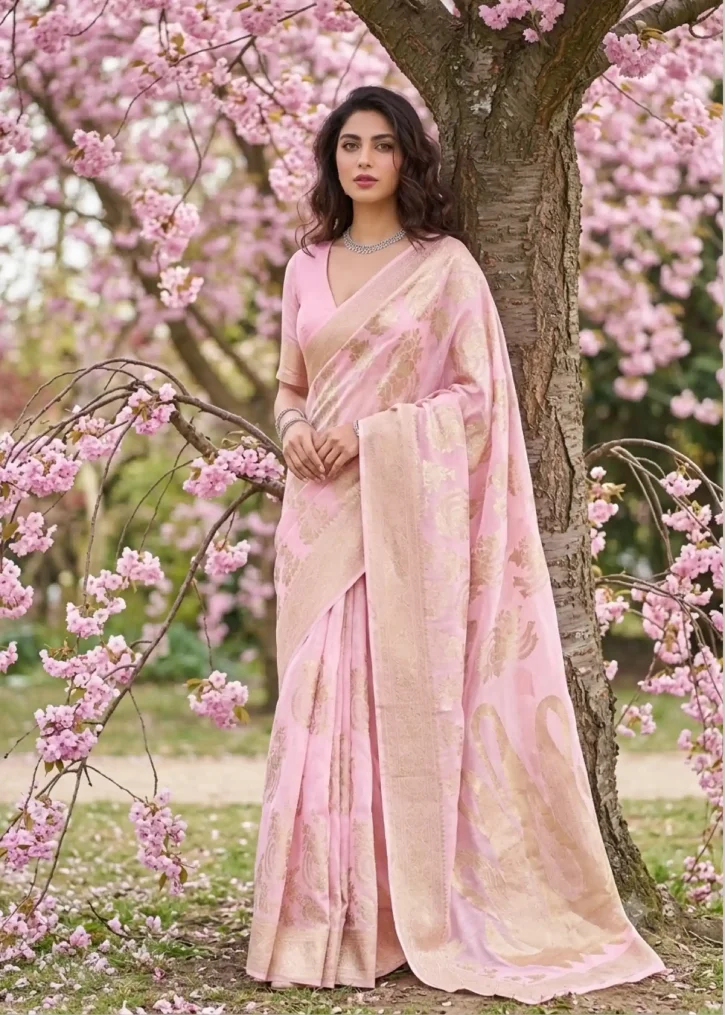
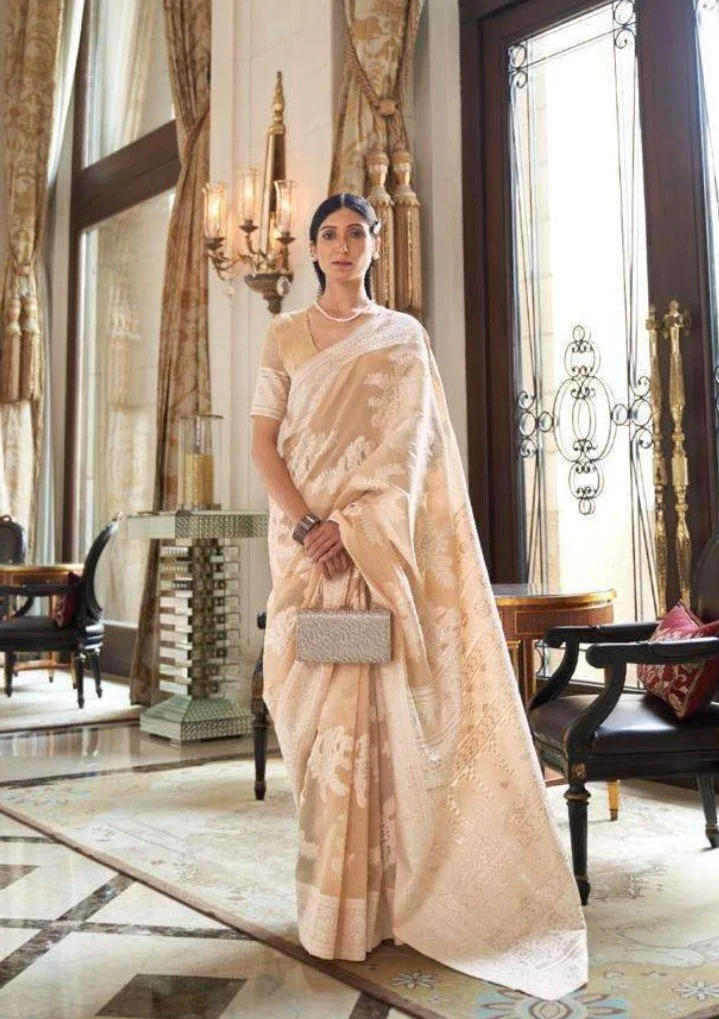
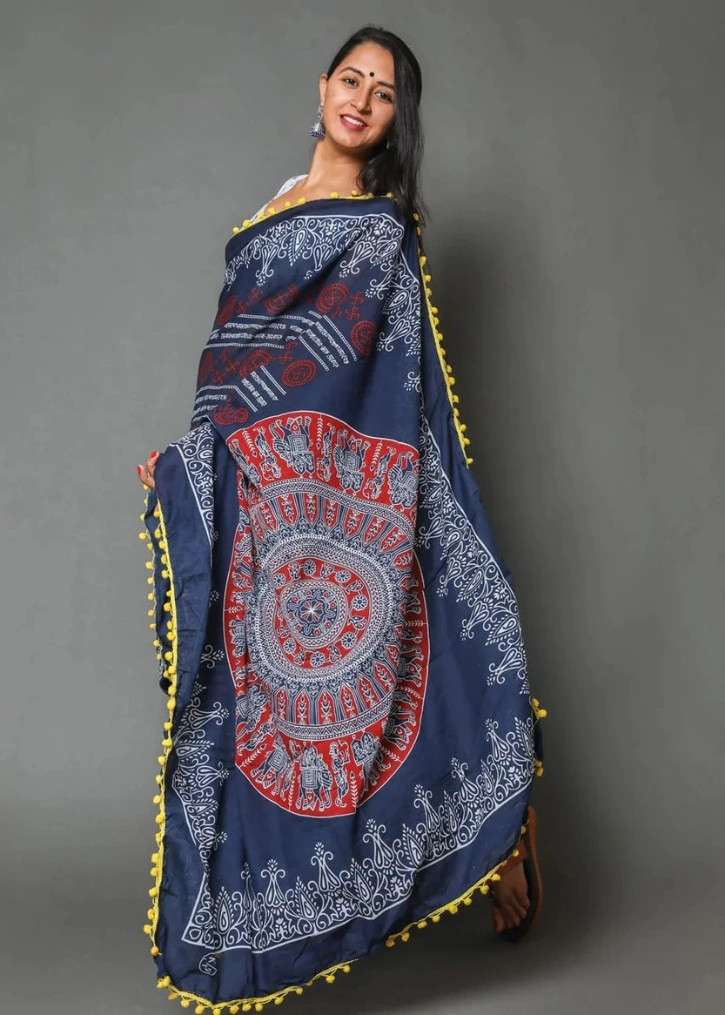
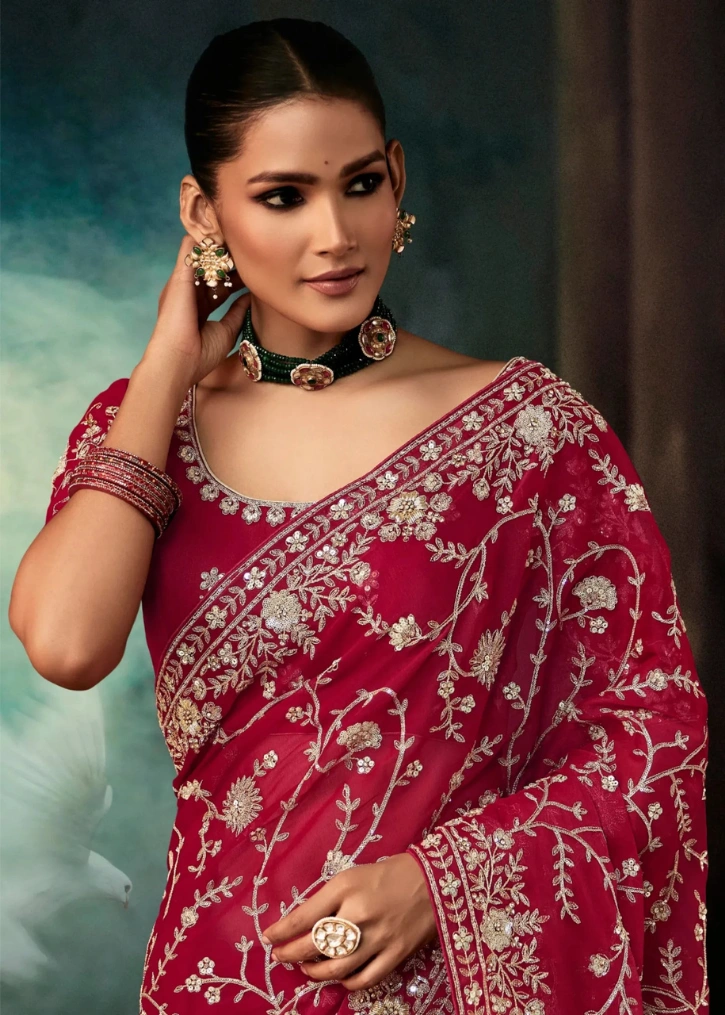
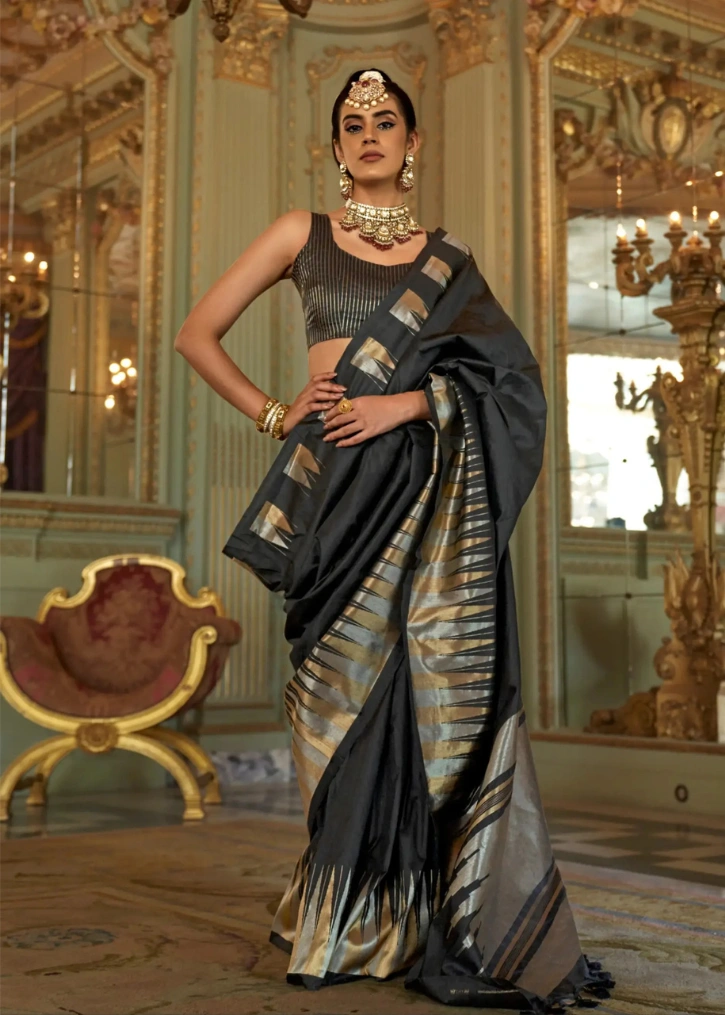
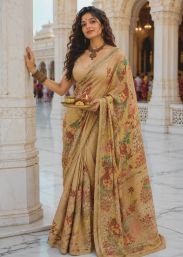
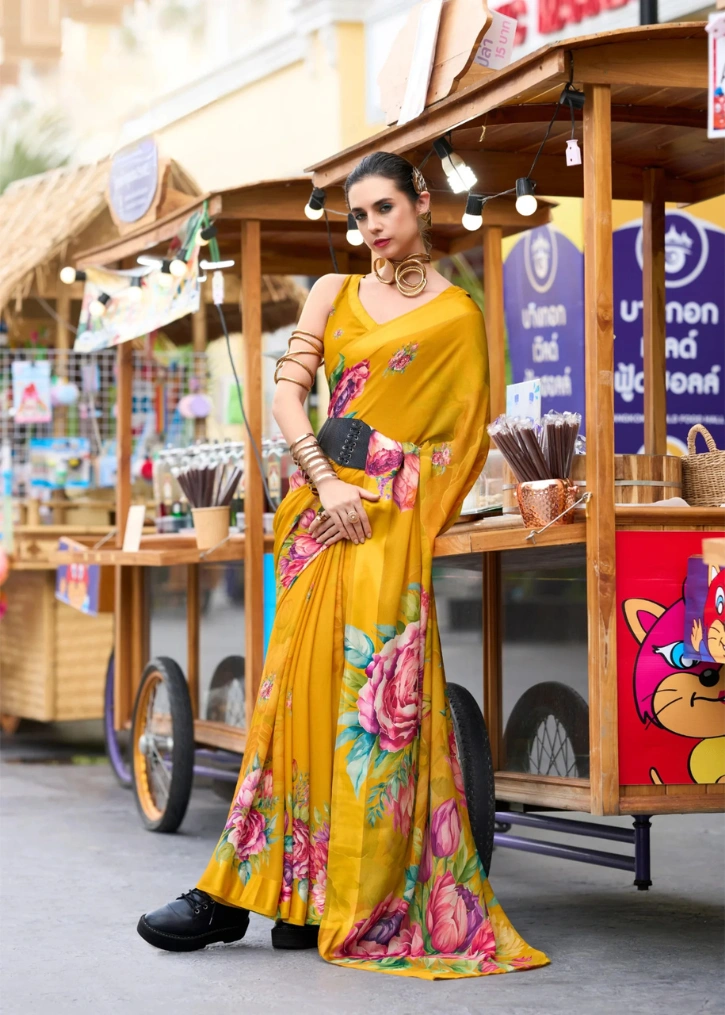
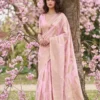
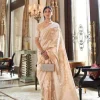
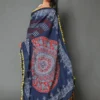
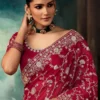
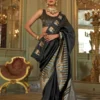
What Are Engagement Sarees?
Engagement sarees are sarees selected specifically for an engagement ceremony, ring ceremony or engagement celebration. Unlike Banarasi, Kanjivaram or raw silk, which describe a textile or material context,
engagement saree describes the occasion for which the saree is being selected.
There is no single fabric, colour or decorative technique that defines an engagement saree. Suitability can depend on the wearer, ceremony style, time of day, venue, desired formality, fabric, sheen, zari, woven or decorative details, border, pallu and blouse.
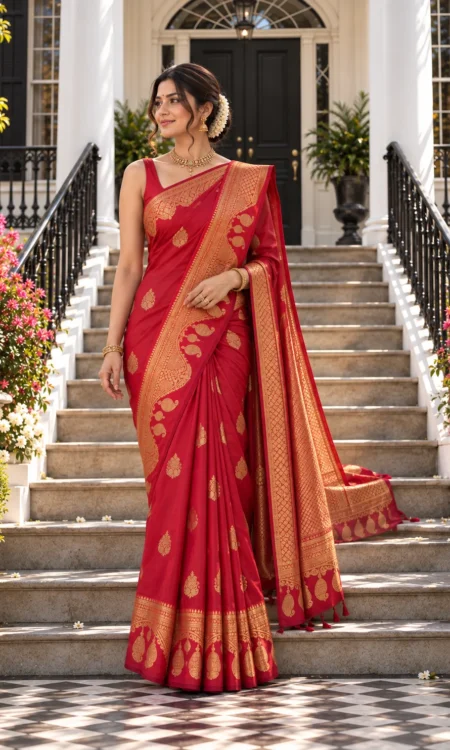
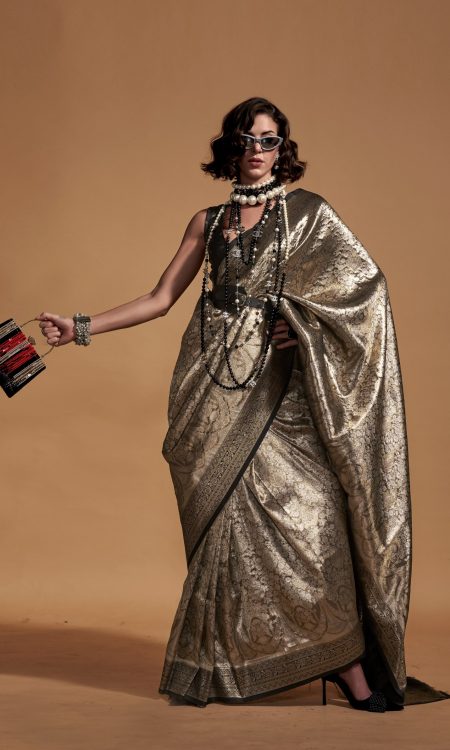
In the current collection, the strongest direction is silk and silk-based occasion wear with zari and woven detailing rather than embroidery-led designs.
Engagement Sarees vs Wedding, Bridal & Reception Sarees
| Category |
What it primarily describes |
Typical context |
Key distinction |
| Engagement Sarees |
Sarees selected for an engagement |
Engagement or ring ceremony/celebration |
Occasion-specific |
| Wedding Sarees |
Sarees selected across wedding-related functions |
Multiple wedding events |
Broader wedding occasion |
| Bridal Sarees |
Sarees for the bride's wedding wardrobe |
Wedding ceremonies |
Bride-specific |
| Reception Sarees |
Sarees selected for a reception |
Wedding reception |
Reception-specific |
| Wedding Guest Sarees |
Sarees selected by attendees |
Wedding functions |
Wearer-focused |
An engagement saree does not have to be a separate textile category. A Banarasi, Kanjivaram or silk saree can be considered for an engagement when its colour, detailing, formality and styling suit the event.
Likewise, a saree from the engagement collection does not automatically become a bridal saree simply because the wearer is a bride-to-be.
Choosing the Right Fabric for an Engagement Saree
The current collection is strongly silk-led, so fabric selection can begin with the materials actually represented rather than with a long list of fabrics that are not in the assortment.
| Fabric / Material |
Current Collection Character |
Engagement Suitability |
| Mashru Silk |
Structured, occasion-oriented silk character; listed examples are around 1,000 g |
Strong choice for a formal engagement look |
| Katan Silk |
Structured silk with zari-enhanced styling; listed example is 600 g |
Suitable for a refined formal look |
| Soft Silk |
Silk-led drape with zari detailing; listed examples are 600–800 g |
Suitable when you want silk with a flexible occasion styling direction |
| Raw Silk |
More restrained, less glossy character in the current example; 850 g listed |
Suitable for a structured contemporary direction |
| Semi Silk |
Product-specific material description with gold/silver decorative detail; 600 g listed |
Suitable for semi-formal or formal styling |
Banarasi and Kanjivaram Choices
Banarasi and Kanjivaram are textile traditions rather than engagement-specific fabrics. Their relevance here comes from their presence in the collection and their ability to provide a more traditional, structured occasion direction.
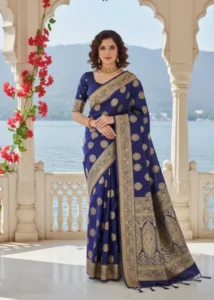
The collection's Banarasi styles include Mashru silk examples with zari borders, pallus and woven jaal. Kanjivaram-related styles provide another traditional silk direction.
Across the wider market, engagement sarees are also available in fabrics such as organza, georgette, chiffon and tissue. These are not, however, defining features of the current Sarees By Muhurat engagement assortment.
A Closer Look at Mashru Silk
Mashru is particularly relevant to this collection because it appears across several Banarasi products. The V&A describes Mashru as a textile woven with a silk warp and cotton weft, with the silk face contributing to its characteristic appearance.
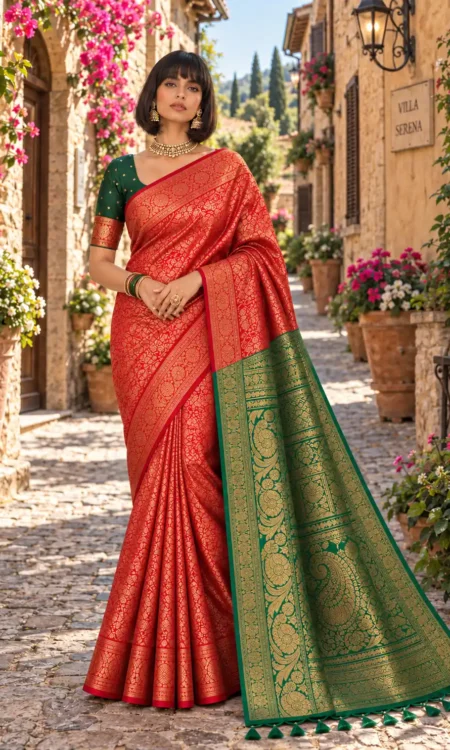
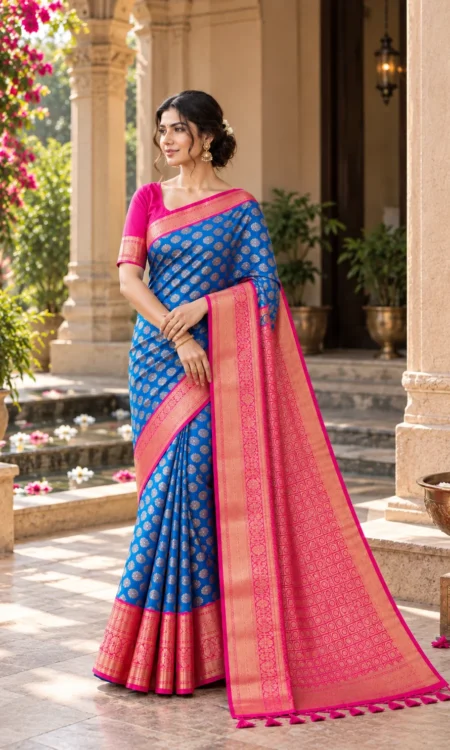
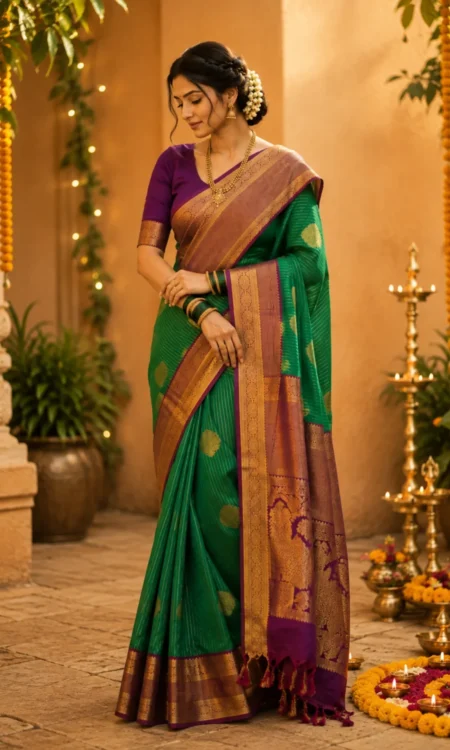
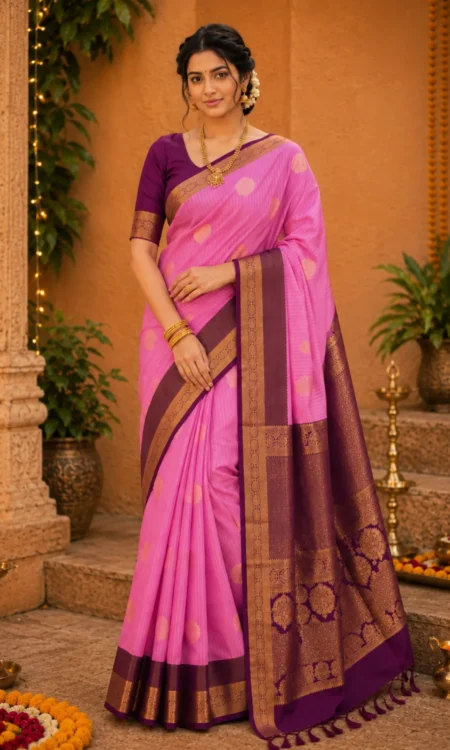
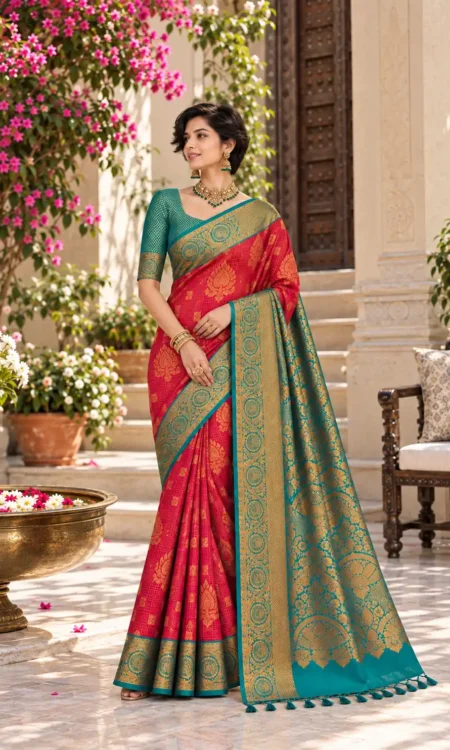
The current collection includes Mashru silk Banarasi styles such as Lapis Lazuli, Forest Fantasy, Rouge Reve and Pink Puff.
Engagement Saree Colours and Zari Details
The current collection has a particularly clear colour identity:
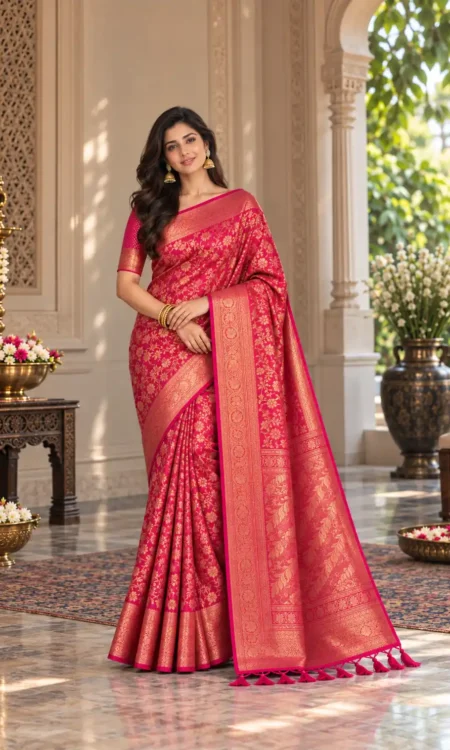
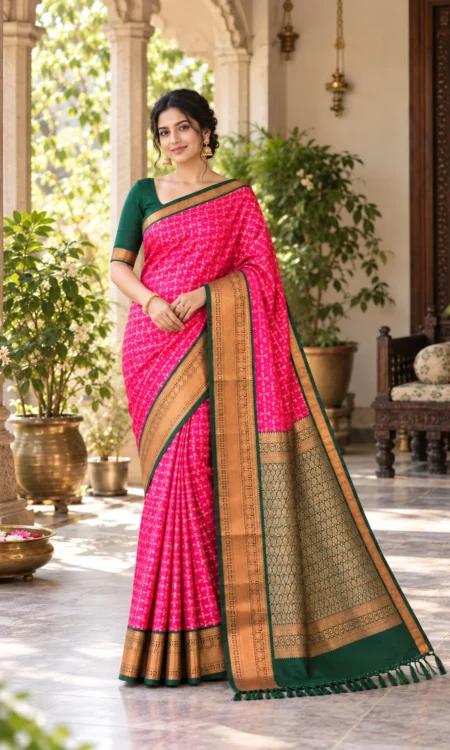
- Pink: Pink Puff, Blush Beauty and Shocking Pink & Gold
- Red: Rouge Reve
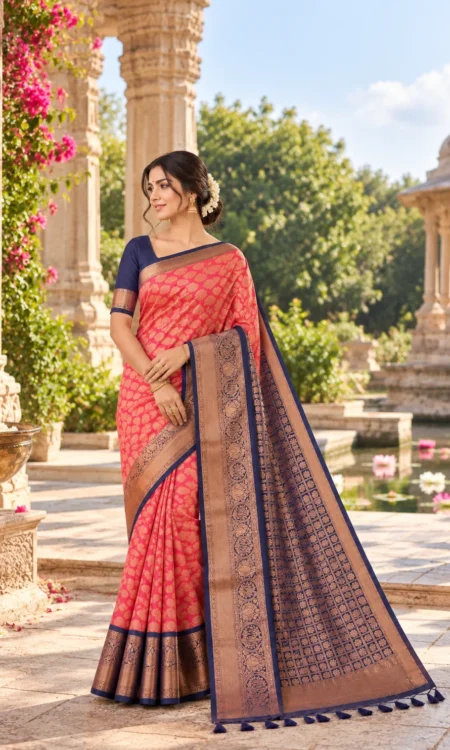
- Blue: Lapis Lazuli and Aegean Blue
- Green: Forest Fantasy
- Violet/plum: Plum Royale and Plum Penache
These colours should be treated as styling directions rather than universal engagement rules.
A rich pink can create a vibrant look, red can support a more traditional visual direction, blue can provide strong contrast, green can create a jewel-toned appearance, while violet and plum can give a deeper contemporary palette.
Zari and Woven Details
Zari is one of the strongest recurring characteristics of the collection. Depending on the product, shoppers can find:
- Gold zari
- Silver zari
- Matte zari
- Zari borders
- Zari pallus
- Woven jaal
- Temple-border styling
- Floral jaal and other woven details
The collection is particularly notable for
woven detail and zari rather than embroidery. A woven jaal is integrated into the textile construction, whereas embroidery is added through stitching after the fabric has been made. The two should not be treated as interchangeable terms.
More zari should not automatically be interpreted as better quality. Zari primarily contributes to the textile's appearance and decorative character, while quality requires consideration of material, construction, finishing and product-specific specifications.
Day, Evening and Venue Considerations
There is no universal colour or fabric rule for day versus evening engagements. Instead, use the event setting to decide how much sheen, metallic contrast and visual density you want.
Day Engagements
You may prefer:
- Softer or brighter colour directions
- Moderate sheen
- Controlled metallic detailing
- A less visually dense overall combination
Evening Engagements
You may consider:
- Richer colour contrast
- Jewel-toned colours
- More noticeable zari
- A stronger border or pallu
- More pronounced jewelry
These are styling considerations, not dress codes. A rich silk saree can work for a daytime event, while a softer colour can work in the evening when the overall styling suits the occasion.
Choosing by Venue
| Setting |
Useful Considerations |
| Indoor Banquet |
Formality, photography and metallic detail |
| Hotel or Ballroom |
Structured silk, zari and coordinated styling |
| Home or Intimate Setting |
More personal or understated styling |
| Garden or Outdoor Event |
Movement, footwear and overall visual lightness |
| Traditional Venue |
Regional textile and jewelry context |
The venue should influence practical styling rather than dictate one mandatory saree fabric.
How to Choose an Engagement Saree
Start with the event rather than with a single trend.
- Who is wearing it? Bride-to-be, family member, relative or guest?
- What kind of engagement is it? Traditional, family-centered, formal, modern or party-style?
- Is it during the day or evening? Consider light, sheen and metallic detailing.
- Where is it taking place? Indoor, outdoor, home, hotel, banquet or another setting?
- How formal should the look be? Minimal, semi-formal, formal or statement?
- Do you want a traditional or contemporary direction? Banarasi, Kanjivaram and richer zari can support a traditional direction, while colour and blouse styling can create a more contemporary result.
- Which fabric suits the event? Compare the silk and silk-based materials actually available.
- How much weight and structure are comfortable? Current listed products range from approximately 600 g to 1,000 g.
- How much sheen do you want? Consider the natural character of the fabric alongside metallic zari.
- Which colour works with your intended styling? The current assortment includes pink, red, blue, green and violet/plum.
- What type of zari do you want? Look at whether the product uses gold, silver or matte zari and where it appears.
- What border and pallu work for the occasion? These can strongly influence the visual formality of the saree.
- Do you want woven detail? Look for jaal, floral jaal, temple-border or other product-specific woven features.
- What blouse is included? Most current products include matching unstitched blouse pieces.
- How will you coordinate jewelry? Consider the saree's metallic colour, fabric and overall richness.
- What is your budget? Compare current product prices rather than relying on generic price ranges.
- What care will the saree require? Check the individual product's instructions before purchasing.
- Are any authenticity claims important to you? Look for product-specific material and certification information where relevant.
How to Style an Engagement Saree
A useful styling framework is:
Saree + fabric + colour + zari + border/pallu + blouse + jewelry + event setting
Blouse
The current collection generally includes
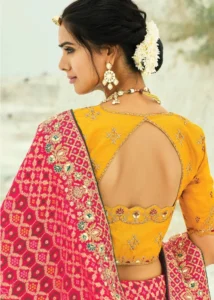
matching unstitched blouse pieces, giving you the option of a coordinated blouse or a tailored interpretation.
Depending on the saree, consider:
- Matching blouse
- Contrast blouse
- Zari detailing
- Structured contemporary blouse
- Sleeve variations
- Neckline variations
The blouse should respond to the saree rather than overpowering its woven or zari details.
Jewelry
Coordinate jewelry with the saree's visual language.
- Gold-dominant zari: Gold jewelry can create continuity.
- Silver zari: Silver, diamond-look or cooler-toned jewelry can complement the metallic detail.
- Heavy zari: Selective jewelry can help maintain balance.
- Rich silk: Traditional jewelry can reinforce the textile character.
These are coordination options rather than rules about what someone must wear.
Draping
Choose a drape according to the saree, venue, movement and personal style. Regional drapes can be appropriate where they reflect the wearer's cultural context, but there is no single universally defined "engagement drape."
Footwear and Accessories
Coordinate footwear with the venue and the practical demands of the saree. Traditional footwear, flats or heels can all be considered depending on the setting.
For bags, a clutch or potli can complement formal styling, while the final choice should remain practical for the event.
Engagement Saree Quality and Authenticity
Quality should be evaluated from the product information and construction rather than from visual richness alone.
What to Examine
- Fabric: Check the stated material, texture and construction against the product description.
- Weaving: For woven sarees, consider motif clarity, border construction, pallu detail and overall finishing.
- Zari: Check the stated zari type and its consistency across the product. Gold or silver appearance alone does not establish purity.
- Finishing: Inspect the border, pallu, blouse piece, fall/pico and loose threads where the product can be physically examined.
- Blouse: Confirm whether the product includes an unstitched blouse and whether its colour or material matches the stated product details.
Authenticity
Terms such as
silk, handloom, handwoven, handmade, artisan-made, GI, gold zari and authentic require product-specific evidence.
A product description identifying a saree as Banarasi or Kanjivaram should not automatically be treated as proof that the product qualifies for a particular GI registration.
For shoppers evaluating silk authenticity, product documentation and relevant certification are more reliable than photographs or appearance alone. Silk Mark guidance also distinguishes pure-silk certification from zari purity.
For GI-related purchases, look for relevant product documentation and applicable information rather than assuming that every saree using a traditional textile name is automatically GI-certified.
Engagement Saree Care
Always follow the
care instructions supplied with the individual saree first. Silk, zari and decorative details can require specialist handling.
For the current collection, product instructions consistently advise against:
- Handwashing
- Machine washing
- Brushing
- Twisting
- Squeezing
- Frequent cleaning
- Direct extreme heat
Professional dry cleaning is recommended in the current product-care guidance.
For storage, handle the saree carefully and fold it in a way that protects zari and decorative areas. Avoid prolonged exposure to direct light, excessive heat or unsuitable storage conditions.
Care requirements can differ by fabric and construction, so the individual product instructions should take priority over any general rule.
Frequently Asked Questions
What is an engagement saree?
An engagement saree is a saree selected specifically for an engagement ceremony, ring ceremony or engagement celebration. It is an occasion-based classification rather than a separate textile type.
Which saree is suitable for an engagement ceremony?
There is no universal best engagement saree. Choose according to the wearer, event formality, time, venue, fabric, colour, sheen, zari, border, pallu and personal style. The current collection is particularly focused on Banarasi and Kanjivaram-related silk styles, including Mashru silk, soft silk, Katan silk, raw silk and zari-rich designs.
Can I wear a silk saree to an engagement?
Yes. Silk and silk-based sarees can be a strong choice when their weight, sheen, colour and detailing suit the event. The current Engagement Sarees collection is strongly silk-led.
Are Banarasi sarees suitable for engagements?
Yes. Banarasi sarees can be considered for engagement ceremonies when their colour, zari, woven details and overall formality suit the event. The current collection includes Banarasi styles with zari borders, pallus and woven jaal.
Are Kanjivaram sarees suitable for engagements?
Yes. Kanjivaram sarees can be selected for an engagement when their silk, zari, colour and styling suit the occasion. They are a textile tradition associated with Kanchipuram rather than an engagement-specific saree type.
Which colours are suitable for engagement sarees?
There is no universal engagement colour. The current collection includes pink, red, blue, green and violet/plum. Choose according to the desired visual direction, event setting and personal style rather than treating one colour as mandatory.
What saree should a bride wear to her engagement?
A bride-to-be can choose a traditional, refined or contemporary saree according to the event. The current collection particularly supports traditional and refined directions through silk, Banarasi/Kanjivaram-related styles, zari and defined borders and pallus.
What is the difference between an engagement saree and a wedding saree?
The difference is primarily the occasion being considered. Engagement sarees are selected for engagement ceremonies or celebrations, while wedding sarees cover a broader range of wedding-related functions.
What is the difference between an engagement saree and a bridal saree?
An engagement saree is selected specifically for the engagement occasion. A bridal saree is primarily part of the bride's wedding wardrobe. A bride-to-be can shop from both categories because the same saree may suit an engagement without being classified as a bridal saree.
Can a reception saree be worn to an engagement?
It can be, depending on the event, styling and desired formality. Reception and engagement are different occasions, but a saree suitable for one may also work for the other.
How should I style an engagement saree?
Coordinate the saree's fabric, colour, zari, border and pallu with the blouse, jewelry, drape and venue. For example, gold-zari sarees can work naturally with gold jewelry, while silver-zari sarees can be coordinated with cooler-toned accessories.
How do I care for a silk and zari saree?
Follow the individual product's care instructions first. For the current collection, care guidance generally advises against washing, brushing, twisting, squeezing and direct extreme heat, with professional dry cleaning recommended.
Explore Related Saree Collections
If your occasion or textile requirement changes, explore:
The Engagement Sarees collection remains the occasion-specific destination for sarees being considered for engagement ceremonies and celebrations.