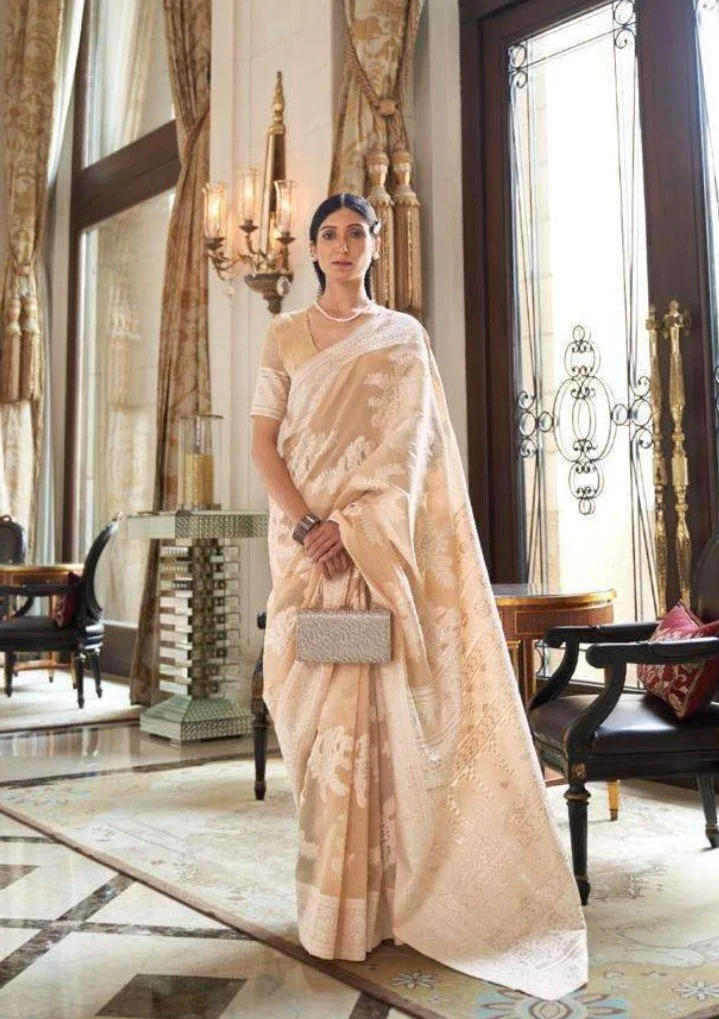
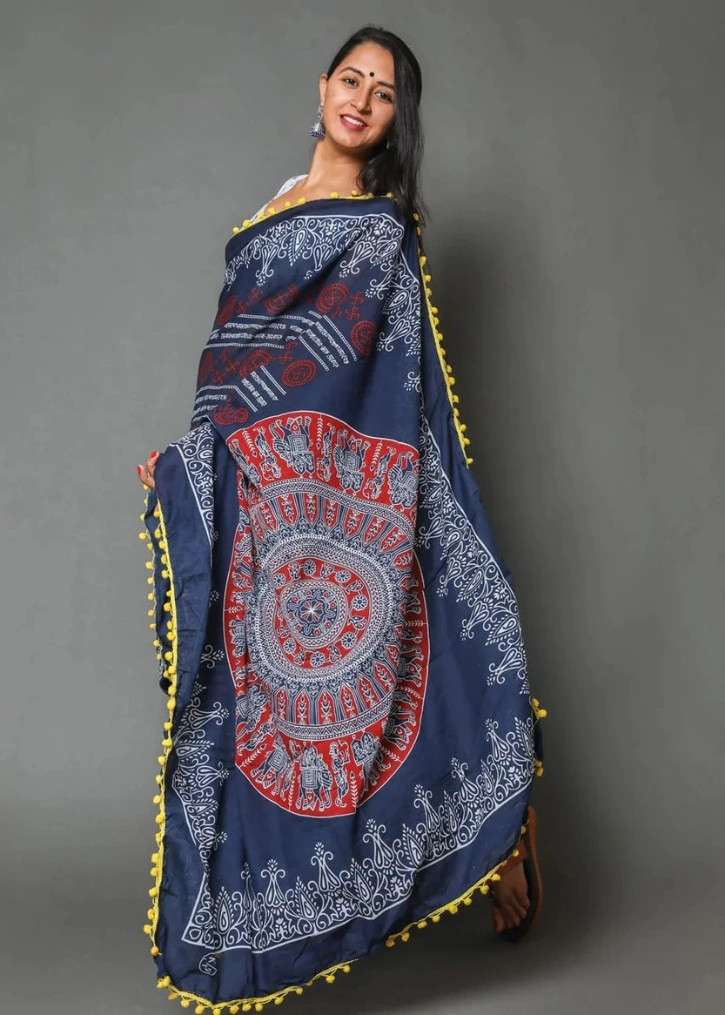
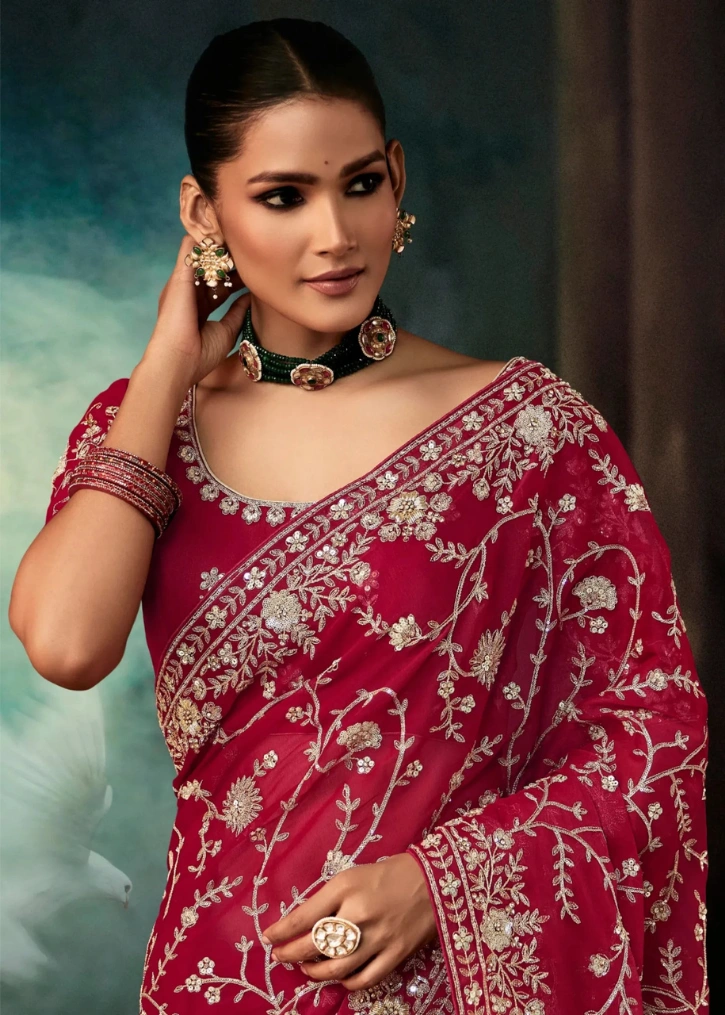
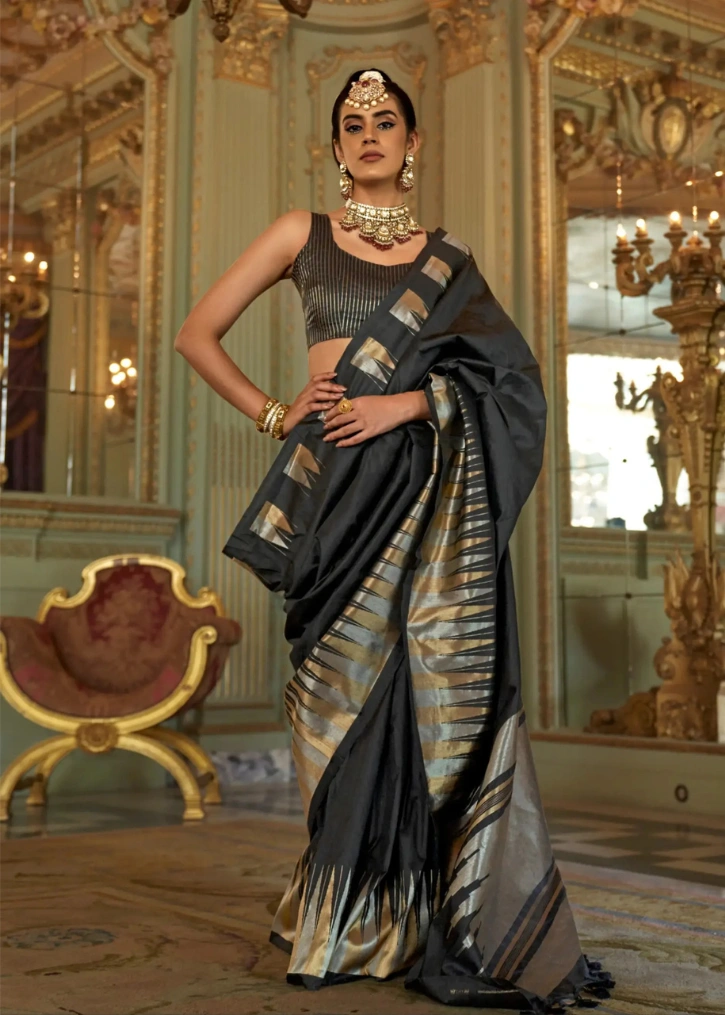
What Are Georgette Sarees?
A georgette saree is a saree made using georgette fabric, a woven crêpe fabric known for its characteristic textured surface and flowing movement.
Georgette is commonly associated with a lightly grainy or puckered appearance created through highly twisted yarns. The exact look and feel can vary according to the fibre used, yarn construction, fabric density, finishing and any embroidery or embellishment added to the finished saree.
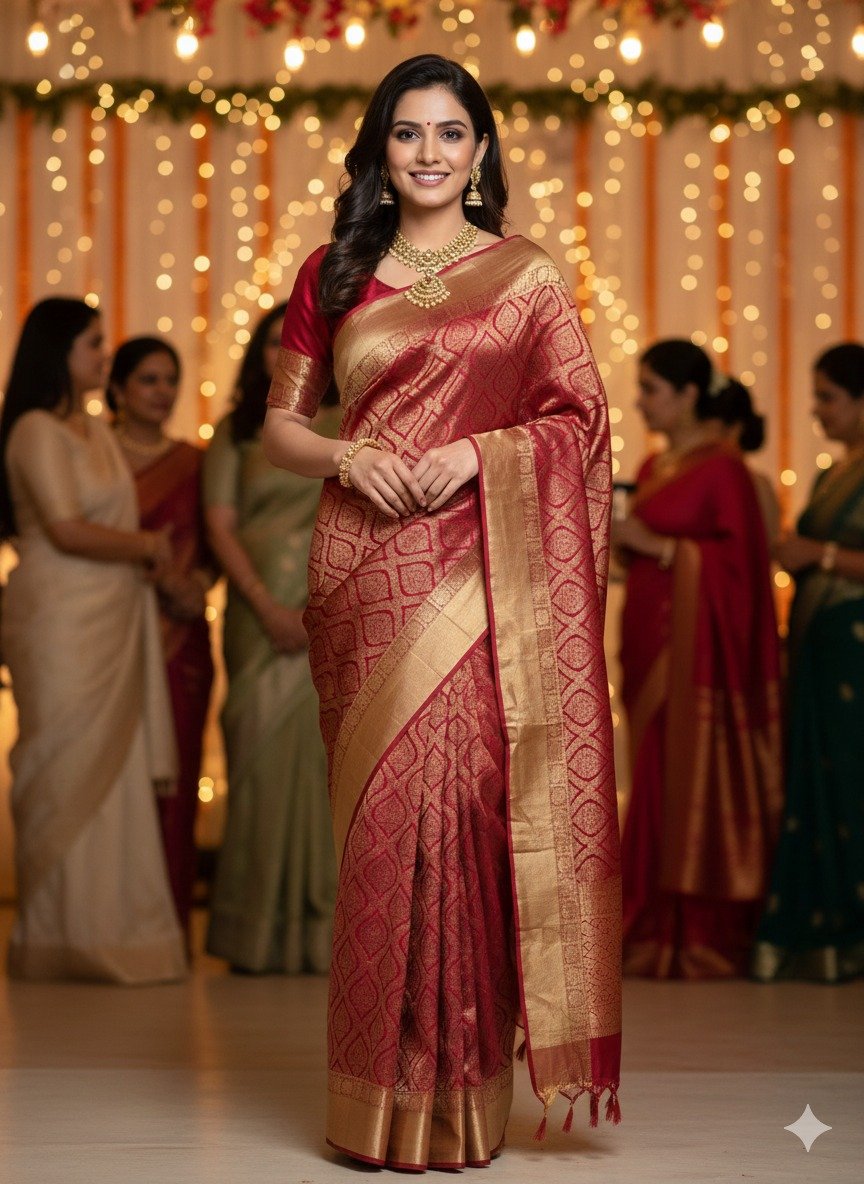
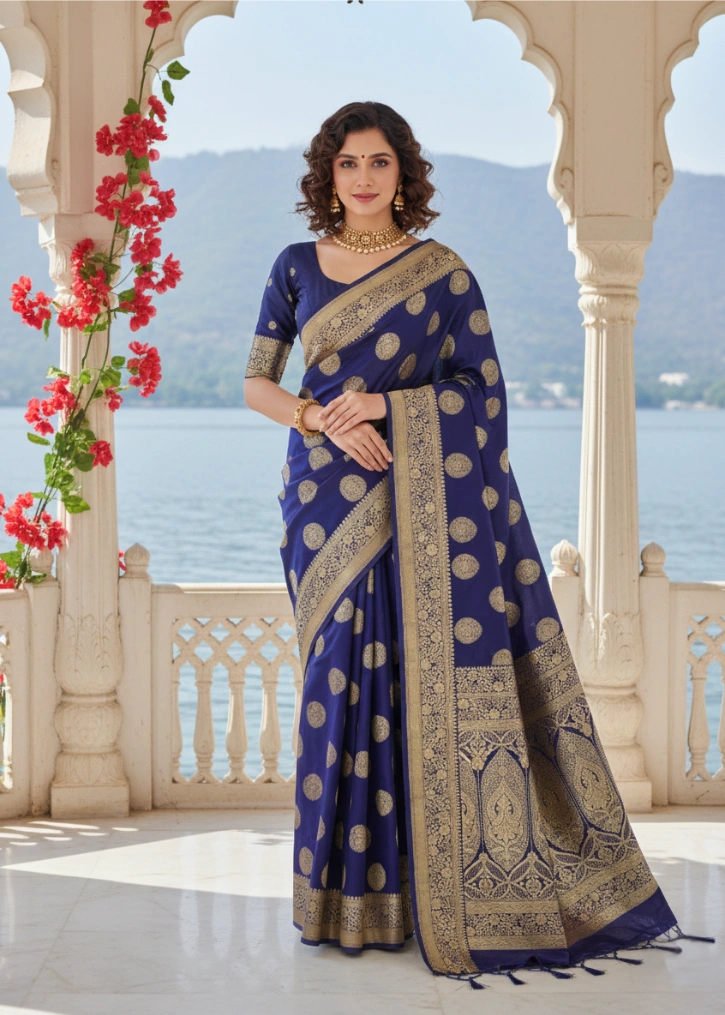
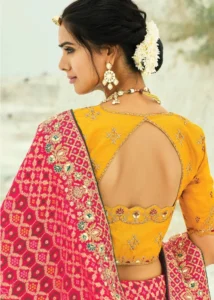
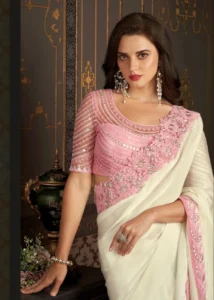
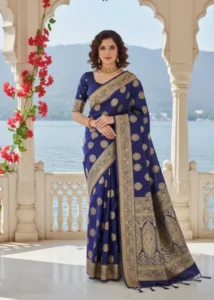
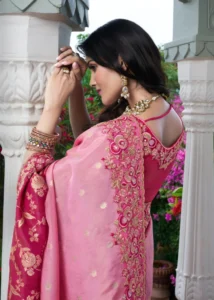
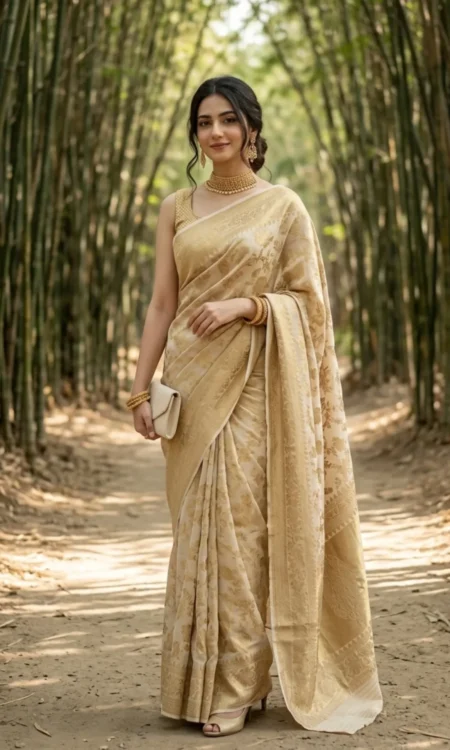
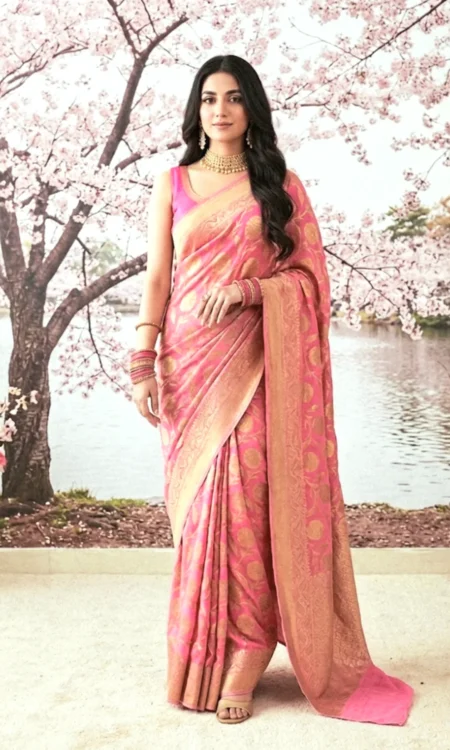
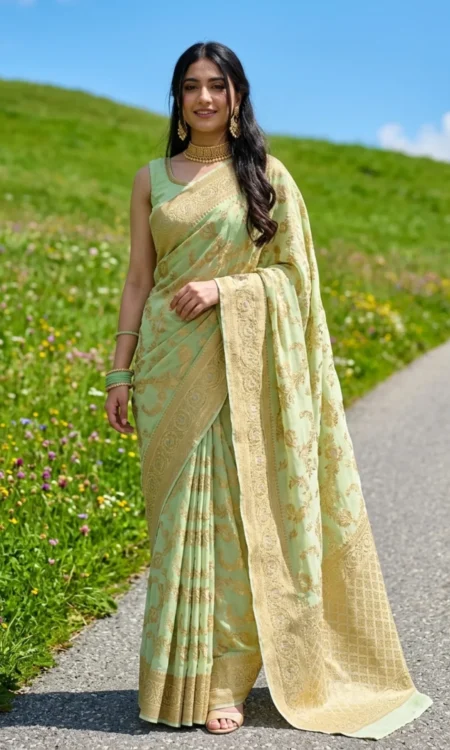
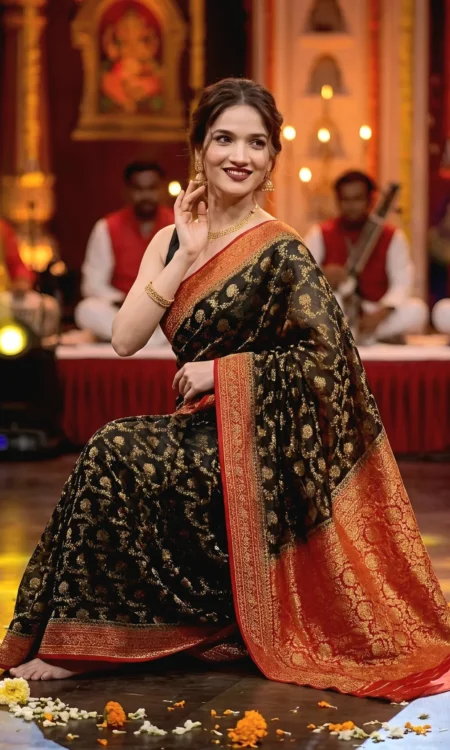
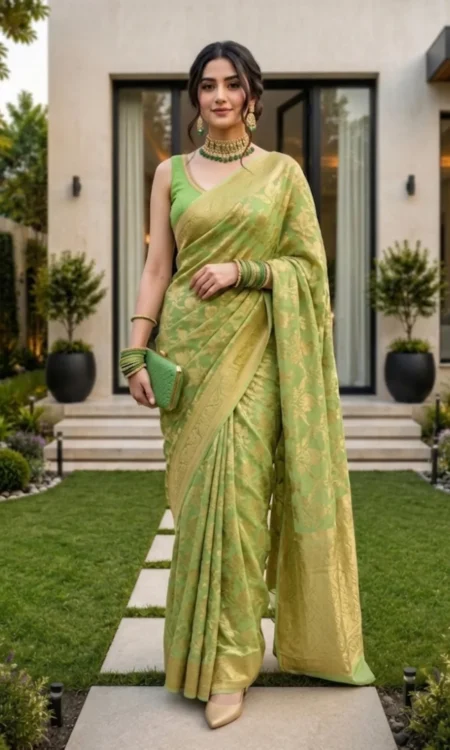
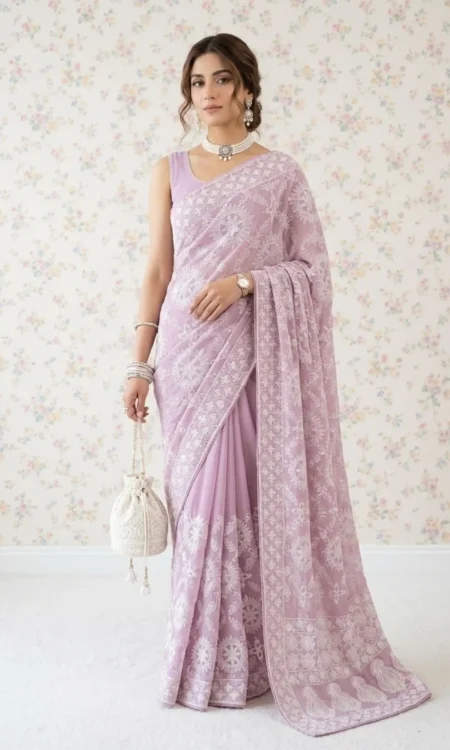
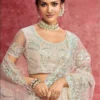
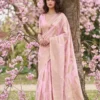
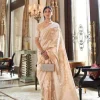
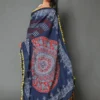
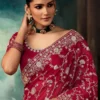
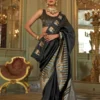
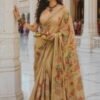
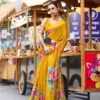
Our current Georgette Sarees collection has a strong focus on Banarasi georgette, Banarasi Khaddi georgette, Chikankari georgette, zari detailing, floral jaal and occasion-focused designs. This makes the collection particularly relevant for shoppers looking for an elegant georgette saree for festive events, weddings, parties and other special occasions.
What Is Georgette Fabric?
Georgette is a fabric category, not a fibre.
The distinction is important when shopping for a saree:
Fibre → yarn → fabric construction → finished saree
Silk, polyester, viscose and other fibres can be used to produce different types of fabrics. Georgette describes the fabric construction and resulting character rather than automatically identifying the fibre inside it.
Its characteristic crêpe texture is associated with highly twisted yarns and alternating twist directions. This construction contributes to the slightly puckered, grainy surface for which georgette is known.
This also means that two sarees both labelled “georgette” can feel different. Fibre composition, yarn characteristics, density, finishing and decorative work can all influence the finished saree.
What Does Georgette Feel Like?
Georgette generally has a textured, crêpe-like surface rather than an exceptionally smooth finish.
Depending on the particular fabric, you may notice:
- A lightly grainy or pebbled surface
- A soft, flowing movement
- A relatively fluid fall
- A less glossy appearance than some smooth fabrics
- A lightweight visual character
The exact hand should not be assumed from the word “georgette” alone. Silk georgette, manufactured-fibre georgette and different fabric constructions can have noticeably different textures and finishes.
Does Georgette Drape Well?
Georgette is commonly valued for its flowing drape and movement.
It can work particularly well for saree styles where the fabric needs to form soft pleats and a fluid pallu. However, the drape of an individual saree also depends on its fibre composition, fabric density, finishing and decorative work.
A heavily embellished georgette saree can behave differently from a lighter, minimally decorated one. Zari, embroidery, borders and other embellishments can add weight and influence how the saree falls.
For this reason, use the individual product photographs and specifications alongside the general characteristics of georgette when choosing a saree.
Is Georgette Lightweight?
Georgette is widely associated with lightweight fabrics, but “georgette” does not guarantee a particular finished saree weight.
The weight of a complete saree can be affected by:
- Fabric construction
- Fibre composition
- Zari
- Embroidery
- Border work
- Pallu detailing
- Blouse piece
- Other embellishments
The sarees in our current collection show a range of finished product weights. These product weights should not be confused with fabric GSM.
A 900g saree, for example, describes the weight of that finished product—not the GSM of the georgette fabric itself.
Is Georgette Sheer?
Georgette can have a relatively light or translucent appearance, but the degree of sheerness varies.
It can be influenced by:
- Fibre composition
- Yarn construction
- Fabric density
- Colour
- Finishing
- Layering
- Embroidery and embellishment
Therefore, it is better not to assume that every georgette saree will have exactly the same level of transparency.
If coverage is an important consideration, review the individual product photography and description and consider how the saree will be worn with its blouse and underskirt.
Silk Georgette and Other Georgette Compositions
One of the most important things to understand when shopping for georgette is that georgette does not automatically mean silk.
A saree may be described as:
- Silk georgette
- Polyester georgette
- Viscose georgette
- Another manufactured-fibre georgette
- A blend
The composition should therefore be checked at the individual product level.
Some sarees in the current collection are specifically described as Pure Georgette Khaddi Jaal Banarasi Sarees, and certain products carry Silk Mark certification information. Where a product provides verified silk composition or certification information, that information should take precedence over assumptions based on appearance or touch.
“Pure georgette” should also not automatically be interpreted as “100% pure silk.”
Georgette vs Chiffon
Georgette and chiffon are both lightweight fabrics commonly used for sarees, but they have different textile characteristics.
| Characteristic |
Georgette |
Chiffon |
| Surface |
Crêpe-like and grainy |
Generally smoother |
| Texture |
Noticeably textured |
Usually less grainy |
| Appearance |
Often more matte |
Often more translucent |
| Drape |
Flowing and fluid |
Very fluid |
| Body |
Can have slightly more body |
Often lighter and more delicate |
| Transparency |
Varies |
Often relatively translucent |
| Visual character |
Textured and softly flowing |
Light and floaty |
The difference should be understood as a general fabric comparison rather than a rigid rule for every product. Fibre, yarn construction and finishing can change the final characteristics.
Georgette vs Crepe
This comparison is slightly more complicated than it first appears.
Georgette is itself associated with the broader crêpe family of fabrics.
In everyday saree shopping, however, “georgette” and “crepe” are often presented as separate commercial fabric labels. The exact characteristics of a fabric sold simply as “crepe” depend on its particular construction.
Rather than assuming that crepe is always heavier or that georgette is always lighter, compare the actual:
- Texture
- Density
- Drape
- Transparency
- Fibre composition
- Finish
of the saree you are considering.
Georgette vs Organza
Georgette and organza create very different visual effects.
| Characteristic |
Georgette |
Organza |
| Surface |
Textured, crêpe-like |
Generally smooth |
| Drape |
Fluid |
More structured |
| Hand |
Soft-moving |
Crisp |
| Transparency |
Varies |
Often visibly sheer |
| Body |
Flowing |
More defined |
| Styling effect |
Soft and fluid |
Crisp and statement-making |
Choose georgette when you prefer flowing movement and a textured surface. Organza can be more suitable when you want a crisp, structured appearance.
How to Choose a Georgette Saree
Choosing the right georgette saree is easier when you consider the complete saree rather than the fabric name alone.
1. Check the fibre composition
If silk is important to you, look for explicit composition information rather than assuming that georgette means silk.
2. Consider the texture
Georgette is associated with a crêpe-like, grainy surface. Decide whether this textured appearance suits the look you want.
3. Think about the drape
Look at the product photographs to understand how the saree falls. Embroidery, zari and heavier borders can influence movement.
4. Consider transparency
If coverage matters to you, assess the individual saree rather than assuming all georgette has the same level of sheerness.
5. Match the design to the occasion
For festive and wedding-related dressing, Banarasi, zari and embroidered georgette can create a more elaborate appearance. For a softer look, consider less densely embellished designs where available.
6. Choose your colour
The current collection features strong pink, red, cream, green, violet, blue, mauve and related colour families.
7. Examine the border and pallu
A prominent zari or embroidered border can make the saree more formal, while the pallu often becomes the main visual feature when the saree is draped.
8. Check the blouse piece
Many current products include an unstitched blouse piece. Consider whether you want a matching blouse or plan to introduce a contrasting colour.
9. Review care instructions
Zari, embroidery and embellishment can require more careful handling. Always follow the instructions supplied with the individual saree.
Georgette Sarees for Weddings, Festive Events and Parties
The current Georgette Sarees collection has a strong occasion-wear direction, with Banarasi, Khaddi, Chikankari, zari and embroidered styles forming an important part of the assortment.
For weddings
Consider:
- Banarasi georgette
- Khaddi georgette
- Zari borders
- Floral jaal
- Rich pallu detailing
- More elaborate embroidery
For wedding guests, choose the level of embellishment and colour according to the event and your personal style.
For festive occasions
Gold zari, floral motifs, contrasting borders and rich colours can create a festive appearance without requiring the saree to be heavily embellished.
For parties
Embroidered georgette, Chikankari, metallic detailing and statement borders can work well when you want a more dressed-up saree.
The suitability of a saree for a particular occasion comes from the combination of fabric, colour, design, embellishment and styling, rather than georgette alone.
Banarasi Georgette Sarees
Banarasi georgette is one of the strongest design directions in the current collection.
The assortment includes georgette sarees featuring:
- Floral jaal
- Zari butta
- Gold borders
- Decorative pallus
- Rich contrast combinations
- Traditional Banarasi-inspired patterning
These styles combine the flowing character of georgette with the decorative presence associated with Banarasi designs.
When shopping, pay attention to the relationship between the body, border and pallu. A detailed border can create a strong frame around the saree, while an all-over jaal creates a more elaborate overall effect.
Chikankari Georgette Sarees
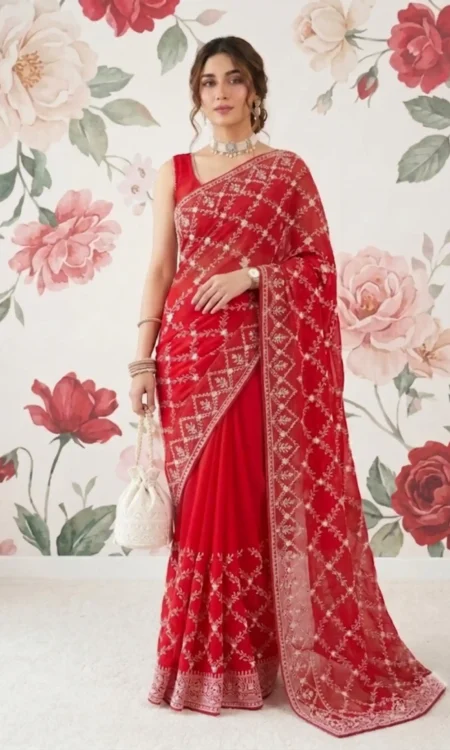
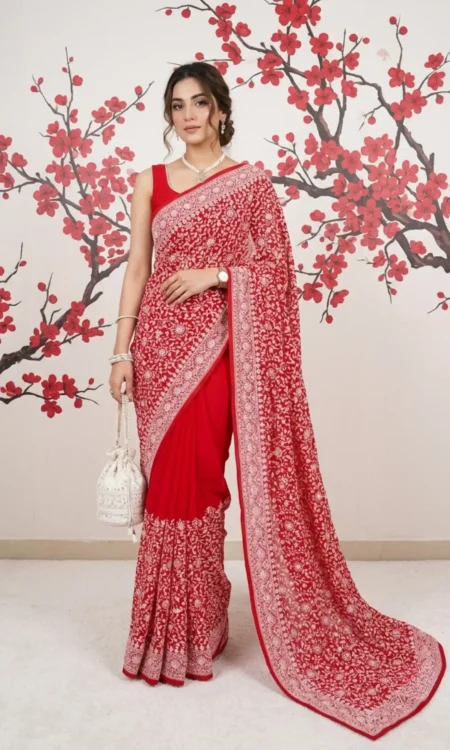
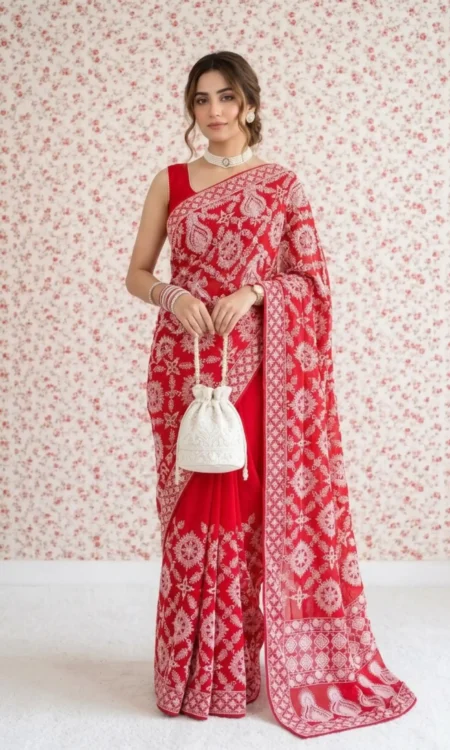
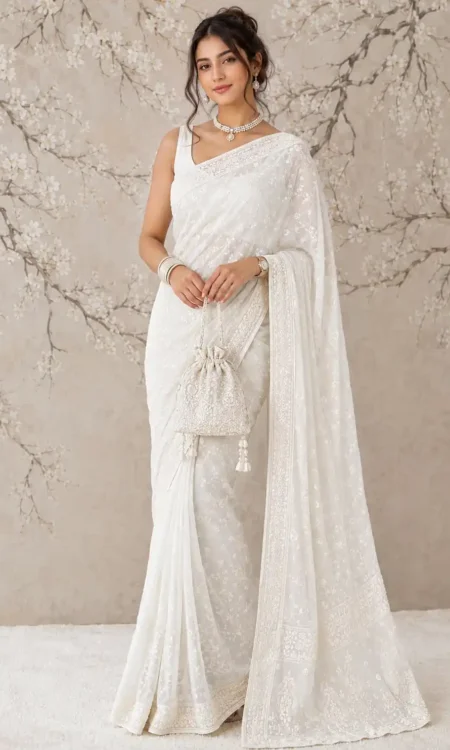
The collection also includes Chikankari georgette sarees in colours such as red, lavender and white.
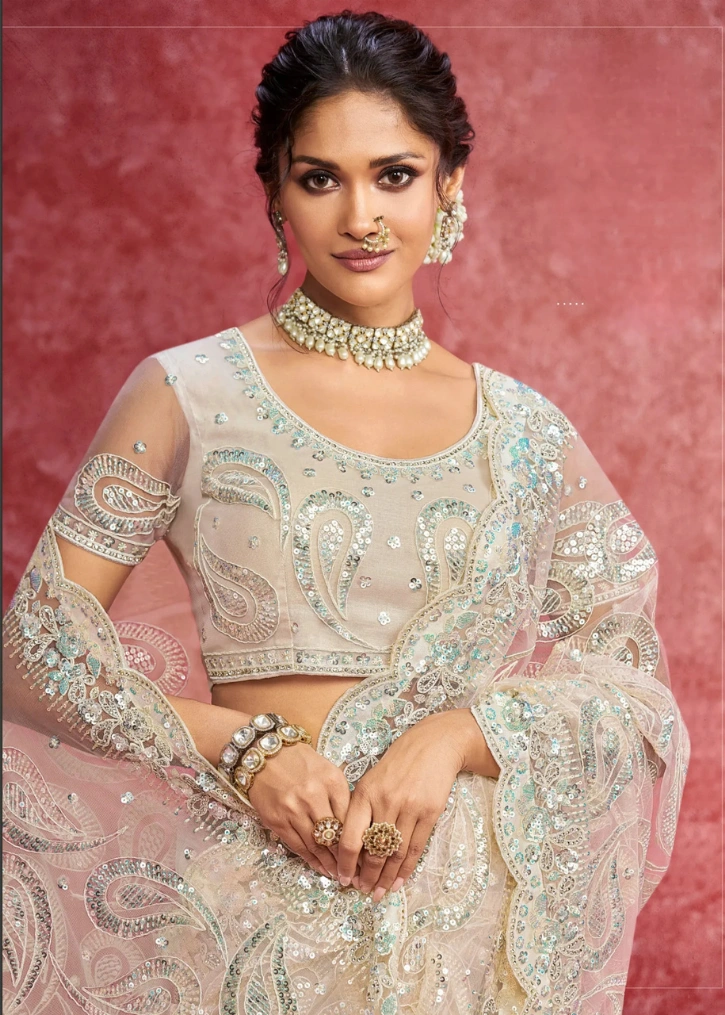
Chikankari adds an embroidered dimension to the textured georgette base, creating a different look from the zari-focused Banarasi styles.
For a softer styling direction, pair an embroidered Chikankari georgette saree with understated jewellery. For a more formal occasion, the accessories and blouse can be used to increase the overall visual impact.
Zari and Embellished Georgette Sarees
Zari is an important decorative feature across the current collection.
You will find designs combining georgette with:
- Gold zari
- Floral jaal
- Zari butta
- Detailed borders
- Decorative pallus
- Embroidery
- Other embellishment
It is useful to distinguish the two components when reading product descriptions:
The saree can have a georgette base with zari detailing.
Zari is a decorative element; it does not describe the base fabric.
Similarly, a saree containing zari should not automatically be described as having a particular zari composition unless the product information establishes it.
Georgette Saree Colours
The current collection offers a broad colour direction, with particularly strong representation in:
- Pink
- Red
- Cream
- Gold
- Green
- Violet
- Mauve
- Blue
- White
Pink and mauve
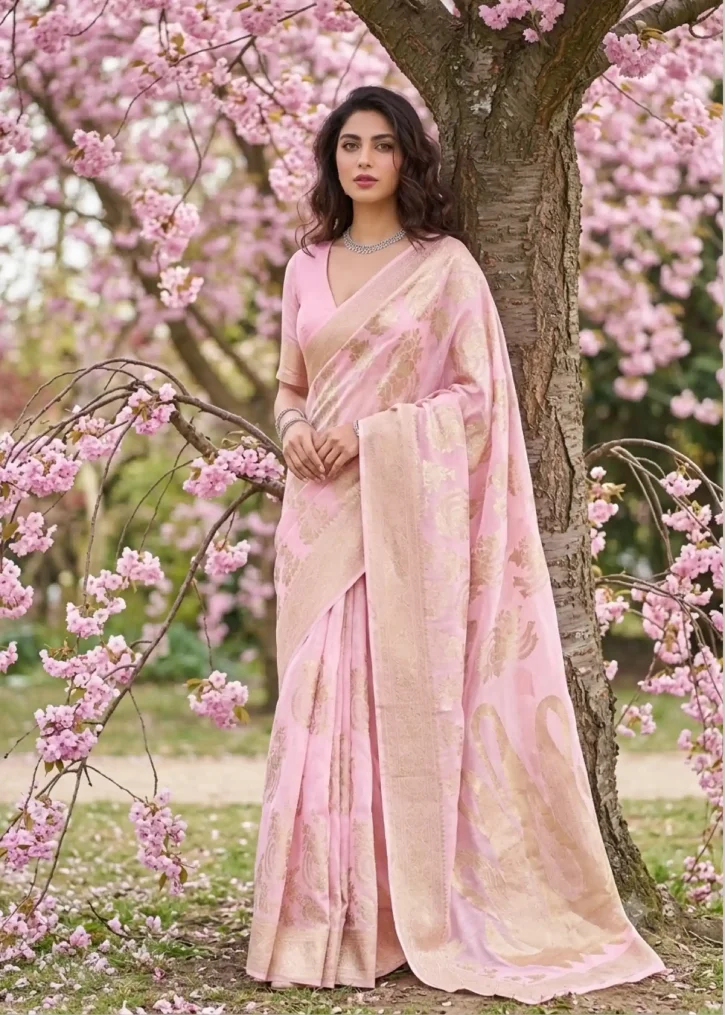
Pink and mauve georgette sarees can create a softer, elegant appearance, particularly when paired with delicate or coordinated styling.
Red
Red georgette sarees with embroidery or zari can create a stronger festive and wedding-oriented look.
Cream and gold
Cream combined with gold creates a classic occasion-wear direction, particularly in Banarasi styles.
Green and blue
Green and blue offer alternatives to the more dominant pink and red colour families and can work particularly well with gold detailing.
Georgette Saree Borders and Pallus
The border and pallu can significantly influence the appearance of a georgette saree.
Current collection designs include:
- Gold borders
- Contrast borders
- Embroidered borders
- Pink-and-gold combinations
- Red-and-gold combinations
- Detailed pallus
- Coordinated body-and-border designs
When choosing a saree, consider whether you want the border to be a subtle finishing element or a major part of the look.
A detailed pallu can also become the focal point of the saree when draped over the shoulder.
How to Style a Georgette Saree
A classic Nivi drape is a practical starting point for styling a georgette saree.
Because georgette has a flowing character, neat pleating and appropriate pinning can help maintain the intended shape.
Blouse
Consider:
- A matching blouse
- A contrasting blouse
- A blouse inspired by the border
- A solid blouse with an embellished saree
- An embroidered blouse for a more formal look
Many current products include an unstitched blouse piece, giving you flexibility in neckline, sleeve and finishing choices.
Jewellery
Match the jewellery intensity to the saree.
For zari-heavy Banarasi georgette, gold-toned or statement jewellery can complement the decorative character.
For Chikankari georgette, pearls or more understated jewellery can create a softer look.
These are styling options rather than fixed rules.
Accessories
A clutch, coordinated footwear and carefully selected jewellery can complete a formal georgette saree look. The more elaborate the saree, the more useful it can be to balance the accessories rather than making every element equally ornate.
How to Judge Georgette Saree Quality
The word “georgette” alone does not tell you everything about a saree's quality.
When comparing products, consider:
Composition
Check the stated fibre composition.
Fabric surface
Look for a consistent crêpe-like character appropriate to the product description.
Density and coverage
Consider whether the fabric provides the level of coverage you want.
Drape
Look at photographs and product information to assess how the saree falls.
Borders and pallu
Check the finishing, alignment and quality of decorative work.
Embroidery
For embroidered sarees, look for consistent stitching and secure finishing.
Zari
Do not judge zari solely by shine. Review the product's stated construction and description where available.
Print quality
For printed designs, look for clean motifs, consistent colour and neat registration.
Product information
Composition, dimensions, weight, blouse-piece information and care instructions are useful indicators of how transparently a product is presented.
Silk Mark and Georgette Saree Authenticity
If you are specifically shopping for silk georgette, do not rely on touch, softness or appearance alone to determine whether a saree is silk.
Look for:
- Explicit fibre composition
- Product-level certification information where applicable
- Verified Silk Mark information where provided
Silk Mark certification should also not be confused with certification of zari purity. These are separate considerations.
Most importantly:
Georgette does not automatically mean silk, and “pure georgette” should not automatically be interpreted as “pure silk.”
Georgette Saree Care
Care should always be based on the individual product's instructions.
This is particularly important when a georgette saree includes:
- Zari
- Embroidery
- Decorative borders
- Embellishments
- A delicate or specialised fibre composition
For the current Sarees By Muhurat georgette collection, product instructions generally favour professional dry cleaning and careful handling rather than routine machine or hand washing.
Avoid:
- Brushing the saree aggressively
- Twisting or squeezing it
- Applying direct extreme heat
- Ironing directly over delicate folds or embellishment
For storage, keep the saree clean and dry and protect detailed zari or embroidery from unnecessary friction. Follow the specific care instructions supplied with your product whenever they differ from general fabric guidance.
Georgette Sarees for UAE Wear
For shoppers in Dubai, Abu Dhabi and elsewhere in the UAE, the most useful approach is to consider the complete textile specification, rather than assuming that every georgette saree will feel the same in warm conditions.
Pay attention to:
- Fibre composition
- Fabric density
- Layering
- Coverage
- Embroidery
- Zari
- Overall saree weight
- Occasion and indoor/outdoor setting
The word “georgette” by itself is not sufficient evidence to describe a saree as breathable, cooling or suitable for every warm-weather situation.
Frequently Asked Questions
What is a georgette saree?
A georgette saree is a saree made using georgette fabric, a woven crêpe fabric known for its textured surface and flowing drape. Its exact feel and appearance depend on the fibre, construction and finishing.
Is georgette a silk fabric?
Not necessarily. Georgette is a fabric category rather than a fibre. Silk can be used to produce silk georgette, but georgette can also be produced using manufactured fibres.
Is georgette always synthetic?
No. Georgette can be made using different fibres. Some georgette fabrics are silk-based, while others use manufactured fibres such as polyester or viscose. Check the product's stated composition.
What does georgette fabric feel like?
Georgette generally has a textured, grainy or crêpe-like surface created by its yarn construction. The exact hand can vary depending on fibre, density and finishing.
Is georgette lightweight?
Georgette is commonly associated with lightweight fabric, but the finished weight of a saree can vary considerably. Zari, embroidery, borders, pallus and other elements can add weight.
Is georgette sheer?
Georgette can have a relatively translucent appearance, but sheerness varies with fibre, density, construction, colour, finishing and layering. Check the individual saree when coverage is important.
What is the difference between georgette and chiffon?
Georgette generally has a more textured, grainy and crêpe-like surface, while chiffon is commonly smoother and more translucent. Both can offer fluid drape.
What is the difference between georgette and crepe?
Georgette is associated with the broader crêpe family. Commercially, “crepe” can refer to several different constructions, so the actual texture, weight and drape depend on the particular fabric.
What is the difference between georgette and organza?
Georgette generally has a more fluid drape and textured surface, while organza is typically crisper, smoother and more structured.
Are georgette sarees suitable for weddings and parties?
Yes, depending on the design. The current collection has a strong focus on Banarasi, Khaddi, Chikankari, zari and embellished georgette styles that are particularly suited to festive, wedding-related and party dressing.
How do I choose a georgette saree?
Start with fibre composition, texture, drape, transparency, occasion, colour, embroidery or zari, border, pallu and blouse. Always review the individual product information before making a final choice.
How should I care for a georgette saree?
Follow the care instructions for the individual saree. Georgette products with zari or embroidery often require careful handling and professional dry cleaning. Avoid twisting, squeezing, aggressive brushing and direct high heat unless the product instructions specifically permit otherwise.
Explore Related Saree Collections
If you are comparing georgette with other textile or design categories, explore related collections such as: