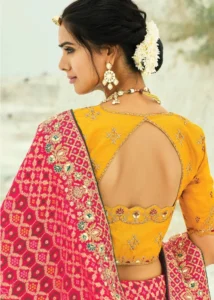
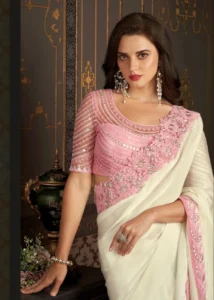
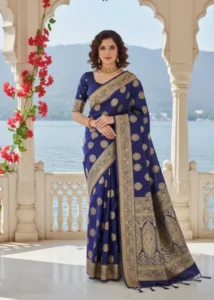
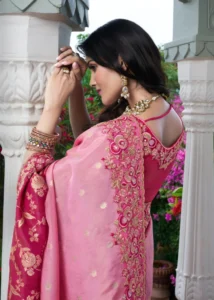
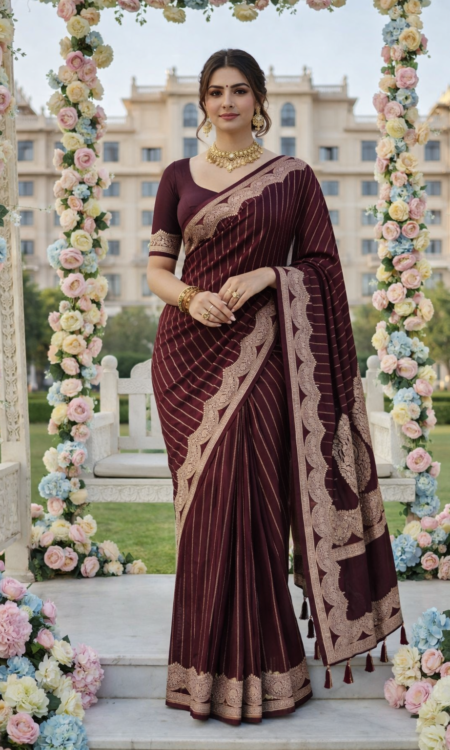
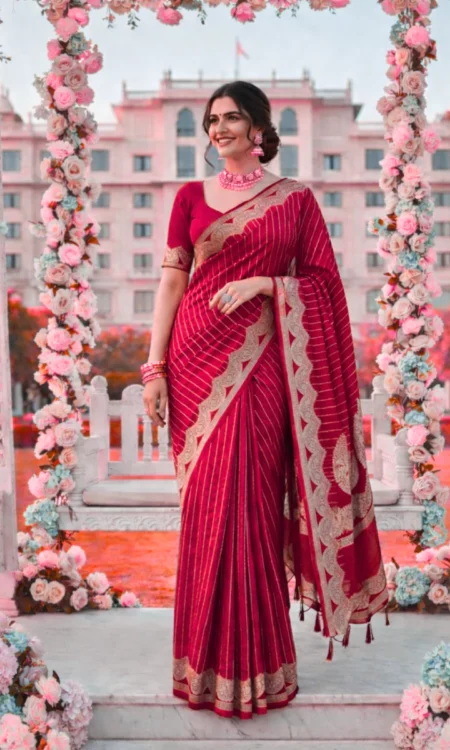
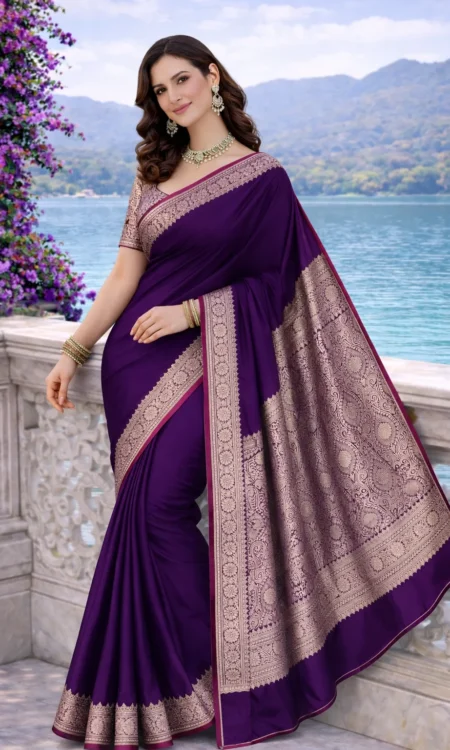
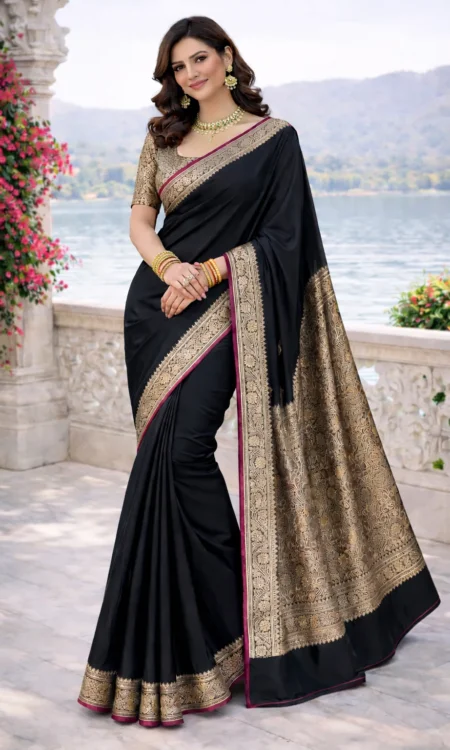
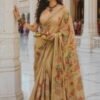
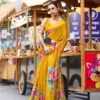
Mashru Silk Sarees
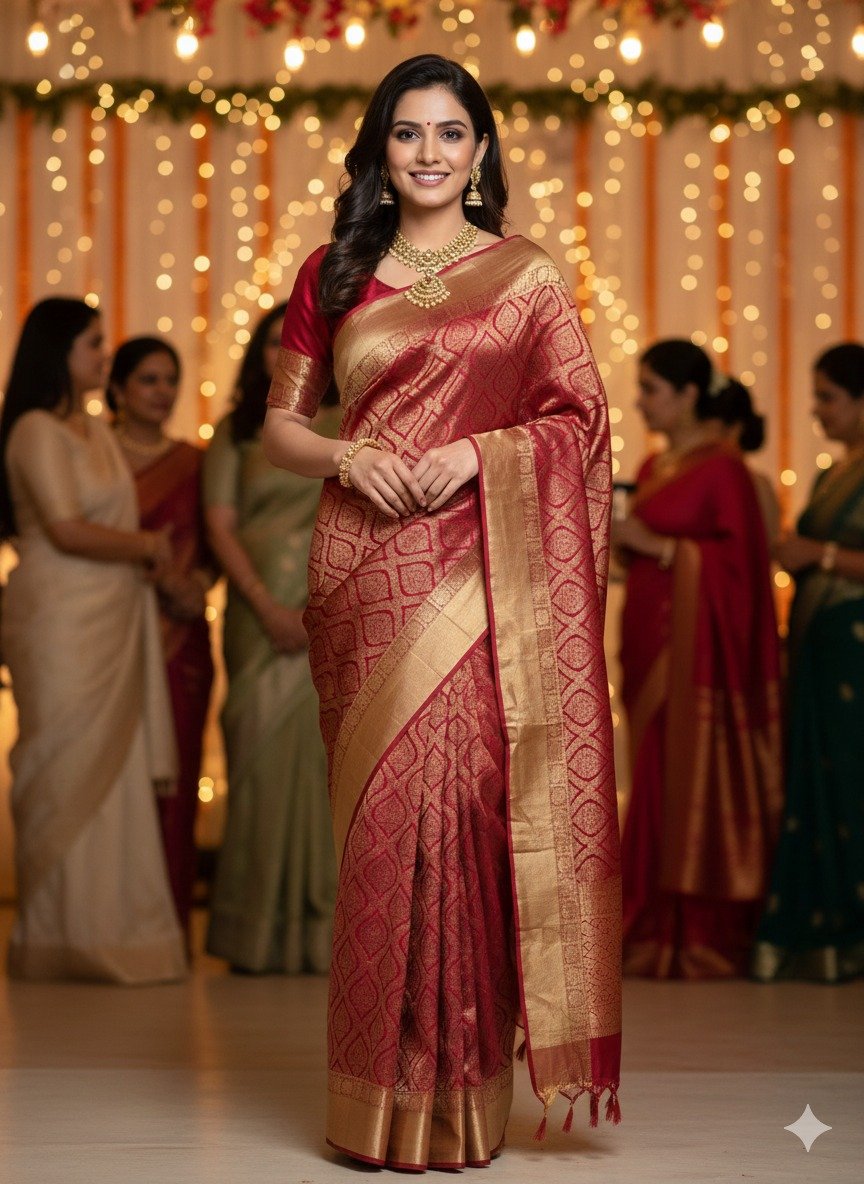
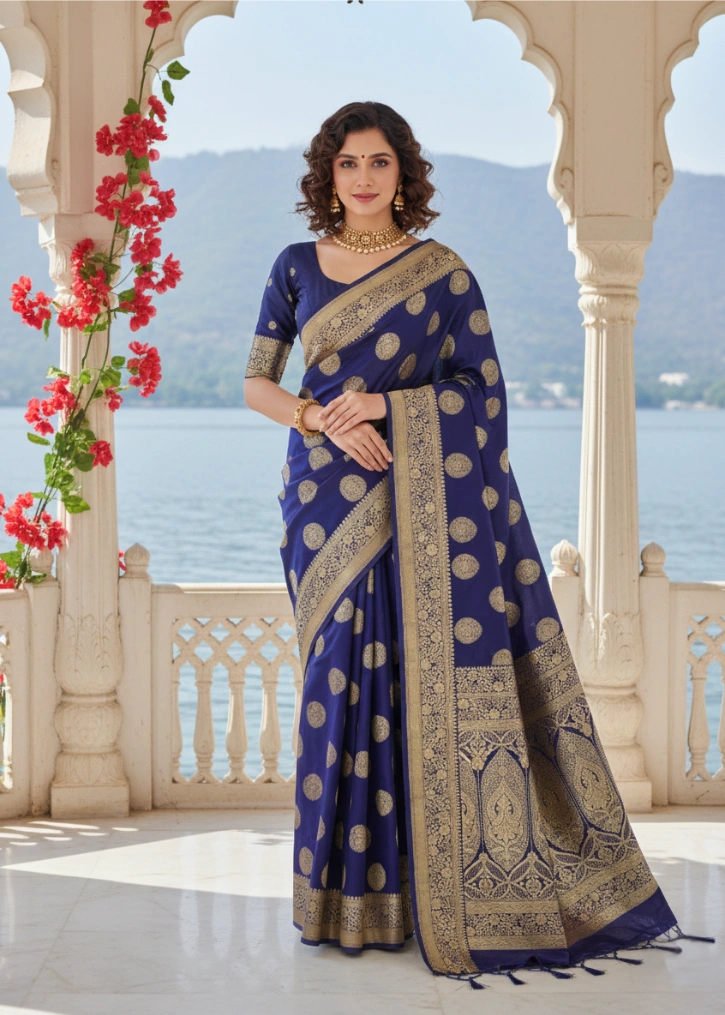
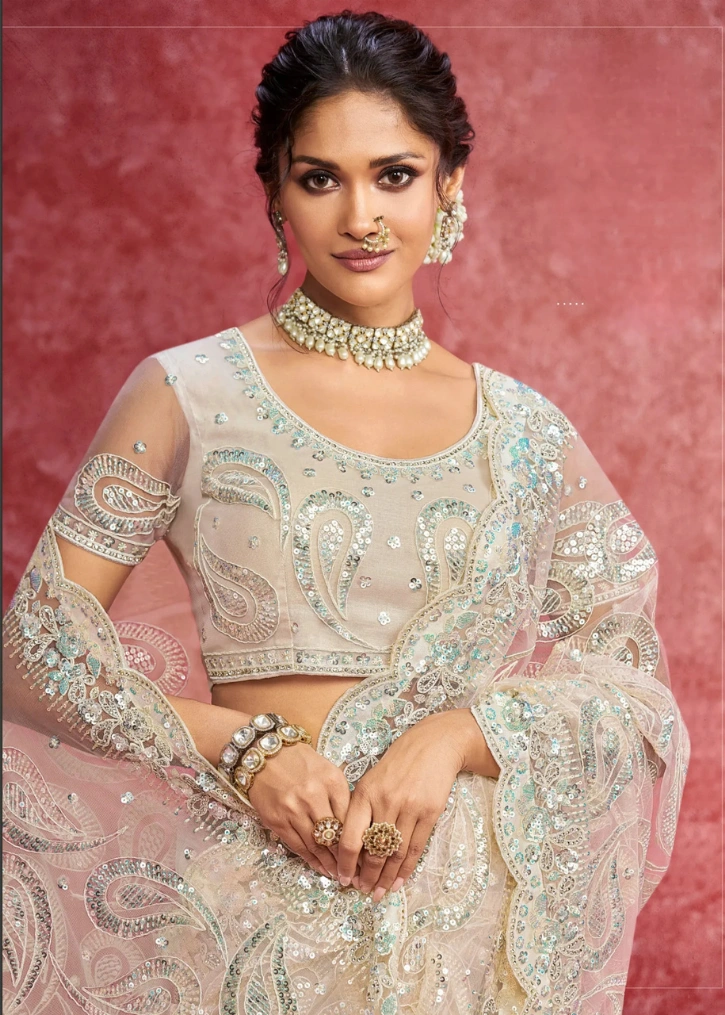
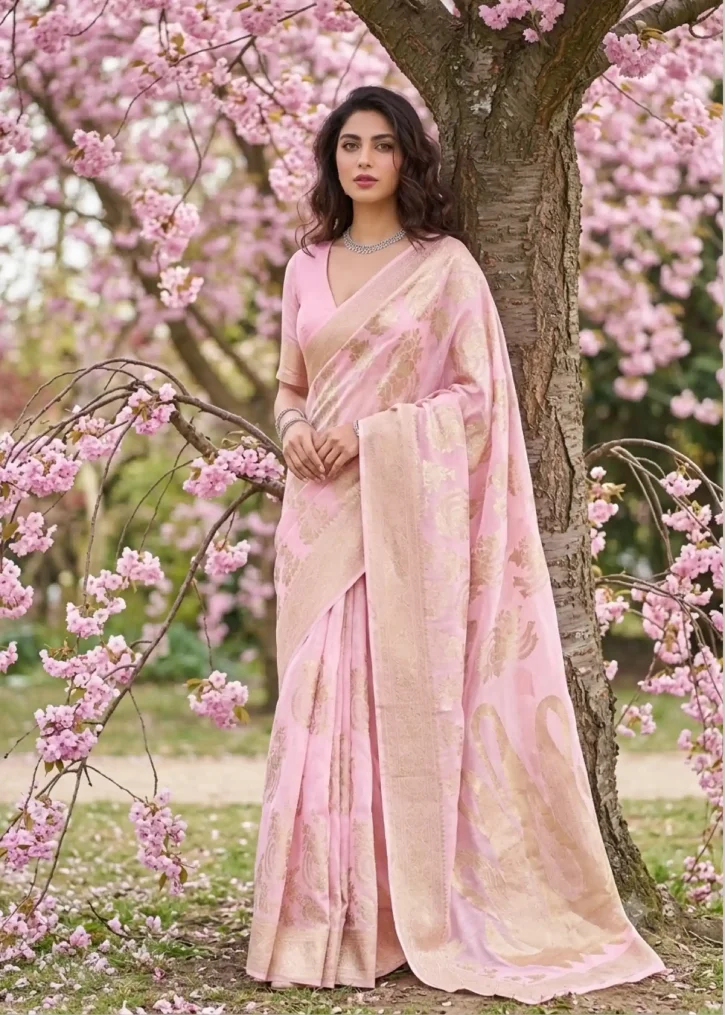
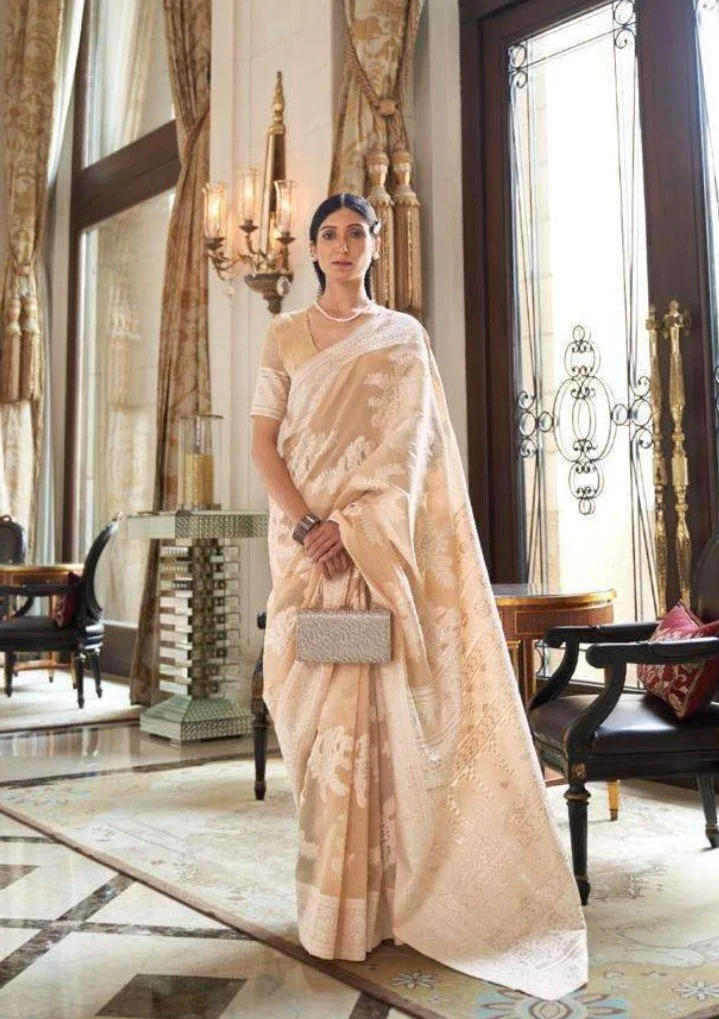
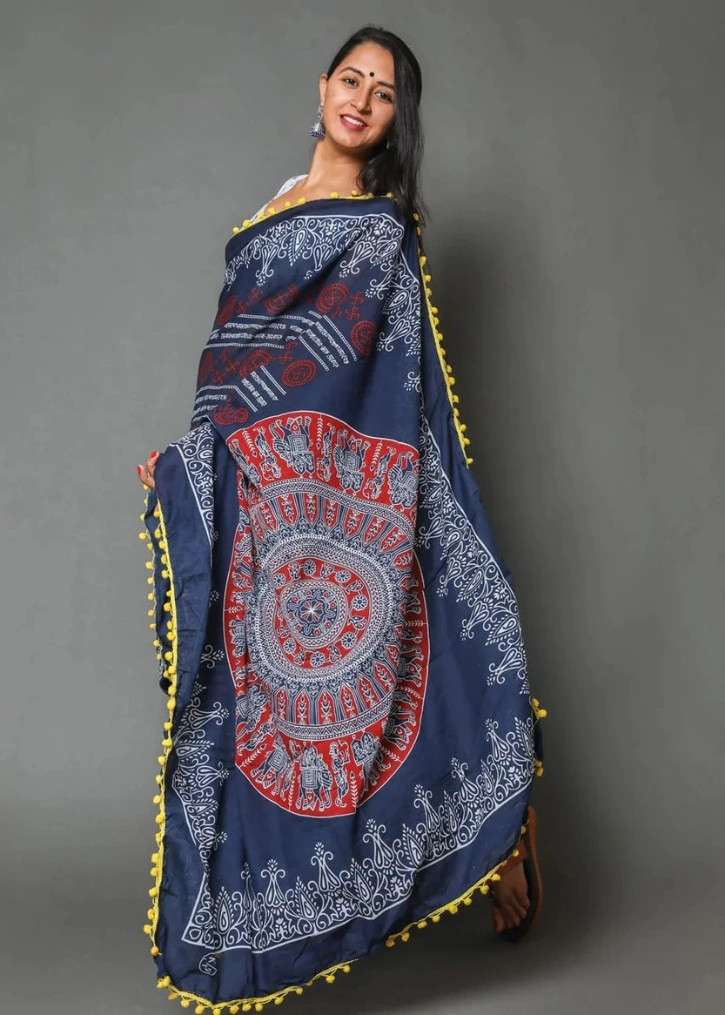
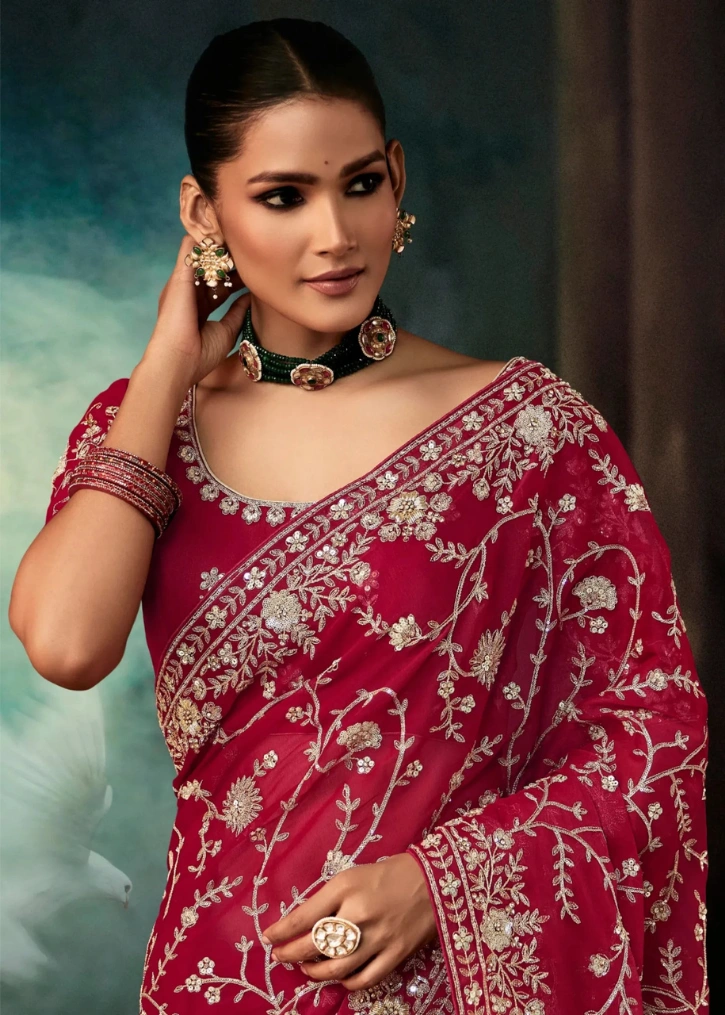
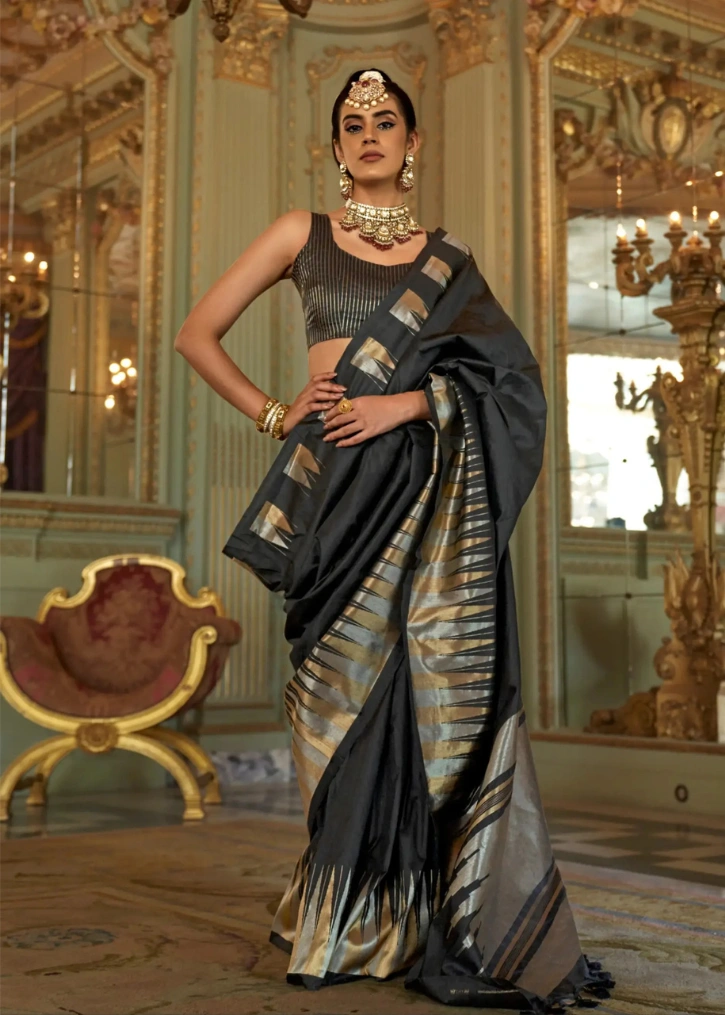
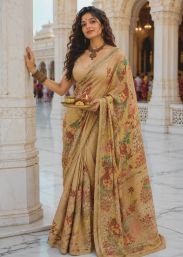
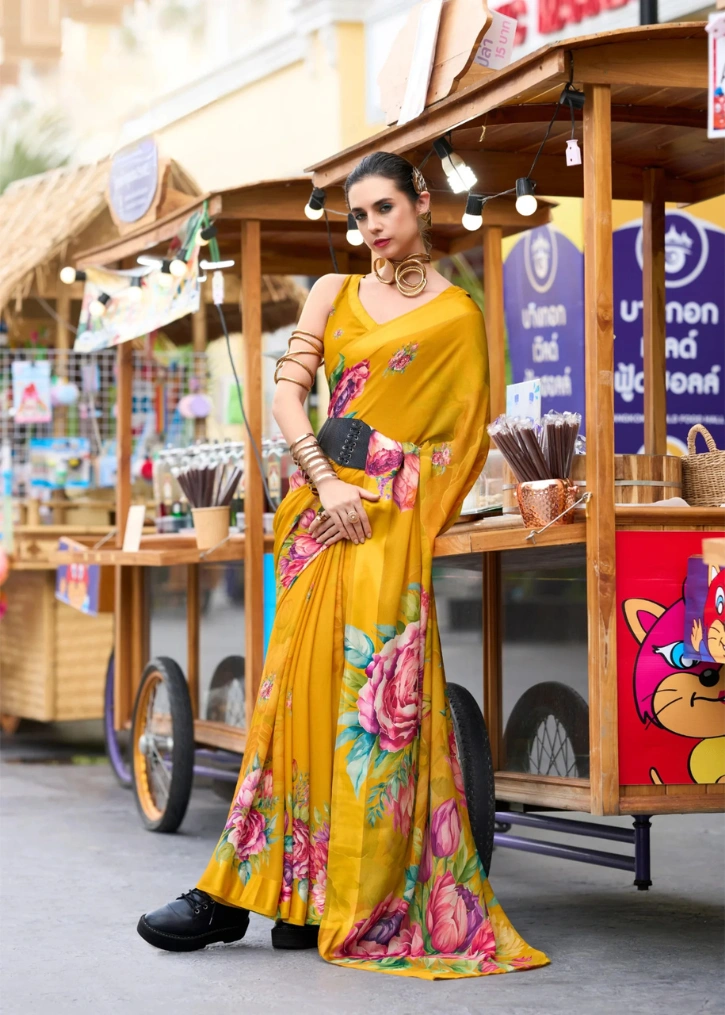
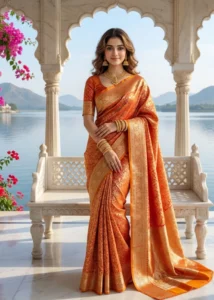
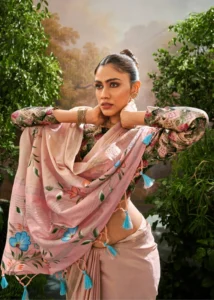
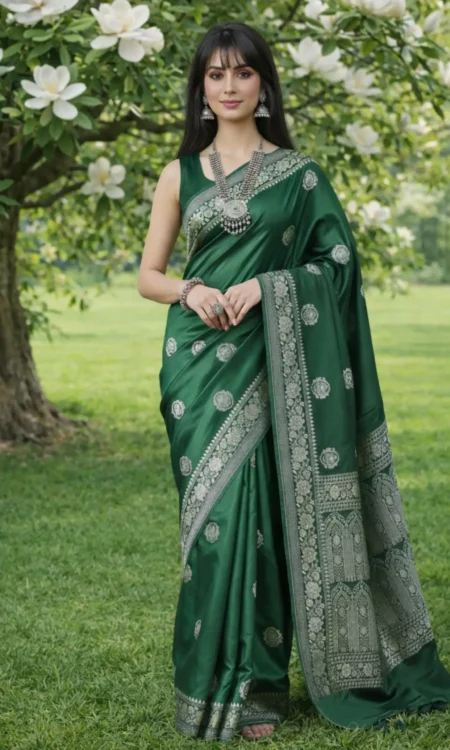
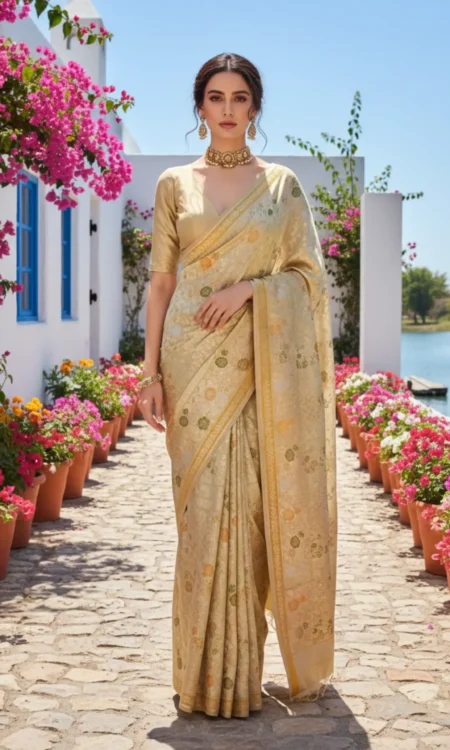
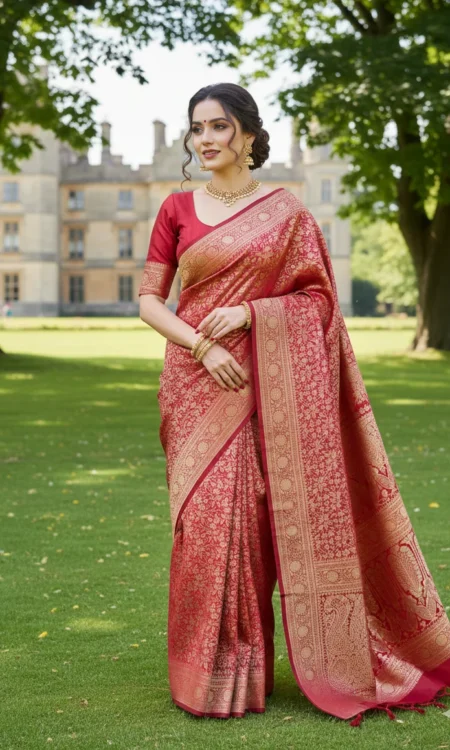
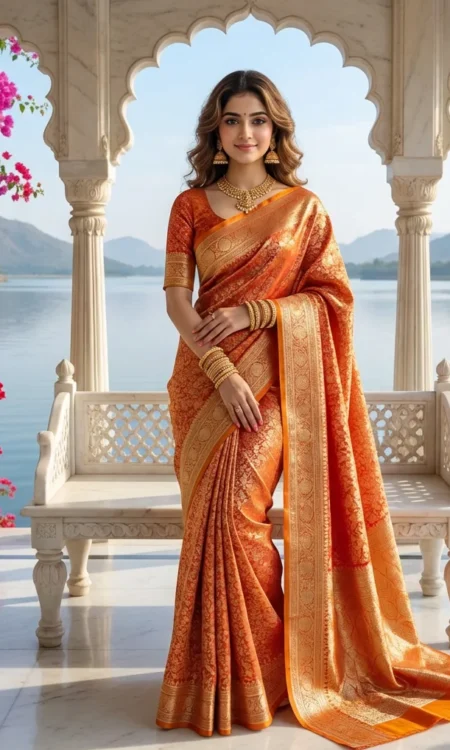
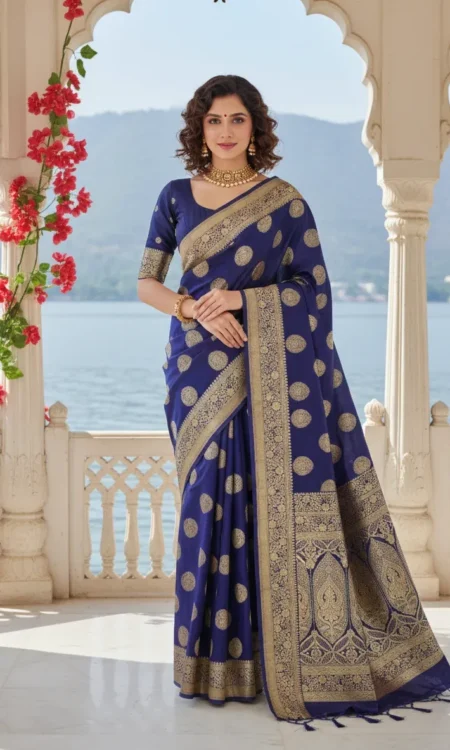
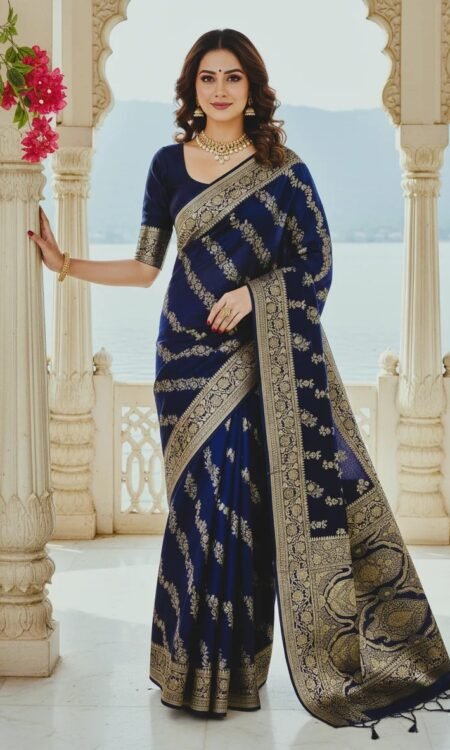
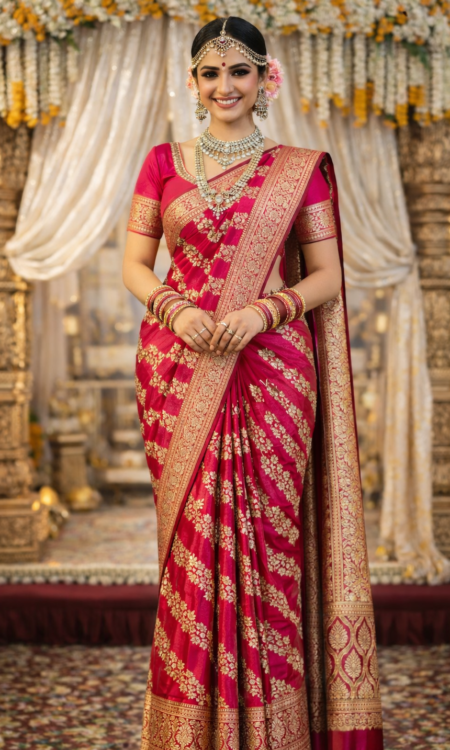
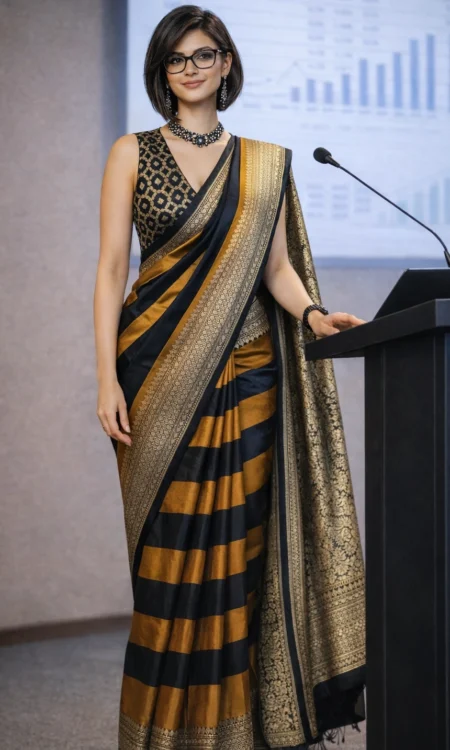
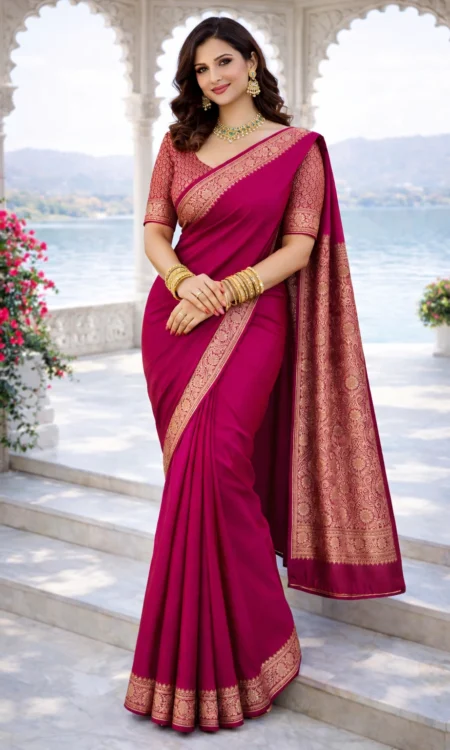
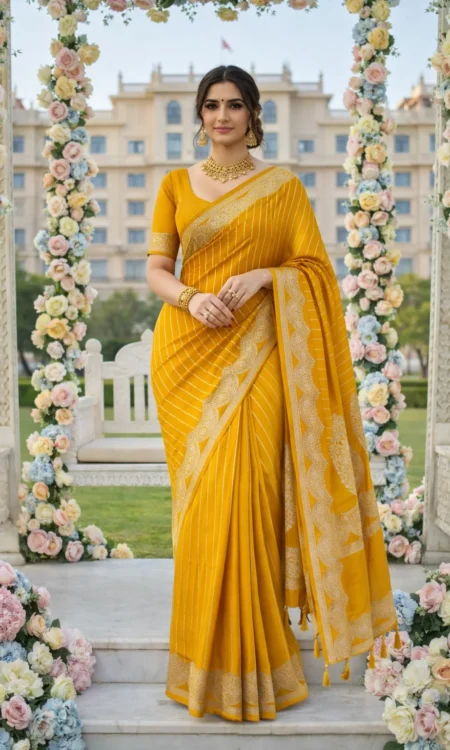
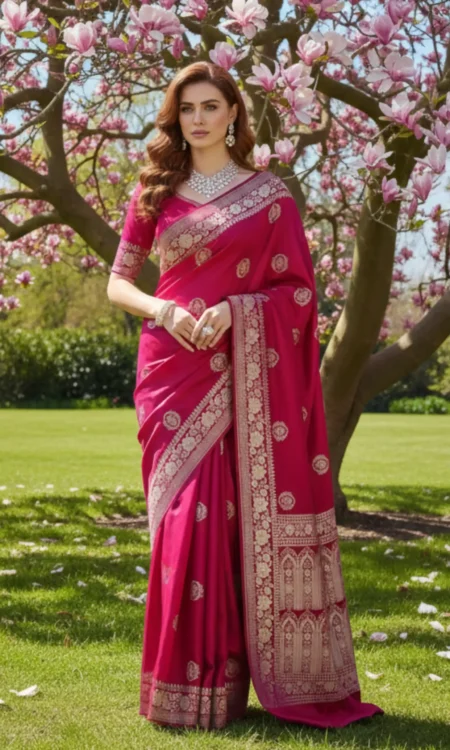
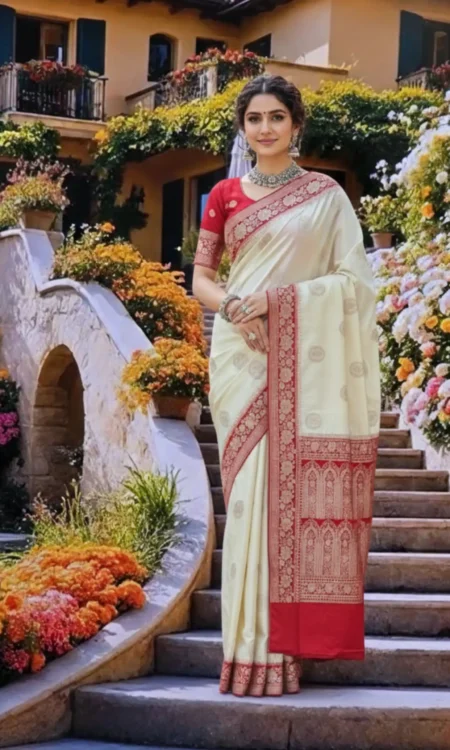
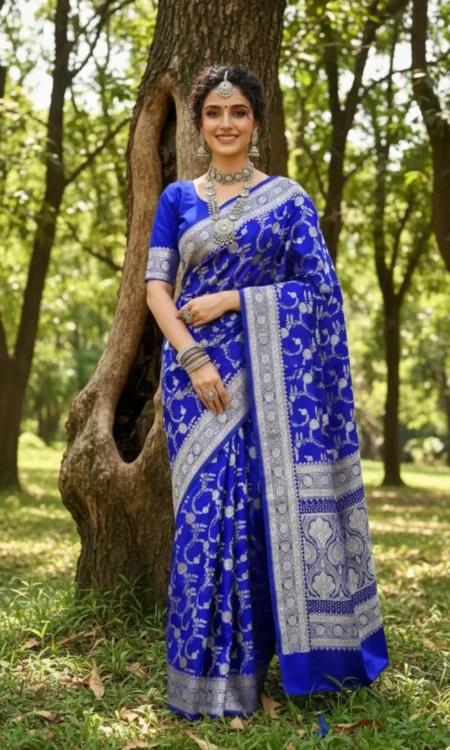
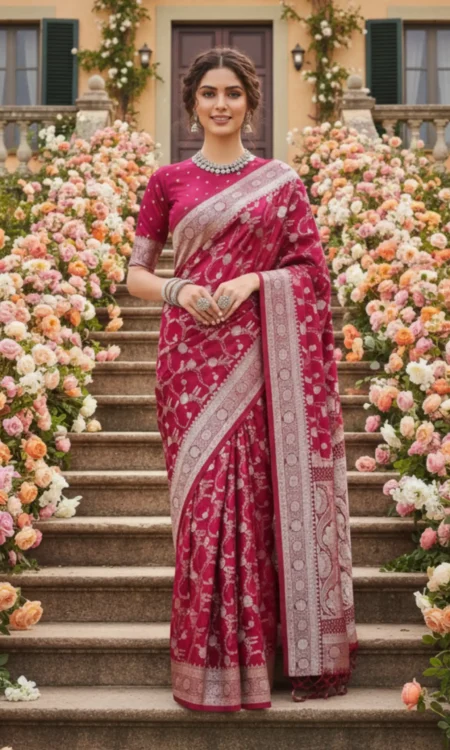
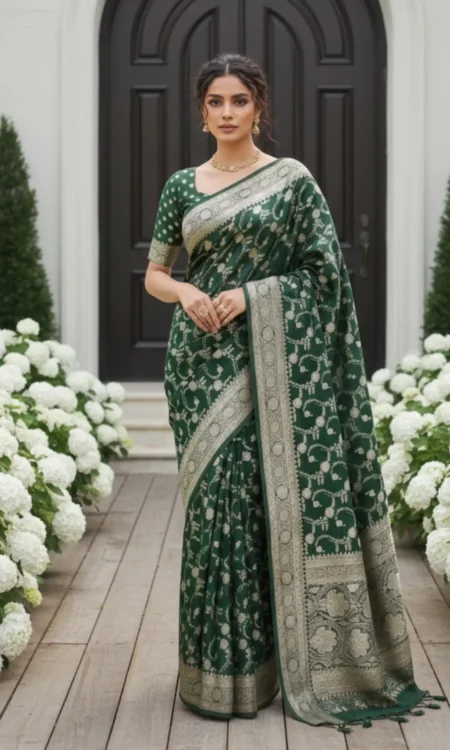
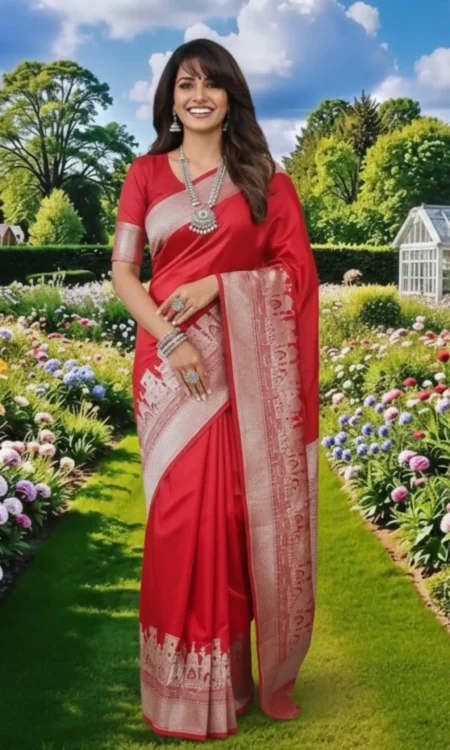
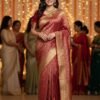
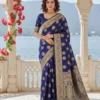
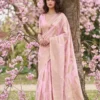
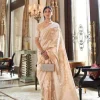
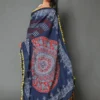
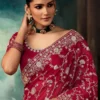
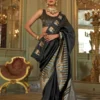
Explore Mashru Silk Sarees at Sarees By Muhurat, with a curated selection that includes Banarasi Mashru styles featuring distinctive borders, pallus, zari detailing and matching blouse pieces. Each saree is presented with product-specific details to help you compare colour, design, length, weight and other specifications before choosing.
The collection includes designs in shades such as violet, maroon, pink, green and blue, with selected sarees featuring gold or silver zari work. As Mashru is used in contemporary saree merchandising in more than one way, refer to each product page for the specific material and construction details of the saree you choose.
Browse the collection to compare Mashru Silk designs and find a saree suited to your style and occasion.
What Is a Mashru Silk Saree?
Mashru is a textile term with a documented historical association with silk-and-cotton woven textiles, including constructions in which silk forms the visible face of the fabric. Contemporary saree retail, however, uses the term “Mashru Silk” in varying ways, so the name alone should not be treated as a universal statement about fibre composition.
At Sarees By Muhurat, Mashru Silk is used as a product/material designation across selected sarees, including Banarasi styles. For the most accurate information about a particular saree, check its individual product specifications for the stated material, length, weight, blouse details and care instructions.
Mashru Silk at Sarees By Muhurat
The collection brings together Mashru Silk designs with varied colours and decorative details. Selected products are explicitly described as Banarasi Mashru Silk sarees and feature woven borders, decorative pallus and zari work.
Depending on the individual design, product specifications may include:
- Colour: Shades represented in the collection include violet, maroon, pink, green and blue, among others.
- Border: Individual sarees may feature contrasting or coordinated woven borders.
- Pallu: Decorative pallus are specified on individual product pages where applicable.
- Zari: Selected designs feature gold or silver zari detailing.
- Blouse: Some products include a matching unstitched blouse piece.
- Length: Product-specific saree lengths are provided on applicable product pages.
- Weight: Weight is listed for individual products where available.
Because these details vary between designs, use the individual product page as the final reference when comparing sarees.
Mashru Silk and Banarasi Sarees
Mashru and Banarasi are not interchangeable terms.
Mashru refers to a textile terminology and construction tradition with a documented historical association with silk-and-cotton weaving, while Banarasi identifies a broader textile and weaving tradition associated with Banaras.
A saree can therefore be described using both terms. Several sarees in this collection are specifically presented as Mashru Silk Banarasi sarees, combining the two classifications.
This distinction is useful when shopping: the Mashru designation helps identify the material/textile category used by the product, while the Banarasi designation describes the relevant textile tradition or product classification.
Mashru Silk Compared With Other Sarees
Mashru Silk vs Pure Silk
Mashru and Pure Silk should not automatically be treated as the same category. “Pure silk” is a fibre or composition claim, whereas Mashru is a textile term with historical and contemporary uses that are not completely standardized.
For Sarees By Muhurat products, rely on the individual product's stated material rather than assuming that every Mashru Silk saree is pure silk.
Mashru Silk vs Katan
Mashru and Katan are distinct textile terms and should not be used as synonyms. Both can appear within Banarasi saree merchandising, but a saree identified as Mashru should not automatically be described as Katan.
Mashru Silk vs Soft Silk
Soft Silk is a separate saree category. A Mashru Silk saree should not be classified as Soft Silk simply because an individual product may be described as soft or supple.
Mashru Silk vs Semi Silk
Semi Silk is another distinct commercial material category. It should not be used as an alternative name for Mashru Silk without product-specific evidence.
Mashru Silk vs Raw Silk
Raw Silk is also a separate textile/material designation. Mashru and Raw Silk should therefore be treated as different categories when browsing sarees.
How to Choose a Mashru Silk Saree
When comparing designs, look beyond the collection name and review the specifications of each individual saree.
Choose by colour
The collection includes a range of shades, from violet and maroon to pink, green and blue. Consider the primary colour of the saree as well as the colours used in its border, pallu and zari detailing.
Look at the border and pallu
The border and pallu can significantly influence the overall appearance of a saree. Check the product photographs and specifications to see whether the design uses a contrasting, coordinated or decorative treatment.
Check the zari details
Selected Mashru Silk Banarasi designs feature gold or silver zari. If zari is important to your choice, check the individual product description for the specific zari detail rather than assuming it is present throughout the collection.
Check the blouse piece
Where provided, the product page identifies the blouse details and whether the piece is unstitched. Review the individual listing before purchasing.
Compare length and weight
Saree length and weight can vary between products. These specifications are more useful for comparison than broad descriptions such as “lightweight” or “heavy,” so check the measurements listed for each design.
Choosing a Mashru Silk Saree for an Occasion
A Mashru Silk saree with zari detailing, a defined border or a decorative pallu can work well for a more dressed-up look, depending on the individual design and how it is styled.
For weddings, receptions and engagements, compare sarees with more elaborate borders, pallus or zari details where those features are present. For festive or party dressing, consider the colour, motif and overall level of embellishment of the individual saree.
There is no single occasion that defines every Mashru Silk saree, so choose according to the design details of the particular product.
Mashru Silk Saree Care
Care requirements can vary according to the specific saree and its construction.
Always follow the care instructions provided on the individual product page. Where professional dry cleaning is specified, use a reputable professional cleaner rather than washing the saree at home. Store the saree carefully in a clean, dry environment and avoid unnecessary exposure to moisture.
For the most accurate care guidance, refer to the instructions supplied with your specific saree.
Frequently Asked Questions
What is a Mashru Silk Saree?
A Mashru Silk Saree is a saree marketed using the Mashru Silk designation. Historically, Mashru is associated with documented silk-and-cotton woven textiles, but contemporary retail usage of the term varies. At Sarees By Muhurat, individual product pages provide the most reliable information about the material and specifications of each saree.
Is Mashru Silk the same as Banarasi?
No. Mashru and Banarasi are not interchangeable terms. Mashru is a textile/material terminology, while Banarasi identifies a broader textile and weaving tradition associated with Banaras. Some sarees can be both Mashru and Banarasi, as reflected in selected products in this collection.
Is Mashru Silk pure silk?
The term Mashru Silk should not automatically be interpreted as a universal pure-silk composition. Historical Mashru textiles include documented silk-and-cotton constructions, while contemporary commercial usage varies. Check the material specification of the individual Sarees By Muhurat product before making a composition assumption.
Is Mashru Silk the same as Katan?
No. Mashru and Katan are distinct textile terms. They can both appear in Banarasi saree collections, but one should not be substituted for the other without product-specific evidence.
What is the difference between Mashru Silk and Soft Silk?
Mashru Silk and Soft Silk are separate category terms. “Soft” may describe the feel or handling of an individual saree, but that does not make the product a Soft Silk saree. Check the material designation on the product page.
Are Mashru Silk Sarees suitable for weddings?
Selected Mashru Silk sarees can suit wedding-related occasions, particularly designs featuring decorative borders, pallus or zari. The most appropriate choice depends on the individual saree and the level of formality you want.
Do Mashru Silk Sarees come with a blouse piece?
Some products in the collection include matching unstitched blouse pieces. Blouse details vary by saree, so check the individual product listing before purchasing.
How should I care for a Mashru Silk Saree?
Follow the care instructions provided for your specific saree. Where professional dry cleaning is recommended, avoid washing it at home and use an appropriate professional cleaning service.
Explore Related Saree Collections
If you are comparing Mashru Silk with other saree categories, explore: