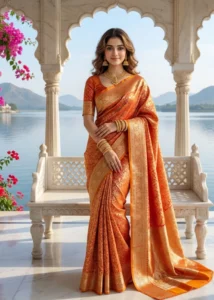
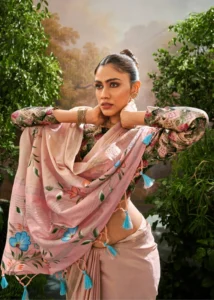
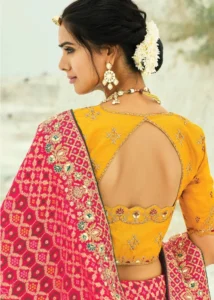
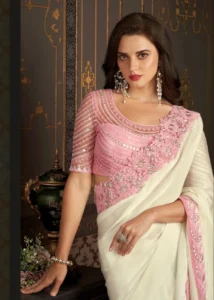
Showing 21–34 of 34 results


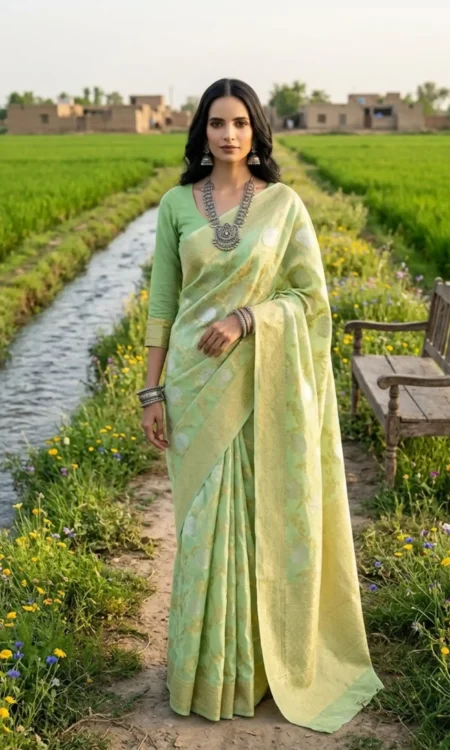
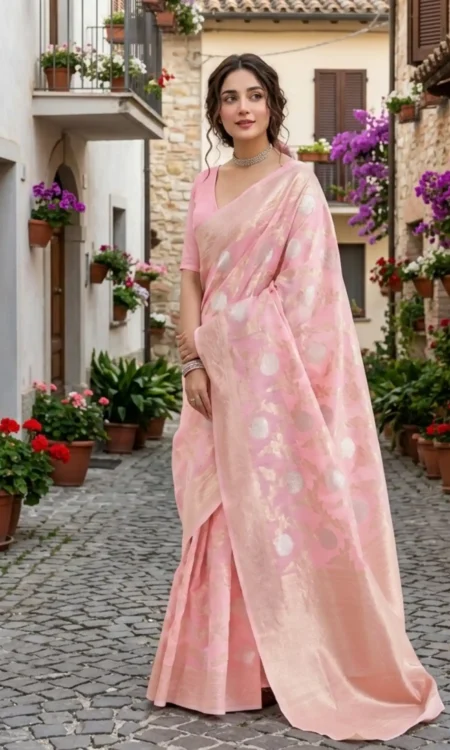
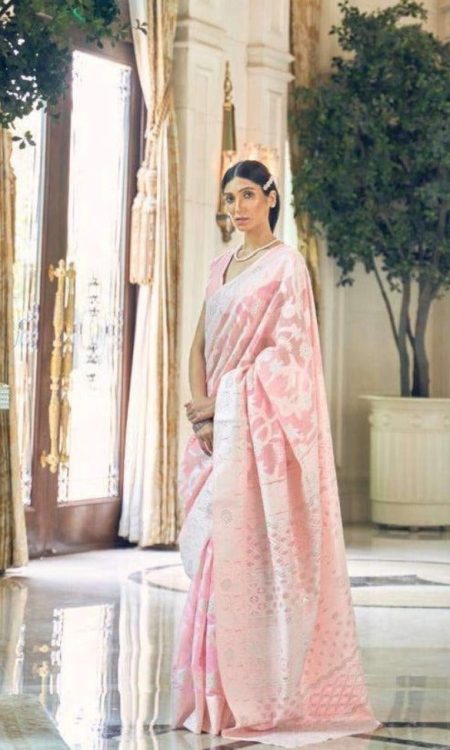
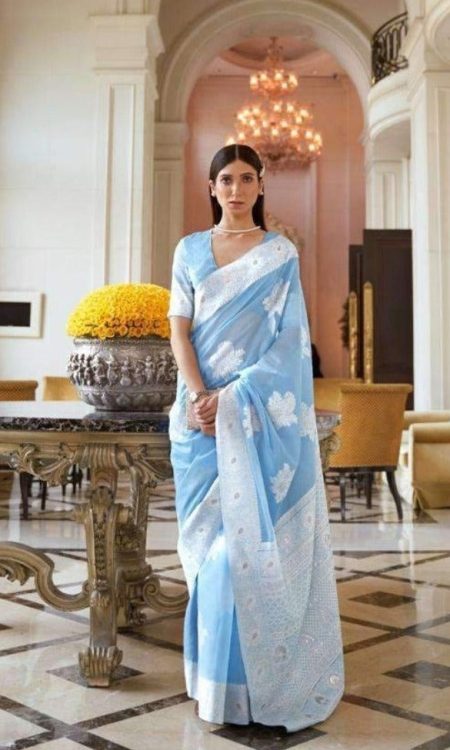
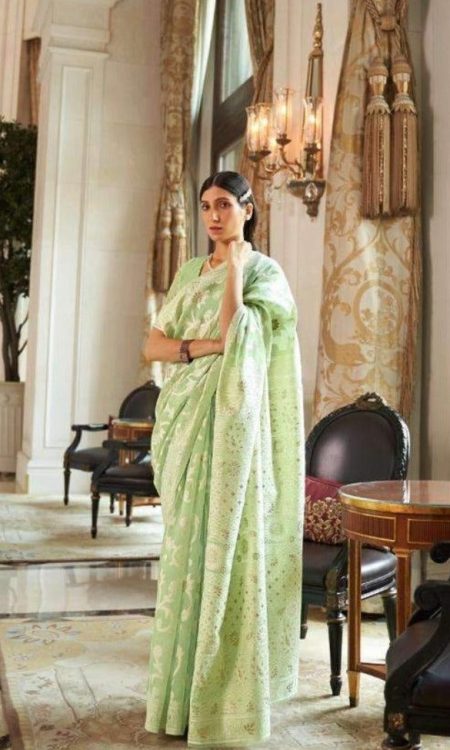
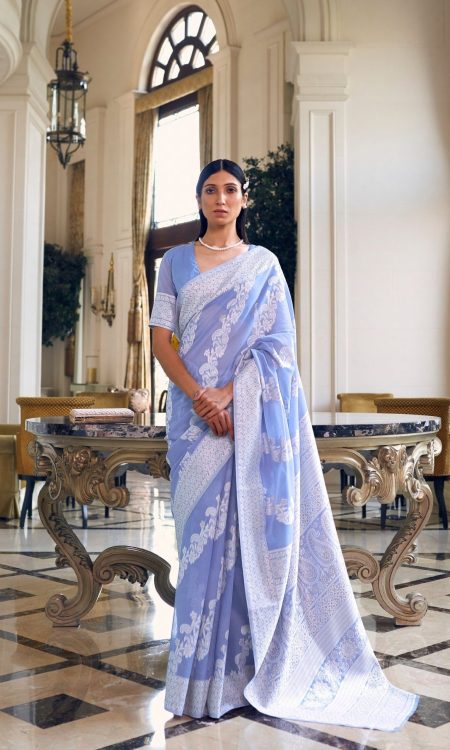
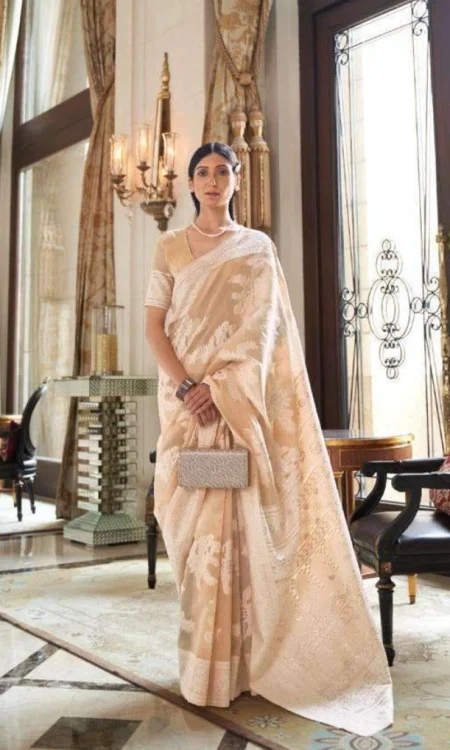
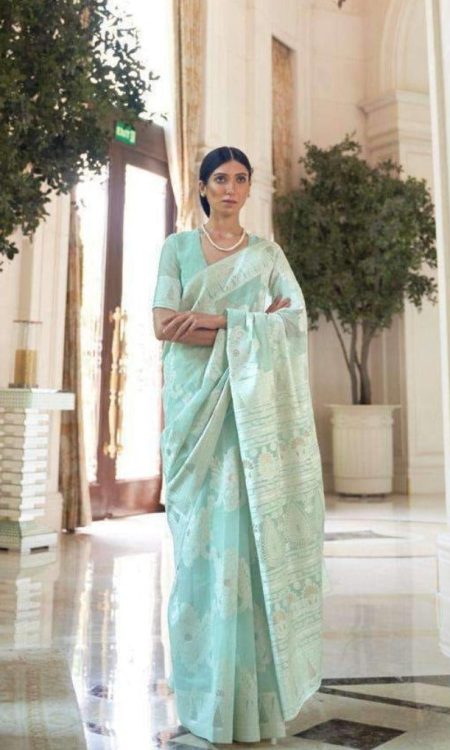
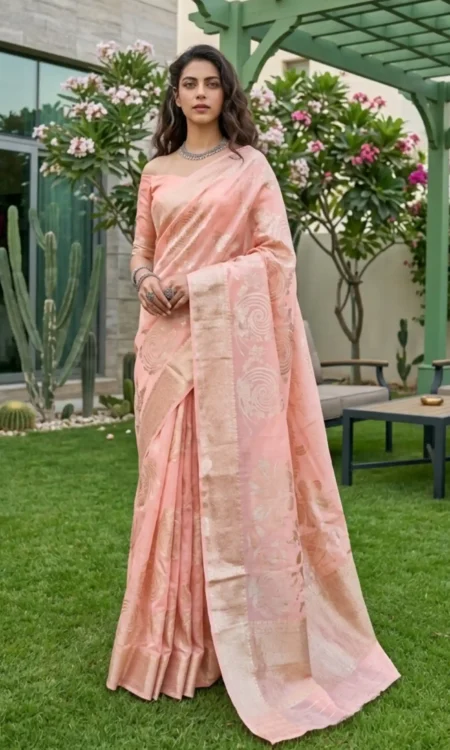
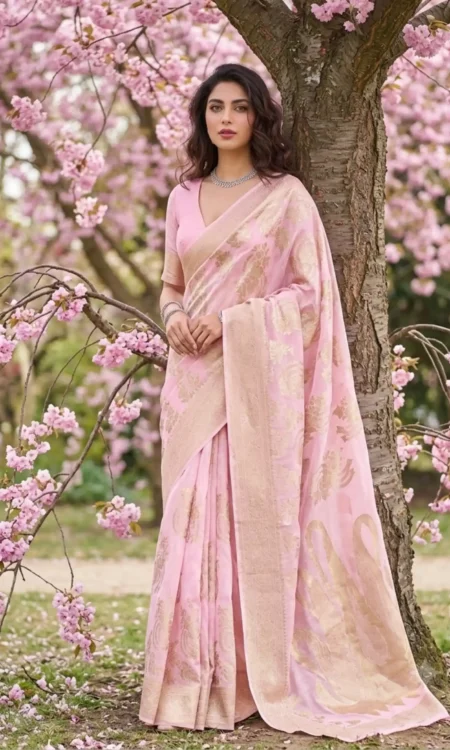
What Are Cotton Sarees?
A cotton saree is a saree made wholly or partly from cotton textile material. Cotton is a natural cellulosic fibre known for its ability to absorb moisture, while the finished fabric can vary considerably depending on its yarn, weave, density, construction and finishing.
That is why two cotton sarees can feel very different when worn. One may have a softer or more fluid fall, while another may feel crisp or structured. Some may be lighter, while others have a more substantial construction or additional embroidery.
The term cotton saree also does not automatically tell you whether a saree is pure cotton, blended, handloom, handwoven, printed or woven with motifs. Those details should be checked at the individual product level.
In the Sarees By Muhurat collection, cotton-related styles include printed cotton designs, cotton-silk options, Chanderi cotton-labelled sarees and embroidered cotton sarees. The collection therefore offers a range of fabric and design experiences rather than one uniform type of cotton saree.
Why Choose Cotton Sarees?
Cotton sarees are valued for their familiar comfort and versatility. Cotton fibres naturally absorb moisture, while fabric construction influences how much airflow, structure, softness and drape a finished saree provides.
This makes cotton an interesting option for everyday dressing and warm-weather wardrobes, particularly when the individual saree has a suitable weight and construction.
Cotton also works across different visual styles. Printed designs can create a contemporary everyday look, while embroidery, distinctive borders or more refined fabric constructions can make selected cotton-based sarees appropriate for festive or formal settings.
One important point is that cotton does not automatically mean lightweight. The yarn, fabric density, weave, embellishment and finishing all influence the final weight and fall.
If comfort is your priority, compare individual sarees rather than choosing by fibre name alone.
Cotton Sarees by Fabric, Weave & Design
The easiest way to understand this collection is to look at the characteristics that actually distinguish one saree from another.
Pure Cotton Sarees
Pure cotton refers to a composition made from cotton rather than a cotton blend. However, the word “cotton” on its own should not be treated as proof that a saree is 100% cotton.
If pure cotton is important to you, check the individual product’s stated material or fibre composition before purchasing.
This distinction is particularly useful when comparing cotton with cotton-silk or other blended constructions.
Cotton-Silk Sarees
Cotton-silk sarees combine cotton and silk rather than representing pure cotton construction.
The addition of silk can change the visual character, texture and fall of the fabric. In this collection, cotton-silk styles include printed designs and floral motifs, giving shoppers an option when they want a cotton-related saree with a different fabric character.
When comparing cotton and cotton-silk, consider the occasion, preferred drape, texture and product-specific material information rather than treating one as universally better.
Chanderi Cotton Sarees
Chanderi is a distinct textile tradition associated with Chanderi in Madhya Pradesh. Chanderi sarees can be made using cotton, silk and cotton-silk constructions, so Chanderi should not automatically be treated as synonymous with cotton.
The cotton category includes Chanderi cotton-labelled products, making this an important distinction for shoppers who want to explore Chanderi while staying within a broader cotton-focused collection.
If you are specifically looking for Chanderi, compare the material and product description carefully to distinguish Chanderi cotton from other Chanderi constructions.
Printed Cotton Sarees
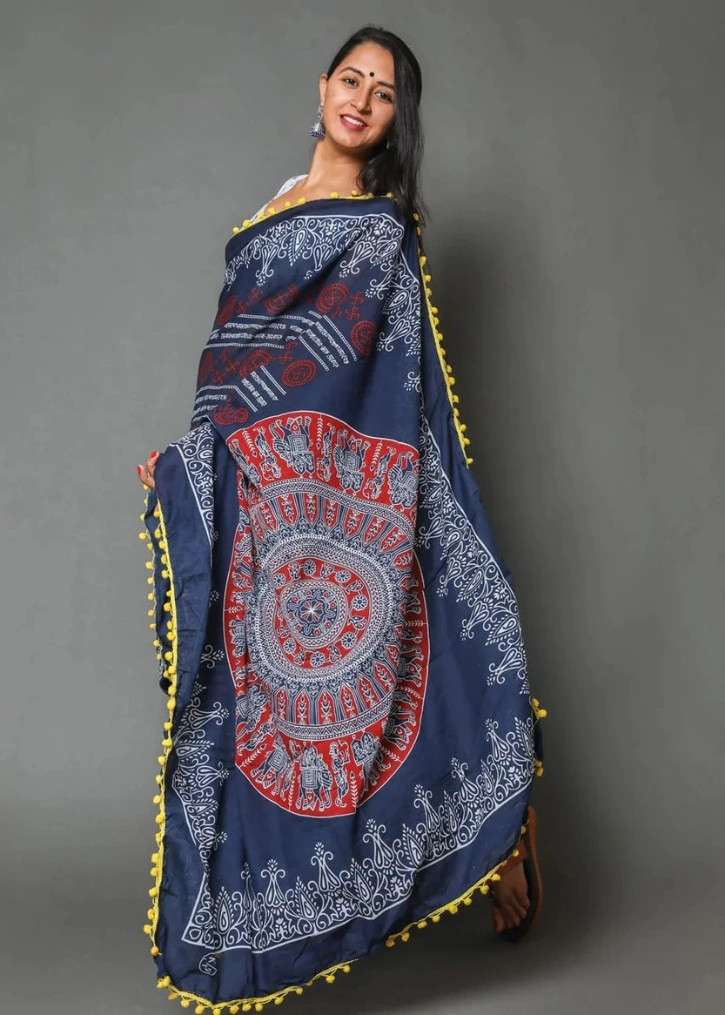
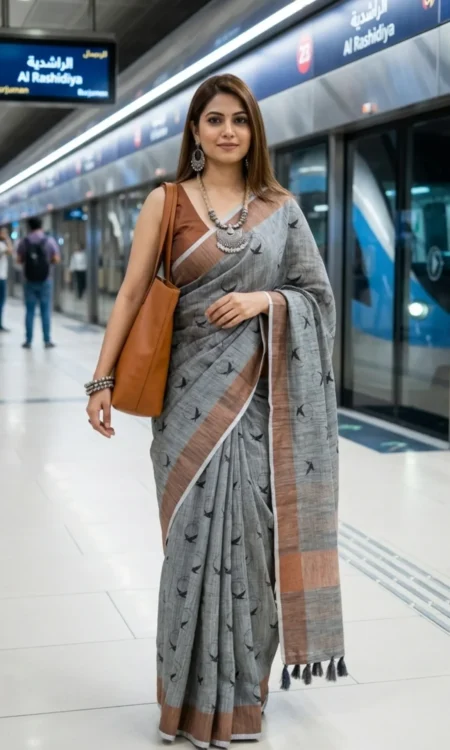
Printed cotton sarees are particularly relevant to this collection. Current designs include geometric, floral, graphic, script and other motif-led prints.
With a printed saree, the design is applied to the fabric through a printing process rather than being formed entirely through the interlacing of yarns.
Printed designs can therefore offer a different visual character from woven motifs, making them useful for shoppers who prefer contemporary patterns, bold graphics or distinctive surface designs.
Embroidered Cotton Sarees
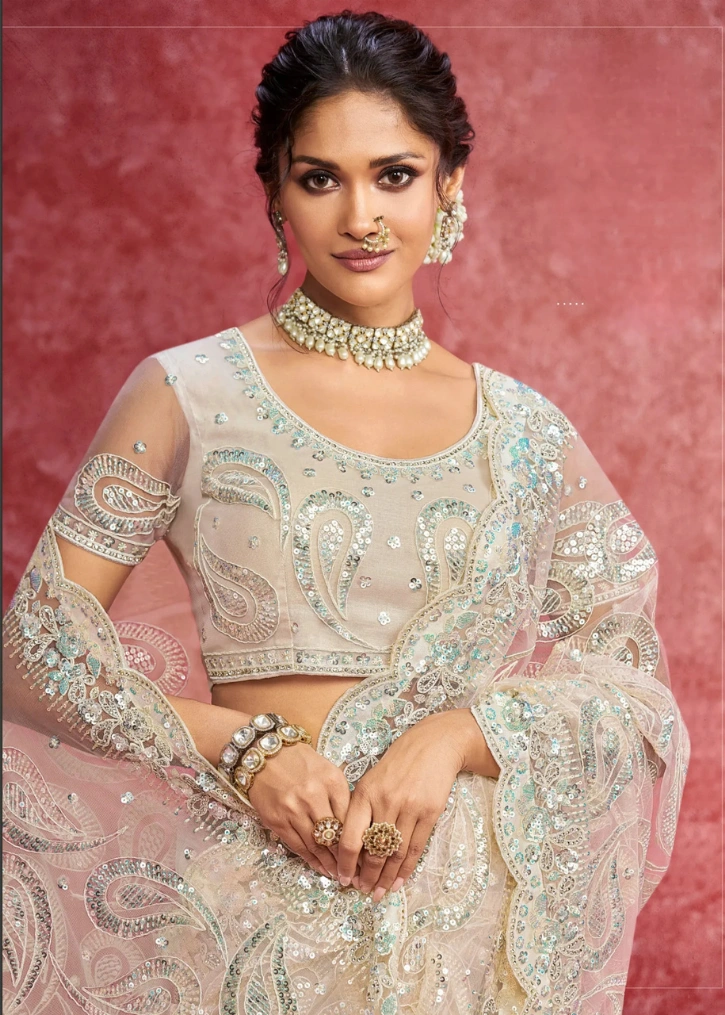
Embroidery adds another layer of surface detail to a cotton saree. The current collection includes Chikankari cotton sarees, bringing embroidery into the broader cotton category.
When choosing an embroidered saree, consider the embroidery itself alongside the base fabric, weight, fall and care requirements. Embellishment can affect how a saree feels and how it should be maintained.
Handloom Cotton Sarees: What to Know
Cotton and handloom describe different things.
Cotton identifies a fibre or material category. Handloom describes a production method involving a hand-operated loom.
A cotton saree can therefore be cotton without being handloom, while a handloom saree can be made using different fibres depending on the textile tradition.
If handloom matters to you, look for explicit product-level information about handloom production or recognized authentication where applicable. Do not infer handloom status simply because a saree is made from cotton or has a traditional-looking design.
Handloom vs Powerloom
The distinction between handloom and powerloom primarily concerns how the fabric is produced.
- Handloom: woven using a hand-operated loom.
- Powerloom: woven using mechanically powered weaving equipment.
This difference can matter to shoppers interested in production methods, craft processes, textile variation and provenance. It should not, however, be turned into the blanket claim that every handloom saree is better than every powerloom saree.
If authenticity of handloom production is important, product-level information and recognized identification such as Handloom Mark are more useful than assumptions based on appearance.
Printed vs Woven Cotton Sarees
One of the easiest ways to compare cotton sarees is to ask how the design is created.
Printed designs
A printed motif is applied to the surface of the fabric through a printing process. The current collection includes examples of geometric, floral, graphic and other printed designs.
Woven designs
A woven motif is created through the arrangement and interlacing of yarns as the fabric is woven.
The distinction is useful because the two techniques produce different visual and textile characteristics.
A printed saree is not automatically less valuable than a woven saree, and a woven design is not automatically superior. The better choice depends on the appearance, texture, construction and occasion you prefer.
Handblock Printing: What Does It Mean?
Handblock printing should be treated as a specific printing technique rather than a synonym for printed cotton.
Handblock printing uses carved blocks that are manually applied to fabric. Because the process involves human placement and handling, verified handblock products can show small variations in registration, colour or surface appearance.
The current collection strategy does not support describing every printed cotton saree as handblock printed. If a particular product is identified as handblock, use that product-level description as the source of truth.
Cotton Sarees for Summer & Warm Weather
Cotton can be useful for warm-weather dressing because cotton fibres absorb moisture and cotton fabrics can provide comfortable wear. However, the summer suitability of a saree depends on its actual construction.
Fabric weight, density, yarn, weave, finish and embellishment can all change how a saree feels.
For warm-weather dressing in the UAE, compare:
- Fabric and fibre composition
- Weight
- Fabric density
- Weave or construction
- Finish
- Embroidery or embellishment
- Drape
A finer or more open construction may feel different from a denser or more substantial cotton saree. Likewise, cotton-silk and embroidered styles should not automatically be expected to feel like a lightweight everyday cotton.
The best approach is to choose according to the individual saree rather than assuming that every cotton saree is equally cool, light or breathable.
Cotton Sarees for Office, Everyday & Festive Wear
Cotton sarees can work across different occasions when the individual design is chosen carefully.
For everyday wear
Look for manageable weight, comfortable construction and prints or motifs that suit your regular wardrobe. Simple printed cotton styles can be useful when you want a practical daytime look.
For office wear
Consider a saree with a neat, controlled drape and a design that suits your workplace. Structured cotton constructions, restrained prints and balanced borders can create a polished appearance without relying on heavy embellishment.
For summer outings
Compare lighter constructions where available, paying attention to fabric density and finish rather than choosing solely because a saree is labelled cotton.
For casual cultural gatherings
Printed cotton and motif-led styles can offer an easy way to combine traditional dressing with a more contemporary visual approach.
For puja and festive occasions
Consider the saree’s border, pallu, colour, motifs and overall finish. Selected Chanderi cotton, cotton-silk or embroidered styles may provide a more occasion-oriented appearance.
For day weddings and formal occasions
Cotton is not limited to everyday wear. Selected Chanderi, cotton-silk or more embellished cotton styles can work for daytime celebrations when their individual design and finish suit the occasion.
For weddings, however, choose according to the specific saree rather than assuming that every cotton saree has the same level of formality.
How to Choose a Cotton Saree
Instead of choosing a cotton saree by name alone, use this checklist:
1. Check the fibre composition
Determine whether the saree is cotton, pure cotton or a blend such as cotton-silk. Never infer 100% cotton simply from the word “cotton”.
2. Check the weight
Cotton sarees are not all lightweight. Product weight can vary considerably, so check the individual product details if weight matters to you.
3. Consider the drape
Think about whether you prefer a structured, crisp fall or a softer, more fluid drape. Yarn, weave, density and finishing all influence this.
4. Look at the weave or construction
Where product information is available, use it to understand the character of the fabric rather than treating all cotton as one construction.
5. Choose between print, weave and embroidery
Decide whether you prefer a surface print, a woven motif or embroidered detailing.
6. Examine the border and pallu
A contrast border can create definition, while a detailed pallu can become a focal point of the drape. These details can also affect the overall formality of the saree.
7. Match the saree to the occasion
For daily wear, prioritise manageable comfort and design. For office wear, consider structure and restraint. For festive or formal settings, look for appropriate colour, detailing, border and pallu.
8. Check the care requirements
Do not assume that all cotton sarees can be washed in the same way. Printing, embroidery, handloom construction, dyes and other product-specific characteristics can affect care.
9. Consider your UAE wardrobe
For warm-weather dressing, compare weight, density, construction and finish. For air-conditioned offices and indoor events, your preferred drape and layering may matter just as much as the outdoor climate.
Why Do Cotton Sarees Wrinkle?
Cotton has relatively low resilience, which means cotton fabrics can wrinkle more readily than materials with greater recovery from creasing.
Wrinkling is therefore a natural characteristic of many cotton fabrics and is not automatically a sign of poor quality.
The degree of wrinkling can vary according to the fabric construction and finishing. If you prefer a more structured appearance, consider the individual saree’s construction and finish when choosing.
Cotton Saree Drape, Weight & Texture
There is no single cotton-saree drape.
The final fall depends on factors including:
- Fibre composition
- Yarn characteristics
- Weave
- Fabric density
- Finishing
- Embroidery or embellishment
- Border structure
- Pallu construction
Some cotton constructions can feel crisp and structured, while others may have a softer or more fluid fall.
Product weight is also useful when comparing styles. The current collection demonstrates that cotton-related products can vary in weight, so “lightweight” should be treated as a product characteristic rather than a universal cotton characteristic.
How to Care for Cotton Sarees
Always follow the care instructions supplied with the individual product first.
A single washing method should not be applied to every cotton saree because prints, dyes, embroidery, handloom construction, embellishment and blended fabrics can require different treatment.
As a general collection-level framework:
- Check the product’s stated care instructions before washing or cleaning.
- Avoid harsh cleaners unless specifically permitted.
- Do not soak a saree unless the product instructions allow it.
- Follow the recommended drying method for the individual fabric and dye.
- Avoid excessive direct heat when ironing.
- Protect embroidered or embellished areas from unnecessary friction.
- Give printed or handblock products the care specified for their particular construction.
- Store clean, dry sarees in a suitable, well-aired environment.
- Refold stored sarees periodically rather than leaving them permanently on the same sharp crease.
Where a product specifically recommends professional dry cleaning, follow that instruction rather than applying a general cotton-washing rule.
Understanding Cotton, Handloom, Khadi & Organic Claims
Textile terminology can describe very different aspects of a saree.
Cotton describes a fibre or material.
Handloom describes a production method.
Printed describes a surface-design process.
Woven motif describes a design formed through yarn interlacing.
Khadi refers to a specific textile and production tradition associated with hand-spinning and hand-weaving; it is not simply another name for cotton.
Organic cotton requires evidence relating to organic-fibre standards and certification. Natural cotton should not automatically be described as organic.
GI identifies a registered geographical indication and should only be used when the product and context genuinely qualify.
This distinction matters when comparing sarees because a single product can have a cotton fibre, a particular weave, a printed surface and a regional identity — but each claim needs its own evidence.
Cotton Saree Authenticity: What Should You Check?
If a particular textile characteristic matters to you, look for evidence at the product level.
For cotton composition
Check the stated material or fibre composition.
For pure cotton
Look for an explicit composition statement rather than assuming that “cotton” means 100% cotton.
For handloom
Look for an explicit handloom statement and, where applicable, recognized identification such as Handloom Mark.
For organic cotton
Look for relevant certification and traceability information rather than relying on words such as “natural” or “eco-friendly”.
For GI textiles
Check the exact textile name, geographical context and product eligibility. A regional name by itself should not be treated as proof of GI status.
For handblock printing
Look for a product-specific description identifying the printing technique.
Frequently Asked Questions
What is a cotton saree?
A cotton saree is a saree made wholly or partly from cotton textile material. Its weight, texture, drape and finish can vary according to yarn, weave, construction and finishing.
Are cotton sarees good for summer?
Cotton sarees can be a comfortable option for warm weather because cotton naturally absorbs moisture, but summer suitability depends on the individual fabric’s weight, density, construction and finish.
Are all cotton sarees lightweight?
No. Cotton sarees can vary significantly in weight. Yarn, weave, density, embroidery and other construction details influence the final weight.
Are cotton sarees breathable?
Many cotton fabrics are associated with comfortable airflow and moisture absorption, but breathability depends on fabric construction and finishing. It is better to evaluate the individual saree rather than assuming all cotton fabrics perform identically.
Are all cotton sarees handloom?
No. Cotton describes a fibre or material, while handloom describes a production method. A cotton saree should not be assumed to be handwoven unless its production method is verified.
What is the difference between pure cotton and cotton-silk sarees?
Pure cotton refers to a cotton-only composition, where verified. Cotton-silk is a blend containing both cotton and silk. The blend can produce a different texture, appearance and drape.
What is the difference between printed and woven cotton sarees?
Printed designs are applied to the fabric through a printing process, while woven motifs are created through the interlacing and arrangement of yarns during weaving.
Which cotton saree is suitable for office wear?
Look for a saree with a manageable drape, suitable weight and a design appropriate to your workplace. Structured constructions, restrained prints and balanced borders can work well for a polished office look.
Which cotton saree is suitable for daily wear?
For everyday use, compare comfort, weight, construction, design and care requirements. Printed cotton styles can be a practical choice when you prefer contemporary patterns, while simpler designs may suit a more understated wardrobe.
Can cotton sarees be worn for festive occasions?
Yes. Selected cotton, Chanderi cotton, cotton-silk and embroidered styles can suit festive occasions depending on their colour, border, pallu, embellishment and overall finish.
Why do cotton sarees wrinkle?
Cotton has relatively low resilience, so cotton fabrics can wrinkle more readily than fabrics with greater resistance to creasing. Wrinkling is not automatically an indication of poor quality.
How should I care for a cotton saree?
Follow the individual product’s care instructions first. Do not assume that every cotton saree can be machine washed or treated identically. Prints, embroidery, dyes, blends and specific constructions can require different care.
Explore More Saree Collections
If you want to compare cotton with other styles and textile traditions, explore the related collections:
- Chanderi Sarees
- Printed Sarees
- Chikankari Sarees
- Kantha Sarees
- Kanjivaram Sarees
- Banarasi Sarees
Cotton remains the focus of this collection, while these related categories provide useful alternatives when you want to compare fabric, design, embroidery or traditional textile characteristics.
Find the Cotton Saree That Fits Your Wardrobe
The right cotton saree is not necessarily the lightest, softest or most traditionally made option. It is the one whose fabric composition, construction, weight, drape, design and care requirements match how you intend to wear it.
Browse the collection, compare individual product details and choose according to your preferred comfort, style and occasion.