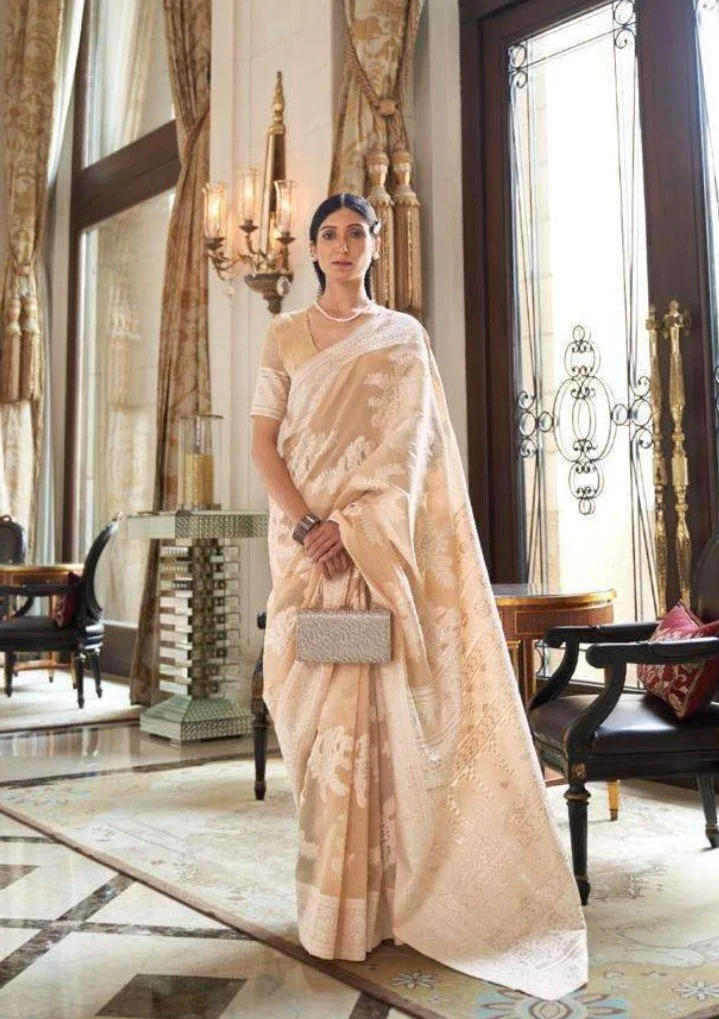
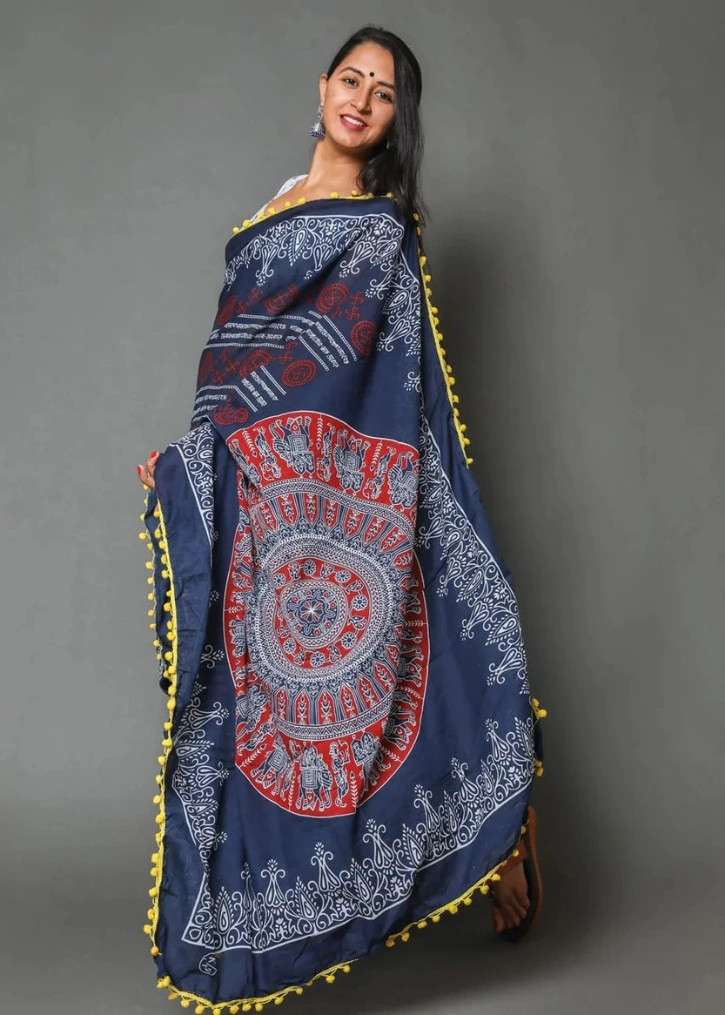
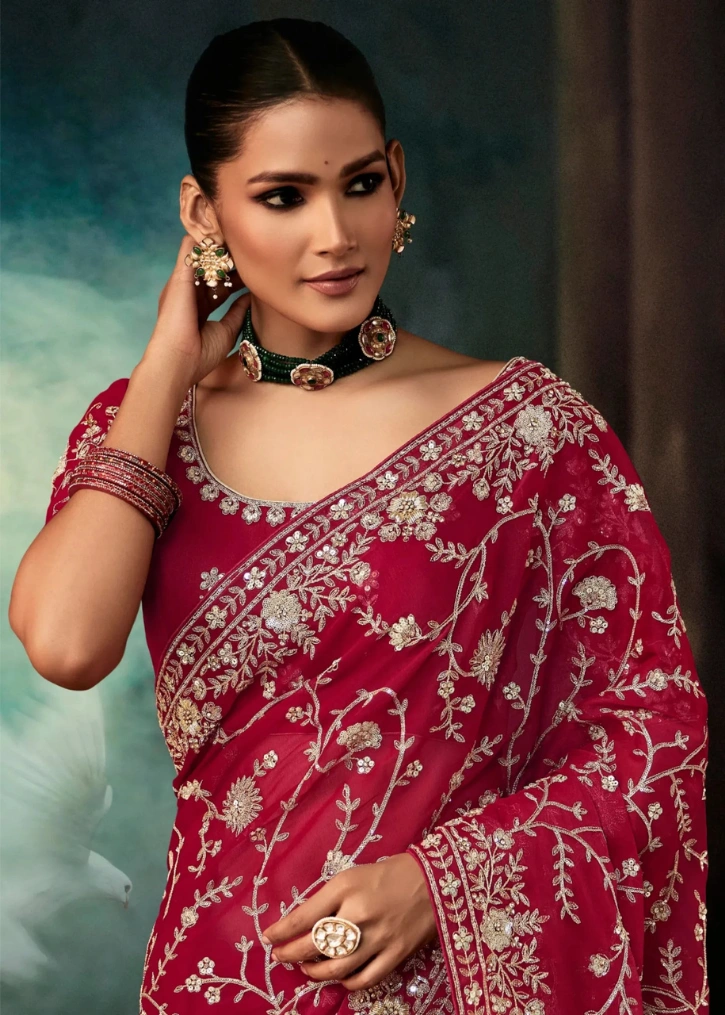
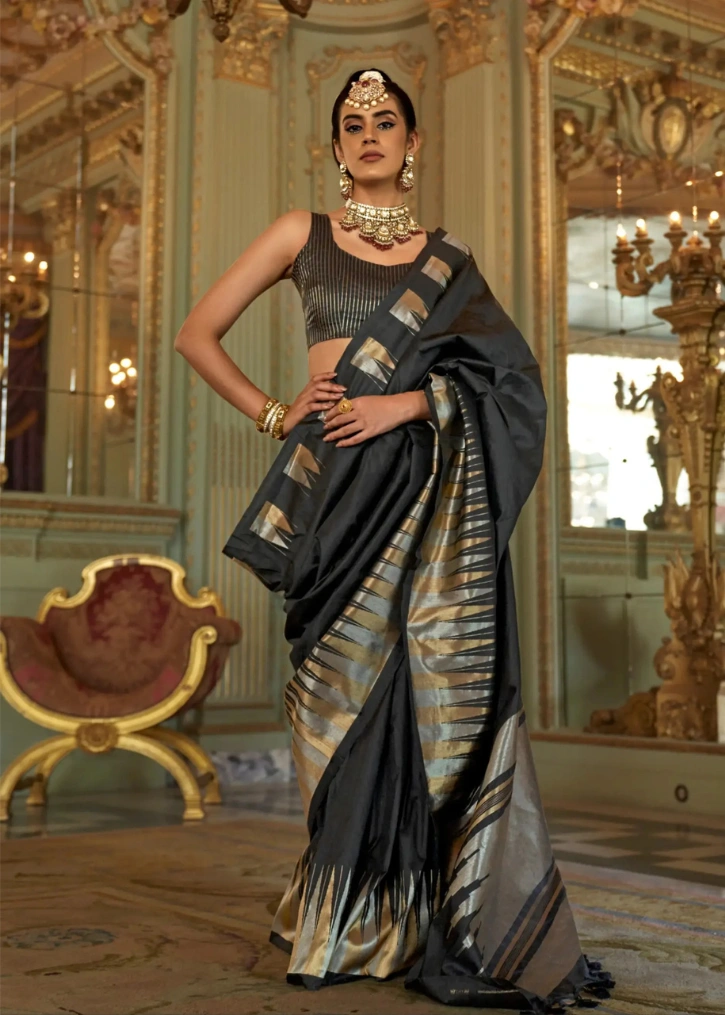
Showing 1–20 of 121 results
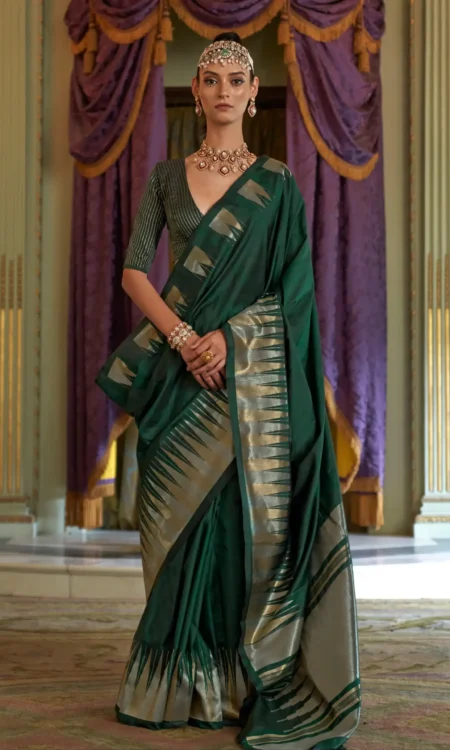
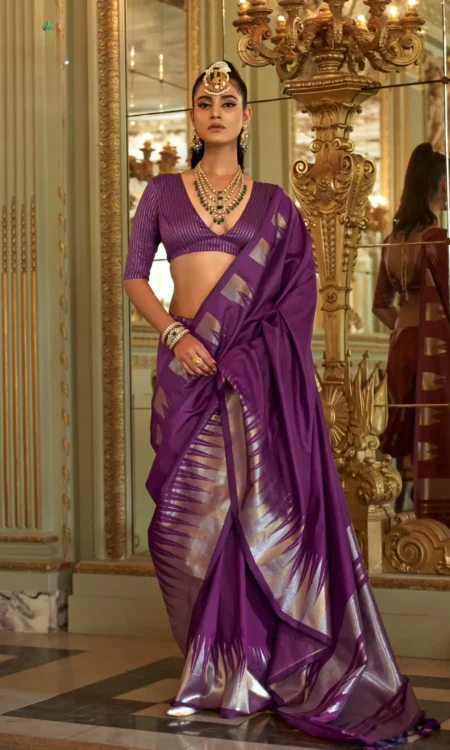
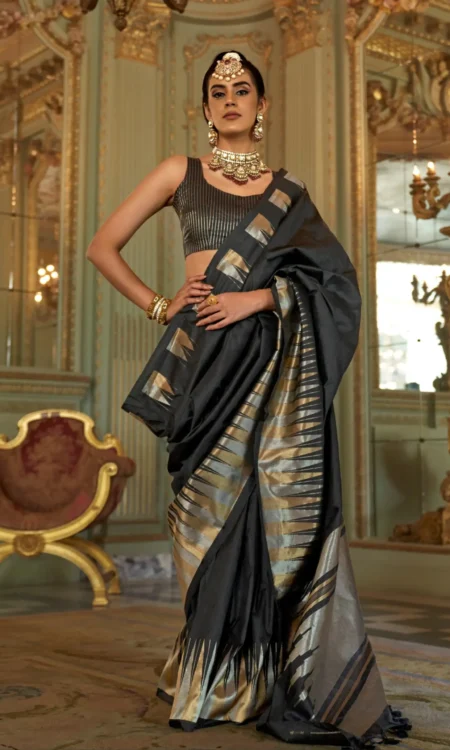


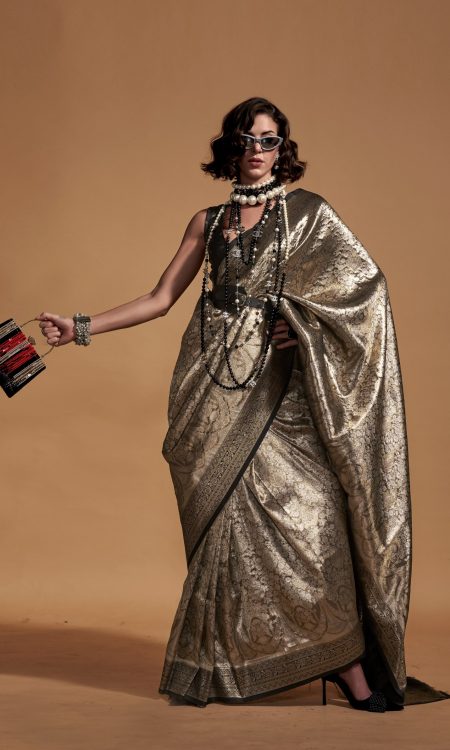
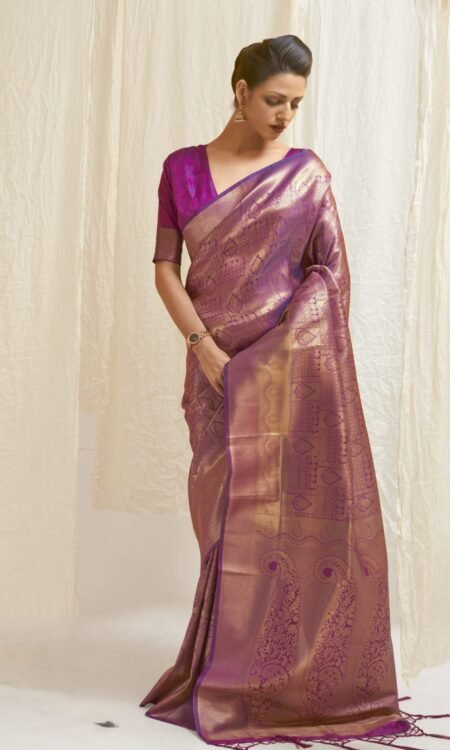
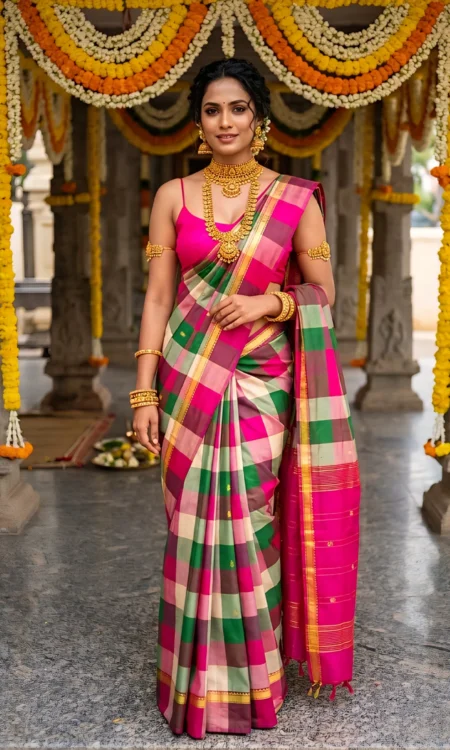
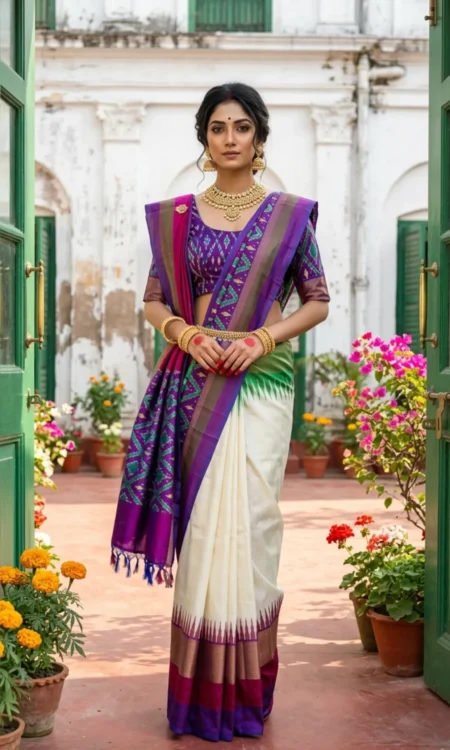
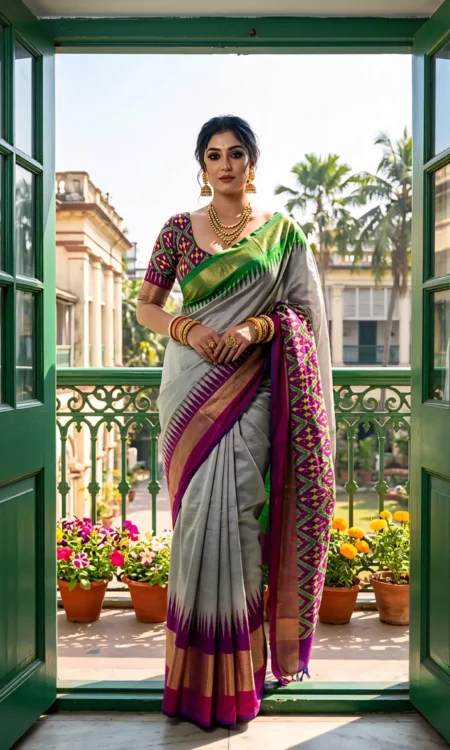
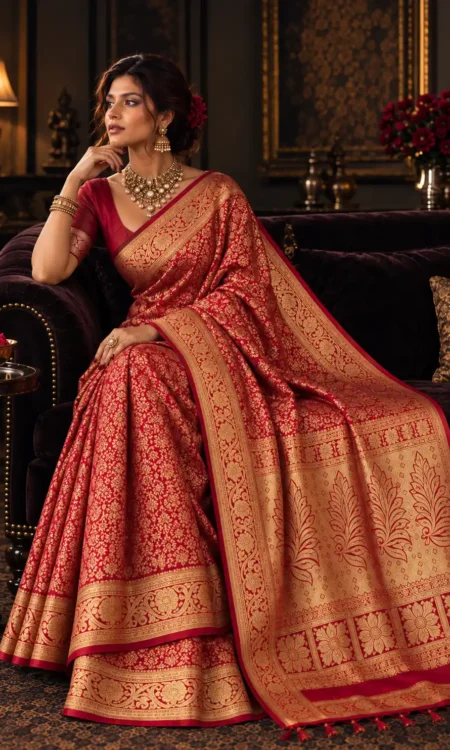
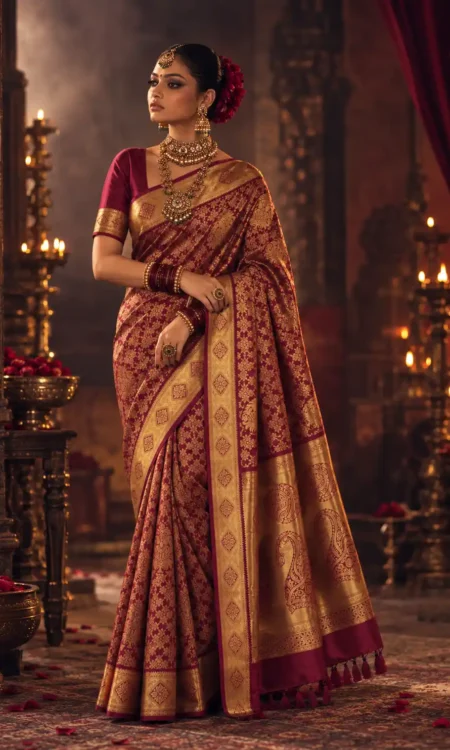
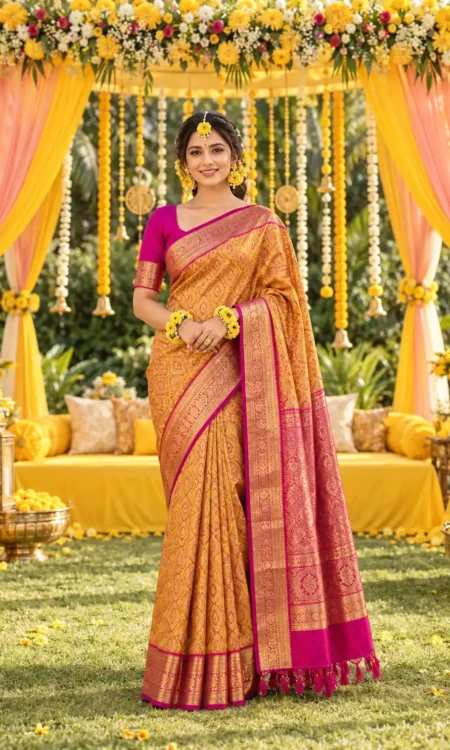
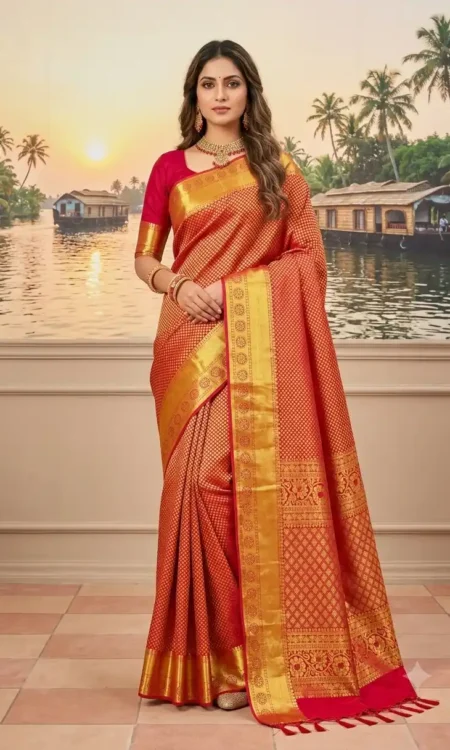
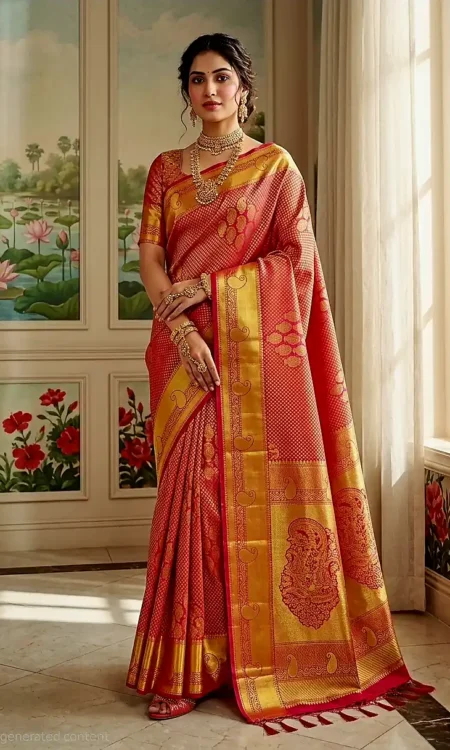
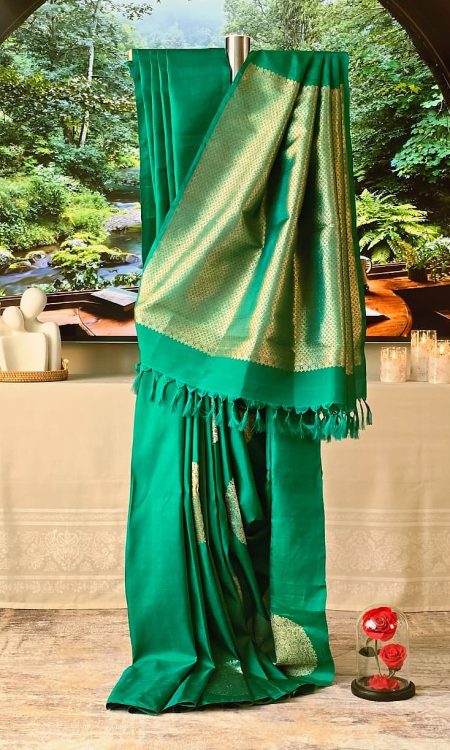
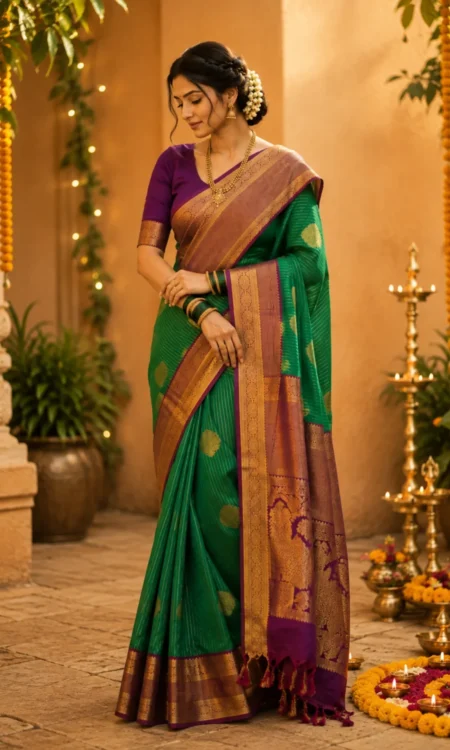
SOLD OUT!
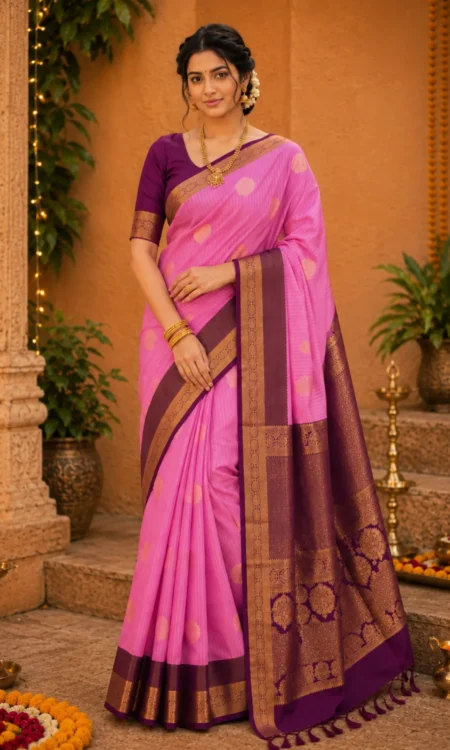
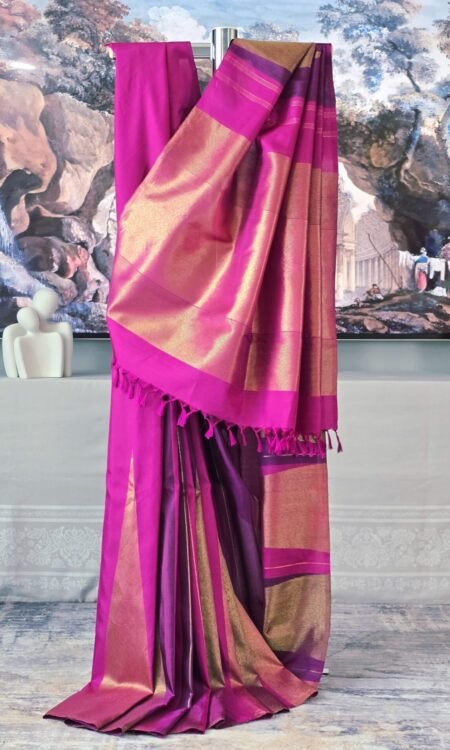
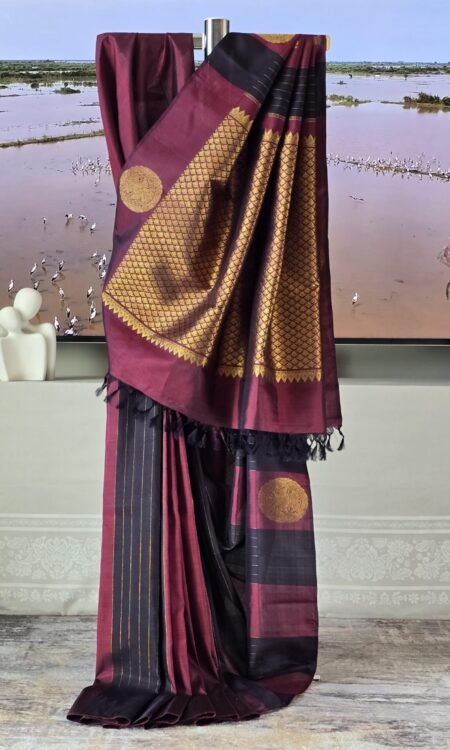
What Are Kanjivaram Sarees?
Kanjivaram sarees are sarees associated with the silk-weaving tradition of Kanchipuram, also known as Kancheepuram, in Tamil Nadu. Their visual character is often created through the relationship between the saree’s body, border and pallu, together with colour contrast, zari and woven motifs.
Traditional Kancheepuram silk sarees are associated with mulberry silk and specialised weaving practices. However, individual products can differ in material, construction, zari and production details, so the specifications of each saree should be checked rather than inferred from the collection name alone.
Kanchipuram has a long history as a South Indian textile and weaving centre, while its distinctive silk-saree tradition developed through changing weaving practices, communities, technology and commercial markets.
Kanjivaram and Kanchipuram: Are They the Same?
Generally, yes. Kanjivaram and Kanchipuram are commonly used names for the same Kanchipuram-associated saree tradition.
“Kanjivaram” is the spelling widely used by saree shoppers and retailers, while Kanchipuram and Kancheepuram connect the saree with its geographic and textile heritage. The official Geographical Indication is registered under the name Kancheepuram Silk.
There is therefore no need to treat Kanjivaram and Kanchipuram as two completely different types of saree. For shoppers, the more useful distinction is between the individual characteristics of each product: its silk or other material composition, weaving method, zari specification, border, pallu, motifs and construction.
What Makes Kanjivaram Sarees Distinctive?
Several features work together to create the recognisable character of Kanjivaram sarees.
Silk and Colour
Traditional Kancheepuram silk sarees are associated with mulberry silk, while contemporary collections can contain different material interpretations. Product specifications should therefore be used to establish the actual composition of an individual saree.
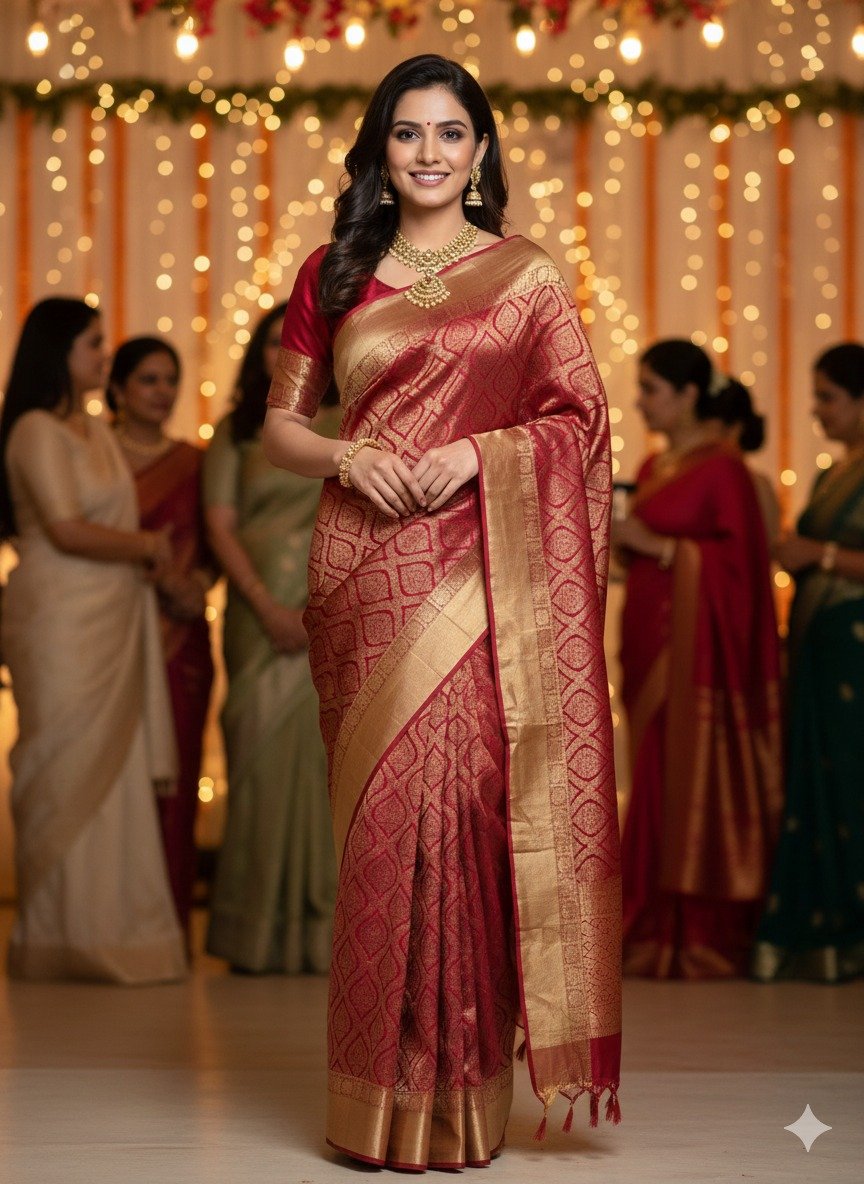
Colour is equally important. Kanjivaram designs are well known for strong relationships between the body, border and pallu, including contrasting combinations that give the saree a structured appearance.
Borders and Pallus
The body, border and pallu are three major visual components of a Kanjivaram saree.
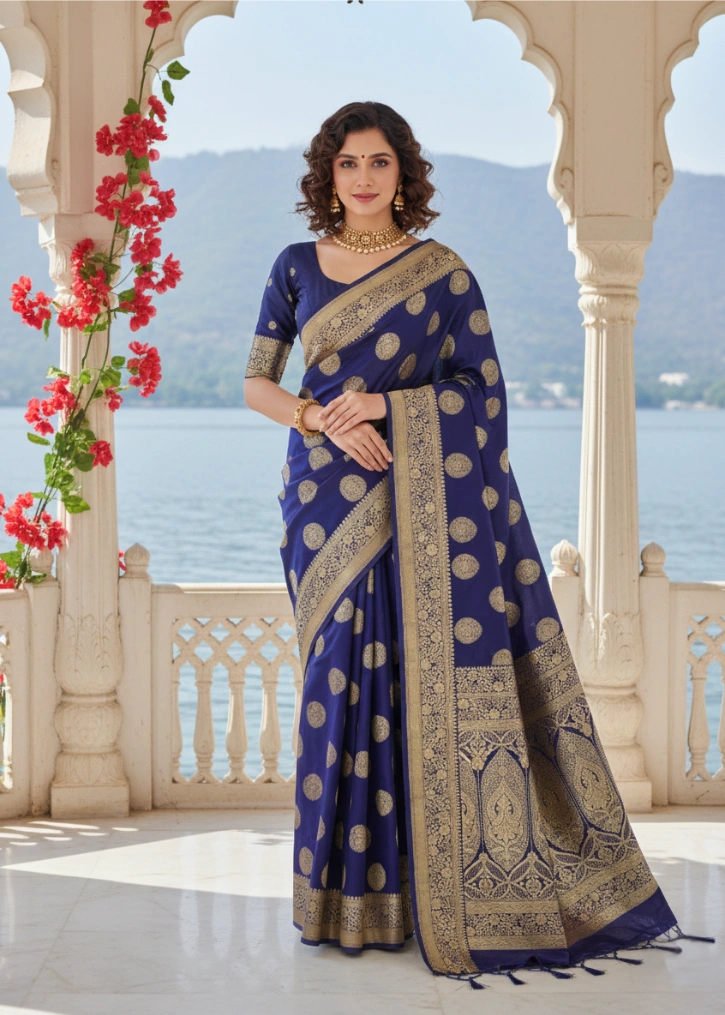
A contrasting border can create a strong separation from the body, while the pallu provides an important area for colour, zari and woven design. Traditional examples can feature broad borders, temple-inspired designs, checks, stripes, floral elements and richly patterned pallus.
When comparing sarees, look beyond the main body colour. The border and pallu can significantly change how formal, traditional or contemporary a saree appears.
Zari
Zari is an important decorative element in Kanjivaram weaving. It contributes metallic detail to borders, pallus and motifs and can create anything from restrained highlights to elaborate designs.
However, zari does not automatically mean pure gold zari. Contemporary products can differ in zari composition, so terms such as gold zari, pure zari, tested zari or imitation zari should only be used when the individual product specification supports them.
Woven Motifs
Kanjivaram sarees feature a wide range of traditional and geometric design vocabulary. Depending on the saree, shoppers may encounter temple or Gopuram-inspired forms, Rudraksham, Mayilkan, Kuyilkan, peacock, elephant, hamsa, paisley or mango forms, floral and vegetal motifs, checks, stripes and chakra-inspired designs.
The exact motifs available depend on the individual design, so the collection should be explored visually rather than assuming that every saree contains the same traditional elements.
Silk, Zari and Traditional Weaving
It is useful to consider silk, zari and weaving as three separate aspects of a Kanjivaram saree.
Silk
Traditional Kancheepuram silk sarees are associated with mulberry silk yarn used in the warp and weft. Contemporary saree markets, however, also use Kanjivaram terminology for products with other material compositions or interpretations.
For this reason, “Kanjivaram” should not by itself be treated as proof that a particular product is pure silk. Always check the material information provided for the individual saree.
Zari
Zari is the metallic thread element used to ornament the textile. Traditional Kancheepuram zari can involve silver, copper, silk and gold-related components, while contemporary products may use different metallic constructions.
If a saree is described specifically as having gold zari, pure zari or another particular zari composition, the product-level specification should be the basis for that claim.
Weaving
Traditional Kancheepuram weaving incorporates warp, weft, silk yarn, borders, pallus and specialised joining or interlocking techniques. Traditional documentation also describes throw-shuttle pit looms, while contemporary production can involve mechanisms such as jacquard.
This means the terms Kanjivaram, silk, handloom and GI should not be treated as interchangeable. Each describes a different aspect of the saree or its provenance.
Korvai and Petni: Traditional Kanchipuram Weaving Techniques
Two terms that are particularly useful when learning about traditional Kancheepuram weaving are Korvai and Petni.
What Is Korvai?
Korvai is a traditional interlocking weaving technique associated with contrasting borders in Kancheepuram weaving.
Traditional Korvai construction can use separate shuttles for the body and borders, with the yarns interlocking to create a strong contrast between the saree body and border.
This helps explain why some traditional Kanjivaram sarees have a particularly defined border-to-body transition.
Not every contemporary Kanjivaram saree should automatically be described as Korvai. Product construction can vary, and official handloom documentation recognises Kancheepuram sarees produced with and without Korvai.
What Is Petni?
Petni is a traditional Kancheepuram technique associated with joining a contrasting pallu warp to the saree’s existing warp structure.
Unlike ordinary stitching, Petni is a weaving and joining process involving the warp. It is therefore useful to understand Petni separately from Korvai.
A simple way to remember the distinction is:
| Technique | Main association |
|---|---|
| Korvai | Contrasting border and weft-direction interlocking |
| Petni | Contrasting pallu and warp-direction joining |
Neither technique should be assumed to appear in every modern Kanjivaram product.
Kanjivaram Motifs, Borders and Pallus
Design is one of the most useful ways to compare Kanjivaram sarees.
Temple and Architectural Motifs
Gopuram and temple-inspired forms are strongly associated with Kanchipuram’s design vocabulary. They can appear within borders or woven pattern arrangements.
Traditional Named Motifs
Depending on the design, shoppers may find motifs such as Rudraksham, Mayilkan and Kuyilkan.
Nature-Inspired Motifs
Peacocks, birds, elephants, hamsa, floral and vegetal forms and paisley or mango shapes are among the documented design elements associated with Kancheepuram sarees.
Geometric Designs
Checks, stripes and chakra-inspired forms provide another important part of the design vocabulary.
How to Compare Them
When browsing the collection, compare:
- Body colour
- Border width
- Border contrast
- Pallu design
- Zari presence
- Motif scale
- Overall visual density
A saree with a broad contrasting border and elaborate pallu can create a very different impression from a design with a quieter border and restrained patterning, even when both belong to the Kanjivaram category.
How to Choose a Kanjivaram Saree
The easiest way to narrow your choices is to compare the sarees in this order:
Occasion → colour → border → zari → motif → weight → construction → budget
1. Start With the Occasion
For a wedding or major ceremony, you may prefer a more elaborate combination of colour, zari, border and pallu. For a reception or festive gathering, a contemporary colour combination or more restrained design may suit the occasion better.
2. Choose the Colour
Traditional wedding choices often include rich reds, maroons, greens and magentas, while blue, pink, gold and other colour combinations can work well for wedding guests and festive occasions.
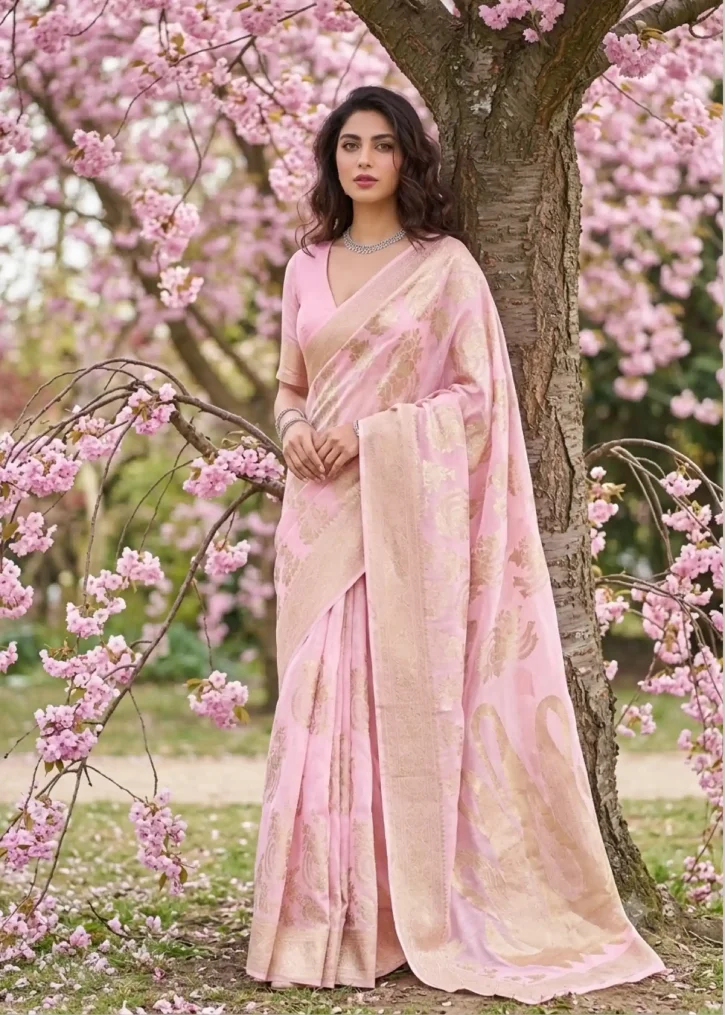
Lighter palettes can also be considered for daytime functions when suitable products are available.
Colour is a styling choice, not an authenticity test.
3. Compare the Border
Consider whether you prefer:
- Broad or narrower borders
- Strong contrast
- Temple-inspired patterns
- Geometric designs
- Zari-focused borders
- A more restrained contemporary appearance
4. Look at the Pallu
The pallu can determine much of the saree’s overall visual impact. Compare its colour, motif density, zari and relationship with the body and border.
5. Check the Zari Specification
Do not assume that a saree with metallic detailing contains pure gold zari. If zari composition matters to your purchase, check the specific product description and documentation.
6. Consider Weight
Weight can be relevant to comfort and occasion, particularly when selecting a saree for a long wedding or formal event. However, weight alone does not establish authenticity, silk composition or GI status.
7. Check Construction and Documentation
For an authenticity-sensitive purchase, review:
- Fibre or material declaration
- Weaving information
- Handloom or handwoven information where provided
- Zari specification
- Product documentation
- GI-related information where applicable
- Silk Mark information where applicable
- Construction details
No single visual or sensory feature can establish fibre, origin, loom method and GI status at the same time.
Kanjivaram Sarees for Weddings and Bridal Wear
Kanjivaram sarees have a strong association with South Indian weddings, bridal dressing and other ceremonial occasions. Their silk tradition, contrasting colours, zari and elaborate woven designs make them particularly suited to formal celebrations.
That does not mean every Kanjivaram saree is a bridal saree. The right choice depends on the ceremony, personal style and level of formality you want.
For Bridal Wear
Consider richer combinations such as:
- Red
- Maroon
- Green
- Magenta
- Strong colour contrast
- More substantial zari
- Elaborate pallus
- Traditional motifs
For Wedding Guests
You may prefer:
- Jewel tones
- Blue
- Green
- Pink
- Sophisticated contrast
- Moderate zari
For Receptions
Look for:
- Contemporary colour combinations
- Refined zari
- Less traditional motif arrangements
- Lighter or tissue interpretations where the individual product specification supports them
For Day Functions
Lighter colours, restrained zari and lighter constructions can be suitable where those options are available.
These are styling recommendations rather than rules for determining whether a saree is authentically Kanjivaram.
Styling a Kanjivaram Saree
Kanjivaram sarees can be styled traditionally or with a more contemporary approach.
Traditional Styling
Pair a richly patterned saree with:
- Gold jewellery
- Temple-inspired jewellery
- Statement earrings
- Bangles
- A traditional blouse
This works particularly well for weddings, religious occasions and formal celebrations.
Contemporary Styling
For receptions or modern celebrations, consider:
- A structured blouse
- Minimalist jewellery
- Statement earrings
- A modern clutch
- More restrained accessories
The blouse can either complement the saree’s dominant colour or deliberately contrast with its border and pallu.
Choose footwear that remains comfortable for the length of the event, particularly when the saree is being worn for several hours.
How to Care for a Kanjivaram Silk Saree
Silk and zari require careful handling, particularly when a saree is worn and stored over many years.
- Follow the individual product’s care instructions first.
- Prefer professional cleaning for valuable silk sarees.
- Avoid frequent unnecessary cleaning.
- Do not twist, wring or squeeze the saree.
- Avoid harsh cleaners.
- Protect the saree from excessive heat.
- Keep it away from prolonged direct sunlight.
- Store it in a breathable fabric rather than an unsuitable airtight environment.
- Keep moisture away during storage.
- Refold the saree periodically to avoid keeping the same fold lines permanently in place.
- Protect zari areas from unnecessary abrasion.
- Avoid direct high heat when ironing.
Product-specific care instructions always take priority, particularly where a saree has a specialised material, zari construction or contemporary interpretation.
Frequently Asked Questions
What is a Kanjivaram saree?
A Kanjivaram saree is a saree associated with the silk-weaving tradition of Kanchipuram/Kancheepuram in Tamil Nadu, recognised for features such as silk, contrasting colours, borders, pallus, zari and distinctive woven designs.
Is Kanjivaram the same as Kanchipuram?
Generally, yes. Kanjivaram and Kanchipuram are commonly used names for the same Kanchipuram-associated saree tradition. The official GI registration is under the name Kancheepuram Silk.
Is every Kanjivaram saree made from pure silk?
No blanket claim should be made for every contemporary product. Traditional Kancheepuram silk sarees are associated with mulberry silk, but individual products should be checked for their stated material composition.
Are all Kanjivaram sarees handwoven?
No. Kanchipuram has a strong handloom tradition, but “Kanjivaram” alone should not be treated as proof that an individual online product is handwoven. Check the product’s specific weaving information.
What is Korvai in a Kanjivaram saree?
Korvai is a traditional interlocking weaving technique associated with contrasting borders in Kancheepuram weaving.
What is Petni in Kanjivaram weaving?
Petni is a traditional Kancheepuram technique associated with joining a contrasting pallu warp to the saree’s existing warp structure.
Is Kanjivaram zari always pure gold?
No. Zari is an important decorative element in Kanjivaram weaving, but its composition can vary. Pure zari or gold-zari claims should be supported by individual product specifications or documentation.
How can I evaluate a Kanjivaram saree online?
Check the product’s material declaration, weaving information, zari specification, construction details and available documentation. Where applicable, also review Silk Mark, handloom or GI-related information. Avoid relying on weight, shine, sound, touch or a burn test as a definitive authenticity test.
Are Kanjivaram sarees suitable for weddings?
Yes. Kanjivaram sarees have a strong association with South Indian weddings and formal celebrations. However, the most suitable design depends on whether you are choosing for bridal wear, a wedding ceremony, reception, festive event or another occasion.
How should I store a Kanjivaram silk saree?
Follow the product’s care instructions first. In general, keep silk sarees dry, protect them from prolonged direct sunlight and store them in breathable fabric. Refold them periodically and avoid unnecessary abrasion to zari.
Explore More Saree Collections
Explore other saree collections to compare different textile traditions, materials and design approaches:
For shoppers comparing saree traditions, the best starting point is the individual product specification: examine the material, construction, zari, border, pallu and design rather than assuming that every saree in a category has identical characteristics.