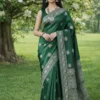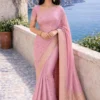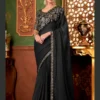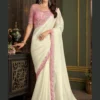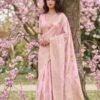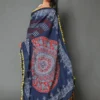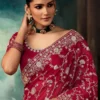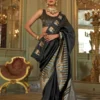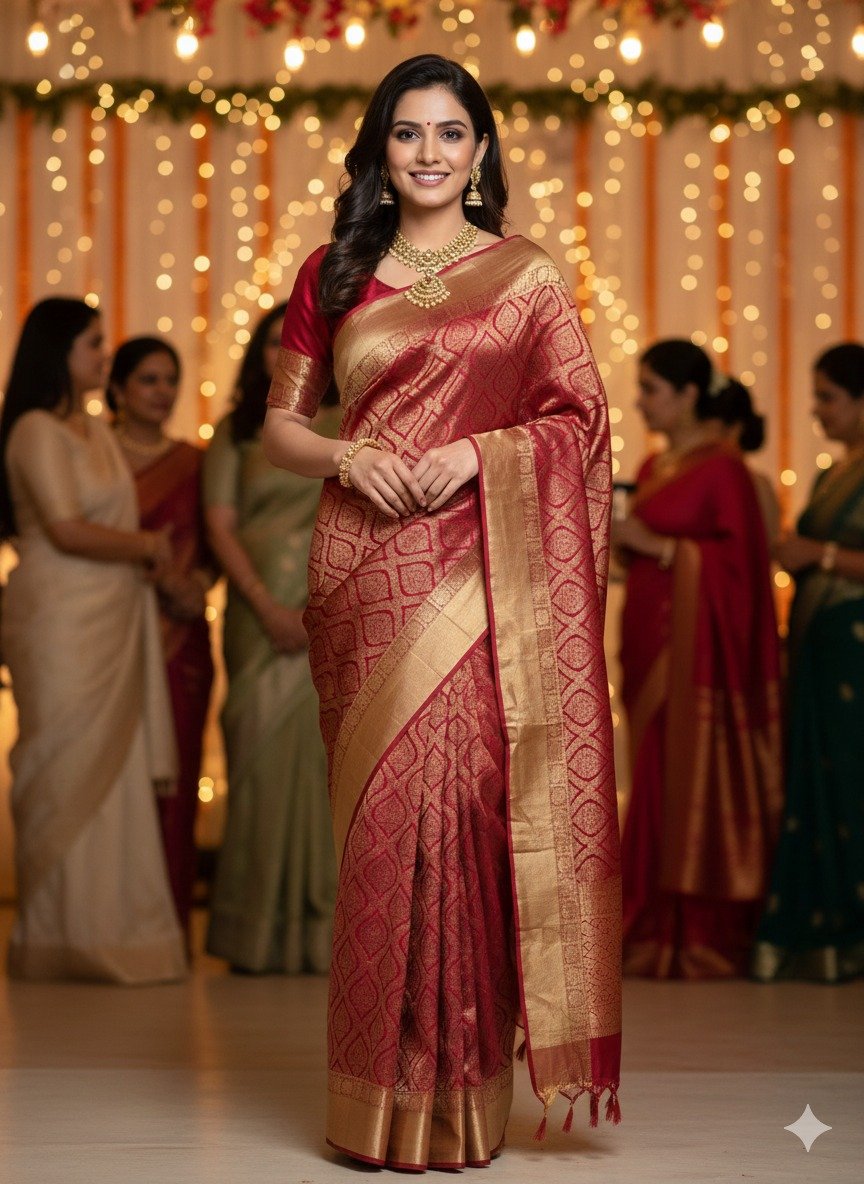
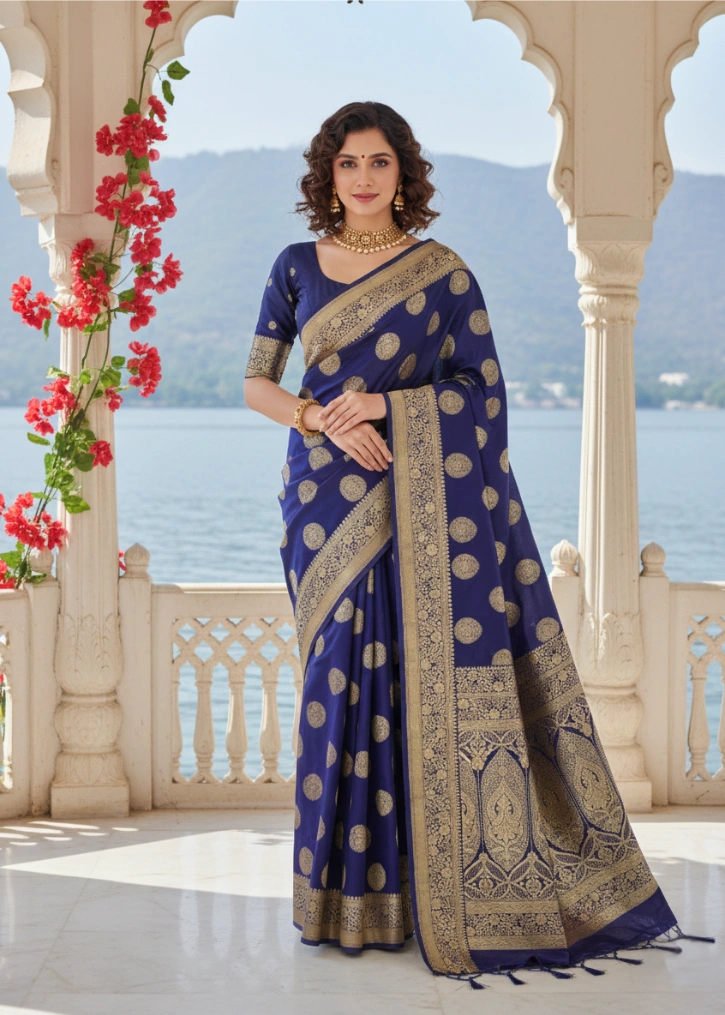
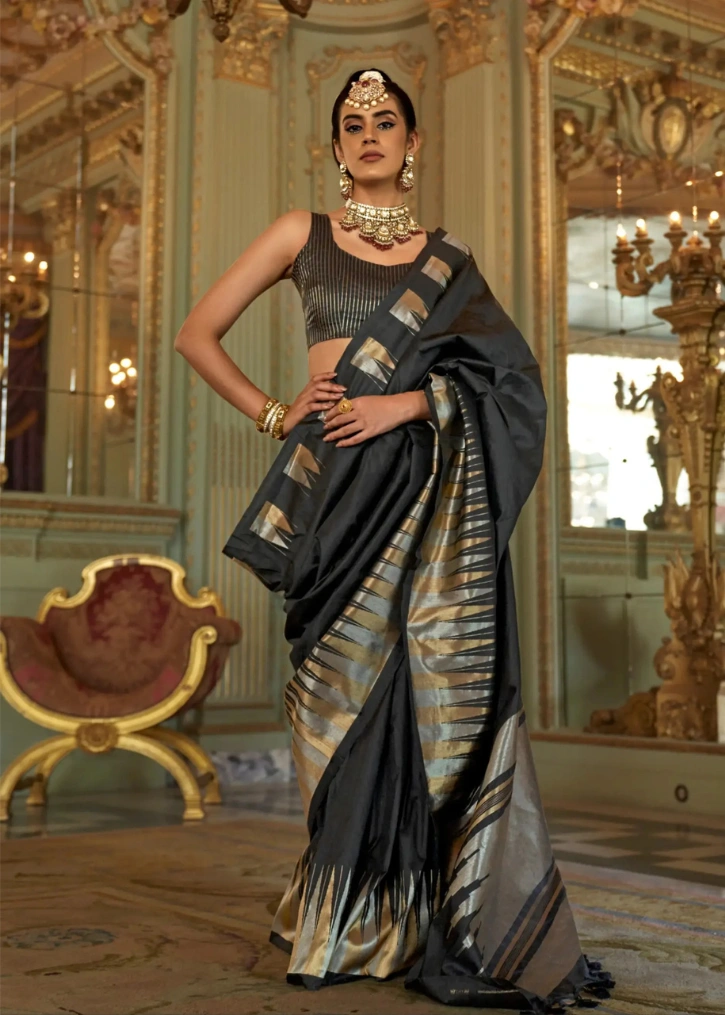
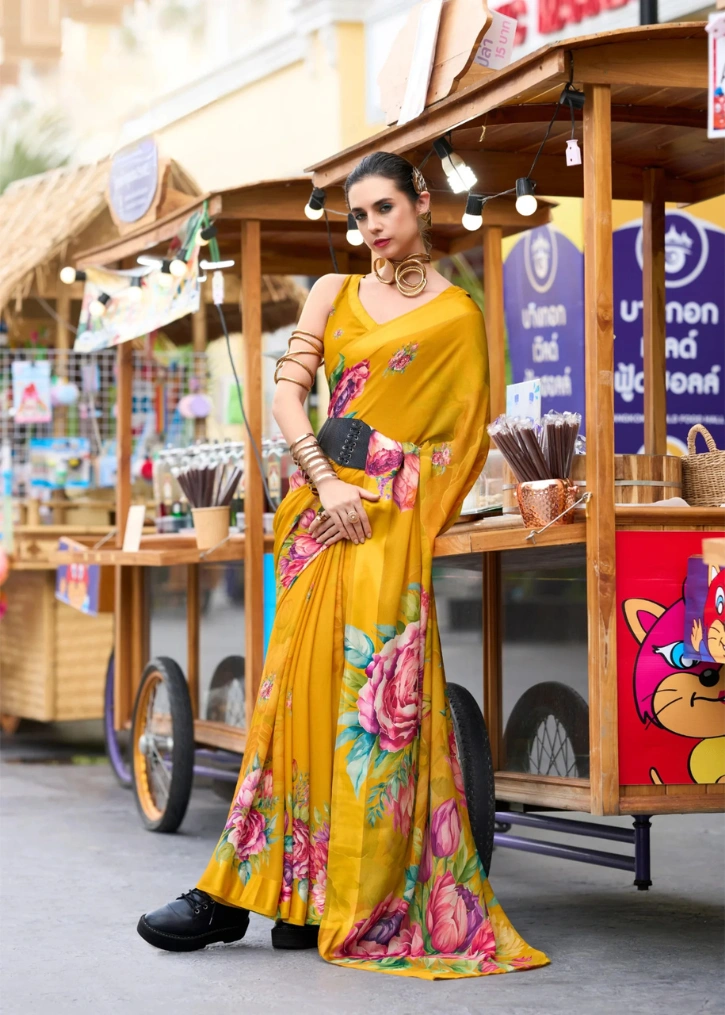
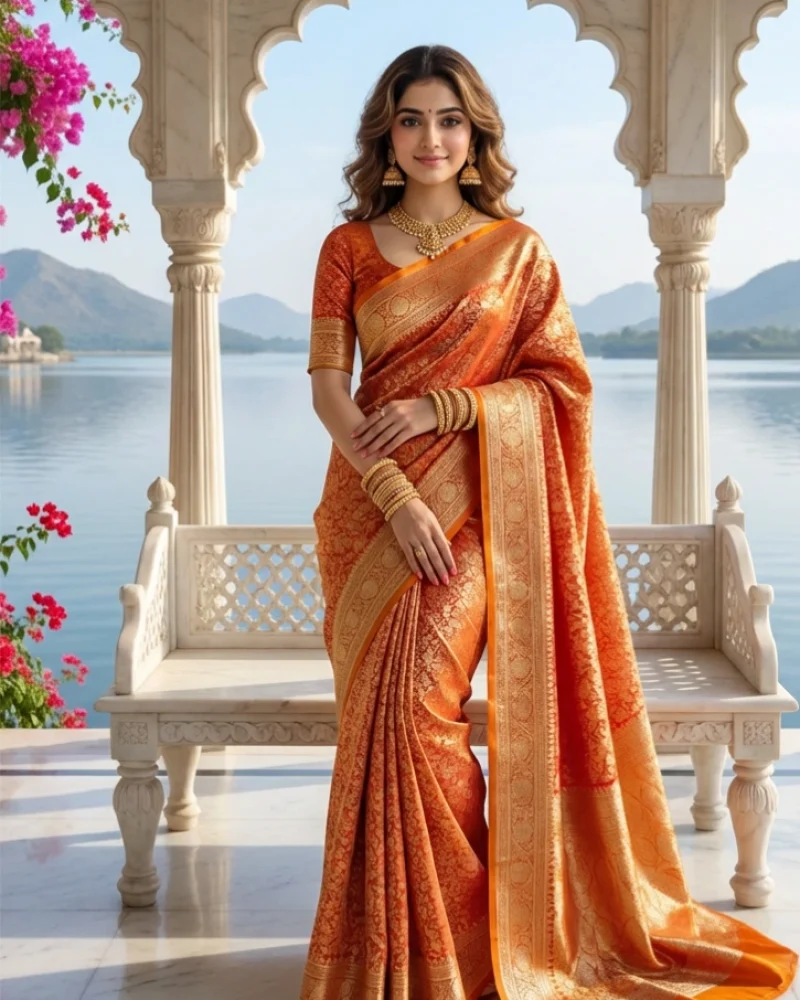
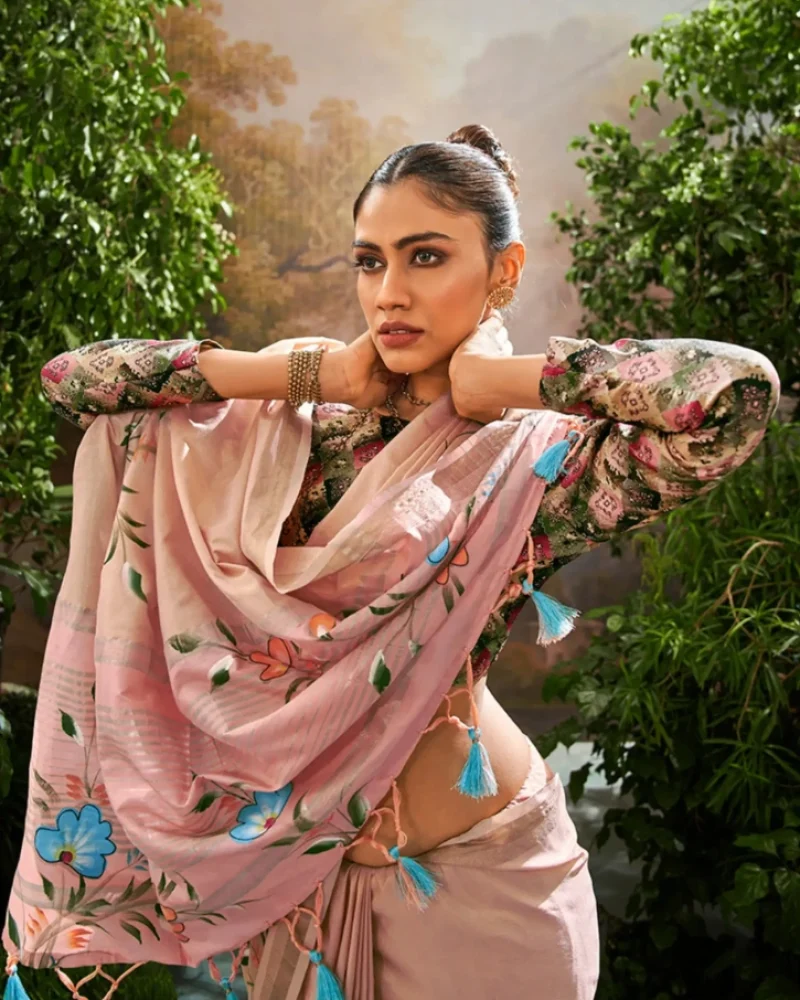
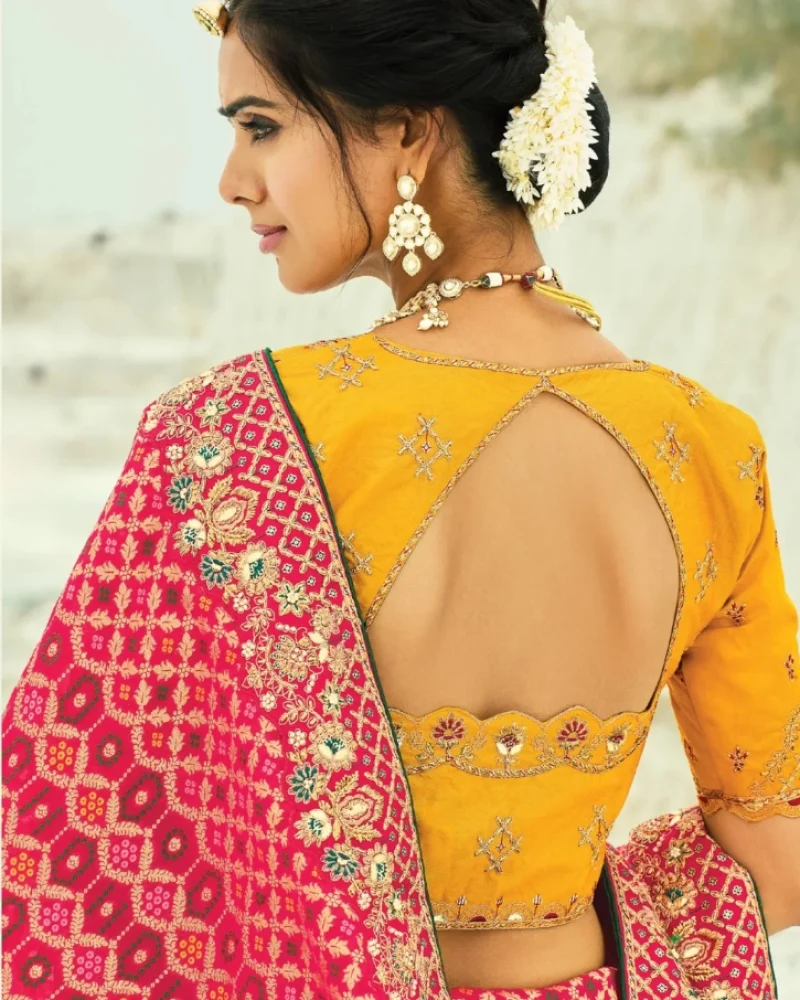
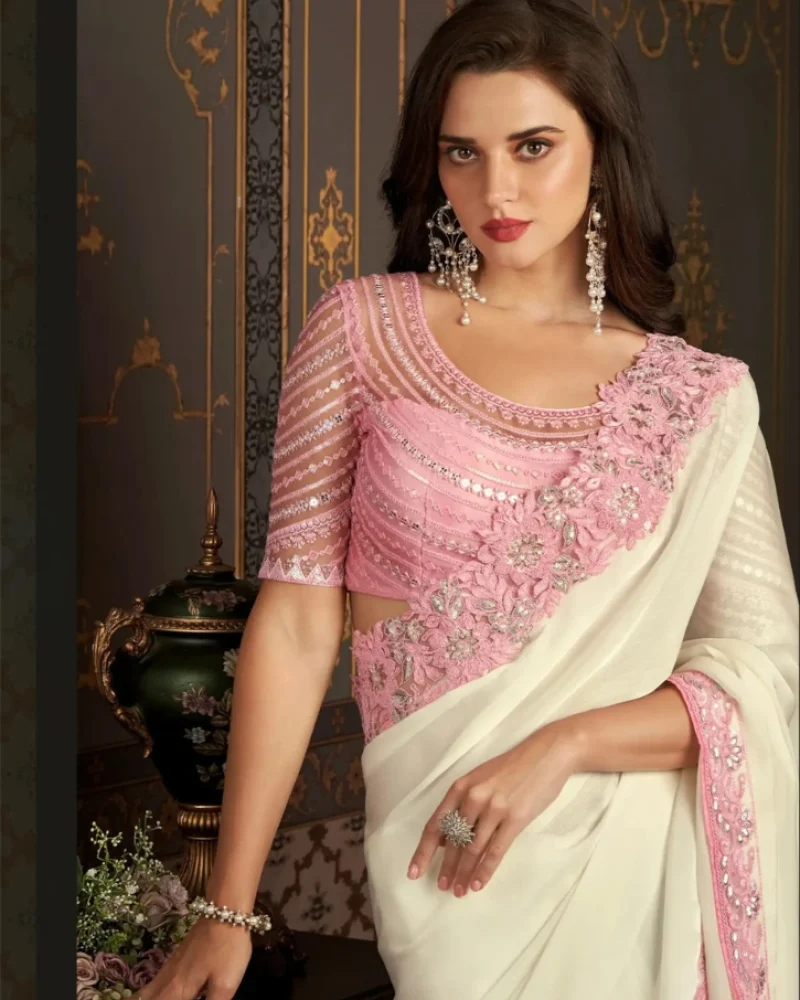
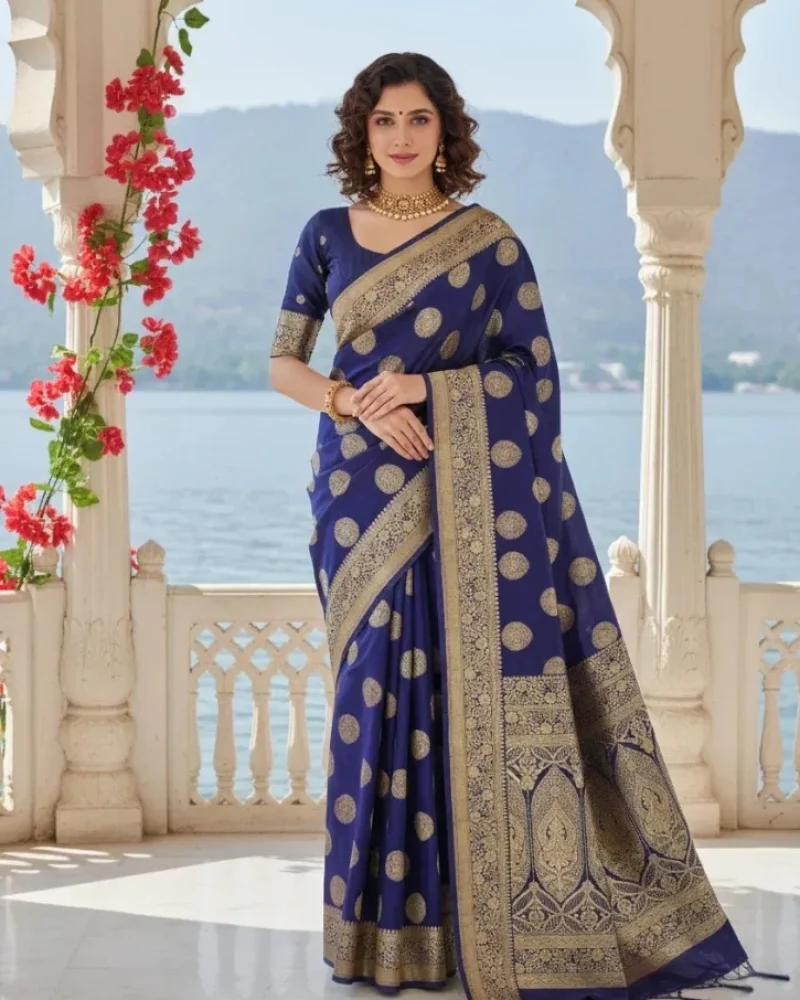
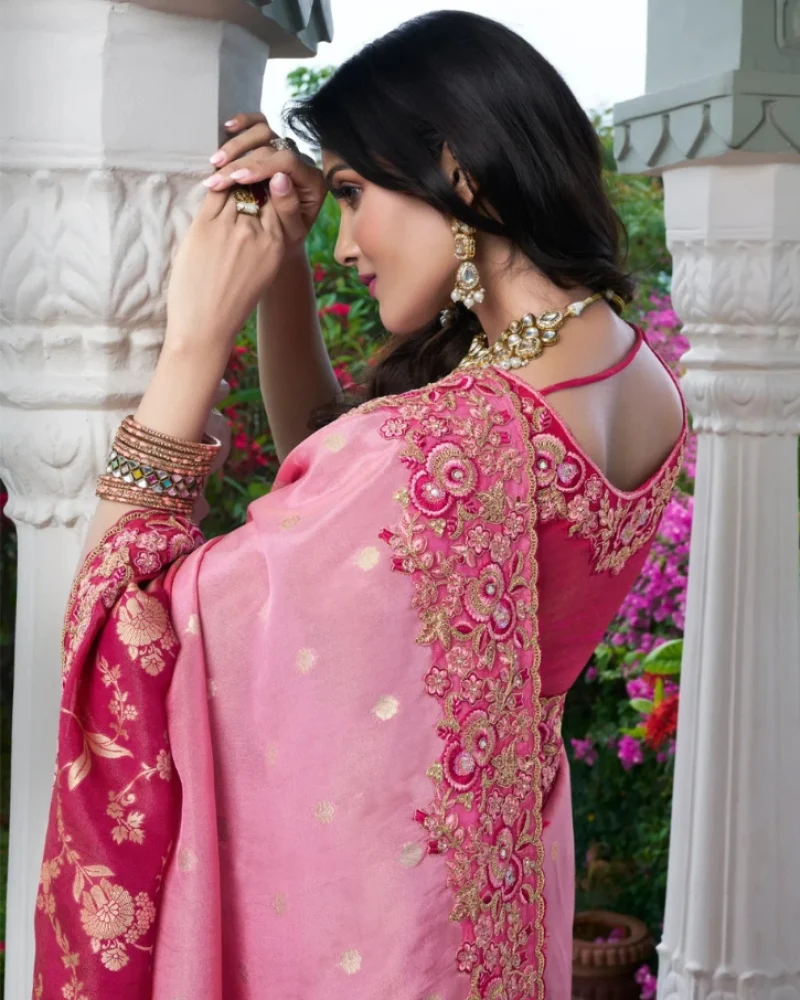

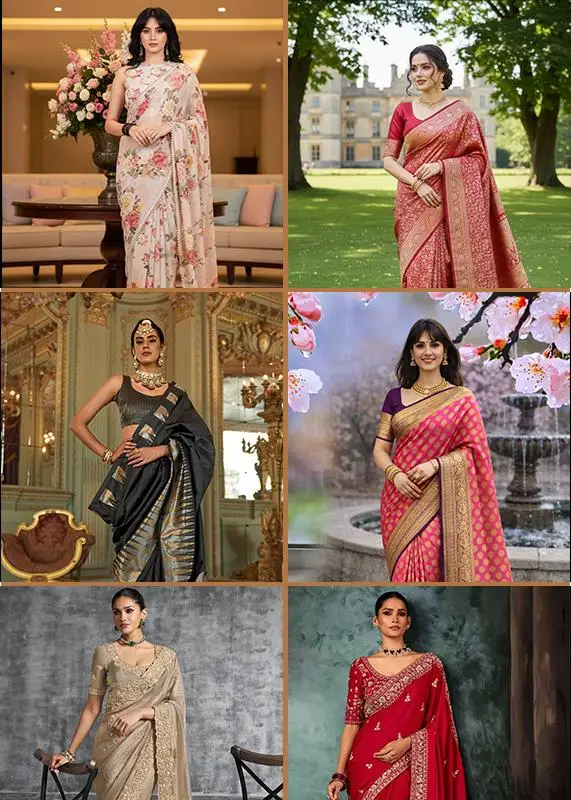
Saree enjoys the reputation of being one of the most versatile garments ever created. Have you ever wondered how a single garment can suit every occasion, season, mood, time of day, location, and activity? The secret lies in the fabric. It is the fabric that determines how a saree drapes, feels, and performs in different situations, making it wearable almost anywhere and anytime. In this blog, we will explore various saree fabrics, understand their pros and cons, and put together a simple guideline to help you choose the right fabric for the right occasion.
1. Georgette:
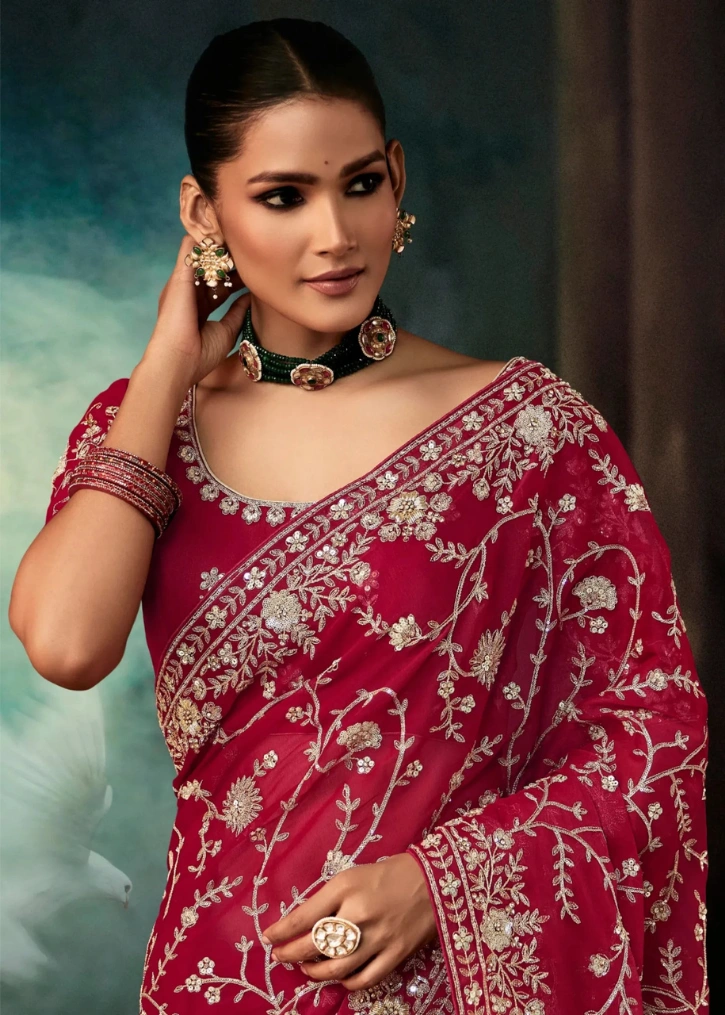
Georgette is a lightweight, delicate fabric that makes a saree easy to wear and comfortable to carry for long hours. It drapes beautifully and gently accentuates the silhouette. Georgette is widely used for premium weaves such as khaddi Banarasi and Bandhani sarees, making it suitable for weddings and special occasions. At the same time, it is also popular for its printed version meant for casual outings and informal gatherings. Comfortable and breathable, georgette works well even in hot and humid weather. Depending on the occasion and budget, you can choose between pure georgette made from silk or faux georgette made from viscose or polyester.
2. Chiffon:
Chiffon is a lightweight, airy fabric known for its soft, flowy drape that gently hugs the body and adds a touch of sensual elegance. Often seen in printed styles, chiffon sarees are perfect for small parties, informal celebrations, luncheons, dinners, and casual or semi-formal gatherings. They carry a distinctly contemporary feel and work especially well when experimenting with unconventional styling such as pairing the saree with a T-shirt or a collared blouse. Chiffon sarees, however, are delicate and require careful handling, as the fabric can easily stretch, lose shape, or tear. Technically, chiffon refers more to a weaving style than a specific fiber and can be made from silk, polyester, or other fine yarns.
3. Cotton:
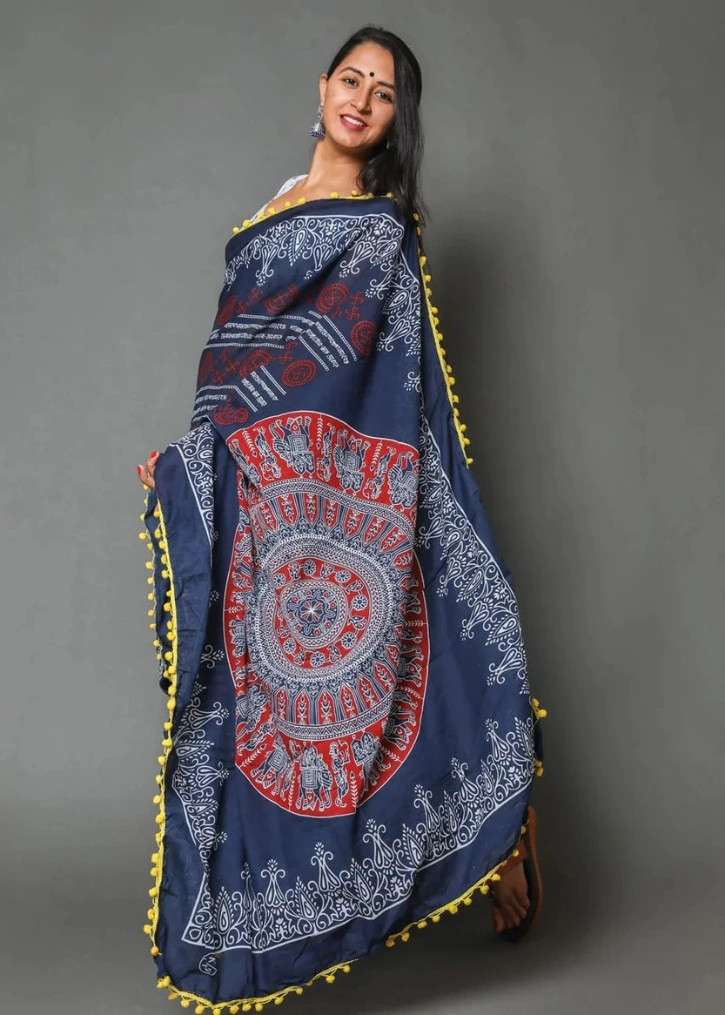
The natural, soft, breathable cotton fabric is a preferred saree fabric. Cotton sarees are comfortable, easy to wear, and all-season sarees. They carry an aura of effortless elegance and understated sophistication. They range from casual printed versions for daily wear, to more elaborate versions adorned with embroidery, hand-painting, patchwork, cutwork, chikankari, and other embellishments for festive wear. In India, cotton sarees are associated with power dressing. Many CEOs, parliamentarians, influential politicians, and public figures often choose crisp cotton sarees that project confidence, authority, and grace. At the same time, cotton sarees are great equalizers – women across all socio-economic backgrounds wear them with equal pride and affection. Cotton sarees with quirky prints like the iconic monuments, famous city skylines, black-yellow rikshaw or taxis, written text or newspaper prints, have received a lot of love from the young wearers.
4. Organza:
Organza is characterized by its crisp, structured feel and semi-transparent appearance. It can be crafted from natural silk or synthetic fibres, offering a sophisticated and elegant aesthetic. Organza sarees require some experience in draping, as their structured fall and lighter drape make them less fluid compared to other saree fabrics. While sarees are often chosen for their graceful, flattering silhouettes, organza sarees create a more defined, structured look because of their transparency and stiffness. They tend to appeal to those who enjoy bold, contemporary styling and feel comfortable carrying a more statement-making fabric. Organza sarees work well for formal occasions, daytime events, or settings with pleasant weather, and are best suited for shorter wear durations.
5. Linen:
Linen is a natural, durable, and breathable fabric made from flax fibers. Lightweight and comfortable, linen sarees can be worn across seasons with ease. Linen lends a chic, understated, and sophisticated appeal to a saree. While a linen saree may not be the ideal choice for weddings or traditional celebrations, it is perfectly suited for settings such as PTA meetings, corporate or university presentations, podcasts, or book club gatherings. Linen sarees are usually plain, or minimally embellished so are suitable for multi-cultural gatherings.
6. Satin:
Satin is known for its glossy, smooth, and fluid texture, with a lustrous front and a matte underside. Interestingly, satin is not a fabric in itself but a weaving technique that creates a seamless, silky surface with a beautiful sheen. Satin sarees drape effortlessly and instantly lend a luxurious, polished look. They are perfect for celebratory occasions that call for a bit of glitz and glamour. The charm of satin sarees often lies in their clean, monochrome appeal, though some may feature delicate Parsi gara work or subtle embroidery along the borders for added refinement. While satin sarees can feel slightly heavier than everyday fabrics, their fluid drape makes them comfortable and graceful to carry.
7. Crepe:
Crepe is a crinkled, granular fabric characterized by its distinctive textured surface. A relatively recent addition to the world of saree fabrics, crepe can be made from silk, wool, or synthetic fibres. It is durable, drapes beautifully, and has a natural fall that flatters the silhouette. Its pebbled, slightly uneven texture sets it apart from the smooth finish of most other saree fabrics. Crepe sarees are generally not considered casual wear; they are better suited for celebrations, small parties, and formal dinners. With their refined look and elegant drape, they are more appropriate as evening wear rather than daytime attire. One thing to keep in mind is that excessive ironing can flatten the characteristic crinkled texture of crepe, which diminishes the very feature that makes the fabric unique.
8. Silk:
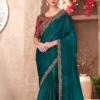
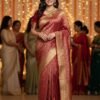
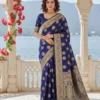
Silk is a natural fibre derived from silkworms and has long been considered the most luxurious fabric used in sarees. Popular varieties of silk include Mulberry silk, Muga silk, Eri silk, and Tussar silk. Pure silk is known for its smooth texture, rich lustre, and elegant drape, making it ideal for premium-quality sarees. Silk sarees are traditionally worn for weddings, special occasions, and religious celebrations, and many of them become treasured heirlooms passed down through generations. Depending on the type of silk fibre, weaving style, and finishing techniques, silk sarees can range from lightweight and fluid to slightly heavier and more structured. However, pure silk sarees often come at a higher price point, which has led to the popularity of more affordable semi-silk sarees.
9. Faux silk:
Faux silk, also known as semi-silk or artificial silk, is made from synthetic fibres such as polyester, nylon, or rayon. It is a more affordable and easy-to-maintain alternative to pure silk for sarees. Faux silk is designed to imitate the lustre, sheen, and smooth texture of natural silk, and it drapes well too. However, artificial silk often appears more uniform and tends to have a consistent white sheen, unlike the slightly uneven, pearl-like glow of pure silk. To achieve a more natural look and feel, manufacturers often blend synthetic fibres with silk to create blended silk fabrics for sarees. These sarees can be worn for many of the same occasions as pure silk sarees, such as weddings and festive celebrations. For a layperson, distinguishing between pure silk and faux silk can often be quite challenging.
10. Synthetic:
Rayon, nylon and polyester are popular synthetic fabrics used in sarees. Rayon offers softness and breathability, nylon provides strength and elasticity, while polyester adds durability and wrinkle resistance. These fibres are often blended to create sarees that deliver the desired look and feel at an affordable price. Synthetic sarees are durable, easy to maintain and well suited for everyday wear. They are ideal for office-goers, school teachers, women running daily errands, informal coffee meets, or casual family visits.
11. Crush, Crinkle, Pleated:
These effects are created on fabrics such as silk, cotton, chiffon, or synthetic blends through mechanical or chemical treatments that produce an uneven, wrinkled, or crushed texture. Although this is a permanent surface treatment, the effect tends to soften and fade with time and repeated use. Sarees made with these textures look modern and trendy. They have a fluid drape rather than a structured form. However, such styles often appear as short-lived fashion trends, as they are not considered very practical for long-term or regular saree wear.
12. Tissue:
Tissue is a light-weight crisp fabric made of metallic zari fiber that gives it a shimmery finish. It is a luminous, shiny fabric that makes sarees suitable for festive occasions. Embellished with zardozi, sequins, and cut-dana these sarees are the most preferred sarees for glitzy celebrations, weddings, and parties. The tissue sarees are crisp and stiff rather than soft and flowy, and they look very sophisticated and elegant. Made with real silk and handwork embellishment these sarees can be expensive but with synthetic tissue they are quite affordable.
13. Net:
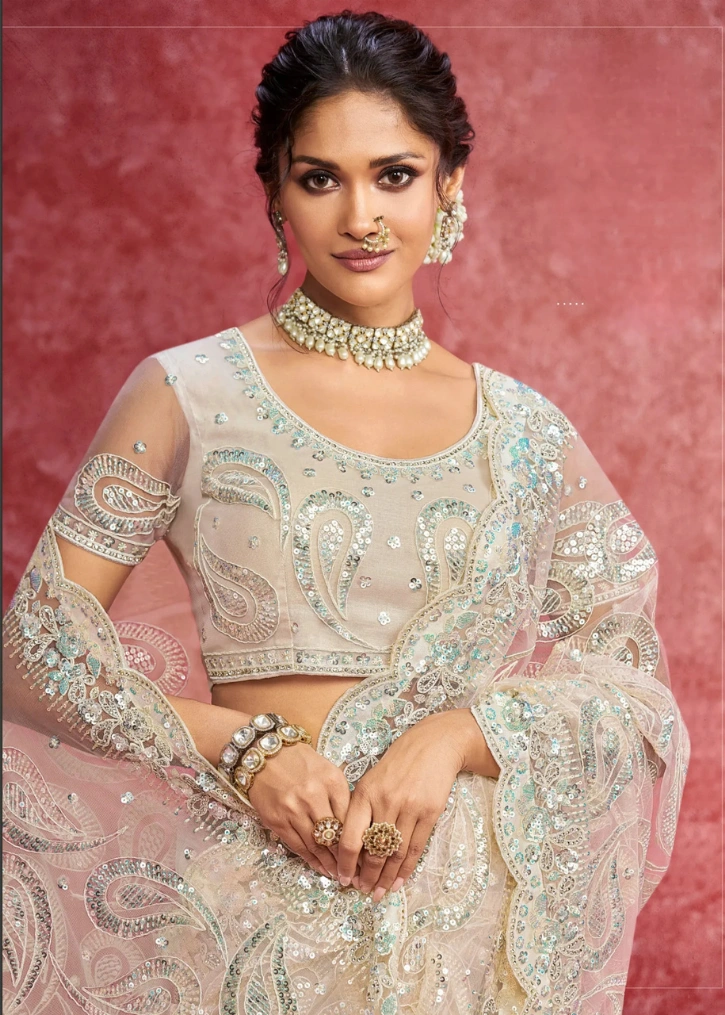
Net is a lightweight, sheer fabric made by twisting or knotting yarns into a mesh-like, grid structure. It is breathable and delicate, creating a transparent base that is rarely used plain. Net sarees are almost always embellished with sequins, beads, stones, or intricate embroidery across the body and borders to add structure and visual richness. The fabric drapes well and creates an elegant, body-contouring silhouette. Net sarees appear glamorous and eye-catching, making them best suited for lavish weddings, luxury celebrations, grand parties, and special evening events.
14. Combination:
Combination fabrics are created by blending two different fibres to achieve a desired texture, finish, or drape. By combining materials, the strengths of each fiber can be combined together in a single saree. Common combinations include crepe-silk, crush-tissue, crepe-tissue, organza-tissue, tissue-silk, georgette-silk, Mashru (satin-silk), and blended silk. Such combinations allow features like sheen, fluid fall, soft feel, and fine drape to coexist, giving the saree both aesthetic appeal and comfort. As a result, combination fabrics often offer a balanced look and feel that can be more versatile and practical than sarees made from a single fabric.