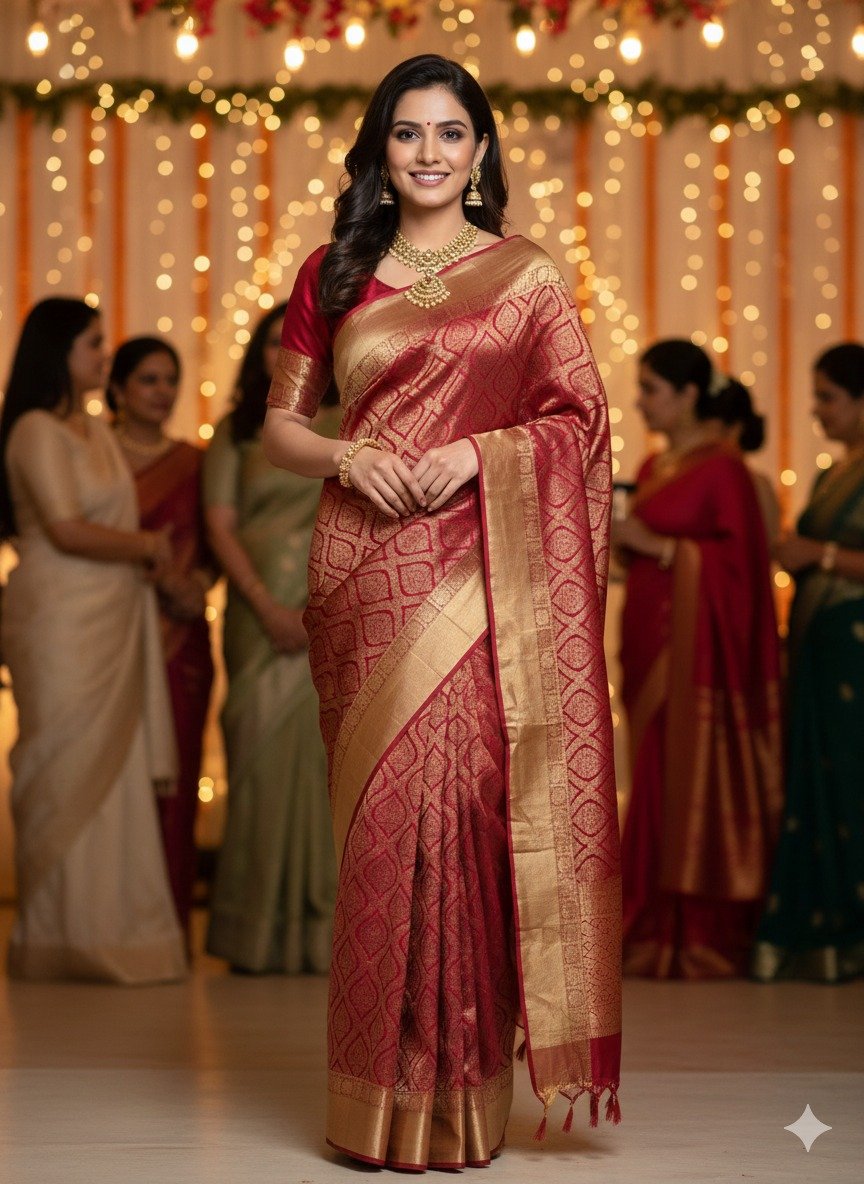
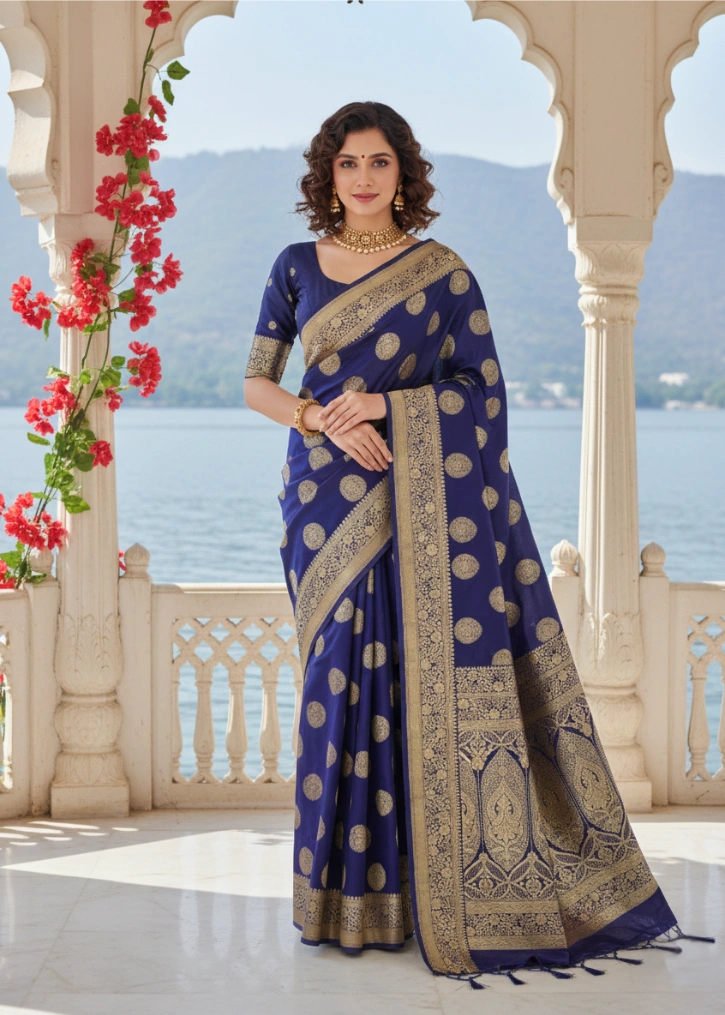
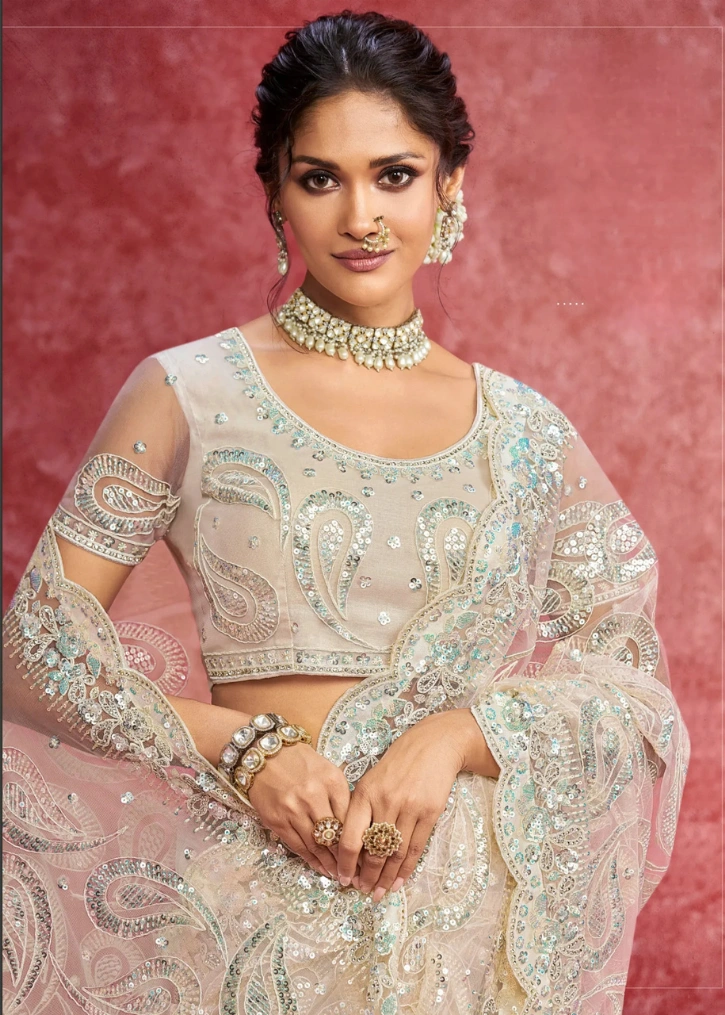
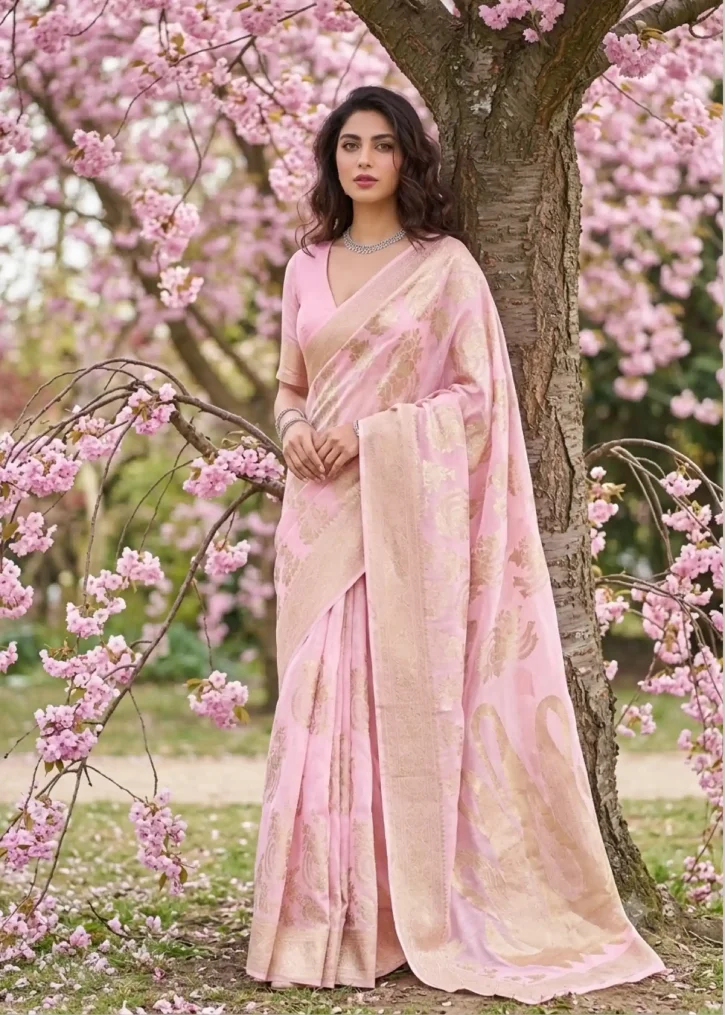
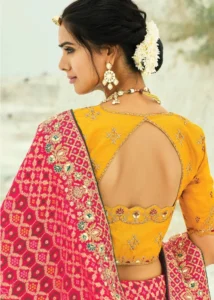
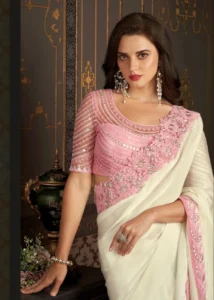
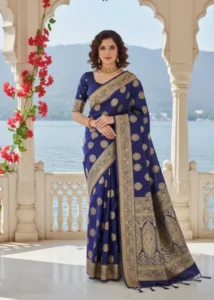
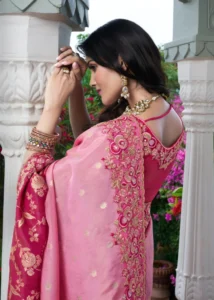
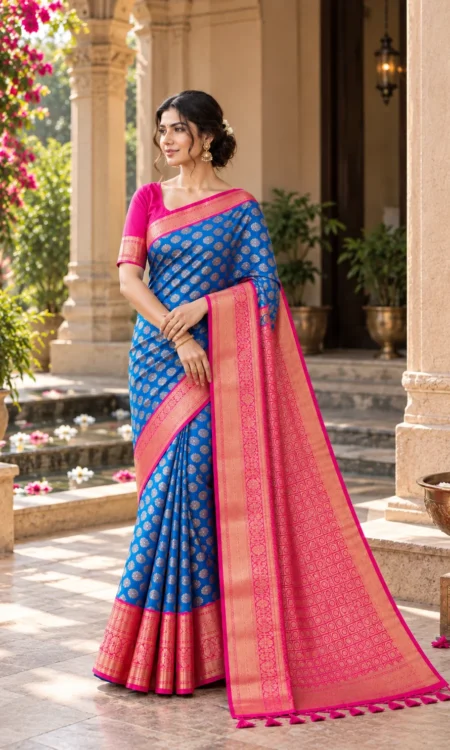
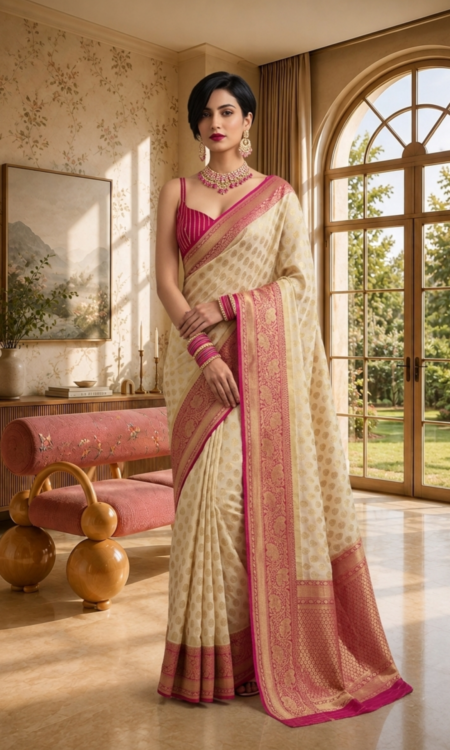
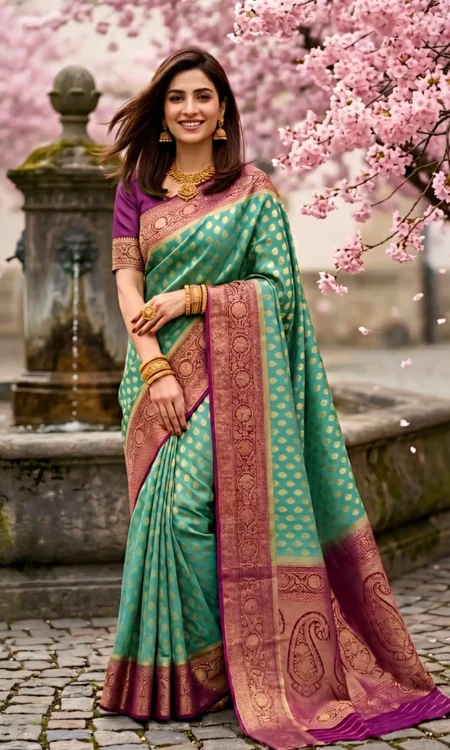
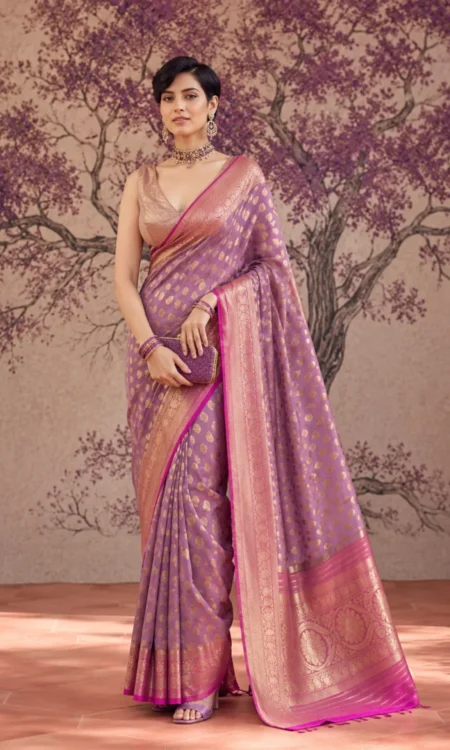
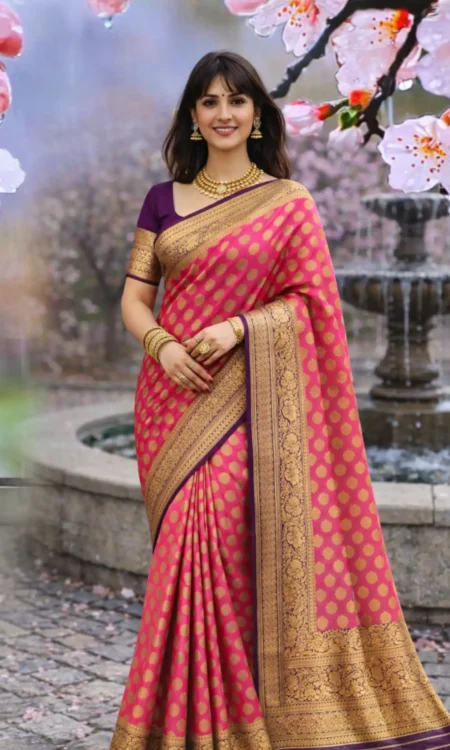
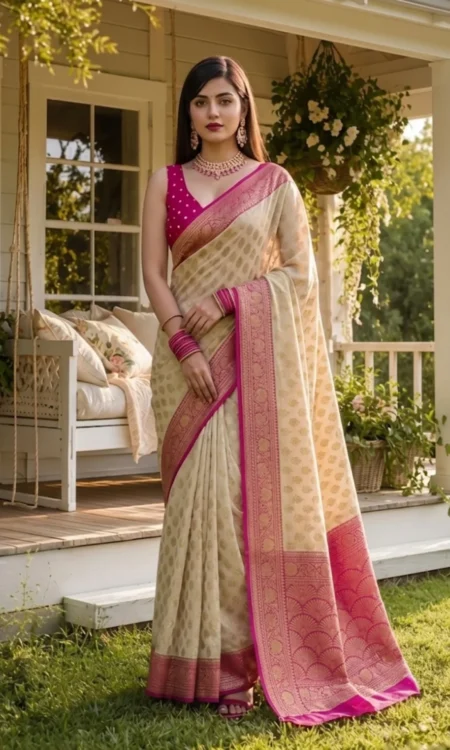
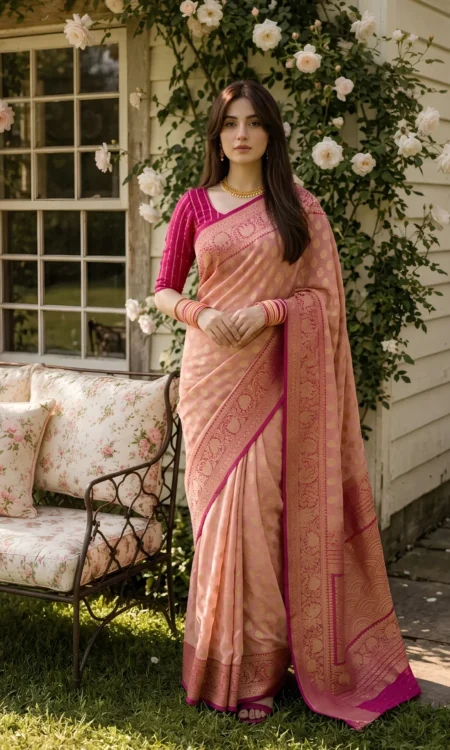
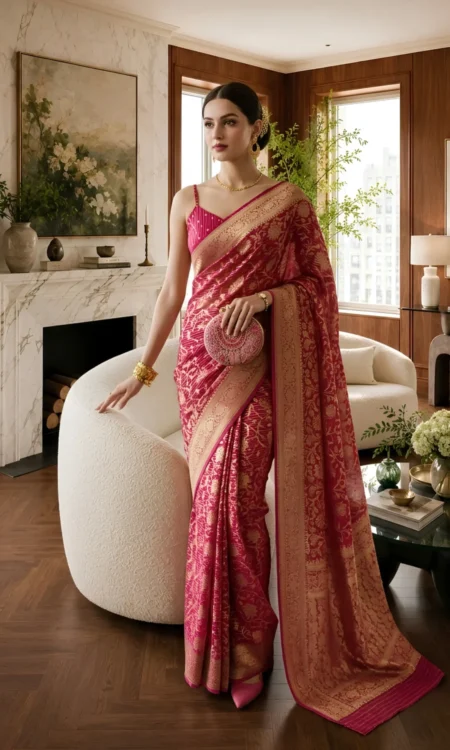
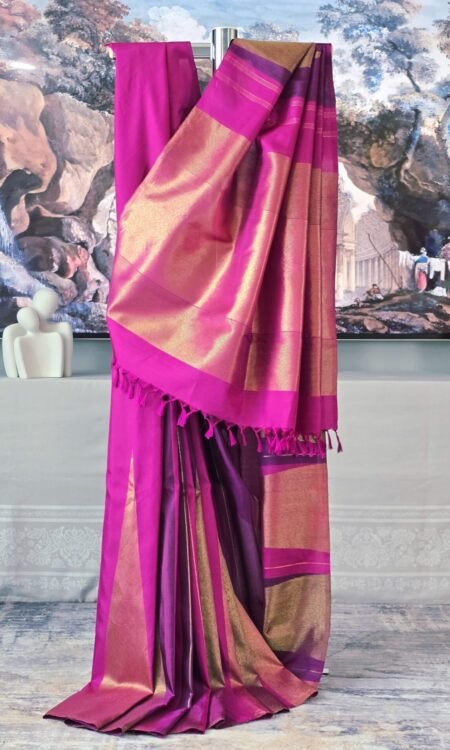
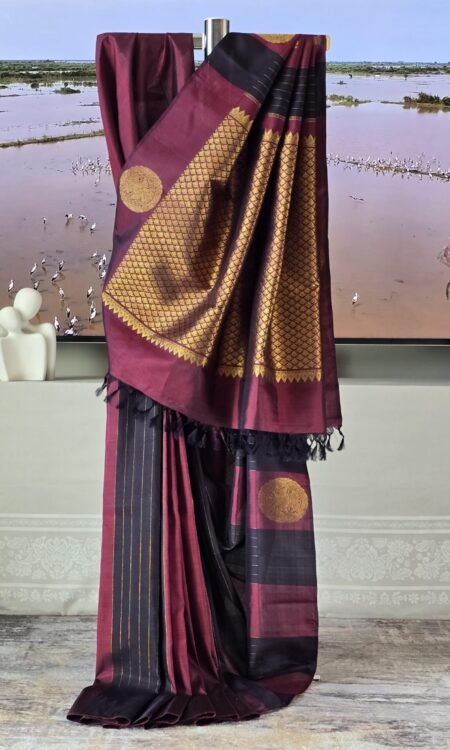
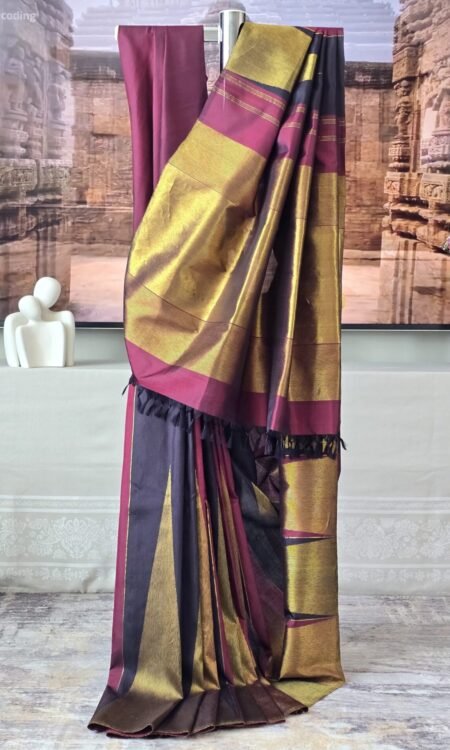
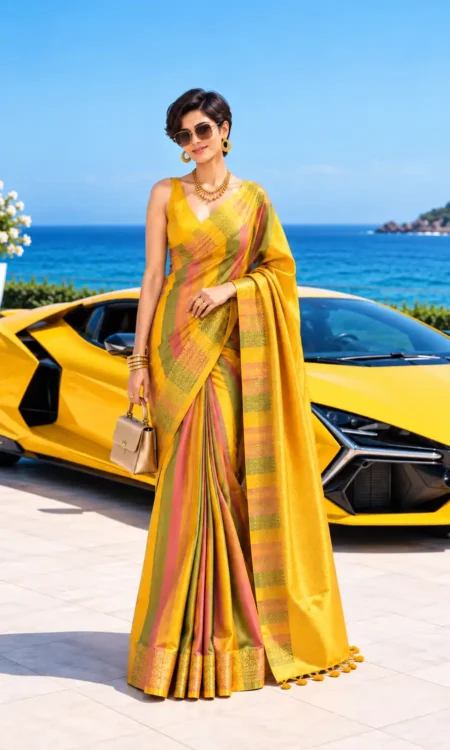
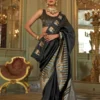
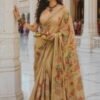
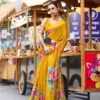
What Are Party Wear Sarees?
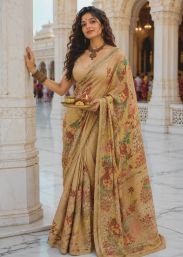
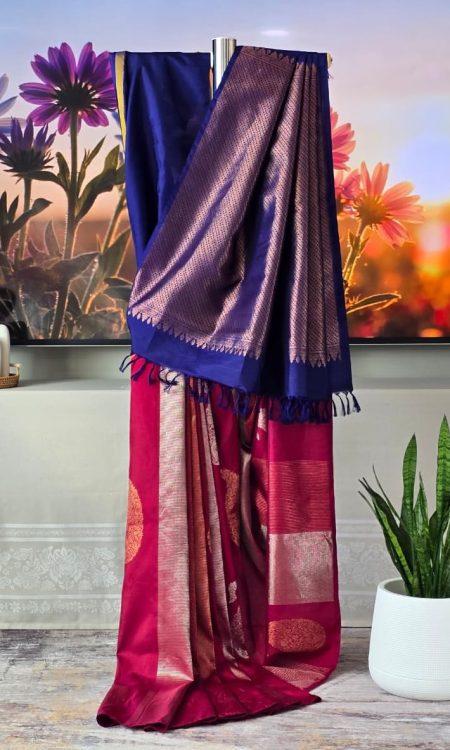
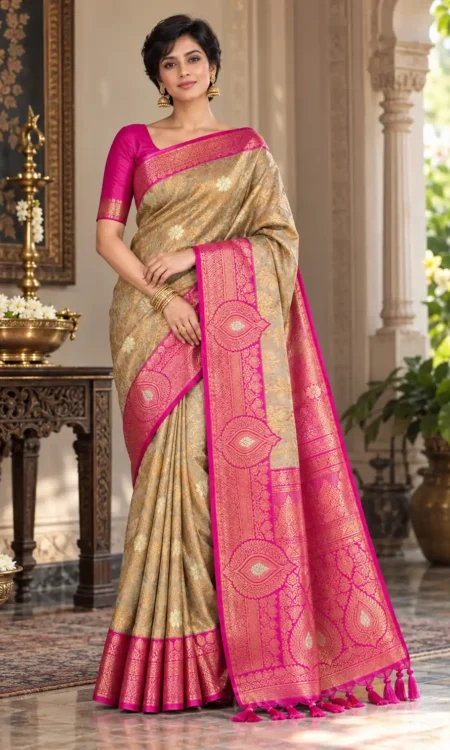
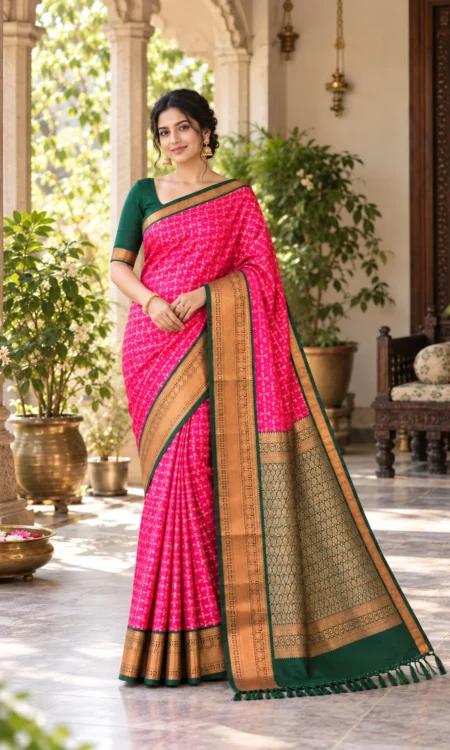
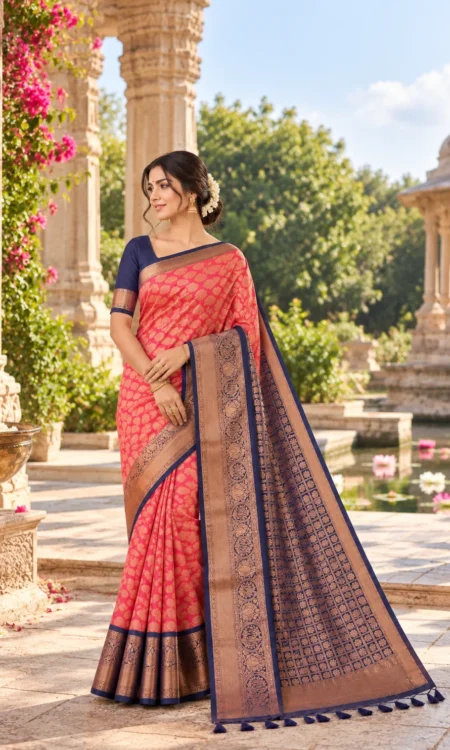
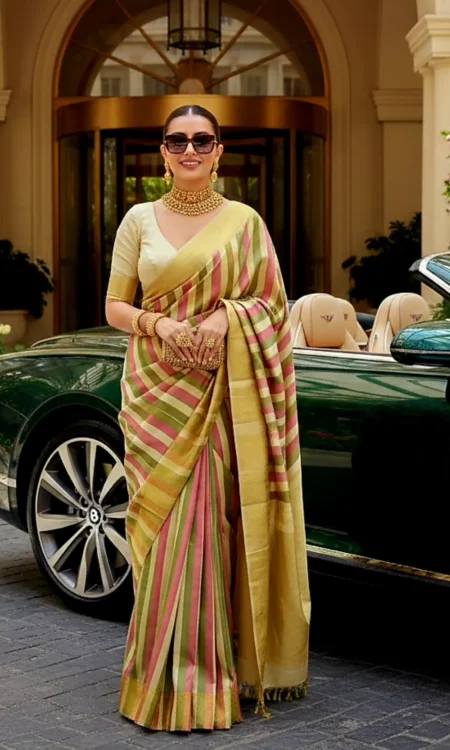
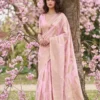
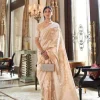
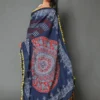
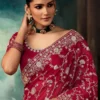
Party wear sarees are sarees selected for parties, celebrations and social occasions. Unlike a category defined by one particular fabric or decorative technique, party wear can include many different saree styles.
A saree may work well for a party because of its fabric, drape, colour, sheen, woven detail, embroidery, embellishment, border, pallu or overall styling. The right choice also depends on the event's dress code, venue and time of day.
That means a party wear saree does not have to be heavily embellished or covered in sequins. A richly woven Banarasi, an elegant Kanjivaram, a tissue saree, a refined Chanderi, a printed silk blend or a lighter georgette or chiffon style can all serve different party-wear purposes.
Party Wear Sarees for Different Occasions
There is no single saree that suits every party. Start with the type of event and then consider how formal, decorative or practical your outfit needs to be.
Dinner Parties
For a dinner party, consider the overall atmosphere of the venue along with the saree's fabric, colour and detailing. Silk-based sarees, Banarasi styles, tissue sarees, embroidered designs and refined printed options can all work depending on the formality of the gathering.
A saree with a distinctive border or pallu can create a polished look without requiring heavy decoration throughout the body.
Birthday and Anniversary Celebrations
Birthday and anniversary celebrations can accommodate a broad range of party sarees. You might choose a printed saree for a more contemporary look, an embroidered style for greater visual detail, or a traditional silk or Banarasi saree for a more formal celebration.
Your blouse and jewellery can also shift the overall appearance from understated to more statement-oriented.
Evening Parties
For an evening event, consider how the saree will look under the venue's lighting. Zari, embroidery, embellishment and naturally lustrous fabrics can introduce additional visual interest, while darker or richer colours can create a dramatic effect.
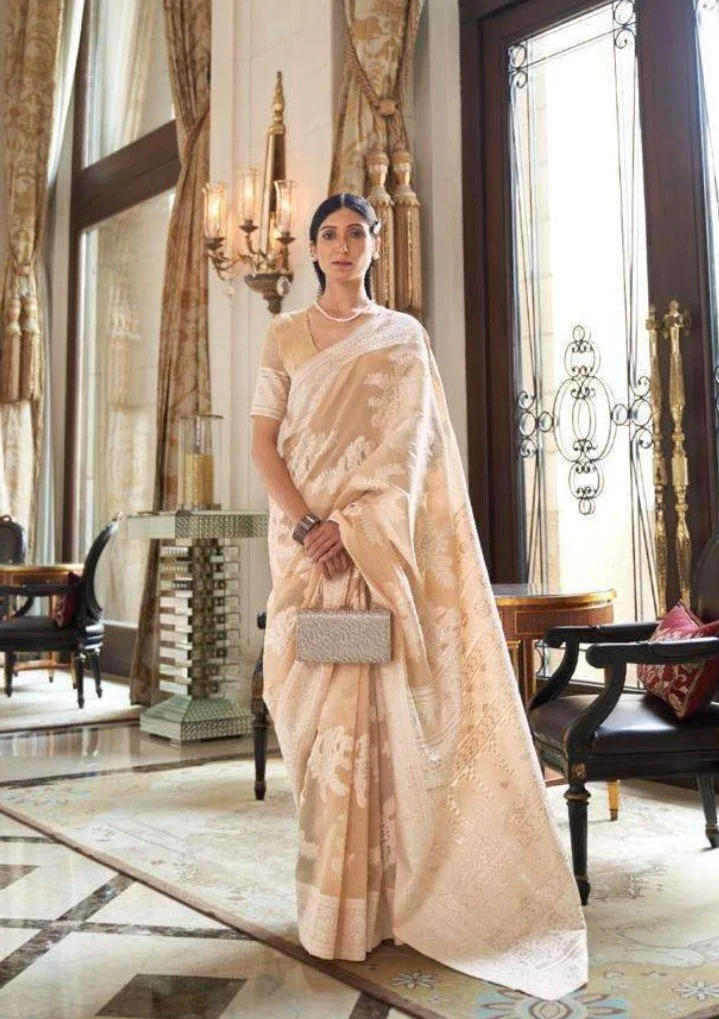
However, evening dressing does not require dark colours. Cream, pink, lavender, gold and other lighter shades can also work when coordinated with the fabric, blouse, jewellery and venue.
Family and Social Gatherings
Family celebrations and social gatherings allow considerable flexibility. A lightweight saree, printed style, Chanderi, chiffon or georgette can be useful when ease of movement is important, while Banarasi, Kanjivaram and other richer textiles can create a more traditional appearance.
The best choice depends on how formal the gathering is and how you want to dress for it.
Formal Social Events
For a more formal celebration, look at the saree as a complete outfit rather than focusing on one attribute. Richer textiles, zari, structured fabrics, embroidered borders, detailed pallus and coordinated blouses can all contribute to a more formal appearance.
Heavier decoration is not automatically a sign of better quality. The goal is to match the saree's visual richness to the occasion.
How to Choose a Party Wear Saree
When you are deciding between several party sarees, use the event itself as your starting point.
1. Consider the type of party
Is it a dinner, birthday, anniversary, family celebration, cocktail-style gathering or formal social event?
Different settings may call for different levels of visual richness.
2. Consider the time of day
For daytime occasions, you may prefer lighter-looking colours, prints or restrained detailing. For evening events, zari, embroidery, embellishment, deeper colours or fabrics with more sheen can create greater visual impact.
These are styling possibilities rather than fixed rules.
3. Think about the venue
A restaurant, hotel, banquet hall, home celebration and outdoor event can all create different practical requirements.
For example, an outdoor gathering may make movement and drape security more important, while a formal hotel event may accommodate a more elaborate saree.
4. Decide on your preferred level of formality
Think in terms of:
- Casual
- Smart or semi-formal
- Formal
- Statement
A relatively simple saree can become party-ready through its blouse, jewellery and styling, while a highly detailed saree may need fewer competing accessories.
5. Choose the fabric
Consider:
- Drape
- Weight
- Structure
- Sheen
- Expected duration of wear
- Amount of embroidery or embellishment
The current Party Pret collection includes silk-based sarees alongside tissue, georgette, chiffon, Chanderi, cotton, printed and blended options.
6. Decide how much shine you want
You can choose between a more restrained appearance and stronger visual effects created by:
- Natural fabric sheen
- Zari
- Embroidery
- Metallic detailing
- Embellishment
7. Choose the colour
Start with your personal preference and then consider the venue, lighting, fabric and blouse.
The Party Pret collection includes black, blue, green, pink, cream, gold, violet, red, maroon, turquoise, multicolour and other shades.
8. Look at the border and pallu
The border and pallu can significantly influence the appearance of a saree. A statement border can add richness to a relatively restrained body, while an elaborate pallu can become the main visual focal point.
9. Consider the blouse
A matching blouse can create a cohesive traditional appearance. A contrast blouse can highlight a colour from the border or pallu. An embroidered or statement blouse can add more visual emphasis where the saree itself is comparatively restrained.
10. Finish the look
Complete the outfit with jewellery, footwear and a bag that work with the saree rather than competing with it.
Best Fabrics for Party Wear Sarees
There is no universally best fabric for a party. The right choice depends on the event, the saree's construction and the effect you want.
The Party Pret collection includes a broad range of textiles and fabric types, including:
Silk
Silk-based sarees can offer natural sheen and a distinctive drape, with the exact appearance varying according to the silk, weave and construction.
The collection includes styles such as Mashru Silk Banarasi, Soft Silk Kanjivaram, Semi Silk, Katan Silk and Pure Silk Pochampally Ikat.
Silk can be an excellent party choice when its weight, sheen, structure and detailing suit the event.
Banarasi
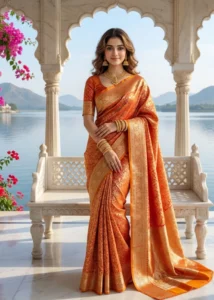
Banarasi sarees can bring woven richness and traditional character to party dressing. Depending on the individual saree, details may include zari, patterned weaving, decorative borders or elaborate pallus.
The collection includes several Banarasi variations, including Mashru, Katan Silk and georgette-based styles.
Kanjivaram
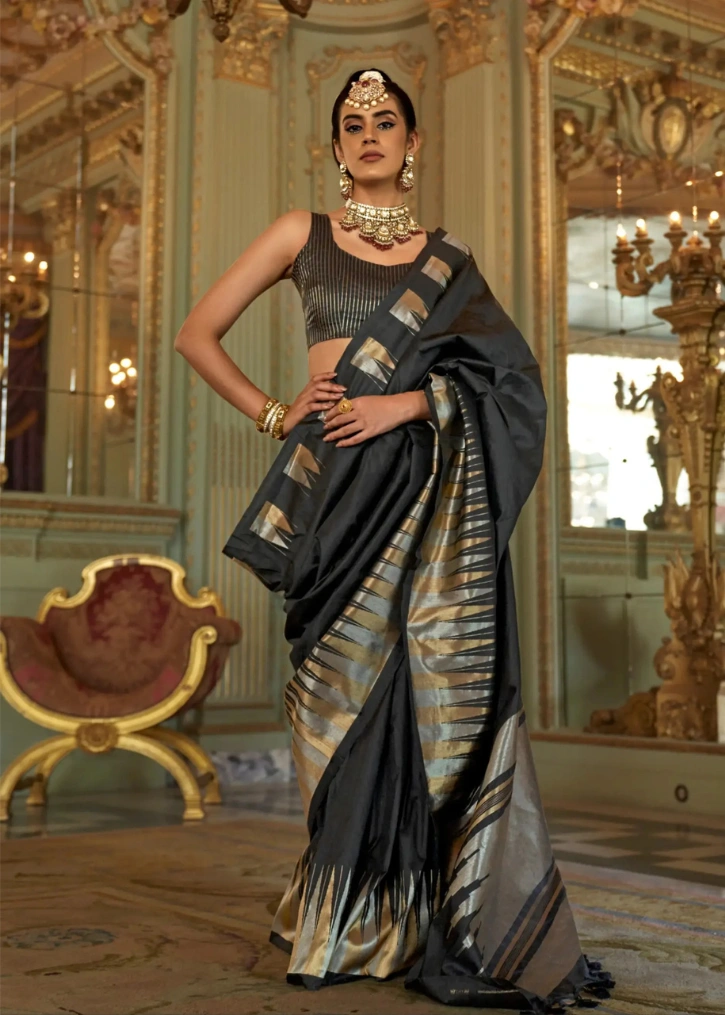
Kanjivaram sarees offer a distinctly traditional option for formal social occasions. The Party Pret collection includes Soft Silk and Korvai Kanjivaram styles with features such as traditional borders and butta designs.
Tissue
Tissue sarees can provide a light-catching appearance and are represented by several party-oriented styles in the collection.
They can be useful when you want decorative visual interest without relying exclusively on heavy embellishment.
Georgette
Georgette can provide a fluid, comparatively lightweight option. The collection includes Banarasi georgette styles that combine the visual character of Banarasi-inspired design with a lighter fabric direction.
Chiffon
Chiffon offers another lightweight and fluid option. It can work well when movement and a lighter-feeling saree are priorities.
Chanderi
Chanderi can provide a refined traditional appearance with a lighter visual character. The collection includes Chanderi party styles with decorative detailing such as zari embellishment.
Blended Silk
Blended silk sarees can offer a variety of textures, prints and visual effects depending on their particular construction.
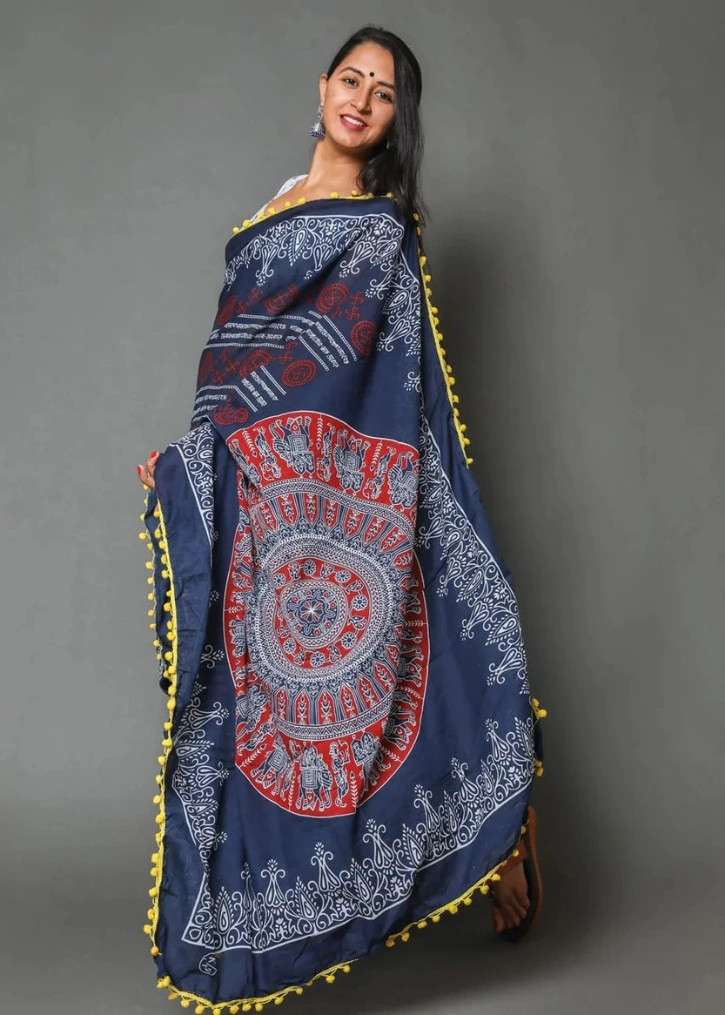
The Party Pret collection includes contemporary printed blended-silk styles, demonstrating that printed sarees can also have a party-wear role.
Cotton
Cotton is not restricted to everyday dressing. A well-styled printed cotton saree can work for a casual or less formal social gathering, particularly when its print, border and styling support the occasion.
Lightweight Party Wear Sarees
If you want a saree that feels easier to carry for a longer social event, consider lighter-looking or lower-weight options where the product specifications support that description.
The collection includes chiffon, georgette, tissue and Chanderi styles, among others.
Remember that perceived comfort depends on more than fabric name. Construction, embellishment, blouse, drape, weather, venue and personal preference all influence how a saree feels during an event.
Where an exact product weight is available, use that product information rather than assuming that every saree made from a particular fabric has the same weight.
Silk Party Wear Sarees
Silk can be a strong choice for party dressing because of its characteristic sheen, drape and ability to carry woven or decorative detail.
The Party Pret collection includes several silk-based directions, including:
- Mashru Silk Banarasi
- Soft Silk Kanjivaram
- Semi Silk
- Katan Silk
- Pure Silk Pochampally Ikat
When choosing a silk party saree, consider more than the word "silk." Look at the specific fabric description, weave or textile tradition where provided, weight, border, pallu, detailing and blouse.
A silk saree is not automatically the best choice for every party, just as a lighter fabric is not automatically less formal.
Zari, Embroidery and Embellishment
Zari
Zari refers to metallic-thread decoration used in textile design. It can appear on borders, pallus, motifs and woven patterns.
Party Pret includes sarees featuring details such as gold or silver zari, zari borders, decorative pallus and traditional temple-border designs.
Zari can increase visual richness, but the presence or amount of zari should not be treated as a standalone measure of quality.
Embroidery
Embroidery adds decorative stitching to the fabric and can range from restrained border work to more elaborate surface detailing.
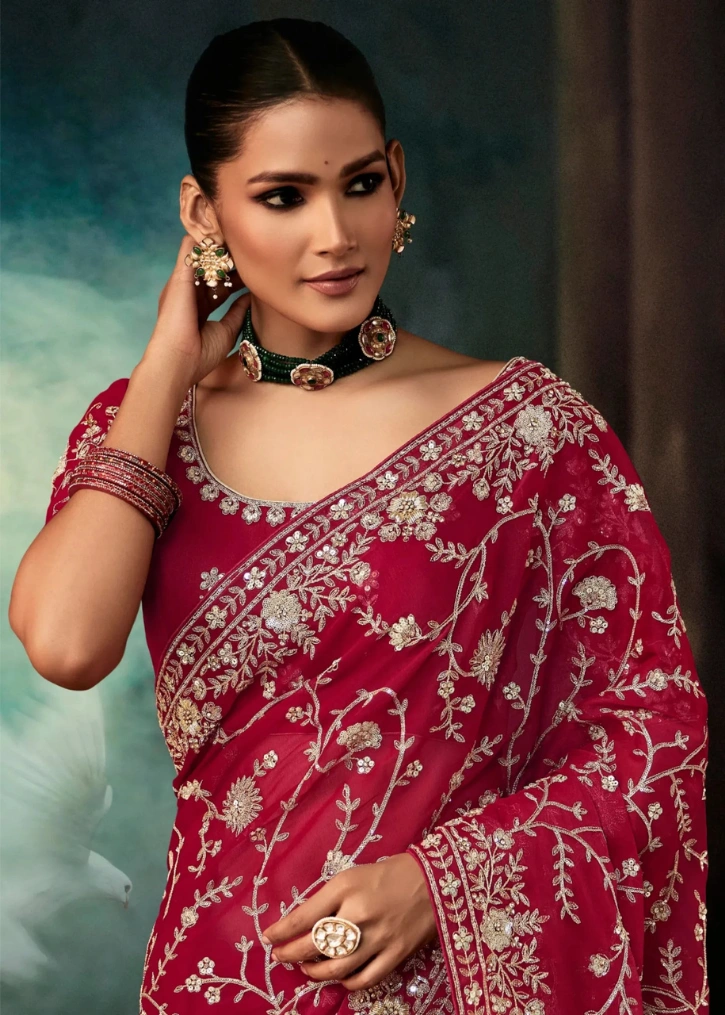
The collection includes embroidered borders, pallus and blouse details on selected sarees.
When evaluating a product, rely on the product description for information about the technique rather than assuming that every decorative surface is hand embroidered.
Embellishment
Embellishment can include additional decorative elements applied to the saree or its borders and pallus. Selected Party Pret products include embellishment such as Swarovski detailing.
A highly embellished saree can make a strong statement, while a more restrained saree can allow the blouse or jewellery to become the focal point.
Party Wear Sarees: Woven, Embroidered, Printed or Embellished?
These terms describe different ways in which visual detail can be created.
- Woven: The pattern or decorative effect is incorporated into the textile during weaving.
- Embroidered: Decorative stitching is added to the fabric after or as part of the textile-making process.
- Printed: A design is applied to the fabric through a printing process.
- Embellished: Additional decorative elements are applied to create texture, sparkle or dimensional detail.
A party saree can use one or several of these approaches.
For example, a traditional woven Banarasi and a contemporary printed silk blend can both belong in a party collection even though their construction and visual language are very different.
Colours for Party Wear Sarees
Party wear does not require one fixed colour palette.
Deep and dramatic shades
Consider:
- Black
- Deep green
- Maroon
- Red
- Deep blue
These can create a stronger visual presence, particularly when combined with contrasting or metallic detailing.
Rich traditional colours
Red, green, gold, purple and maroon can work especially well with traditional textiles and zari-rich designs.
Soft and contemporary shades
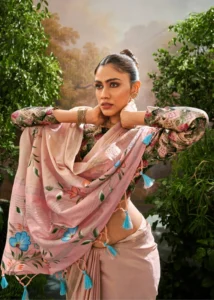
Cream, pastel pink, lavender, lilac and other lighter shades can create a more understated or contemporary appearance.
Metallic-inspired shades
Gold, silver and similar tones can work particularly well when the saree already contains metallic detailing.
The most useful approach is to consider colour together with the fabric, sheen, lighting, venue and styling rather than applying rigid day-versus-night colour rules.
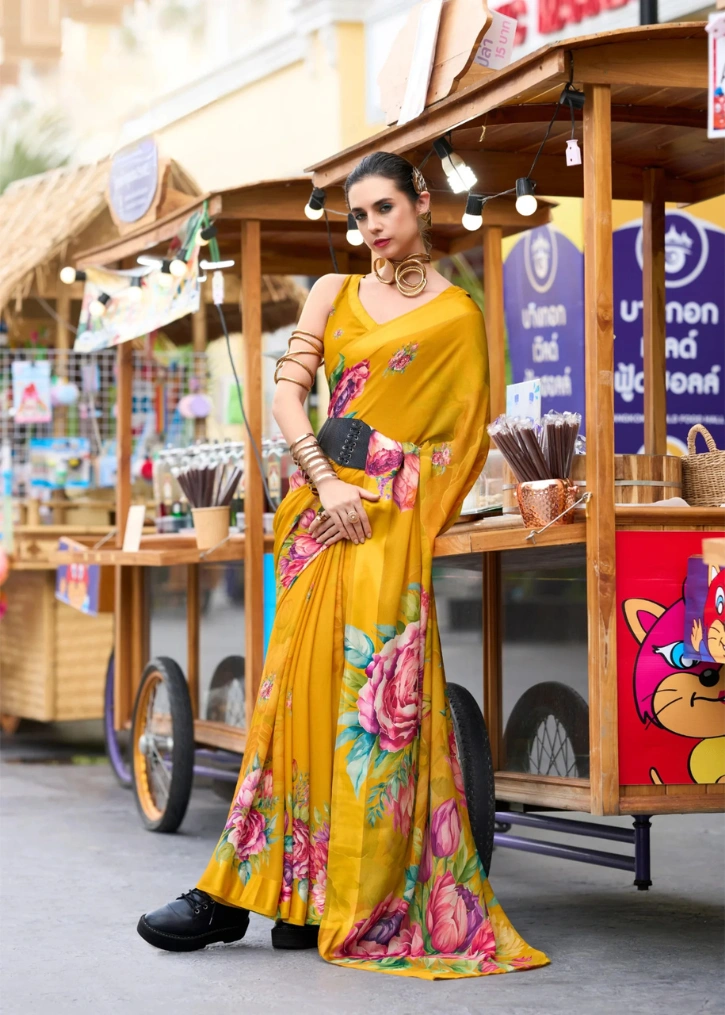
Printed Party Wear Sarees
A printed saree does not automatically mean casual wear.
The Party Pret collection includes printed cotton and blended-silk options that demonstrate how prints can work for social and party occasions.
When deciding whether a printed saree is appropriate, consider:
- The fabric
- Scale of the print
- Colour combination
- Border
- Pallu
- Blouse
- Jewellery
- Venue
- Overall formality
A refined print with coordinated styling can look very different from a simple everyday print.
Traditional and Contemporary Party Wear Sarees
Party dressing does not have to be either traditional or contemporary.
Traditional direction
You may choose:
- Banarasi
- Kanjivaram
- Chanderi
- Pochampally Ikat
- Zari borders
- Traditional pallus
- Classic blouse styling
- Traditional jewellery
Contemporary direction
You may choose:
- Printed sarees
- Lightweight fabrics
- Contrast blouses
- Modern blouse silhouettes
- Minimal jewellery
- Contemporary draping
- A stronger focus on the saree's print or colour
A traditional textile can also be styled in a contemporary way. Similarly, a modern print can be paired with a more traditional blouse or jewellery direction.
How to Style a Party Wear Saree
Blouse
Choose the blouse according to the saree's level of detail.
A heavily detailed saree can work with a supporting blouse, while a relatively restrained saree can provide more room for an embroidered, contrast or statement blouse.
Drape
The Nivi drape is a classic starting point for party styling. Depending on the saree and your preferred look, you can also explore regional or contemporary draping variations.
A Gujarati-style drape, for example, can introduce a different regional character, while an open pallu or belted styling can create a more contemporary effect.
The drape should complement the saree's construction and remain practical for the venue and duration of the event.
Jewellery
Coordinate jewellery with:
- Saree colour
- Zari or metallic detailing
- Embroidery
- Blouse
- Venue
- Formality
A richly detailed saree may benefit from one dominant jewellery focal point, while a more minimal saree can accommodate stronger earrings, a necklace or statement bracelet.
Footwear
Choose footwear based on both appearance and practicality.
Heels, embellished sandals, flats and traditional footwear can all work depending on the venue and outfit.
For outdoor or movement-heavy events, secure and comfortable footwear may be more important than adding another decorative element.
Bags and Accessories
Clutches, potlis, evening bags and compact accessories can complete a party saree outfit.
Keep the overall balance in mind so that accessories support rather than overwhelm the saree.
How to Choose a Party Saree for a Formal Event
For a formal social event, begin with the dress code and venue rather than automatically choosing the most heavily embellished saree.
Consider:
- A richer textile or more structured fabric where appropriate.
- A refined border or detailed pallu.
- Zari or embroidery if it suits the event.
- A coordinated or carefully contrasted blouse.
- Jewellery that complements the saree's visual richness.
- Footwear and accessories suitable for the venue.
A formal saree does not have to be heavily decorated. Quality of construction, textile character, colour, finishing and styling all contribute to the final appearance.
Party Wear Sarees vs Wedding, Bridal, Reception and Festive Sarees
| Collection |
Primary shopping intent |
| Party Wear Sarees |
Parties, dinners, celebrations and general social occasions |
| Wedding Sarees |
Wedding functions and wedding-event dressing |
| Bridal Sarees |
Sarees intended specifically around bridal dressing |
| Reception Sarees |
Reception-focused dressing |
| Engagement Sarees |
Engagement-event dressing |
| Festive Sarees |
Festival and festive-celebration dressing |
There can naturally be overlap. A Banarasi, Kanjivaram or embroidered saree may work for both a party and a wedding-related event.
The distinction is the primary reason the shopper is looking.
If you are specifically shopping for a wedding, explore our Wedding Sarees. For bride-focused dressing, browse Bridal Sarees. For a reception, see Reception Sarees. If the event is an engagement, explore Engagement Sarees. For festival-specific dressing, browse Festive Sarees.
How to Evaluate a Party Wear Saree Before Buying
Check the fabric description
Look for the specific material or fabric information provided for the product.
Do not assume that every saree in the collection is made from silk.
Check the construction or textile terminology
If a product is described as handloom, handwoven, pure silk, Banarasi, Kanjivaram or another specific textile identity, look for supporting product information.
Check the decorative work
Identify whether the product is described as woven, embroidered, printed or embellished.
Check the border and pallu
These areas can significantly affect the saree's appearance and should be considered alongside the body design.
Check the blouse
Confirm whether the saree includes a matching, contrast, embroidered, designer or unstitched blouse piece where that information is provided.
Check weight where available
An actual product weight is more useful than assuming that all sarees made from a particular fabric have the same weight.
Check care instructions
Follow the individual product's care instructions first, particularly for silk, zari, embroidery and embellished sarees.
Understanding Silk, Handloom and GI Claims
Textile terminology matters when buying a saree online.
Terms such as pure silk, handloom, handwoven, Banarasi, Kanjivaram and GI should not be treated as interchangeable.
A textile tradition may have a registered Geographical Indication, but that does not mean every saree using a similar name is automatically GI-certified.
Similarly, the appearance of a saree alone cannot establish that it is pure silk or handwoven.
Where these attributes matter to your purchase, look for product-level information and relevant supporting evidence rather than relying only on photographs or broad marketing language.
Party Wear Saree Care
Always follow the care instructions provided with the individual saree first.
As a general approach:
- Avoid washing or treating delicate sarees without checking the product's instructions.
- Do not brush, twist or squeeze delicate embellished or zari work.
- Professional dry cleaning may be recommended for selected silk and embellished sarees.
- Avoid direct extreme heat.
- Store sarees in a clean, dry and well-aired environment.
- Protect zari, embroidery and embellishment when folding and storing.
- Avoid unnecessarily frequent cleaning.
For silk-based sarees especially, follow the product-specific care guidance rather than assuming that all silk sarees can be cleaned in the same way.
Frequently Asked Questions
What are party wear sarees?
Party wear sarees are sarees selected for parties, celebrations and social occasions. They can range from traditional Banarasi and Kanjivaram styles to tissue, georgette, chiffon, Chanderi, printed, embroidered and embellished sarees.
What makes a saree suitable for a party?
Suitability depends on the event's formality, venue, time, fabric, drape, colour, sheen, border, pallu, embellishment and styling. There is no single feature that makes every saree suitable for every party.
Which saree is best for a party?
There is no universally best party saree. Choose according to the type of party, venue, time, desired level of formality, fabric, colour, detailing and personal style.
What saree should I wear to a dinner party?
Consider a saree whose fabric, colour and detailing match the restaurant or venue and the formality of the gathering. Banarasi, silk-based, tissue, embroidered and refined printed styles can all work depending on the event.
Can I wear a silk saree to a party?
Yes. Silk can be an excellent party-wear choice when its weight, sheen, weave, construction and detailing suit the occasion. The Party Pret collection includes several silk-based styles.
Are Banarasi sarees suitable for parties?
Yes. Banarasi sarees can work particularly well for formal and traditional social occasions. Depending on the individual saree, zari, woven patterns, borders and pallus can provide party-appropriate visual richness.
Can I wear a Kanjivaram saree to a party?
Yes. A Kanjivaram saree can be styled for a party or formal social gathering when its traditional character and level of richness suit the event.
Which colours are suitable for party wear sarees?
Party sarees can work in many colours, including black, blue, green, red, maroon, pink, cream, gold, purple and lighter pastel shades. Consider the venue, lighting, fabric, sheen and your preferred styling rather than following rigid colour rules.
Are pastel sarees suitable for evening parties?
Yes. Pastel and lighter shades can work for evening parties. The overall effect depends on the fabric, lighting, border, embellishment, blouse and accessories.
Can printed sarees be worn to parties?
Yes. A printed saree can be suitable for a party when its fabric, print, colour, border and styling match the event. The Party Pret collection includes printed cotton and blended-silk styles.
How do I style a party wear saree?
Start with the saree's level of detail and the event's formality. Then coordinate the blouse, drape, jewellery, footwear and bag. A highly detailed saree may work best with supporting accessories, while a simpler saree can accommodate a stronger blouse or jewellery focal point.
What blouse goes with a party saree?
A matching blouse creates a cohesive appearance, while a contrast blouse can highlight a colour from the saree's border or pallu. Embroidered, zari or contemporary blouses can also work depending on the saree.
What jewellery should I wear with a party saree?
Coordinate jewellery with the saree's colour, zari, embroidery, blouse and venue. Traditional gold-toned jewellery can complement many richly woven sarees, while more restrained sarees may allow stronger earrings or other statement pieces.
How is party wear different from wedding wear?
Party wear has broader social-event intent and can include dinners, celebrations and gatherings. Wedding wear is specifically centred on wedding functions. Some sarees can naturally work in both categories.
What is the difference between party wear and festive sarees?
Party wear is centred on social and party occasions, while festive sarees are selected around festivals and festive celebrations. There can be considerable overlap in the actual sarees suitable for both.
How do I choose a party saree for a formal event?
Consider the venue, dress code, fabric, structure, border, pallu, zari, embroidery and overall styling. Rather than choosing the most heavily embellished saree automatically, aim for a level of richness that fits the occasion.
How do I care for a party wear silk saree?
Follow the individual product's care instructions first. Depending on the construction and detailing, professional dry cleaning may be recommended. Avoid harsh washing, twisting, brushing and direct extreme heat, and store the saree in a clean, dry and well-aired environment.
Explore Related Saree Collections
Looking for a saree for a more specific occasion or textile tradition?
Shop Party Wear Sarees Online in the UAE
Explore the Party Pret collection at Sarees By Muhurat for party wear sarees across traditional, contemporary, embellished, woven, embroidered and printed styles. Whether you are dressing for a dinner, celebration, family gathering or formal social occasion, choose according to the event, fabric, formality and styling you prefer.