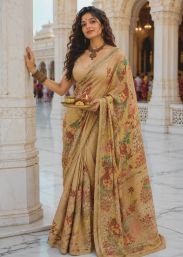
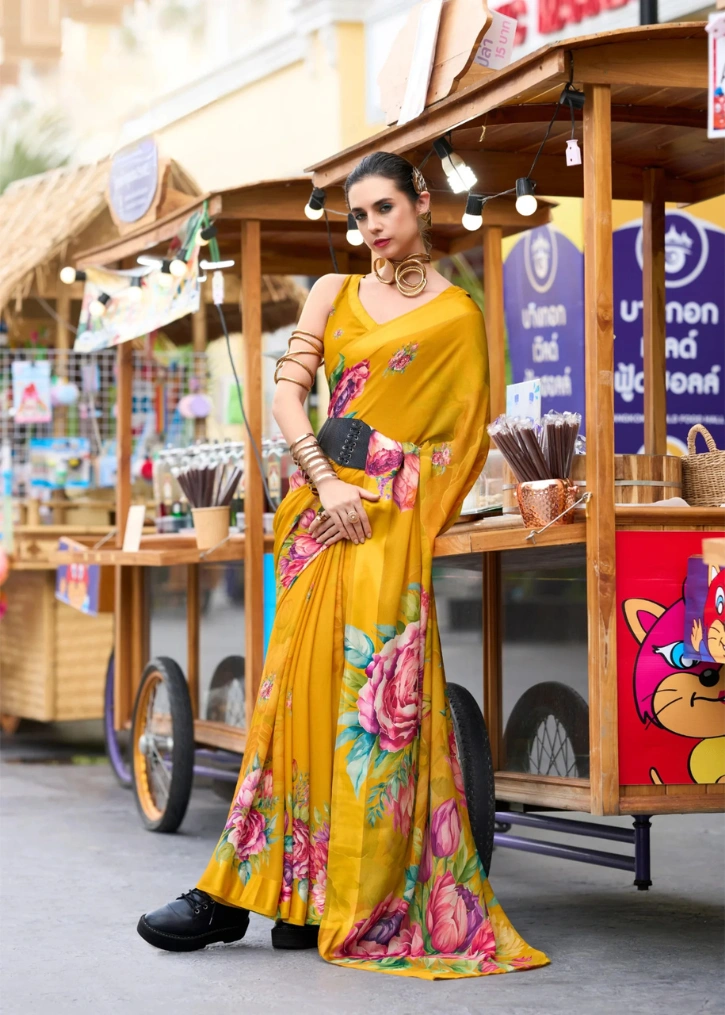
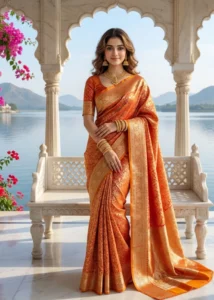
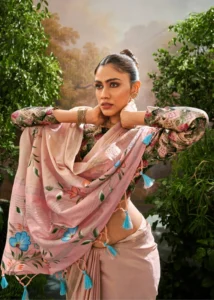
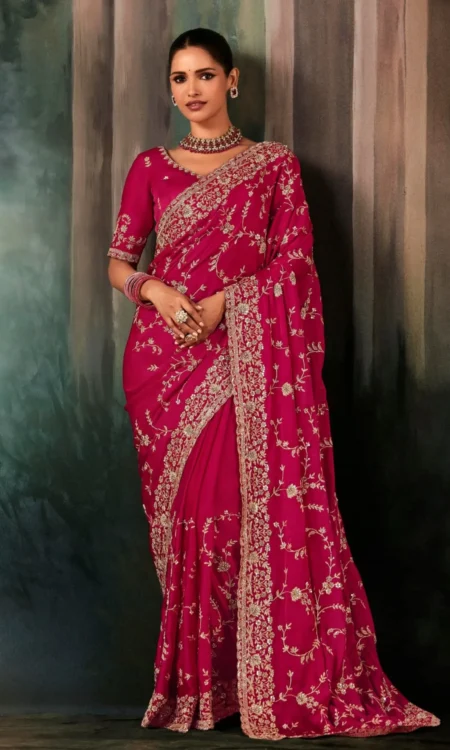
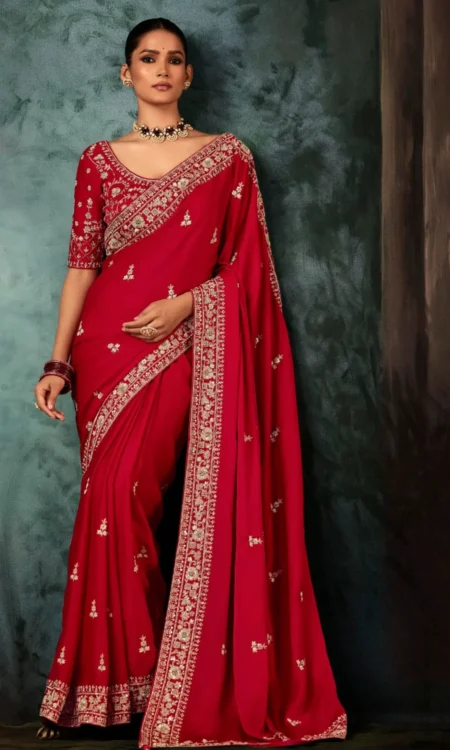
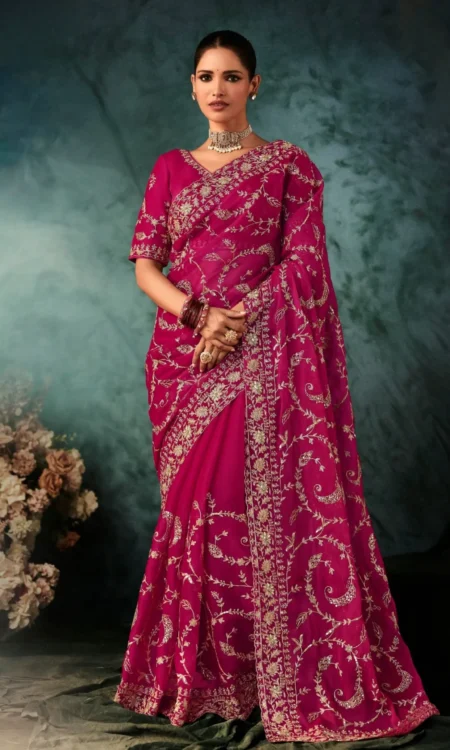
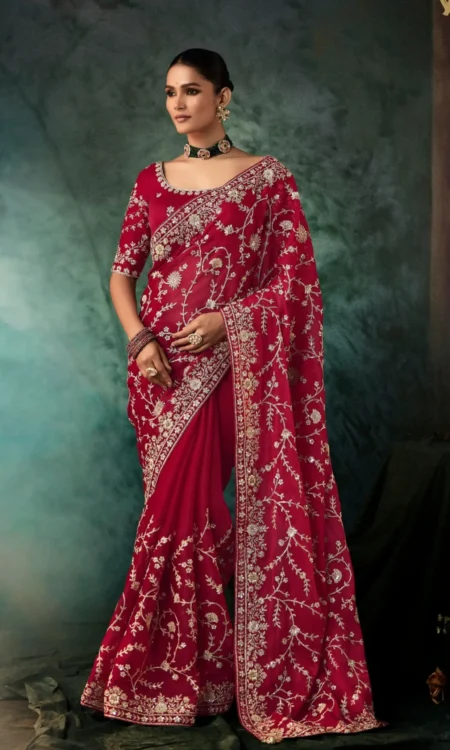
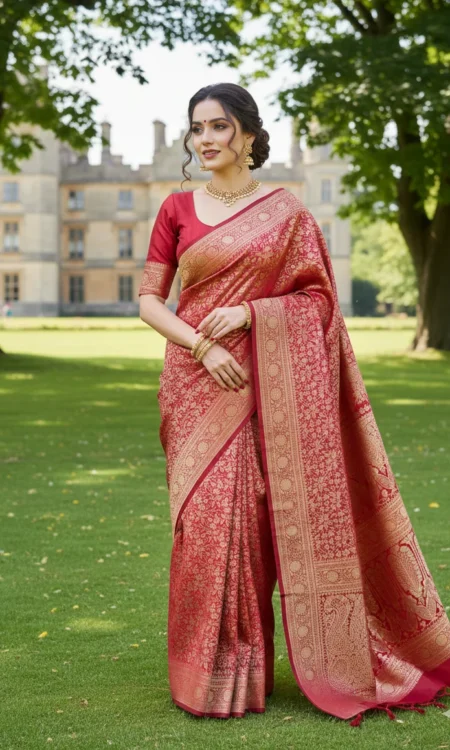
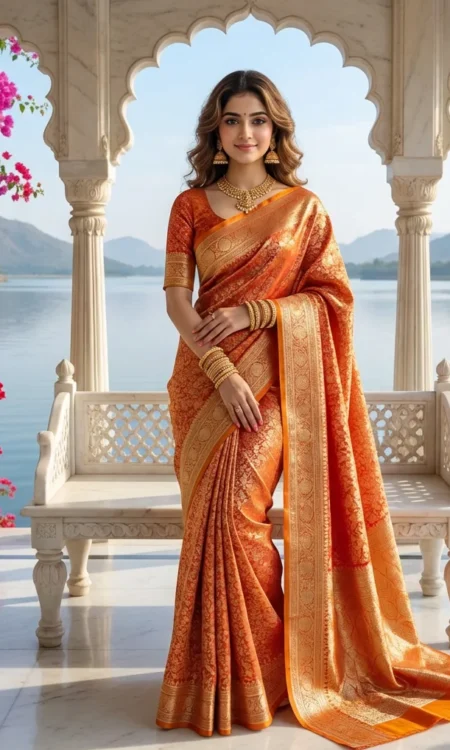
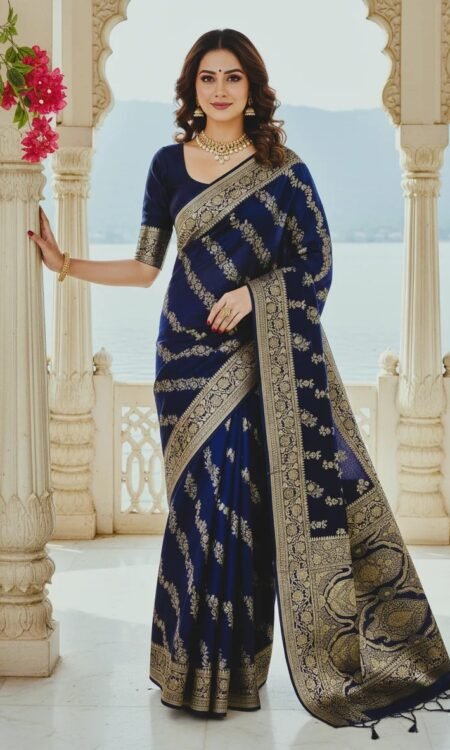
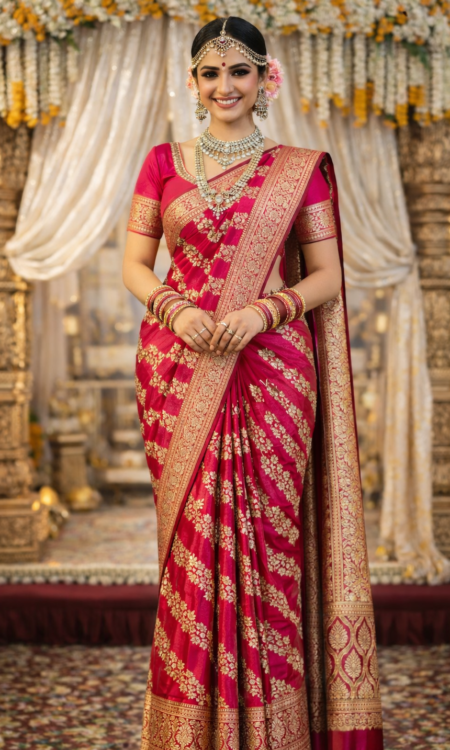
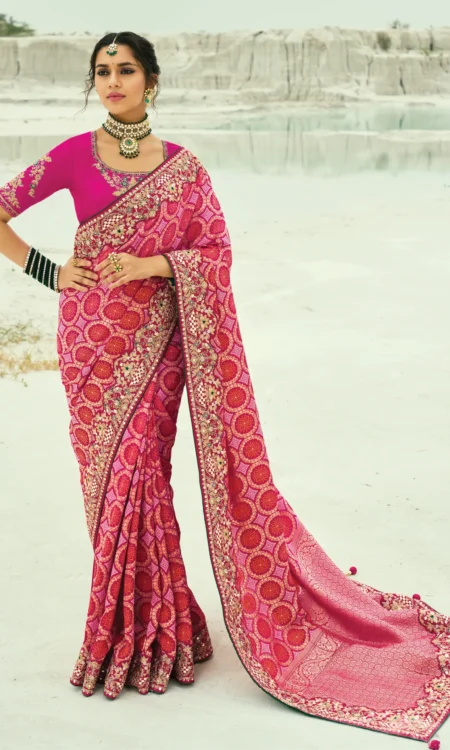
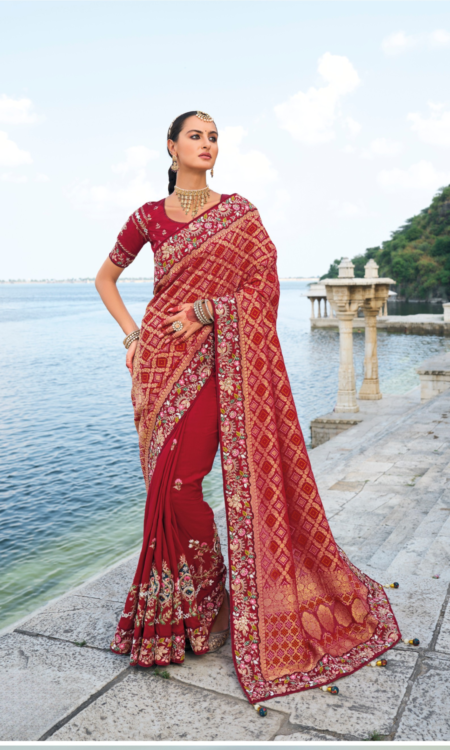
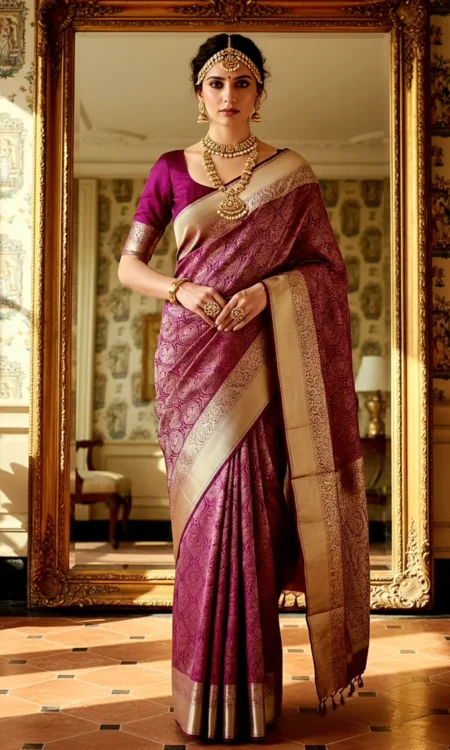
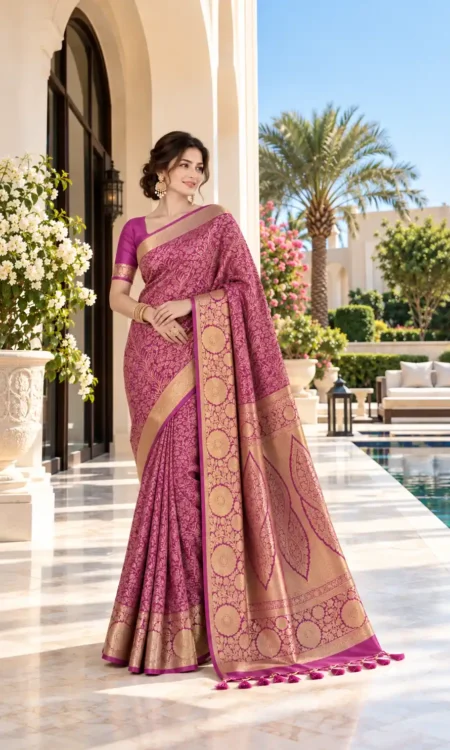
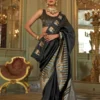
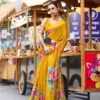
What Makes a Saree Bridal?
A bridal saree is a saree selected for a bride's wedding-related wardrobe. It may be worn for the main wedding ceremony, reception, engagement, sangeet, mehendi, haldi or another celebration connected with the wedding.
There is no single fabric, colour or weave that automatically makes a saree bridal.
A saree can have bridal relevance because of its:
- Textile and weave
- Regional tradition
- Ceremonial significance
- Colour
- Zari
- Border
- Pallu
- Motif design
- Embroidery or embellishment
- Drape
- Blouse
- Overall styling
This is why a rich silk saree may be suitable for a wedding but not necessarily be a bridal saree, while a lighter contemporary saree may work beautifully for a reception.
The most useful way to think about bridal suitability is:
Ceremony + textile + design + colour + construction + styling
rather than simply:
Silk + red + gold = bridal.
Bridal Sarees by Fabric
Fabric has a major influence on how a bridal saree looks, feels and drapes. It also affects how comfortable the saree may be during a long ceremony or celebration.
Instead of asking which fabric is universally "best" for a bride, consider the fabric together with its construction, weight, finish and intended occasion.
Kanjivaram Silk
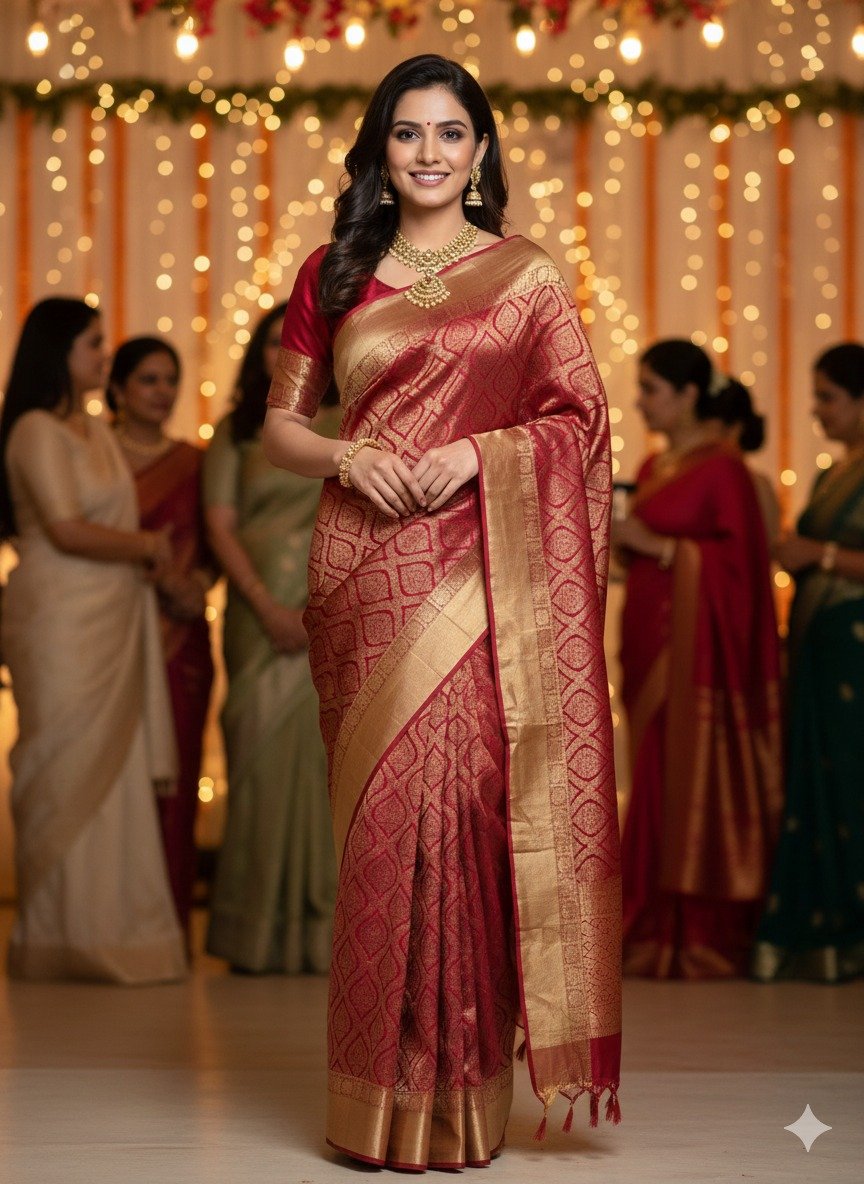
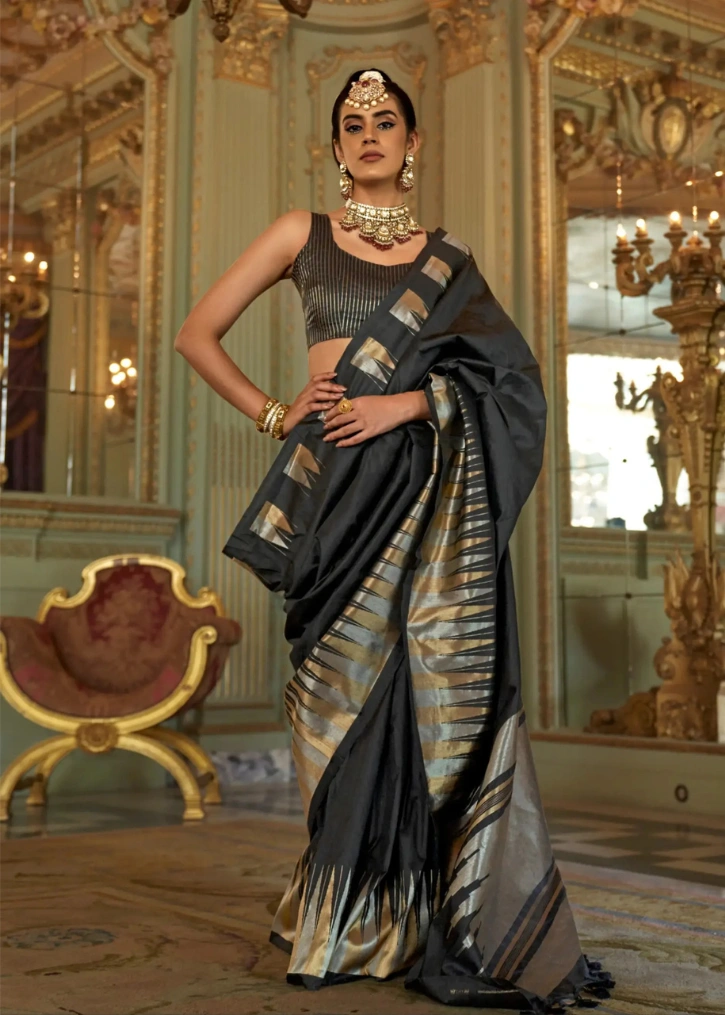
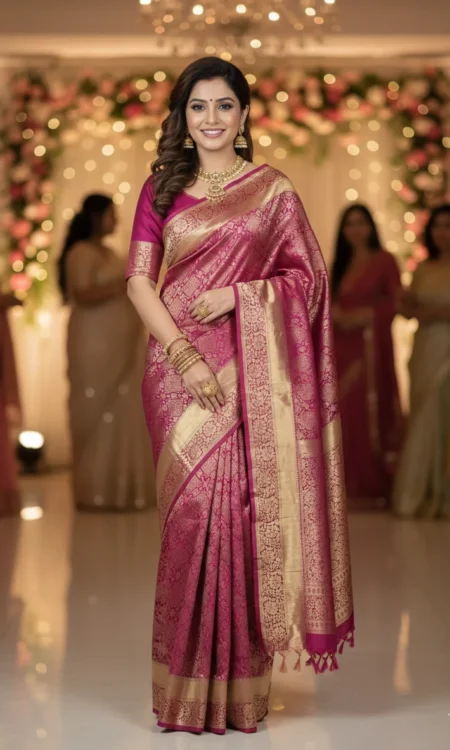
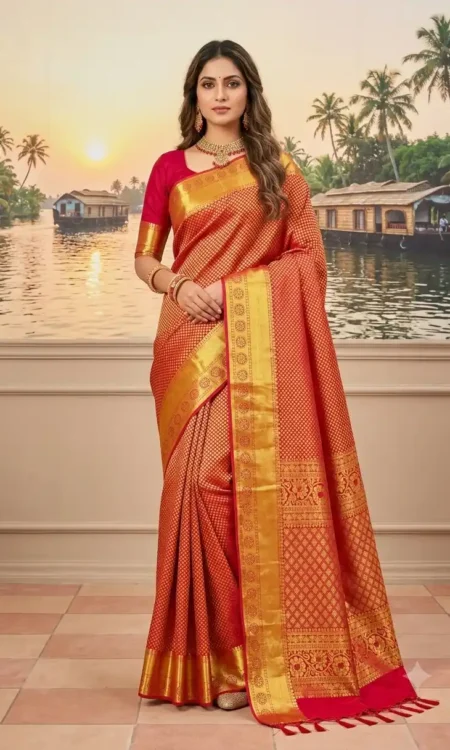
Kanjivaram is one of the strongest traditional bridal associations in the collection. Its structured silk appearance, rich borders, prominent pallus and zari detailing can create a distinctly ceremonial look.
It is particularly suited to brides looking for a traditional South Indian-inspired wedding aesthetic.
For a Kanjivaram bridal saree, consider:
- Body and border relationship
- Pallu design
- Zari detailing
- Saree weight
- Blouse piece
- Jewellery compatibility
- Intended drape
Banarasi Silk
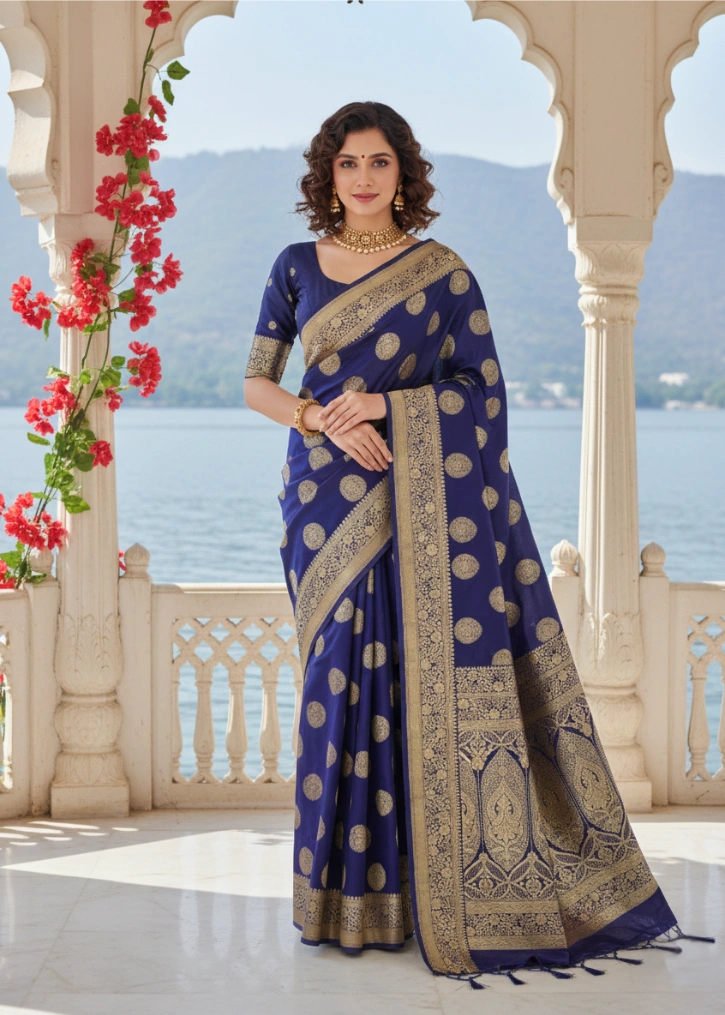
Banarasi sarees are another major bridal choice, especially for brides who appreciate woven richness, brocade effects and intricate zari designs.
Depending on the construction, Banarasi sarees can range from traditional and substantial to lighter and more contemporary.
They can work particularly well for:
- Wedding ceremonies
- Reception looks
- Engagement celebrations
- Traditional family functions
Georgette
Georgette offers a softer, more fluid drape than many structured silk sarees. Bridal georgette styles can therefore be useful for receptions and contemporary celebrations where movement and a lighter feel are priorities.
A georgette saree can also provide a useful contrast when the bride wants a more fashion-forward look rather than a heavily traditional ceremony ensemble.
Chanderi
Chanderi is known for its fine, lightweight character and delicate appearance. It can be considered when the bride wants an elegant and lighter ceremonial saree rather than maximum visual weight.
Its suitability depends on the specific design, embellishment, colour and occasion.
Organza
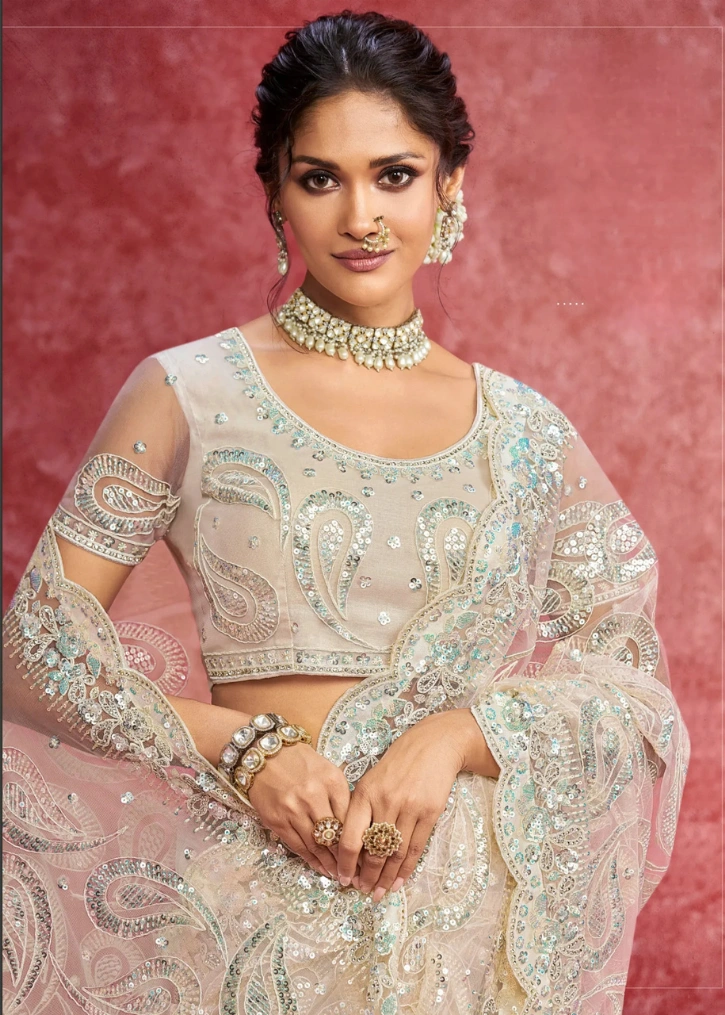
Organza offers a crisp, structured appearance and can create a striking silhouette. It can work particularly well for contemporary bridal and reception styling, especially when the saree features embroidery, embellishment or a distinctive pallu.
Tissue
Tissue sarees can bring a luminous, celebratory quality to bridal dressing. Their sheen makes them especially interesting for receptions and evening occasions where the saree is intended to catch light.
Pure Silk and Other Silk Styles
Silk is an important part of bridal saree dressing across several Indian textile traditions, but "silk" by itself does not tell you everything about a saree.
Before choosing a silk bridal saree, consider:
- Exact fabric description
- Construction
- Weight
- Weave
- Zari or decorative work
- Border
- Pallu
- Blouse fabric
- Care requirements
The same fabric category can contain sarees with very different appearances and drapes.
Traditional Indian Bridal Saree Styles
Indian bridal sarees are not one uniform category. Different regions have developed their own textile traditions, colours, motifs, construction methods and ceremonial associations.
Kanjivaram Sarees
Kanjivaram sarees are a natural starting point for brides seeking a traditional South Indian bridal aesthetic.
Look for combinations of:
- Rich silk
- Contrasting borders
- Zari
- Elaborate pallus
- Traditional motifs
- Coordinated blouse pieces
The visual relationship between the body, border and pallu is especially important when choosing a Kanjivaram bridal saree.
Explore Kanjivaram Sarees
Banarasi Sarees
Banarasi sarees offer another classic route into bridal dressing, particularly for brides who prefer intricate woven designs and zari-rich surfaces.
Depending on the individual saree, you may find:
- Floral motifs
- Buti or buta-style designs
- Brocade effects
- Zari borders
- Elaborate pallus
- Rich all-over patterning
Not every Banarasi saree is automatically bridal. The individual design, colour, construction and occasion determine its suitability.
Explore Banarasi Sarees
Paithani
Paithani is strongly associated with Maharashtrian textile heritage and has a recognised place in traditional bridal trousseau.
Distinctive motifs and richly designed pallus can make Paithani an appealing choice for brides looking for a regional bridal aesthetic.
Its suitability should be considered within the bride's cultural context and the particular saree's design.
Panetar
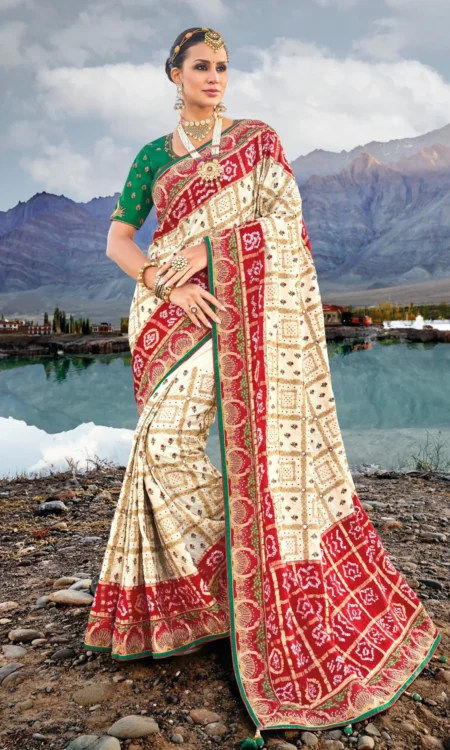
Panetar is particularly relevant to Gujarati bridal dressing. Traditional Panetar is associated with a white or off-white base combined with red or maroon elements.
It is an excellent reminder that bridal saree traditions cannot be reduced to one universal red-and-gold formula.
The Proper Panetar in the collection provides a direct regional option for shoppers looking for this distinctive Gujarati wedding aesthetic.
Gharchola
Gharchola is another important Gujarati wedding textile tradition, associated with distinctive grid or checked structures, zari and bandhani/tie-dye elements.
When discussing Gharchola, it is important to retain its specific cultural context rather than describing it simply as another type of red bridal saree.
Pochampally Ikat
Pochampally Ikat brings a very different visual language to bridal and wedding dressing through ikat construction and geometric patterning.
A silk Pochampally style can work for a bride seeking a regional, distinctive alternative to more commonly chosen Kanjivaram and Banarasi styles.
Patola
Patan Patola is a highly distinctive Gujarati double-ikat silk tradition. Its complex patterning makes it particularly relevant to brides interested in regional textile heritage and statement ceremonial dressing.
It should, however, be presented as a regional or luxury ceremonial option rather than as the universal Gujarati bridal saree.
Baluchari
Baluchari, associated with West Bengal, is recognised for its narrative woven designs, particularly on the pallu.
Its detailed storytelling quality can make it an interesting ceremonial choice, but it should not be presented as automatically appropriate for every bridal context.
Chanderi, Gadwal, Ilkal and Sambalpuri
Other regional traditions can also have a place in wedding and ceremonial dressing.
Their suitability depends on:
- Region
- Family tradition
- Ceremony
- Saree construction
- Colour
- Design
- Personal preference
The important point is that India's bridal saree tradition is regional and diverse rather than governed by one national formula.
Kanjivaram vs Banarasi Bridal Sarees
Two of the strongest categories in this collection are Kanjivaram and Banarasi.
| Feature |
Kanjivaram |
Banarasi |
| Strongest association |
South Indian bridal traditions |
North Indian and broader Indian ceremonial dressing |
| Visual character |
Structured silk, prominent borders and pallus |
Brocade, intricate woven patterns and zari |
| Drape |
Generally structured |
Depends on construction |
| Design focus |
Borders, pallus, traditional motifs |
Woven motifs, brocade and zari |
| Bridal role |
Strong main-ceremony option |
Wedding, ceremony and reception options |
| Styling |
Traditional jewellery and structured blouse |
Traditional or contemporary blouse and jewellery |
Neither should be considered universally better.
Choose based on the wedding context, textile preference, desired drape and overall bridal styling.
Bridal Sarees by Wedding Occasion
The saree that works beautifully for a main wedding ceremony may not be the same saree you want for your reception.
Wedding Ceremony
For the main ceremony, consider:
- Regional tradition
- Cultural expectations
- Textile
- Saree weight
- Border
- Pallu
- Drape
- Blouse
- Jewellery
A richly woven Kanjivaram or Banarasi can be appropriate when a traditional ceremonial appearance is the goal.
Bridal Reception
Reception styling often allows greater freedom.
Consider:
- Georgette
- Organza
- Tissue
- Contemporary silk
- Embroidered sarees
- Sequins or other embellishment
- Modern colours
- Statement pallus
The focus can shift from traditional ceremony dressing toward a more fashion-led bridal look.
Engagement
For an engagement, a bride may prefer a saree that feels elegant without requiring the maximum visual richness of a main wedding saree.
Banarasi, refined silk and lighter embellished styles can all be considered depending on the event.
Mehendi
A mehendi celebration may call for a lighter and more movement-friendly saree.
Colour, comfort and ease of movement can be more important than maximum weight or formality.
Haldi
There is no single universal saree rule for haldi celebrations.
Consider the specific event, family tradition, venue, comfort and colour preference rather than assuming that every bride should wear one particular fabric or colour.
Sangeet
For a sangeet, movement can become especially important.
Lighter construction, fluid drapes and contemporary embellishment may work well when the bride expects to move, dance or spend several hours socialising.
Religious or Community Ceremonies
For a religious ceremony, selection should follow the relevant regional, family or community tradition.
Rather than assuming that all Indian weddings follow the same dress code, consider what is appropriate for the particular ceremony.
Bridal Saree Colours
Red remains an important bridal colour across many traditions, but it is not the only choice available to today's bride.
The collection includes a broad palette that can support both traditional and contemporary bridal styling.
Red and Maroon
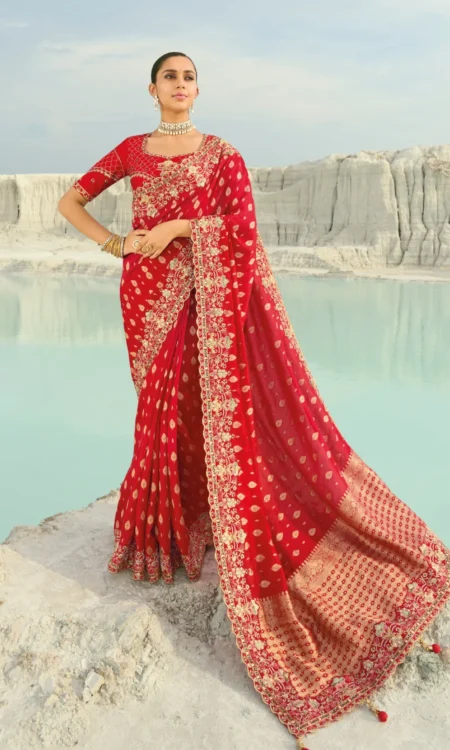
Red, crimson, maroon and related deep shades can create a classic ceremonial appearance.
They pair naturally with:
- Gold zari
- Traditional jewellery
- Rich borders
- Elaborate pallus
- Classic bridal blouse designs
Pink and Magenta
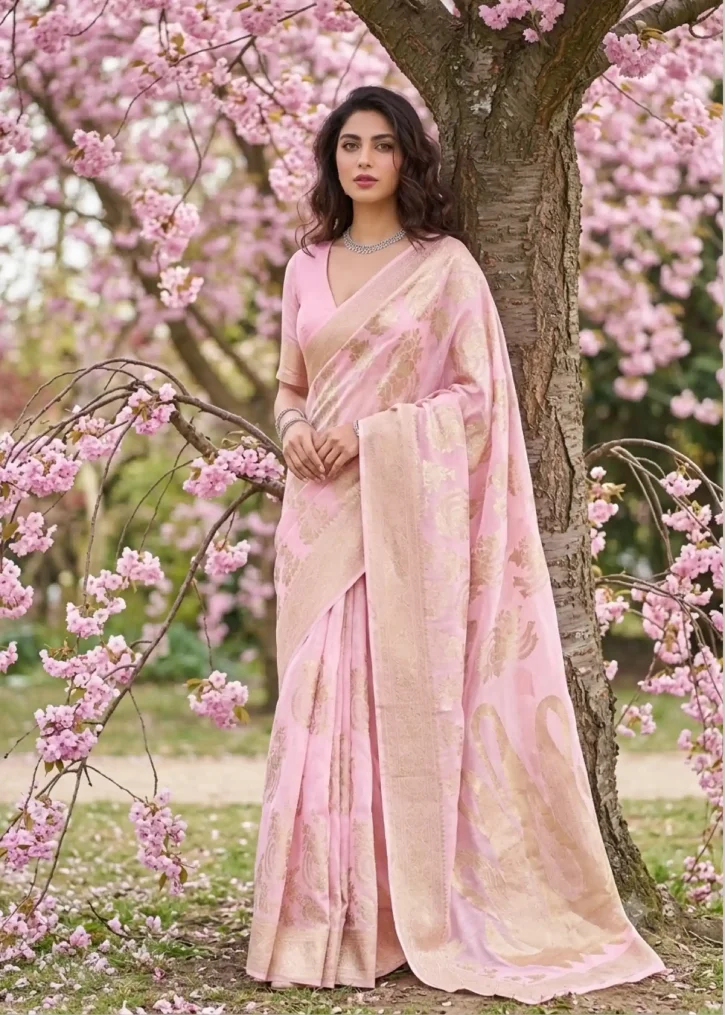
Pink, rani pink, rose and magenta can create a softer or more youthful bridal appearance while retaining visual richness.
Green
Green can provide a strong contrast against gold zari and is particularly effective when the saree already contains rich woven detailing.
Wine and Burgundy
Deep wine and burgundy shades offer a more contemporary interpretation of traditional bridal colour palettes.
Ivory and Cream
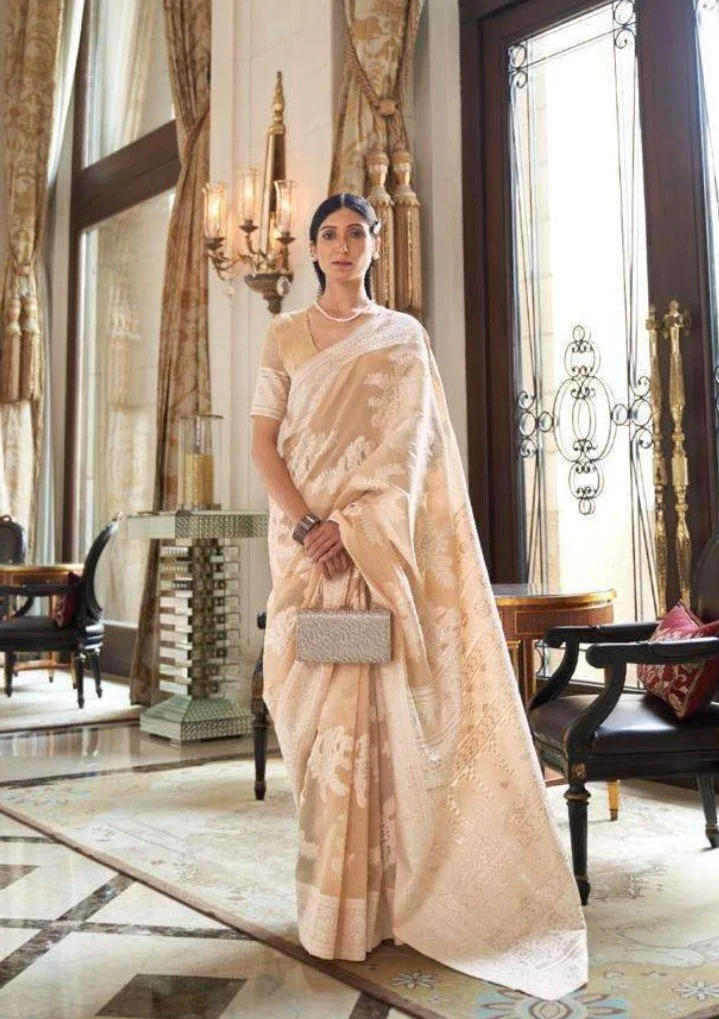
Ivory and cream can create an elegant bridal appearance, especially when combined with gold, metallic detailing or a contrasting border.
The Panetar tradition also demonstrates why lighter bridal bases should not be dismissed simply because they are not red.
Jewel Tones and Contemporary Colours
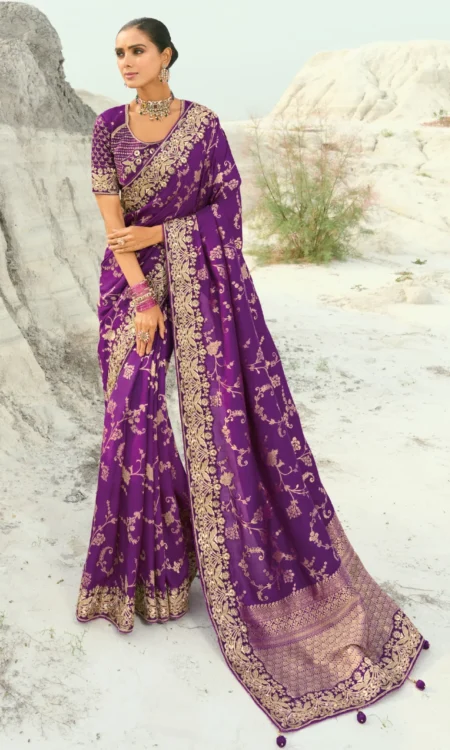
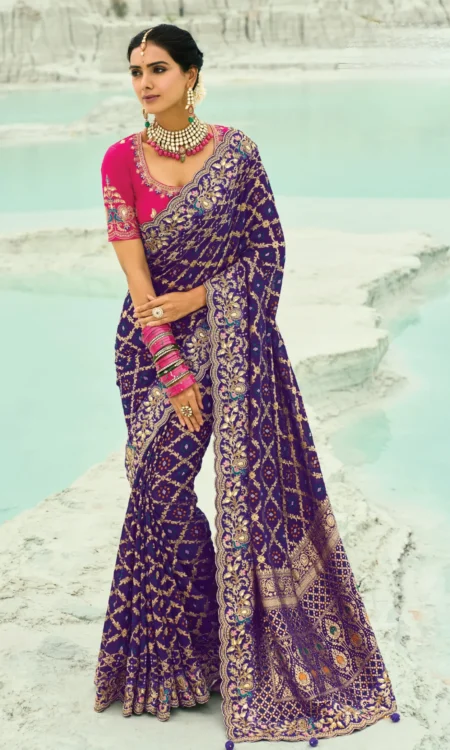
Purple, violet, yellow, orange, blue and other jewel or fashion-led colours can work when they complement the ceremony, jewellery, blouse and overall styling.
There is no single correct bridal colour.
The best choice is one that fits the ceremony and feels appropriate to the bride.
Zari, Border and Pallu: What to Look For
Three details can have a major influence on a bridal saree:
Zari + Border + Pallu
Zari
Zari is a metallic thread or decorative metallic element used in textile production and ornamentation. Different types and constructions exist, so the word "zari" should not automatically be interpreted as real gold.
When evaluating a product, look for the specific description provided for that saree.
Border
The border frames the saree and can strongly influence its ceremonial appearance.
Consider:
- Border width
- Colour
- Contrast
- Motif
- Zari detailing
- Relationship with the body
A substantial border can create a more traditional appearance, while a restrained border can work well for contemporary styling.
Pallu
The pallu often becomes one of the most visible parts of the saree after draping.
Consider:
- Pallu width
- Pattern
- Zari
- Motifs
- Contrast
- Overall richness
A richly designed pallu can become the focal point of a bridal look.
Body + Border + Pallu
Do not evaluate these components independently.
A successful bridal saree often depends on how they work together.
Woven, Embroidered, Printed and Embellished Sarees
These terms describe different forms of surface design and should not be used interchangeably.
Woven
A woven motif is created as part of the textile construction itself.
This is particularly important when discussing traditions such as Kanjivaram and Banarasi.
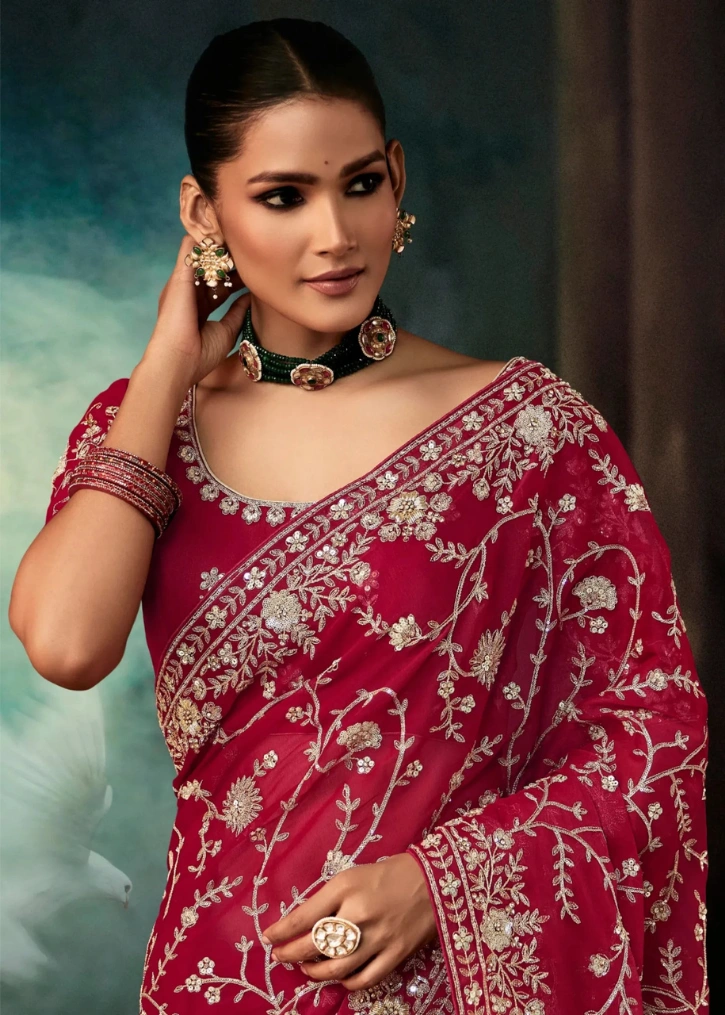
Embroidered
Embroidery involves decorative material being stitched onto the fabric.
It creates a surface layer of ornamentation rather than forming the design through the basic weaving structure.
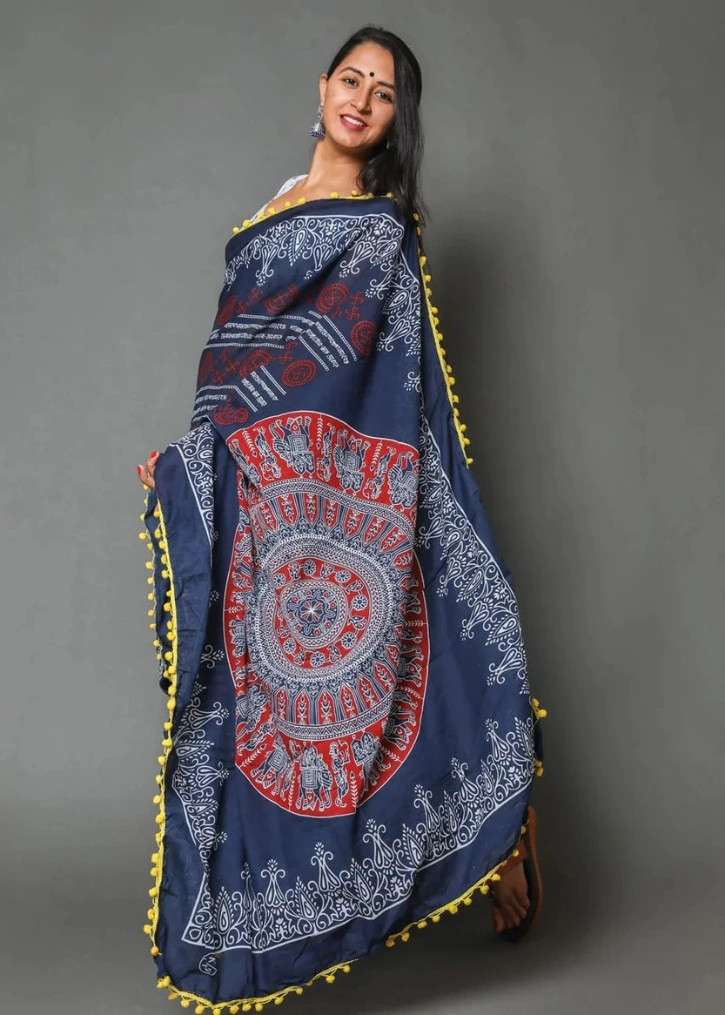
Printed
Printed designs are applied to the fabric through a printing process.
A printed saree can certainly be appropriate for a contemporary bridal event, but print alone does not establish bridal status.
Embellished
Embellishment can involve materials such as sequins, beads, stones or other decorative elements added to the fabric.
This can be particularly relevant to reception and contemporary bridal styling.
Always check the product description before assuming how a saree's design was produced.
How to Choose a Bridal Saree
Choosing a bridal saree becomes easier when you work through the decision in stages.
1. Start With the Ceremony
Ask:
Where will I wear it?
Main wedding ceremony, reception, engagement, mehendi, haldi or sangeet?
2. Decide on Your Style Direction
Do you want:
- Traditional
- Regional
- Contemporary
- Minimal
- Rich and ornate
- Fashion-forward
3. Choose the Textile
Consider Kanjivaram, Banarasi, silk, georgette, organza, tissue or another suitable construction.
4. Consider Weight and Drape
Think about:
- Ceremony duration
- Movement
- Venue
- Indoor temperature
- Outdoor exposure
- Personal comfort
For UAE weddings, venue conditions and air-conditioning can be particularly relevant.
5. Choose Your Colour
Start with your preferred palette rather than assuming that one colour is required.
6. Examine the Border
Ask whether the border complements the body and works with your planned drape.
7. Examine the Pallu
The pallu can become a major visual feature, especially in photographs.
8. Check the Zari or Decorative Work
Understand what the product description actually states rather than assuming that "zari" means real gold.
9. Check the Blouse Piece
Confirm:
- Whether a blouse piece is included
- Its fabric
- Its colour
- Its approximate length
- Whether it complements your styling plan
10. Consider Your Jewellery
Your jewellery should work with the saree rather than compete with it.
11. Check the Product Details
Before purchasing, review:
- Fabric
- Length
- Weight, if provided
- Colour
- Border
- Pallu
- Blouse
- Care instructions
- Product-specific craftsmanship claims
Bridal Saree Styling
The saree is only one part of the finished bridal look.
A useful styling sequence is:
Saree → Blouse → Jewellery → Drape → Hair → Accessories
Blouse
Choose between:
- Matching blouse
- Contrast blouse
- Zari blouse
- Brocade blouse
- Embroidered blouse
- Traditional sleeves
- Contemporary sleeves
The blouse should complement the saree's existing visual density.
A heavily patterned saree may not need an equally elaborate blouse.
Jewellery
Traditional silk sarees can support rich jewellery, while a heavily embellished contemporary saree may work better with carefully selected statement pieces.
Think about balance.
More jewellery is not automatically better.
Drape
The drape should suit:
- Saree construction
- Ceremony
- Regional tradition
- Blouse
- Jewellery
- Personal comfort
Regional drapes should be described in their cultural context rather than presented as a single "Indian bridal drape."
Footwear and Accessories
Choose footwear that works with the saree length and venue.
Keep accessories coordinated with the saree's existing colours and metallic details.
Bridal Saree Quality & Authenticity Checklist
Before purchasing a bridal saree, look beyond the colour and photograph.
1. Fabric
Check the exact material description.
Do not assume that every saree described as "silk" has the same construction.
2. Weave
Understand whether the design is woven, printed, embroidered or embellished.
3. Zari
If zari is mentioned, check what the product description actually specifies.
4. Border
Look at the border's width, finishing and relationship with the saree body.
5. Pallu
Examine the pallu because it can significantly affect the final bridal appearance.
6. Motifs
Consider motif placement and consistency.
7. Blouse Piece
Check whether a blouse piece is included and whether its fabric and colour match the saree.
8. Finishing
Where information is available, check stitching, finishing, fall, pico and other preparation details.
9. Measurements
Review saree length, blouse-piece length and other available measurements.
10. Weight
If the product provides weight information, use it as a useful indicator when considering comfort and long-duration wear.
11. Care
A bridal saree may require specific storage and cleaning.
Read the care instructions before purchase.
12. Product-Specific Claims
Claims such as:
- Pure silk
- Handloom
- Handwoven
- Gold zari
- Handmade
- GI
- Zardozi
should be evaluated at the individual product level.
A collection should not be assumed to have the same characteristics across every product.
Handloom, Powerloom and Craftsmanship
Handloom and powerloom describe different production systems.
Neither term alone is a complete measure of a saree's quality.
When comparing sarees, consider the actual:
- Fabric
- Construction
- Design
- Finishing
- Material
- Craftsmanship
- Product documentation
A handloom label should be based on product-specific evidence rather than assumed simply because a saree looks traditional.
Similarly, a powerloom saree should not automatically be described as inferior.
The most useful approach is to understand exactly what the individual product claims and how that relates to your expectations.
Understanding GI and Regional Textile Names
Some Indian textile traditions have registered Geographical Indication identities.
This can be useful information for shoppers because it connects a textile name with a defined geographical and product tradition.
However:
GI does not mean that every saree that looks similar is automatically GI-certified.
For example, a product described as Kanjivaram-inspired should not automatically be presented as a registered geographical product.
When authenticity or provenance matters to your purchase, look for specific product documentation rather than relying on a style name alone.
What Does "Zari" Mean?
Zari refers to metallic thread or metallic decorative material used in textile work.
It is important to distinguish:
zari
from:
real gold.
Different types of zari exist, and modern sarees can use different metallic materials and constructions.
Therefore, a product described as having "gold zari" should not automatically be interpreted as containing solid or pure gold.
For a bridal saree, check the exact product description if the composition of the zari is important to you.
How to Think About Price and Value
A bridal saree's price can be influenced by many factors, including:
- Fabric quality
- Silk type
- Weaving complexity
- Zari
- Embroidery
- Embellishment
- Motif complexity
- Construction
- Craftsmanship
- Design
- Provenance
- Brand positioning
A higher price does not automatically prove authenticity, and a lower price does not automatically mean poor quality.
Instead, evaluate the product against the characteristics that matter to you.
Bridal Sarees for UAE Weddings
Brides across Dubai, Abu Dhabi, Sharjah and other UAE emirates can explore bridal sarees for traditional ceremonies, receptions and wedding celebrations.
When choosing a saree in the UAE, consider the actual environment in which you will wear it.
For indoor weddings
Air-conditioning can make a heavier saree comfortable even when outdoor temperatures are high.
For outdoor events
Consider:
- Fabric weight
- Breathability
- Movement
- Duration
- Venue conditions
For long ceremonies
A saree that looks beautiful but feels uncomfortable after several hours may not be the right choice.
Think about the complete experience:
Weight + drape + venue + ceremony duration + jewellery + movement
rather than season alone.
Bridal Saree Care
A bridal saree may be worn only occasionally, which makes correct storage especially important.
After Wearing
Allow the saree to air before storing it.
Avoid putting it away while damp or exposed to moisture.
Cleaning
Follow the product-specific care instructions.
Do not assume that every silk, zari or embellished saree can be treated in exactly the same way.
Storage
For valuable bridal sarees:
- Keep them clean and completely dry
- Store away from direct sunlight
- Avoid unnecessary compression
- Refold periodically
- Use suitable saree storage materials
- Take extra care with zari and embellished surfaces
Before the Wedding
If the saree has been stored for a long period, inspect:
- Colour
- Fabric
- Zari
- Border
- Pallu
- Blouse
- Finishing
well before the event.
This leaves time for tailoring, steaming or other preparation if required.
Frequently Asked Questions
What is a bridal saree?
A bridal saree is a saree selected for a bride's wedding-related wardrobe. Its suitability can depend on the ceremony, regional tradition, textile, colour, design, embellishment, border, pallu and styling.
What makes a saree suitable for bridal wear?
There is no single requirement. Bridal suitability can come from the combination of textile, ceremonial context, regional tradition, colour, weave, zari, embroidery, embellishment, border, pallu and overall styling.
Which sarees are traditionally worn by Indian brides?
This varies by region and community. Kanjivaram, Banarasi, Paithani and selected regional traditions such as Panetar and Gharchola can be important in different bridal contexts.
Which saree is best for a wedding ceremony?
There is no universal best saree. Consider the regional tradition, ceremony, textile, weight, border, pallu, drape and personal preference. Kanjivaram and Banarasi are strong options for brides seeking traditional ceremonial styles.
Which saree is suitable for a bridal reception?
Reception dressing can offer more flexibility. Georgette, organza, tissue, contemporary silk and embellished sarees can work well depending on the venue, styling and desired look.
Are Kanjivaram sarees good for bridal wear?
Yes. Kanjivaram sarees have a particularly strong association with traditional South Indian bridal dressing. Individual suitability still depends on the saree's design, colour, construction, weight and styling.
Are Banarasi sarees suitable for brides?
Yes. Banarasi sarees can be excellent bridal choices, particularly when their woven design, zari, border, pallu and overall richness suit the ceremony and bride's styling.
Are bridal sarees always red?
No. Red and related deep shades are important in many bridal traditions, but brides also choose pink, green, maroon, wine, ivory, cream, yellow, purple, blue and other colours depending on region, ceremony and personal style.
Is every silk saree a bridal saree?
No. Silk is widely used for formal and ceremonial sarees, but bridal suitability depends on the specific construction, design, colour, occasion and styling.
Is every Banarasi saree a bridal saree?
No. Banarasi is a textile tradition, not a universal occasion classification. Some Banarasi sarees are highly suitable for bridal wear while others may be designed for different occasions.
Is every Kanjivaram saree a bridal saree?
No. Kanjivaram is a regional silk tradition. Individual sarees can be appropriate for weddings, festivals, formal occasions or other celebrations.
Does zari mean real gold?
No. Zari can refer to different metallic thread constructions. A saree described as having zari should not automatically be assumed to contain real gold.
What should I check before buying a bridal saree?
Check the fabric, construction, colour, border, pallu, zari or decorative work, blouse piece, measurements, weight where available, finishing and care requirements. Also verify any specific claims such as handloom, handwoven, pure silk or particular zari composition.
What is the difference between handloom and powerloom sarees?
Handloom and powerloom refer to different production systems. The terms alone do not determine overall quality. Evaluate the actual fabric, construction, design, finishing and product documentation.
How should I care for a silk bridal saree?
Follow the product-specific care instructions. Keep the saree clean and dry, protect it from prolonged direct sunlight and store it carefully to reduce unnecessary stress on the fabric and decorative work.
Explore Related Saree Collections
If you are still deciding which bridal style suits you, explore related collections based on textile, occasion and design.
- Kanjivaram Sarees — For richly woven South Indian-inspired ceremonial styles.
- Banarasi Sarees — For intricate woven designs, brocade effects and zari-rich styling.
- Chanderi Sarees — For lighter, elegant woven styles.
- Embroidered Sarees — For brides looking for surface embroidery and contemporary decorative detailing.
- Wedding Sarees — For broader wedding-related saree choices.
- Reception Sarees — For more contemporary and reception-focused styling.
- Festive Sarees — For celebratory looks that can also complement pre- and post-wedding occasions.
- Printed Sarees — For brides considering a more contemporary or unconventional approach to occasion dressing.
Find Your Bridal Saree
Your bridal saree does not have to follow a single formula.
It can be traditional or contemporary, richly woven or delicately embellished, deeply regional or modern in colour and styling.
Start with the occasion.
Then consider the textile, weight, colour, border and pallu.
Finally, bring everything together through the blouse, jewellery and drape.
The right bridal saree is the one that works for your ceremony, your comfort, your cultural context and the bridal look you want to remember.
Explore the Bridal Sarees collection and discover styles for wedding ceremonies, receptions and celebrations across the UAE.